Roads Posted Open Versus Roads That Are Not
It’s a frustration many of us face when we first get into ATV and UTV riding here in Pennsylvania: figuring out exactly where we can legally ride. One of the biggest areas of confusion revolves around road use, specifically distinguishing between roads that are officially open to off-highway vehicles and those that are absolutely off-limits. This guide is all about cutting through that confusion, helping you understand the crucial difference between a road posted open and one that is not, and how to stay on the right side of the law while enjoying our incredible state.
Understanding Pennsylvania's General Stance on ATV Road Use
Let's be blunt: Pennsylvania isn't exactly a free-for-all when it comes to riding your ATV or UTV on public roads. The general rule is often misunderstood, leading to fines and unnecessary headaches for riders who just want to enjoy their machines. It's not like hopping on your dirt bike and cruising down any old street; there are very specific regulations that govern where your off-highway vehicle can and cannot go.
The Default Rule: Closed Unless Posted Open
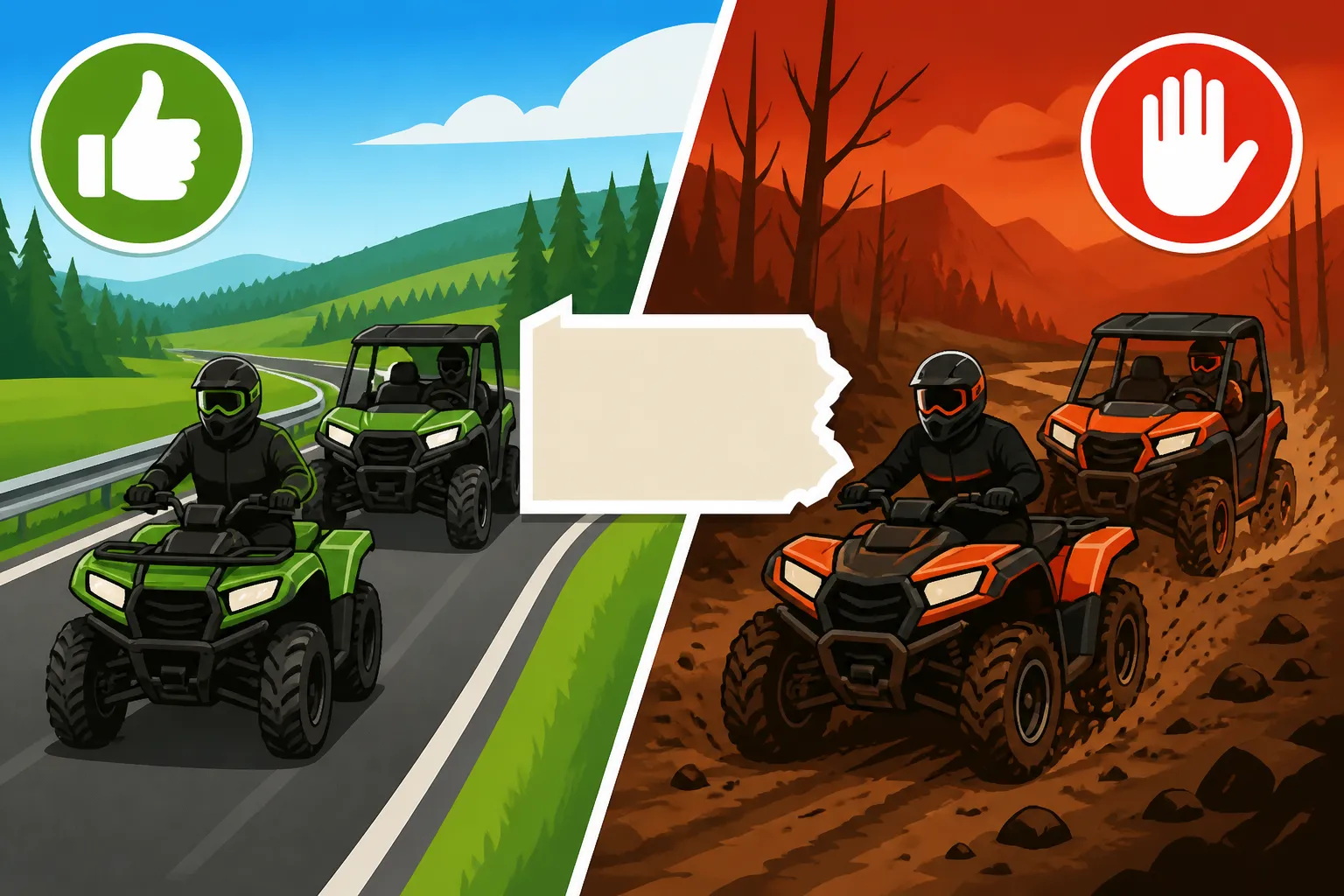
This is the golden rule, the foundational principle for road use in Pennsylvania: a road is closed to ATVs and UTVs unless it is specifically posted as open. Think of it as an "opt-in" system, not an "opt-out." You cannot assume a road is fair game just because you don't see a "No ATVs" sign. In fact, the absence of a sign means it's closed by default, and riding there is considered illegal operation. This applies to most township roads, borough streets, state routes, and even many private roads where you don't have explicit permission. This default closure is why many riders get caught off guard, believing they have more freedom than the law actually grants. It's a critical piece of knowledge that can save you a significant amount of trouble and help you understand [Why Pennsylvania Will Not Plate a Quad] for general street use.
Why the "Street Legal" Myth Persists
We've all heard the whispers, the garage talk, the forum posts: "My buddy made his quad street legal, why can't I?" This persistent myth often stems from a misunderstanding of what "street legal" actually means in different contexts or states. In Pennsylvania, an ATV or UTV cannot simply be made "street legal" in the same way you can convert an off-road truck for highway use. There's no conversion path to get a PennDOT title and registration that allows you to drive your quad freely on state highways or most local roads. The closest we get are specific, designated roads that have been opened by local municipalities, creating what are often called "joint-use roads." These aren't blanket permissions; they are very targeted exceptions to the general rule. The frustration often comes from seeing machines in other states that are street legal, leading to false hope or misguided attempts here in Pennsylvania.
How Roads Become Open to ATVs and UTVs in Pennsylvania
So, if the default is closed, how do any roads ever open up for ATV and UTV use? It's not a federal or state-level directive that throws open all roads. Instead, it's a very localized process, requiring specific actions from your local governing bodies. Understanding this process can empower riders to advocate for more opportunities in their own communities.
Township and Borough Ordinances
The power to open local roads for ATV and UTV use primarily rests with the individual townships and boroughs. These local governments can pass ordinances—local laws—that designate specific roads or sections of roads for off-highway vehicle travel. This isn't a decision made lightly; it often involves public hearings, community input, and careful consideration of safety, traffic flow, and potential impacts on residents. The intention behind these ordinances is usually to create safe connector routes between trail systems or to provide limited access for riders within a municipality. For example, a township might open a road to allow riders to get from their homes to a designated trail network, or to access a local business. [Who Votes to Open a Road] is a direct question for your local elected officials.
The Role of the Green Sign
Once a township or borough has officially designated a road or section of road as open, you won't just see a small notice in the local paper. The key indicator for riders is a distinctive physical sign. These are typically green signs, clearly marked with an ATV or UTV symbol and text indicating that the road is open for their use. These aren't subtle little markers; they are intended to be easily visible to anyone operating a vehicle. If you don't see this specific green sign, you should assume the road is closed, regardless of what someone might have told you or what you think you know. Spotting [The Green Sign on a Pennsylvania Township Road] is your visual cue for legal riding. It's important to remember that even on these posted roads, standard traffic laws apply, and riders are still expected to operate their machines safely and responsibly, often with speed limits much lower than what cars might observe.
Joint-Use Roads and Shared Responsibility
Many of the roads that are opened for ATV and UTV use are what are called "joint-use roads." This means they are shared with traditional highway vehicles like cars, trucks, and motorcycles. This sharing requires extra vigilance and responsibility from all parties. For ATV and UTV riders, this means understanding that they are guests on a road primarily designed for other traffic. It means being visible, following all posted speed limits, yielding to other vehicles, and being acutely aware of blind spots, especially on winding rural roads. [Pennsylvania Joint-Use Roads and Who Shares Them] means everyone needs to be extra cautious. Some riders choose to enhance their visibility with aftermarket accessories like brighter LED lights or flags, which can be found from brands like SuperATV, especially if they anticipate riding during dawn, dusk, or in areas with heavy tree cover where visibility is naturally reduced. This shared environment emphasizes the need for safety certificates, appropriate helmets, and adequate insurance, even for short jaunts.
Navigating Designated ATV Roads in Pennsylvania
Once you've identified a road that is genuinely posted open for ATV and UTV use, there's still a specific way you need to ride to ensure safety and legality. It's not just about getting on the road; it's about adhering to the rules that come with that privilege.
Identifying the Green Sign on a Township Road
As discussed, the green sign is your best friend when it comes to knowing where you can ride. These signs are usually placed at the entry points of the designated road sections, clearly indicating where ATV and UTV travel is permitted. They might also include information about specific hours of operation or other local regulations. It’s crucial to understand that these signs delineate the exact section of road that is open. Don't assume that if one road is open, all connecting roads are also open. Always look for the next sign, and if the green sign disappears, assume the road is no longer designated for ATV or UTV use. Many municipalities publish maps of their designated roads, which can be an invaluable resource to consult before heading out. Always check these maps in conjunction with on-the-ground signage.
Rules for Riding Posted Open Roads
Even on a designated road, you're not entirely free to ride as you please. There are a host of rules that typically apply, many of which mirror those for conventional vehicles. This often includes:
- Speed Limits: You must adhere to the posted speed limit, which might be significantly lower than what a car can legally travel.
- Crossing Highways: If you need to cross a state highway, it generally must be done at a 90-degree angle, stopping fully before proceeding, and only when safe to do so. [Crossing a Highway on an ATV in Pennsylvania] is a specific maneuver with strict rules.
- Passengers: If your ATV is designed for a single rider, you cannot carry a passenger. UTVs are designed for multiple occupants and can carry passengers as long as they adhere to the machine's capacity. [Pennsylvania Rules for a Passenger on a Quad] are clear.
- Helmets: Helmets are often mandatory for all riders and passengers, regardless of age, on designated roads. While there are exceptions for agricultural use, these generally don't apply to recreational road riding. [Pennsylvania Helmet Law for ATV Riders] is something you must know.
- Insurance: Most designated roads will require you to carry proof of liability insurance. This isn't just a good idea; it's often a legal requirement. [Pennsylvania's Mandatory Insurance Off Your Own Land] means you need coverage.
- Registration: Your ATV or UTV must be properly registered with the DCNR and display a valid registration plate.
- Minimum Age: Operators must meet the [Pennsylvania's Minimum Age of Sixteen on Roads] requirement for designated road use.
Connector Routes and Trail Access
One of the primary reasons townships and boroughs open roads is to create vital "connector routes." These are short stretches of road that link private property to state-managed trails, or connect different sections of a larger trail system. Imagine you're staying at a campground and want to get to the main trailhead for Whiskey Springs. A local township might open a specific road for a mile or two, allowing you to legally travel from your campsite directly to the trail entrance. These routes are invaluable for improving accessibility and reducing the need for riders to trailer their machines for every small movement. Brands like SuperATV offer useful accessories like GPS mounts and navigation systems that can help you plan your route effectively, ensuring you stay on designated paths and legally connect to the trails you want to ride. [Riding to a Trailhead on a Township Road] is precisely what these routes are for. Always have your [Pennsylvania ATV Registration Paperwork Checklist] handy, as rangers and local law enforcement often patrol these connector points.
The Dangers and Consequences of Riding Unposted Roads
While the allure of an open road might be tempting, riding an ATV or UTV on a road not explicitly designated for such use carries significant risks and severe consequences. It's not just a minor infraction; it can lead to substantial fines, legal battles, and even jeopardize future riding opportunities for everyone.
Understanding Pennsylvania's Trespass Rules for Riders
Riding on a road that is not designated as open for ATVs and UTVs can quickly turn into a trespassing issue, even if it's a public road. While a public road is open to vehicles like cars, an ATV or UTV often falls under a different category of vehicle when it comes to road use regulations. If you're on a private road without permission, it's straightforward trespassing. However, even on public roads, operating an unregistered or unauthorized vehicle can be cited under different sections of law, potentially leading to charges that parallel trespass. This is especially true if you ride off the paved or gravel surface onto private land adjacent to the road. Always err on the side of caution: if you don't see the green sign, consider it closed. [Pennsylvania Trespass Rules for Riders] can be a serious issue.
Legal Fines and Penalties for Riding Illegally
The penalties for riding illegally on closed roads in Pennsylvania are not to be taken lightly. A common scenario is getting caught riding an unregistered or unauthorized machine on a public road, which can result in an automatic minimum fine. [Pennsylvania Fines for an Unregistered ATV] typically start around $300, and that's often just the base fine. This can be compounded by additional charges depending on the specifics of the infraction, such as reckless driving, operating without a helmet, or lacking insurance. These fines can quickly escalate, and repeat offenses carry even steeper penalties, including potential impoundment of your machine. Beyond the immediate financial hit, such citations can become part of your legal record, impacting future interactions with law enforcement and potentially even your driving privileges. [Pennsylvania Fines for Riding Illegally] can truly dampen your enthusiasm for riding.
Safety Risks and Damage to Community Relations
Beyond the legal and financial ramifications, riding on closed roads poses significant safety risks. These roads are not designed for ATVs or UTVs, which handle differently than cars. Sharing narrow, winding roads with fast-moving traffic is incredibly dangerous, both for the rider and for other motorists. Visibility for ATVs can be an issue, and unexpected encounters can lead to serious accidents. Furthermore, illegal riding creates a negative perception of all ATV and UTV enthusiasts. When local residents or property owners see riders disregarding laws, it fuels opposition to opening new trails or designating more roads for responsible use. This erosion of goodwill can make it incredibly difficult for ATV clubs and advocates to make progress in expanding legal riding areas. [Why Most Roads Stay Closed] often boils down to safety concerns and past negative experiences with irresponsible riders.
| Feature | Posted Open Road (Designated) | Unposted/Closed Road (Default) |
|---|---|---|
| Legal Status | Legal for ATVs/UTVs by local ordinance | Illegal for ATVs/UTVs (unless agricultural/farm exemption applies) |
| Key Indicator | Distinctive Green Sign with ATV/UTV symbol | Absence of green sign; generally no specific signage |
| Governing Body | Local Township/Borough | State (PA Code), local ordinance, or private owner |
| Typical Rules | Adherence to traffic laws, speed limits, helmet, insurance, DCNR registration, age restrictions | All ATV/UTV road use is prohibited |
| Consequences of Use | Legal, provided all rules are followed | Fines (e.g., $300+), potential impoundment, trespassing charges, poor public relations |
| Purpose | Connector routes, local access, trail access | Primarily for highway-legal vehicles |
Advocacy and Community Involvement for More ATV Roads
For those of us who love riding in Pennsylvania, the thought of more legal places to ride is always appealing. Expanding the network of designated ATV and UTV roads requires more than just hoping; it requires active engagement and responsible advocacy within our communities.
Asking a Township to Open a Road
If you believe a particular road in your township or borough would make a sensible and safe connector route or provide valuable access for ATV and UTV riders, don't just complain—take action. The first step is to engage with your local township supervisors or borough council members. Attend public meetings, express your interest respectfully, and come prepared with data and arguments for why opening a specific road would be beneficial. Highlight the economic benefits of increased rider traffic to local businesses, emphasize the safety aspects of designated routes versus illegal riding, and present a plan for how riders would be educated on the new rules. [Asking a Township to Open a Road] is a process, not a simple request. It’s also crucial to show that you are a responsible rider, someone who adheres to current regulations, and that you are part of a community that cares about the environment and public safety.
Joining Local ATV Clubs and Organizations
One of the most effective ways to advocate for more riding opportunities is to join and support local ATV and UTV clubs. These organizations are often the primary interface between riders and local governments, as well as the DCNR. Clubs consolidate voices, organize efforts, and often have established relationships with decision-makers. They work tirelessly on trail maintenance, landowner relations, and promoting safe, responsible riding practices. Being part of a club demonstrates a commitment to the sport and gives your voice more weight. Many clubs even assist in the physical posting of new signs when a road is designated, ensuring clarity for all riders. They might even have members who are experts in navigating the permitting process or helping to identify suitable routes that could be opened. If you're passionate about expanding riding opportunities, a local club is your best ally. Remember, advocating for change also means leading by example: always ride respectfully and adhere to all existing regulations, whether on [Pennsylvania's Designated ATV Roads] or state forest trails.
Disclaimer
This article is for general informational purposes only and does not constitute professional advice. Laws, prices and regulations vary by location and change over time. Consult a qualified professional for guidance on your specific situation.