Pennsylvania’s Agricultural Exception to the Helmet Rule
One of the most common questions, and often frustrations, among ATV and UTV owners in Pennsylvania revolves around helmet laws. It feels like every time you turn around, there's a different rule, and it can be especially confusing for folks who use their machines for work rather than just play. This guide will clarify the specific agricultural exception to Pennsylvania's helmet rule, so you can understand when you need head protection and when the law recognizes a different set of circumstances.
Understanding Pennsylvania's General Helmet Law for ATVs
Let's start by laying the groundwork: what does Pennsylvania generally require when it comes to helmets and ATVs? The state takes safety very seriously, and for good reason. Accidents can happen in a split second, and head injuries are often the most severe and life-altering.
Who Needs a Helmet and When
Generally speaking, if you're riding an ATV or UTV in Pennsylvania, you and any passengers are required to wear an approved helmet. This rule applies to most situations where you'd be riding off your own private property, including on state-designated trails, private parks, and even when crossing designated roads. Whether you're a seasoned rider tearing up the mud at the [Anthracite Outdoor Adventure Area in Pennsylvania] or a casual weekend warrior exploring some local trails, that helmet needs to be strapped on.
The law is pretty clear that this isn't just for inexperienced riders; it's a universal requirement designed to protect everyone. Even if you're just making a quick run down a short section of [Pennsylvania's Designated ATV Roads], the helmet is mandatory. There’s no age exception for adults, and certainly no exception for children. In fact, Pennsylvania has specific helmet rules for younger riders, ensuring they have appropriate protection. This blanket rule often catches new riders off guard, especially if they're coming from states with different regulations or if they've only ever ridden on private land where rules might be more relaxed.
The Importance of Helmet Safety Beyond the Law
While legal compliance is a significant factor, the importance of wearing a helmet extends far beyond avoiding a fine. We've all seen or heard stories of riders who took a spill, and the difference a helmet made in the outcome can be literally life-changing. Helmets are designed to absorb impact, distribute force, and protect your brain from severe trauma. Riding an ATV or UTV, especially on challenging terrain, carries inherent risks. Rocks, trees, unexpected ruts, or even another rider can present hazards.
Think about the sheer force involved in a rollover or a sudden impact. Your head is incredibly vulnerable. A quality helmet, properly fitted and securely fastened, can mean the difference between walking away with a headache and suffering permanent brain damage or worse. This is why, even in situations where the law might not strictly mandate it (like the exception we're about to discuss), many experienced riders still choose to wear a helmet. It's about personal safety, mitigating risk, and being able to enjoy countless more rides down the line. It's a critical piece of gear, right up there with sturdy boots and eye protection.
Diving Deep into the Agricultural Exception
Now, let's get to the heart of the matter for many of our rural readers: the agricultural exception. This part of the law often brings a sigh of relief to farmers and those who truly use their ATVs and UTVs as workhorses, not just for recreation. Pennsylvania understands that a quad on a farm isn't always the same as a quad on a trail.
Defining "Agricultural Purpose" in Pennsylvania
So, what exactly counts as an "agricultural purpose" in the eyes of Pennsylvania law? Essentially, it means using your ATV or UTV directly for farming, ranching, or other related agricultural operations. This isn't a loophole to avoid wearing a helmet while joyriding through your back forty; it's specifically for those engaged in legitimate farm work. This could include tasks such as hauling feed to livestock, checking fences, moving equipment between fields, spraying crops, herding animals, or performing maintenance around the farm.
The key here is the purpose of the ride. If you're using your UTV to check on the cows in the far pasture, that's agricultural. If you're using your ATV to pull a small trailer loaded with tools to fix a tractor, that's agricultural. However, if you finish your chores and then decide to take your kids for a rip around the fields just for fun, that would typically fall outside the agricultural exception, and the general helmet rule would apply. The law makes a distinction between true work and leisure, and understanding this nuance is crucial for staying compliant. It's about the function your machine is serving at that specific moment.
The Specifics of Riding on Farms Without a Helmet
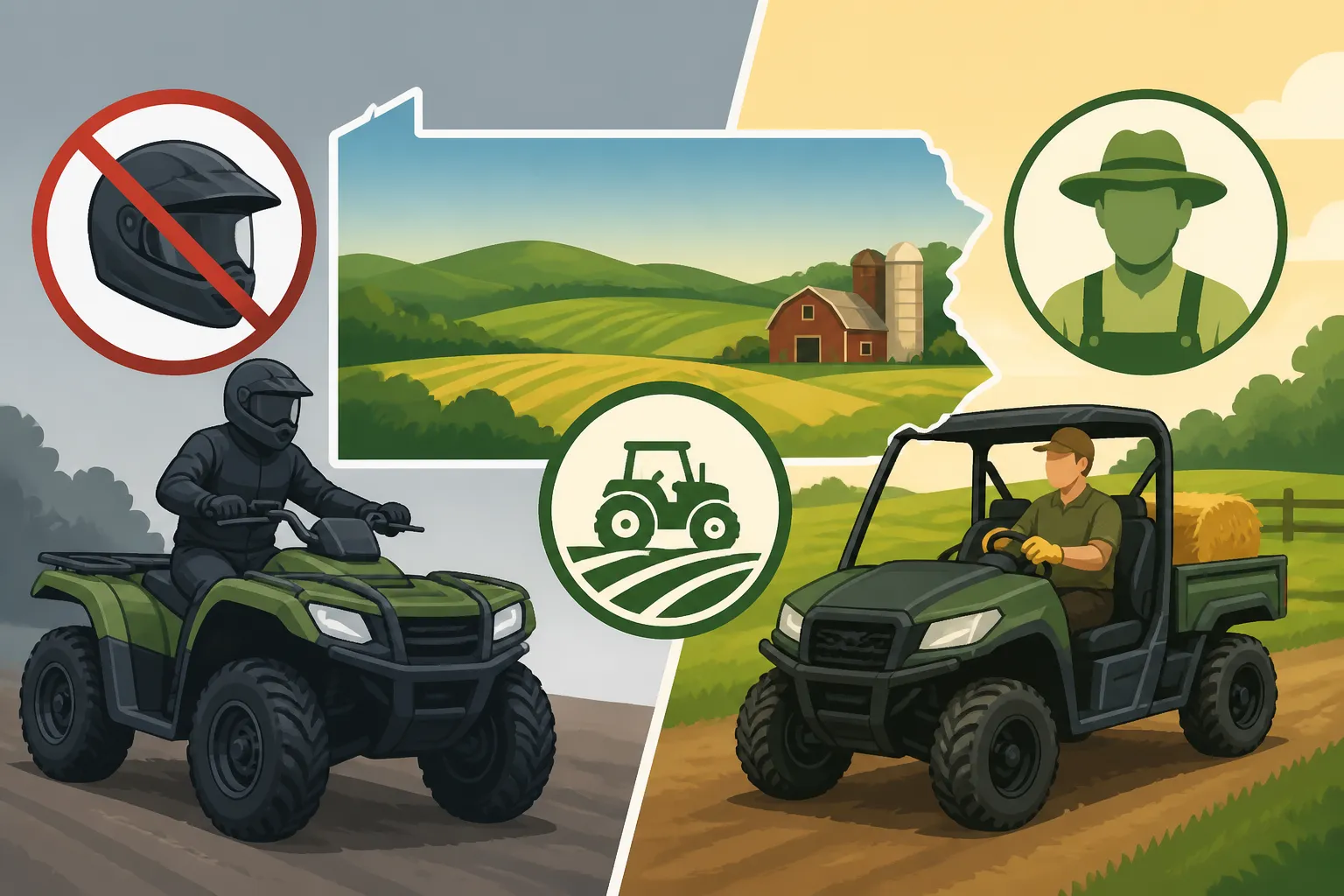
When an ATV or UTV is being operated for a bona fide agricultural purpose on land owned or leased by the operator for farming activities, the helmet requirement is waived. This means you can ride your quad to inspect fields, mend fences, or transport small equipment across your property without needing to don a helmet. This is a practical consideration for farmers who might be frequently dismounting and remounting their machines throughout the day, often needing to communicate or manage tasks that are cumbersome with a helmet on.
Imagine a farmer who needs to quickly drive across a field to check irrigation lines, stop to adjust a valve, then drive to another section. Constantly putting on and taking off a helmet would be incredibly inefficient and disruptive to their work. This exception acknowledges that unique operational environment. It's important to remember that this waiver applies to the private agricultural land itself. The moment you venture off that specific property and onto a public road, even if it's just to get to another parcel of your farm, the general helmet law often kicks back in, requiring you to wear appropriate head protection. We'll delve into those transitional scenarios a bit more in the next section, but for now, remember: agricultural purpose, agricultural land, no helmet required.
Practical Considerations and Limitations of the Exception
While the agricultural exception offers some relief, it's not a blanket free pass. There are very specific boundaries and situations where it applies, and understanding these limitations is crucial to avoid an unexpected citation or, more importantly, an avoidable injury.
Where the Exception Does (and Doesn't) Apply
The agricultural exception is quite specific: it applies when you are operating an ATV or UTV for an agricultural purpose on agricultural land. This means your own farm, or land you have leased specifically for farming operations. It does not extend to recreational riding on that same farm, nor does it extend to public lands or designated ATV trails, even if you are a farmer in your off-hours. So, if you're taking your UTV, perhaps outfitted with some heavy-duty components from SuperATV for farm chores, and then decide to take it out for a spin on a local trail, you absolutely need your helmet.
Similarly, if you're riding on a neighbor's property, even if you're helping them with farm work, you need to ensure you understand the legalities. While "helping out" might feel like an agricultural purpose, the letter of the law typically applies to land owned or leased by the operator. Always err on the side of caution and wear a helmet if there's any doubt about whether the strict legal definition applies to your specific location and activity. The rule is designed for the working farmer on their own ground, not necessarily for every farm-related activity elsewhere.
Crossing Roads and Public Ways Under the Exception
This is where things get particularly tricky and where many riders can inadvertently run afoul of the law. If your agricultural land is split by a public road, or if you need to access different parcels of your farm by crossing a township road, the agricultural helmet exception generally does not apply during that road crossing. When you are on a public road, even for a short distance or just to cross, you typically fall under the general rules for ATV operation on public thoroughfares, which often includes the helmet requirement. [Pennsylvania Rules for Crossing a State Route] are stringent, and this applies equally to farm machines.
It's a common scenario: you're driving your UTV from the barn to the south forty, which requires a quick jaunt across a rural road. During that brief traverse, the expectation is that you would be wearing a helmet. This is because public roads present different hazards and legal jurisdictions than private farm fields. You might encounter other vehicles, pedestrians, or unexpected obstacles. The transition from private agricultural land to a public right-of-way means a shift in the legal framework. Always be prepared to put on your helmet before engaging with any public road, no matter how short the distance. This also ties into [Pennsylvania's Minimum Age of Sixteen on Roads] for ATV operation, regardless of purpose.
Other Safety Gear Still Recommended
Even when the helmet exception applies, it doesn't mean you should abandon all other safety measures. Think of it this way: just because you don't legally need a helmet for certain farm tasks doesn't mean an accident wouldn't still hurt. Robust footwear, eye protection (to shield against dust, debris, and low-hanging branches), gloves, and long sleeves/pants are always highly recommended. Many farmers rely on their machines daily, and a preventable injury can mean lost time, medical bills, and significant disruption to their livelihood.
Moreover, if you're regularly hauling heavy loads or navigating uneven terrain on your farm, consider additional safety accessories. A good set of mirrors can improve situational awareness, and a winch, perhaps a heavy-duty model from SuperATV, can be invaluable for self-recovery or assisting with farm tasks. Rollover protection systems (ROPS), common on UTVs, are also a critical safety feature that works in conjunction with seatbelts to protect occupants. Safety is an ongoing commitment, and relying solely on what the law mandates can sometimes leave you vulnerable to risks that could otherwise be mitigated.
Differentiating Agricultural Use from Recreational Riding
This is a really important distinction, because misunderstanding it can lead to fines and legal trouble. The spirit of the law is to accommodate legitimate work, not to create a loophole for recreational riders. Law enforcement officers, especially those with the Pennsylvania DCNR, are well-versed in this difference.
The Legal Line Between Work and Play
The crucial difference between agricultural use and recreational riding often comes down to intent and activity. Are you performing a task directly related to the operation or maintenance of a farm? Or are you simply enjoying the ride, regardless of whether it's on farm property? For example, if you're using your ATV to scout deer in your woodlot during hunting season, even if that woodlot is part of your farm, that's generally considered recreational hunting, not agricultural work. Therefore, the helmet rule would likely apply.
Another example: transporting your kids on the ATV around the farm for fun, even if you just finished checking fields, would typically be seen as recreational. If you're using your side-by-side to take a picnic lunch out to a scenic spot on your property, that's recreational. The continuous and direct link to the actual agricultural operation is what defines the exemption. It's not about who owns the land or who is riding, but why they are riding and what they are doing. This distinction is vital, especially when dealing with any official who might question your activity.
Potential Fines and Consequences for Misinterpretation
Misinterpreting the agricultural exception can lead to significant penalties. If you're pulled over or observed by a DCNR ranger riding without a helmet, and your activity isn't clearly and demonstrably agricultural, you could face a citation for violating Pennsylvania's helmet law. These fines can be substantial, and they often come with additional court costs or administrative fees. A single instance could quickly add up to several hundred dollars. Remember, [Pennsylvania Fines for an Unregistered ATV] are steep, and the same principle applies to helmet violations.
Beyond the immediate financial hit, there's the risk of other legal repercussions, especially if an accident occurs. If you're involved in a crash while riding without a helmet, and it's determined you were not engaged in an agricultural purpose, your insurance coverage could be impacted, and you might face greater liability. Law enforcement officers who encounter a rider without a helmet will likely start with the assumption that the general rule applies, and the burden of proof will be on you to demonstrate that your specific activity falls under the agricultural exception. It's always better to be overly cautious than to find yourself in a situation where you're explaining your actions to a judge.
Insurance, Registration, and the Agricultural Rider
Even with the agricultural exception for helmets, there are other important legal aspects for farm ATVs and UTVs in Pennsylvania. These machines, whether used for work or play, still interact with broader state regulations regarding ownership and operation.
How Agricultural Use Impacts Registration Requirements
Pennsylvania's DCNR generally requires all ATVs and UTVs to be registered, regardless of whether they're used for recreation or agriculture. However, there are some nuances. If your machine is exclusively used for agricultural purposes on your own land and never leaves that land, it might be exempt from registration. This is a very narrow exemption and requires careful reading of the DCNR guidelines, specifically [The Farm and Business Exemption in Pennsylvania]. The moment that machine leaves your property to cross a public road, or for any non-agricultural use, the general registration requirement typically kicks in.
Most farmers find it simpler and safer to just register their ATVs and UTVs, opting for [Pennsylvania's Limited Registration for Your Own Land] or [Pennsylvania's General Registration for Everywhere Else] if they ever plan to take the machine off their immediate property or cross public roads. This ensures full compliance and peace of mind. A registered machine gets you a plate and a wallet card, which are critical for identification and proof of ownership. Keep in mind that [Pennsylvania ATV Registration Cost] is minimal compared to the fines for non-compliance.
Insurance Needs for Farm ATVs
Just like registration, insurance is another critical consideration, even for farm-specific ATVs and UTVs. While Pennsylvania's DCNR does not set minimum coverage amounts, it does require insurance for any ATV or UTV operated off your own private land. This means if you're crossing a public road or taking your farm quad to a neighboring field that isn't connected to your main property, you must have liability insurance. This is distinct from your homeowner's or farm insurance, which may or may not cover ATV incidents. You'll likely need a specific ATV policy.
It’s always a good idea to check with your insurance provider to understand what your existing policies cover and what additional coverage you might need. A good [Pennsylvania ATV Insurance Policy] can protect you from significant financial loss in the event of an accident, covering property damage or injuries to others that you might be deemed responsible for. Even on your own land, having coverage can protect your investment in the machine and cover any potential injuries to yourself or others working on the farm. Don't assume your farm liability policy automatically covers every ATV incident; dedicated off-road vehicle insurance is often the most reliable path to proper protection.
Comparison of Helmet Rules: General vs. Agricultural Exception
To help clarify the differences we've discussed, here's a quick comparison:
| Feature | General Pennsylvania ATV Helmet Rule | Agricultural Exception to Helmet Rule |
|---|---|---|
| When it Applies | Recreational riding, designated trails, public roads, private parks. | Operating for a direct agricultural purpose. |
| Where it Applies | Any location off your own private land. | On land owned or leased by the operator for agricultural purposes. |
| Helmet Requirement | Mandatory for all operators and passengers. | Not mandatory. |
| Rider Age | All ages (with specific rules for minors). | All ages. |
| Purpose of Ride | Recreational, transport on public access routes. | Directly related to farming, ranching, or agricultural operations. |
| Example Activity | Trail riding, crossing a road to access a hunting camp. | Hauling feed to livestock, checking fences, spraying crops. |
| Legal Consequence | Fines for non-compliance, potential liability issues. | Helmet optional, but other safety gear still highly recommended. |
This table should give you a clear visual breakdown of when the helmet is legally required and when you might be exempt due to agricultural use. Always consider safety first, regardless of the legal mandate.
Disclaimer
This article is for general informational purposes only and does not constitute professional advice. Laws, prices and regulations vary by location and change over time. Consult a qualified professional for guidance on your specific situation.