Can You Plate a UTV in Pennsylvania?
You're looking at your UTV, maybe just got a new one, and you're thinking, "Wouldn't it be great to just hop on this thing and run down to the corner store, or even cruise a few miles on a back road to get to the trails?" It's a natural thought for anyone who loves the freedom of an off-road machine, especially when you see similar vehicles like golf carts sometimes sharing the road. But when it comes to "plating" a UTV in Pennsylvania for general street use, the reality can be a bit of a frustrating maze. This guide is here to untangle the confusion and give you a clear picture of what Pennsylvania law truly says about UTV street legality.
The Straight Answer: No General Street Plating for UTVs in Pennsylvania
Let's get right to it because I know you're looking for a direct answer. In Pennsylvania, you generally cannot get a UTV (Utility Terrain Vehicle), often called a side-by-side, "plated" in the same way you would a car, truck, or motorcycle for full, unrestricted street legal use. This is often a tough pill to swallow for riders who envision their UTV as a versatile tool for both trail and town, but the state's vehicle codes draw a very distinct line.
The fundamental issue lies in how Pennsylvania defines and categorizes vehicles. UTVs, like ATVs, are primarily considered "Off-Highway Recreational Vehicles" (OHRVs) by the Department of Conservation and Natural Resources (DCNR). This means they are designed and regulated for off-road environments, not for highway travel. PennDOT, which handles vehicle titling and registration for highway-legal vehicles, simply doesn't have a classification for UTVs that allows them to be registered for general road use. It's not a matter of adding turn signals or a horn; it's a difference in legal classification. Many folks spend a lot of money on aftermarket parts like those offered by companies like SuperATV, thinking they can 'convert' their UTV, only to find out it still doesn't meet the core legal definition for road use in PA.
DCNR vs. PennDOT: Why the Distinction Matters
Understanding the difference between the DCNR and PennDOT is crucial here. The DCNR is responsible for regulating and registering ATVs and UTVs for off-highway use. When you [Registering an ATV in Pennsylvania] (which includes UTVs under the broader ATV definitions for registration purposes), you're doing so through DCNR. They issue you a registration sticker, a wallet card, and in some cases, a small metal plate. This registration allows you to legally operate your UTV on designated state forest trails, approved municipal roads, and private property (with permission).
PennDOT, on the other hand, is the state agency responsible for titling and registering vehicles that are allowed on public roads and highways. Cars, trucks, motorcycles, and even golf carts (under very specific conditions as low-speed vehicles) fall under PennDOT's purview. The key difference is that PennDOT's registration signifies a vehicle meets certain federal motor vehicle safety standards and state highway regulations—standards that UTVs simply are not manufactured to meet. This is the core reason [Why PennDOT Does Not Register Pennsylvania ATVs] for general road use. Your UTV, even if it looks robust and capable, just isn't built to highway vehicle standards in the eyes of the law.
Why Your UTV Isn't a "Car" in the Eyes of the Law
It might seem arbitrary, especially when you consider how capable many modern UTVs are. They often have seatbelts, roofs, windshields, and powerful engines. However, the legal definition of a "motor vehicle" suitable for highway use involves a long list of specific safety standards for things like crashworthiness, emissions, lighting, braking systems, and more. Manufacturers design UTVs to excel off-road, not to pass federal highway safety tests.
Think about it this way: a powerful, high-performance dirt bike is street legal in some states, but only if it was manufactured with specific features like headlights, taillights, turn signals, mirrors, and specific emissions equipment, and then subsequently titled as a motorcycle. A UTV, despite its size, doesn't fit into any existing street-legal vehicle category in Pennsylvania, such as a passenger car, truck, or even a low-speed vehicle (LSV), which has very strict speed and weight limits, and usually doesn't have the off-road capability of a UTV.
Limited Road Use: The Exceptions and Designated Routes
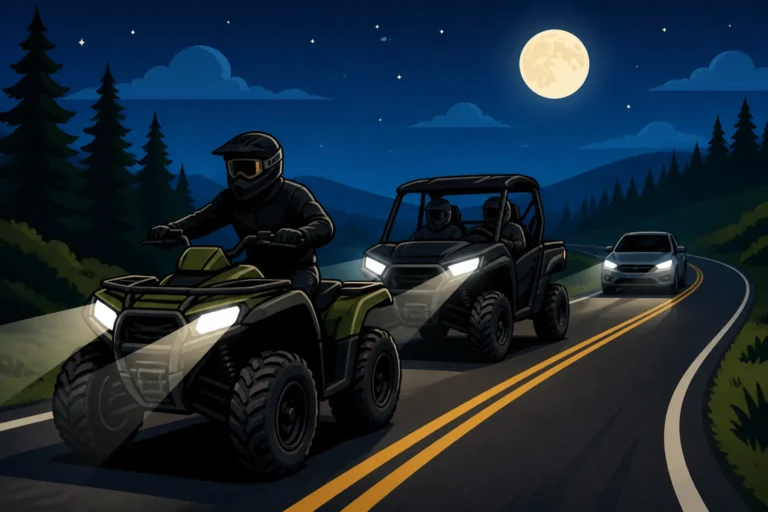
While general street plating is a no-go, Pennsylvania law does allow UTVs (and ATVs) to use certain public roads under very specific, limited circumstances. These aren't about making your UTV street legal; they're about allowing controlled access to connect trails or for specific local purposes. It’s vital to understand these distinctions to avoid costly fines and ensure your safety.
Designated ATV/UTV Roads: Joint-Use and Township Roads
The most common way UTVs legally operate on public roads in Pennsylvania is through designated ATV/UTV roads. These are typically:
- Joint-Use Roads: These are specific state forest roads that the DCNR has designated for shared use by both traditional highway vehicles and OHRVs. They are clearly marked with green signs that indicate ATV/UTV use is permitted. These roads are often connector routes between larger trail systems or provide access to staging areas. You'll find these primarily within state forest lands. [Pennsylvania's Designated ATV Roads] are a lifesaver for riders wanting to extend their adventures.
- Township Roads: Some townships in Pennsylvania have ordinances that allow ATVs and UTVs to be operated on specific local roads. This is not a blanket permission for all township roads. Each township must pass an ordinance specifically opening certain roads for ATV/UTV use. These roads are often crucial for local residents to access trails or services without having to trailer their machines for short distances. Always check with the local township before assuming any road is open, as [Township Roads Open to Pennsylvania ATVs] are the exception, not the rule.
When riding on these designated roads, all the standard Pennsylvania ATV/UTV regulations still apply. This includes registration, minimum age requirements, and safety equipment like helmets. You also need to adhere to all traffic laws that apply to other vehicles, such as speed limits and stop signs.
Crossing Public Roads
There are specific rules for merely crossing a highway or public road that is otherwise not designated for UTV use. This is typically allowed only under very strict conditions:
- Ninety-Degree Angle: You must cross at approximately a 90-degree angle to the road. You cannot ride along the shoulder or merge into traffic. [Crossing a Highway on an ATV in Pennsylvania] involves very specific maneuvers.
- Safety Precautions: You must come to a complete stop, yield to all oncoming traffic, and proceed only when it is safe to do so. Think of it like crossing a railroad track.
- No Dividers: You generally cannot cross divided highways. This rule is in place to prevent dangerous situations where UTVs might be exposed to high-speed traffic for extended periods.
- Direct Crossing: The intent is to get from one side of an off-road area to another, not to travel down the road.
These crossings are strictly for bridging gaps between off-road sections or private property and are not an invitation for even limited travel on the road.
Agricultural and Business Use Exemptions
Pennsylvania law provides some very narrow exemptions for ATVs and UTVs used for agricultural purposes or in the course of business operations. For example, a farmer might use a UTV to cross a public road to get from one field to another, or a construction worker might operate one on a road within a construction zone.
These exemptions are very specific and do not grant general street-legal status. They are tied to the immediate, practical needs of the farm or business and typically involve operating the vehicle at low speeds and for short distances. The machine still needs to be registered with DCNR, and the operator must carry proof of that registration. [The Farm and Business Exemption in Pennsylvania] is really about the purpose of the ride, not the machine itself being road-ready.
Essential Requirements for Any Pennsylvania UTV Road Use
Even for the limited and designated road uses discussed, there are non-negotiable requirements you must meet. Ignoring these can lead to significant fines and even impoundment of your machine.
Pennsylvania ATV/UTV Registration is Always Required
Regardless of whether you're riding on state trails, private property, or a designated township road, your UTV must be registered with the Pennsylvania DCNR. This is your proof that the state acknowledges your machine and it contributes to trail maintenance and safety programs. The DCNR provides two main types of registration:
- General Registration: This is for UTVs that will be ridden on DCNR-managed public trails and designated joint-use roads. It comes with a plate and a sticker. [Pennsylvania's General Registration for Everywhere Else] is what most trail riders need.
- Limited Registration: This is for UTVs primarily used on private property and not on DCNR trails. It offers a free registration that never expires, but it specifically does not permit use on public trails or designated roads. [Pennsylvania's Free Limited Registration] is good if your UTV is strictly for your own land.
If you plan to ride on any public land or designated public roads, you need General Registration. The cost is pretty minimal, [Pennsylvania ATV Registration Cost] are affordable, and it's valid for two years.
| Registration Type | Primary Use Case | Cost | Plate/Sticker | Public Trail Access | Designated Road Access |
|---|---|---|---|---|---|
| General Registration | Public trails, DCNR designated roads, private land | Check DCNR site | Yes (plate/sticker) | Yes | Yes |
| Limited Registration | Private property (your own land) | Free | Yes (sticker only) | No | No |
Helmet and Eye Protection Laws
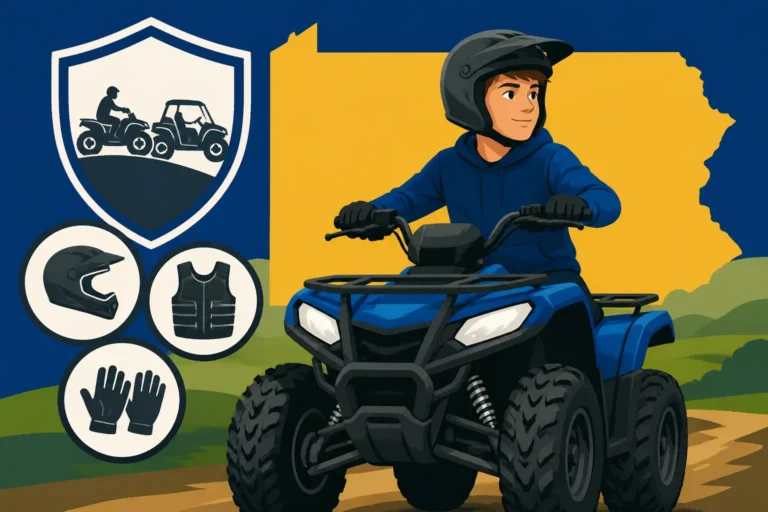
Pennsylvania takes helmet laws very seriously for ATV/UTV riders. If you are operating a UTV on any public land, including designated roads, or on private land that is open to the public for recreation, a helmet is mandatory. This applies to both the operator and any passengers. The only exception is for agricultural use on your own land or land you lease for farming.
This isn't just a suggestion; it's a critical safety measure. Helmets are designed to protect you from serious head injuries, which are all too common in off-road accidents, and even more so if you're interacting with public roadways. Always wear a DOT-approved helmet that fits correctly. [Helmet Rules for Pennsylvania Riders] are strictly enforced.
Proof of Insurance
While Pennsylvania doesn't mandate a minimum liability coverage amount for ATVs/UTVs in the same way it does for street-legal vehicles, it does require you to carry liability insurance if you operate your UTV on public land, designated roads, or any property not owned by you. You must have proof of this insurance with you while riding.
This insurance protects you in case you cause damage to property or injury to another person while operating your UTV. It's a non-negotiable part of responsible riding. Many homeowners' insurance policies won't cover off-road vehicle incidents, so a dedicated ATV/UTV policy is usually necessary. [Insurance Pennsylvania Requires to Ride] is crucial for peace of mind and legal compliance.
Age and Safety Certificate Requirements
Operators must be at least 8 years old to ride an ATV/UTV in Pennsylvania, and specific engine size restrictions apply for younger riders. For those between 8 and 15 years old, a DCNR-approved ATV Safety Certificate is mandatory to operate on any public land or designated roads. Even for riders 16 and older, while not always mandatory for all public land use, taking a safety course is highly recommended. These courses teach critical riding skills, awareness, and legal responsibilities. [Pennsylvania ATV Safety Certificates] are vital for safe riding and especially important for younger operators who might be using designated roads.
Why UTV Street Legalization is Difficult and Unlikely to Change Soon
Many states have explored or implemented various forms of street-legal status for UTVs, often creating a new vehicle category or allowing extensive modifications. However, Pennsylvania has historically been very cautious in this area, and there are several reasons why a widespread "street legal UTV" option is unlikely to appear in the near future.
Focus on Off-Highway Recreation
Pennsylvania's DCNR, the primary regulator for UTVs, focuses on their role as off-highway recreational vehicles. Their mission is to provide safe and sustainable opportunities for off-road recreation, not to integrate these machines into the existing highway system. The state invests registration fees into trail development, maintenance, and safety education. [What Pennsylvania ATV Fees Pay For] directly benefits the off-road community.
The existing trail networks, like those found at [Whiskey Springs and Pennsylvania's Longest Trail] or the [Anthracite Outdoor Adventure Area in Pennsylvania], are designed for off-road machines, not street-licensed vehicles. Shifting the focus to street legality could divert resources and complicate the existing regulatory framework.
Safety Concerns and Infrastructure
Integrating UTVs into general road traffic raises significant safety concerns. UTVs lack many of the safety features found in traditional cars, such as crumple zones, advanced airbag systems, and robust body structures designed to withstand high-speed collisions. While modifications can add basic components like turn signals or mirrors, they don't fundamentally change the vehicle's crashworthiness.
Furthermore, Pennsylvania's road infrastructure, particularly in rural areas, isn't always designed to safely accommodate a mix of high-speed highway vehicles and slower, off-road-oriented machines. The potential for accidents would likely increase, leading to greater liability for the state and local municipalities.
Legislative and Public Opposition
Any move towards widespread UTV street legality would require significant legislative changes, which can be a slow and challenging process. There would likely be opposition from various groups, including safety advocates, highway departments, and even some segments of the off-road community who prefer to keep trails separate from roads.
While individual townships can open specific roads, a statewide allowance would be a much larger undertaking with many more hurdles. The current system, with its clear separation between DCNR-registered OHRVs and PennDOT-registered highway vehicles, simplifies enforcement and regulation.
What If You're Caught Riding Illegally?
Operating a UTV on a public road not designated for its use, or without proper registration, insurance, or safety gear, can result in serious consequences. Pennsylvania law is quite clear and punitive regarding illegal ATV/UTV operation.
Fines and Penalties
The most immediate consequence is a fine. [Pennsylvania Fines for an Unregistered ATV] can be substantial, often starting at $300 for a first offense, plus court costs and fees. These fines can quickly add up, especially if other violations are tacked on, such as riding without a helmet, riding underage, or reckless operation. A second offense can see even higher penalties.
Getting cited for riding on a closed road or an undesignated public road is not just a slap on the wrist. Law enforcement, including DCNR rangers and local police, are trained to enforce these regulations, especially in popular riding areas like [Registration Checks at Bloody Skillet] and [Registration Checks at Whiskey Springs].
Machine Impoundment and Other Legal Troubles
In more severe cases, or for repeat offenses, your UTV could be impounded. Reclaiming an impounded vehicle involves additional fees, storage costs, and a significant bureaucratic headache. Additionally, illegal operation could potentially impact your driving record, depending on the severity and nature of the offense, and could lead to increased insurance premiums or even cancellation of your policy.
It's simply not worth the risk. The thrill of a short illegal road ride pales in comparison to the financial and legal repercussions you could face. Always know [Pennsylvania Rules for Riding a Township Road] and stick to the designated areas.
Accessories and Modifications: What They Can and Cannot Do
Many UTV owners, hoping to bridge the gap between off-road capability and street utility, invest in various aftermarket accessories. While these can greatly enhance your UTV's safety and functionality for off-road use, they generally do not magically make your UTV street legal in Pennsylvania.
Common Accessories and Their Limitations
- Turn Signals, Horns, Mirrors: Companies like SuperATV offer kits to add these features to UTVs. While these are required for street-legal vehicles, simply adding them to your UTV doesn't change its classification. They are excellent for increasing safety and communication on trails or designated roads, but they don't grant permission for general street use.
- Windshields and Wipers: A full windshield can make your ride more comfortable and protect you from debris, but it's not a legal requirement for UTVs and doesn't affect street legality.
- DOT-Approved Tires: Some UTV tires are stamped "DOT approved," meaning they meet certain standards for road use. However, having DOT-approved tires on your UTV doesn't make the entire vehicle street legal. It just means the tires themselves are suitable for road surfaces. The vehicle as a whole must still meet state and federal standards for highway use, which a UTV typically does not.
The Myth of "Converting" Your UTV
There's a persistent myth that if you add enough street-legal parts, your UTV becomes street legal. While some states have specific conversion processes, Pennsylvania does not have a pathway to convert a UTV into a street-legal vehicle like a car or motorcycle. [Why There Is No Conversion Path in Pennsylvania] comes down to the fundamental vehicle classification and safety standards.
Focus on accessorizing your UTV for improved off-road performance, safety, and comfort within the legal bounds of off-road operation. For example, a winch is incredibly useful for [Winches and Pennsylvania Mud], but it has nothing to do with road legality. Don't fall into the trap of spending money on modifications with the false hope of achieving general street legality.
Final Thoughts for Pennsylvania UTV Owners
It's clear that the answer to "Can you plate a UTV in Pennsylvania?" for general street use is a resounding no. The state’s regulations are designed to keep off-highway vehicles in their designated off-road environments. While this might be disappointing for some, it's rooted in safety and the specific design purpose of these machines.
However, this doesn't mean you can't enjoy your UTV to the fullest in Pennsylvania. The state offers fantastic opportunities for off-road enthusiasts, with hundreds of miles of designated trails and parks. By understanding and respecting the rules, getting your UTV properly registered with DCNR, and always prioritizing safety, you can have countless hours of legal and thrilling adventure. Focus on where [Where to Ride an ATV in Pennsylvania] and you'll find plenty of legal places to use your machine.
Always stay informed about local ordinances and state laws, and don't hesitate to contact the DCNR's Snowmobile and ATV Section if you have specific questions about where and how you can legally operate your UTV.
Disclaimer
This article is for general informational purposes only and does not constitute professional advice. Laws, prices and regulations vary by location and change over time. Consult a qualified professional for guidance on your specific situation.