Pennsylvania Rules for Carrying a Passenger
Riding ATVs and UTVs across Pennsylvania's beautiful landscapes is an incredible experience, but many riders get confused or make dangerous assumptions about carrying passengers. It's a common sight to see someone trying to squeeze an extra person onto an ATV or overloading a side-by-side, often unaware they're breaking the law and putting lives at risk. This comprehensive guide will meticulously break down Pennsylvania's specific rules for carrying passengers on both ATVs and UTVs, ensuring you understand how to ride legally and, most importantly, safely, to protect everyone on your machine.
ATVs and Passengers: A Strict One-Rider Rule
When it comes to All-Terrain Vehicles (ATVs) in Pennsylvania, the law is remarkably clear and unwavering: these machines are almost exclusively designed and regulated for a single operator. This isn't just a suggestion; it's a fundamental safety principle baked into their design and the state's statutes. Many riders, especially those new to the sport or just visiting from out of state, often find this rule surprising, assuming their large utility quad or sport machine is robust enough for two. Unfortunately, that assumption can lead to serious consequences, both legally and physically.
The Core Prohibition for ATVs
Pennsylvania law explicitly states that no person shall operate an ATV with a passenger, unless the ATV is specifically designed by the manufacturer to carry more than one person. For the vast majority of traditional ATVs you see on trails, this means one rider and one rider only. When you look at most ATVs, from sport quads to utility models, you'll notice the seat is designed for a single occupant. There are no handholds, no dedicated footrests for a passenger, and certainly no secondary seatbelt. The machine's balance, suspension, and braking capabilities are all calibrated for the weight and dynamics of a solo operator. Trying to add a second person fundamentally alters these critical factors, making the ATV unstable and incredibly difficult to control, especially on varied off-road terrain.
This rule is enforced diligently by DCNR rangers and local law enforcement officers, particularly on state forest trails, designated trail systems like Whiskey Springs, or at popular riding areas. They're not just being particular; they're trying to prevent serious accidents. An ATV rollover, already dangerous for a single rider, becomes exponentially more hazardous with a passenger, who often has no means to brace themselves or escape the falling machine. Carrying an unauthorized passenger is not just a minor infraction; it's seen as a significant safety violation, and the fines reflect that seriousness. If you're riding with an extra person, you might find yourself facing a substantial penalty, a point worth remembering when considering [Pennsylvania Fines for a Trail Violation].
Why ATVs Are Not Designed for Passengers
The fundamental design of an ATV, which emphasizes quick weight shifts by the rider for steering and stability, makes carrying a passenger inherently dangerous. A traditional ATV requires its operator to lean, shift their weight, and actively participate in balancing the machine through turns, over obstacles, and on uneven terrain. This dynamic interaction is crucial for safe operation. When a passenger is added, their weight is often carried high and to the rear, raising the center of gravity and making the machine top-heavy. This dramatically reduces the operator's ability to make those critical weight shifts and maintain control. The passenger's movements, even if they're trying to cooperate, can inadvertently throw off the ATV's balance, leading to loss of control, tipovers, or even complete rollovers.
Think about traversing a steep incline or a technical rock garden. A solo rider can shift their weight forward or to the side to maintain traction and prevent flipping. With a passenger, this becomes almost impossible. The extra weight pushes the center of gravity further back or makes the front end too light, which can cause the ATV to wheelie uncontrollably on ascents or lose steering authority on descents. Braking distances can also increase significantly, as the ATV's braking system is not engineered for the added mass of a second person. All these factors combine to transform a relatively stable machine into an unpredictable and potentially deadly one when an extra person is on board.
Exceptions and Misconceptions
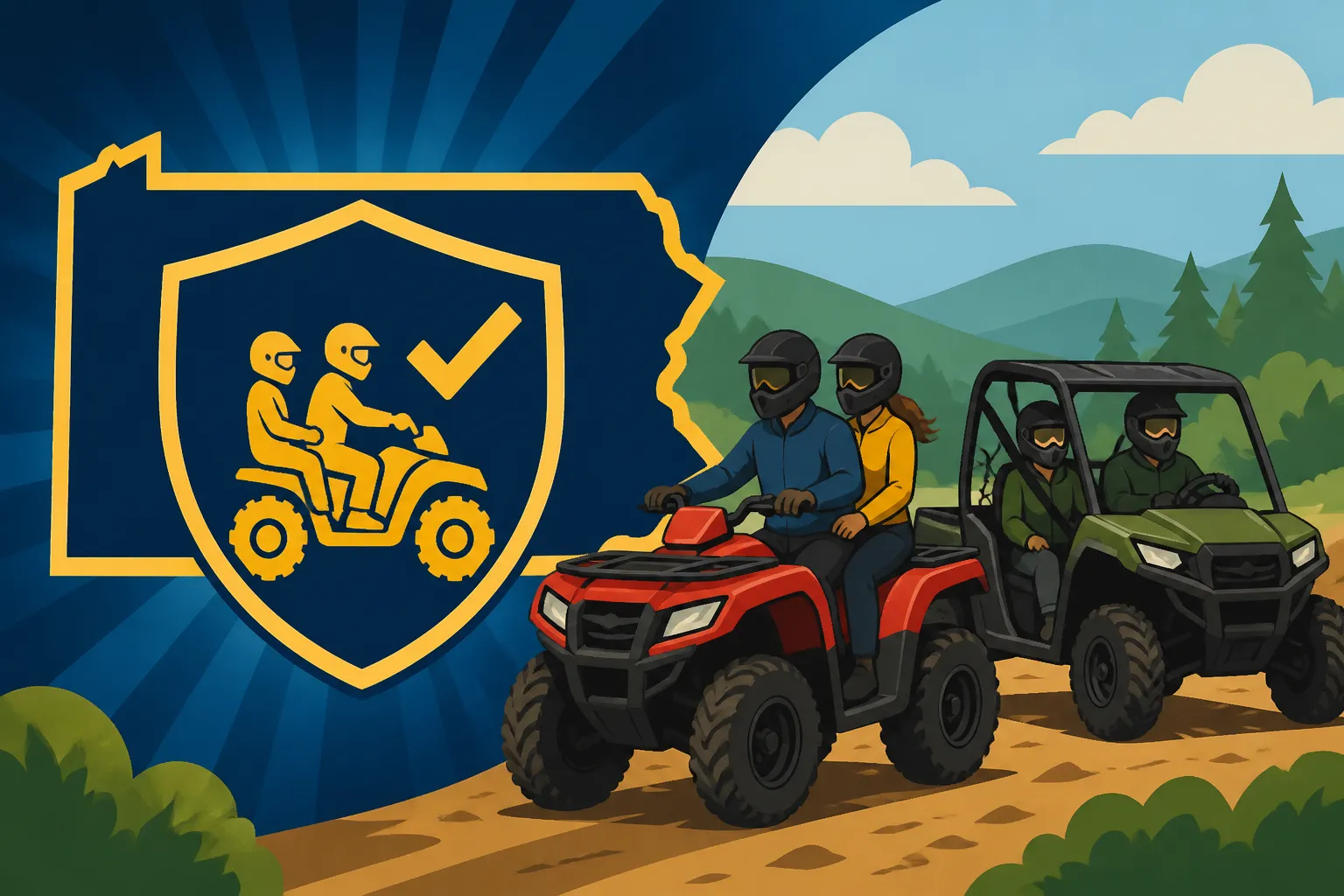
While the "one rider" rule for ATVs is generally absolute, there are rare exceptions and many common misconceptions that need clarification. The primary exception comes from the manufacturer's design. Some specific ATV models, often referred to as "two-up" or "tandem" ATVs, are indeed factory-designed to carry a driver and one passenger. These machines will have an extended seat, dedicated passenger handholds, separate footrests for the passenger, and sometimes a slightly longer wheelbase or modified suspension to accommodate the extra weight safely. If your ATV does not explicitly have these manufacturer-installed features, it is a single-rider machine.
A very common misconception revolves around utility racks or modified seating. Some riders believe that because their ATV has a front or rear utility rack, they can strap a seat to it or have someone sit on it. This is unequivocally illegal and extremely dangerous. Utility racks are designed to carry cargo, not people. They offer no safety restraints, no proper seating, and are positioned in ways that would severely compromise the ATV's balance and the passenger's safety. Likewise, aftermarket modifications that attempt to add a second seat to a single-rider ATV will not make it legal or safe to carry a passenger. The law looks at the original manufacturer's design. Companies like SuperATV produce fantastic accessories for UTVs, but for ATVs, their focus is generally on enhancing cargo capacity or machine protection, not circumventing passenger laws with unofficial seating. Always check your ATV's owner's manual and the manufacturer's specifications to confirm its intended passenger capacity – if it's not a factory-designated two-up model, stick to solo riding.
UTVs and Passengers: Following Manufacturer Design
Unlike their ATV counterparts, Utility Terrain Vehicles (UTVs), often called side-by-sides, are inherently designed with multiple occupants in mind. This is where the rules differ significantly and where riders have more flexibility, provided they adhere strictly to the manufacturer's original design and safety guidelines. UTVs offer a different riding experience, often closer to a small off-road vehicle than a traditional quad, and their passenger capacity is a key differentiating factor.
Seating Capacity as the Guiding Principle
For UTVs, Pennsylvania law permits carrying passengers up to the maximum seating capacity designated by the manufacturer. This is the golden rule for side-by-sides. If your UTV is a two-seater model, you can legally carry one driver and one passenger. If it's a four-seater, you can carry a driver and three passengers. The same applies to six-seater models. The key here is "designated by the manufacturer." This means fixed, molded seats, typically with backrests, designed for human occupants. It does not mean squeezing extra people into the cargo bed or having them sit on makeshift benches. Each passenger must have a dedicated, factory-installed seating position.
When considering a UTV, particularly if you plan to carry family or friends, pay close attention to the model's specified seating. This information is readily available from the manufacturer and often clearly marked on the machine itself. Many popular UTVs, like those from Polaris, Can-Am, or Honda, come in various configurations, from sport-oriented two-seaters to multi-row family haulers. If you decide to upgrade or modify your UTV, always ensure any seating additions are manufacturer-approved and don't exceed the original design limits for safety and legality. For example, SuperATV offers many quality UTV accessories, but these are intended to enhance your machine within its design parameters, not to add unauthorized seating or capacity.
Designated Seating and Seatbelts
Just having a "seat" isn't enough; each passenger must occupy a designated seating position. This means a proper, factory-installed seat with an accompanying seatbelt or harness system. UTVs are equipped with seatbelts for every intended occupant, usually a three-point harness similar to a car, or even a four or five-point racing harness on sportier models. These restraints are critical for safety, preventing occupants from being ejected in the event of a sudden stop, collision, or rollover. It is absolutely mandatory for every passenger, and the driver, to be properly secured with their seatbelt whenever the UTV is in motion.
Failing to use seatbelts is not only incredibly dangerous but also a clear violation of Pennsylvania law. A DCNR ranger or state trooper will not hesitate to issue a citation if they observe unbelted occupants in a UTV. Beyond the legal ramifications, the real concern is the potentially catastrophic injury that can occur. Even on seemingly smooth trails, an unexpected bump or swerve can throw an unbelted passenger from the vehicle, often leading to severe head trauma or other debilitating injuries. Always ensure everyone is buckled up before starting your ride, and make a quick visual check at every stop. This is a crucial part of responsible riding, much like ensuring you have [Pennsylvania ATV Registration and Insurance Proof] for your machine.
Youth Riders and UTV Passengers
When it comes to youth riders as passengers in UTVs, Pennsylvania has specific guidelines regarding age and supervision, particularly on state lands. While UTVs are generally safer for carrying children than ATVs due to their roll cages and seatbelts, there are still rules to follow. Typically, a child can be a passenger in a UTV as long as they can reach the footrests and be properly secured by the seatbelt system. However, specific age minimums can apply, especially when operating on public trails. For example, a minor under 16 years of age operating a UTV must possess an ATV Safety Certificate. While this specifically applies to operators, it underscores the state's emphasis on youth safety in off-road vehicles.
The driver of the UTV bears the responsibility for ensuring all youth passengers are seated correctly, belted in, and that the UTV is operated in a manner appropriate for their presence. This often means reducing speeds, avoiding overly aggressive maneuvers, and choosing trails that are suitable for all occupants. [Pennsylvania Rules for a Child Passenger] outlines further details on age restrictions for operators, but generally, as passengers, children need to meet the physical requirements for safe restraint in the UTV's factory-designated seat. It's not just about what the law says, but what common sense and parental responsibility dictate for a fun and safe family outing.
Safety Considerations Beyond the Law
While understanding the letter of the law is crucial for avoiding citations, true safety on the trails extends far beyond legal compliance. When carrying passengers on your UTV (or if you find yourself with an unauthorized ATV passenger, which you shouldn't), you're accepting a significant responsibility for their well-being. Thinking through the practical safety implications of having another person on board can prevent accidents and ensure everyone has an enjoyable, incident-free ride.
The Dangers of Overloading and Improper Seating
Overloading a UTV, even if it has designated seats, can be just as perilous as carrying an unauthorized passenger on an ATV. Every UTV has a Gross Vehicle Weight Rating (GVWR) and a specific payload capacity, which includes the weight of the driver, passengers, and any cargo. Exceeding these limits can compromise the UTV's handling, braking, and suspension, making it less stable and more difficult to control. Imagine trying to stop a fully loaded six-seater UTV quickly on a steep downhill section – the extra momentum can make it nearly impossible, leading to a loss of control. Similarly, a UTV whose suspension is overloaded will "bottom out" more easily, reducing ground clearance and increasing the risk of getting stuck or damaging components.
Improper seating is another major hazard. This includes letting passengers ride in the cargo bed, stand up, sit on laps, or hang body parts outside the UTV's protective cage. Cargo beds, even if they have high sides, are not designed for human occupants. They lack seatbelts, proper cushioning, and protection from roll-overs. A sudden jolt or turn can easily eject someone from the cargo area, leading to severe injuries. Likewise, extending arms or legs outside the UTV can result in limbs being caught, crushed, or degloved by passing obstacles or during a rollover. Always insist that passengers remain seated, belted, and keep all body parts inside the vehicle's protective frame. This is especially critical on trails where debris or trees are close to the path.
Rider Responsibility and Passenger Briefings
As the operator of the ATV or UTV, you are the captain of the ship, and the safety of your passengers rests squarely on your shoulders. This responsibility begins even before you start the engine. A thorough passenger briefing is an often-overlooked but vital step. Before setting out, take a few minutes to explain the basic rules of the ride to your passengers:
- Always keep all limbs inside the vehicle.
- Keep hands and feet on the designated grab handles and floorboards.
- Do not distract the driver.
- Communicate any discomfort or need to stop immediately.
- Explain the importance of staying seated and belted at all times.
- Brief them on what to expect on the trail – bumps, turns, inclines, etc.
This briefing helps prepare them for the unique dynamics of off-road riding and sets clear expectations for their behavior. It's also your responsibility to adjust your riding style to accommodate passengers. This means driving more conservatively, reducing speed, avoiding aggressive maneuvers, and taking a cautious approach to challenging terrain. Remember, your experienced solo riding skills may not translate safely when you have others on board. A great resource for general safety is an ATV safety course, even if it's primarily for operators; the principles apply to all riders. Check out [Pennsylvania ATV Safety Certificate Requirements] for more information on available courses.
Gear and Helmets for Passengers
Just like the operator, passengers on ATVs and UTVs need appropriate safety gear, with helmets being paramount. In Pennsylvania, all ATV and UTV operators and passengers under the age of 16 are required to wear a DOT-approved helmet. However, for anyone 16 and older, while not legally mandated for passengers in a UTV with a roll cage and seatbelts, wearing a helmet is still highly recommended. For ATV passengers (again, only on a factory-designed two-up ATV), a helmet is always mandatory, regardless of age. [Pennsylvania Helmet Law for Passengers] provides all the specifics on this critical requirement.
Beyond helmets, other protective gear is strongly advised for all passengers. This includes eye protection (goggles or a face shield), sturdy over-the-ankle boots, long pants, and long-sleeved shirts. These items offer protection against flying debris, branches, sun exposure, and scrapes in the event of a minor tip or branch strike. Think of it this way: if it's important for you as the driver, it's just as important, if not more so, for your passenger who may be less prepared for the unexpected. Equipping your passengers with proper gear is another way to demonstrate your commitment to their safety and enhance their overall riding experience.
Table: Pennsylvania ATV vs. UTV Passenger Rules
| Feature/Rule | ATV (Traditional Single-Rider) | UTV (Side-by-Side) |
|---|---|---|
| Passenger Legality | Generally PROHIBITED unless factory-designed "two-up" model. | Permitted up to MANUFACTURER'S DESIGNATED SEATING CAPACITY. |
| Seating Type | Single seat. No dedicated passenger features. | Factory-installed, molded seats with backrests. |
| Restraints | Not applicable (single rider). | Mandatory seatbelts/harnesses for EVERY designated seat. |
| Required Helmet | MANDATORY for all ages on a two-up ATV. | MANDATORY for all under 16. Highly RECOMMENDED for 16+. |
| Design Intent | Rider weight shifts for control; unstable with passenger. | Multiple occupants, roll cage, seatbelts for enhanced safety. |
| Common Misconception | Utility racks or aftermarket seats are for passengers (FALSE). | Cargo bed or extra bodies squeezed in are legal (FALSE). |
| Typical Fine | Significant fine for illegal passenger. | Fine for unbelted passengers or exceeding capacity. |
Enforcement and Penalties for Passenger Violations
Pennsylvania takes ATV and UTV safety seriously, and that includes strict enforcement of passenger rules. It's not uncommon for DCNR rangers or local law enforcement to be present at trailheads, patrolling designated riding areas, and performing routine checks. Ignoring the passenger rules can lead to more than just a stern lecture; it often results in citations and financial penalties, impacting your wallet and potentially your ability to ride.
Common Scenarios for Being Cited
Law enforcement officers look for several key indicators of passenger violations. On state-managed trails, these checks are routine. The most blatant scenario for an ATV is simply having a second person on the machine when it's clearly designed for one. This is an immediate red flag and almost certainly will result in a citation. Even if the passenger is a small child, if your ATV isn't a factory-designated two-up model, it's a violation. Officers are well-versed in identifying these machines.
For UTVs, common violations include:
- Exceeding designated seating capacity: Trying to fit three people in a two-seater UTV, or having a child on someone's lap when all designated seats are full.
- Unbelted passengers: This is a very frequent offense. Officers will observe if all occupants have their seatbelts properly fastened.
- Passengers in the cargo bed: This is an absolute no-go. Even if the UTV is moving slowly on private land, if observed on a public trail or road, it’s a violation.
- Passengers hanging outside the vehicle: Any limb or part of the body outside the protective cage is dangerous and often results in a citation.
These violations are often spotted during routine patrols or at checkpoints established at popular trail entrances, such as those at Bloody Skillet or Whiskey Springs. Officers are also on the lookout for general unsafe operation, and an improperly loaded vehicle or unbelted passengers are prime indicators of recklessness.
Fines and Legal Consequences
The financial penalties for passenger violations can be quite substantial in Pennsylvania. While specific fine amounts can vary, getting caught with an illegal passenger on an ATV, or with unbelted or unauthorized passengers in a UTV, can result in fines that start in the hundreds of dollars. For instance, being cited for no registration can already be an automatic $300 fine, and passenger violations can be in a similar range, often compounding if multiple offenses are observed (e.g., no helmet, unbelted passenger, and illegal passenger). These fines are designed to deter unsafe practices and reflect the serious risks involved.
Beyond the immediate fine, repeated offenses or particularly egregious violations could potentially lead to further action, though this is less common for simple passenger violations unless combined with other dangerous behavior. It's also worth noting that if an accident occurs while you are carrying an illegal or improperly secured passenger, you could face enhanced legal liability and even criminal charges if serious injuries or fatalities result from your negligence. The legal system views the operator as having a duty of care for their passengers, and violating passenger laws makes it very difficult to defend against claims of negligence.
Insurance Implications
An often-overlooked consequence of passenger violations is the impact on your ATV or UTV insurance. Most insurance policies have clauses that relate to legal operation. If you are operating your machine illegally – for example, carrying an unauthorized passenger on an ATV or exceeding the designated capacity of a UTV – your insurance company might deny coverage for any resulting accident or injury. Imagine a scenario where you have an accident with an illegal passenger, and that passenger sustains serious injuries. Your liability insurance, which is mandatory for riding off your own land in Pennsylvania, might not cover their medical expenses if you were in violation of the law at the time of the incident.
This could leave you personally responsible for hundreds of thousands of dollars in medical bills, rehabilitation costs, and legal fees. Even if you have comprehensive coverage, claims related to illegally carried passengers could be denied. Always read your insurance policy carefully and understand its terms regarding legal operation and passenger carriage. It's a sobering thought, but operating within the law is not just about avoiding a ticket; it's about ensuring your financial protection and the safety net your insurance is supposed to provide. Make sure you carry [Pennsylvania ATV Insurance Requirements] documentation with you, as it proves you're prepared for unforeseen circumstances, but even that can be voided by illegal operation.
Ultimately, the rules regarding carrying passengers on ATVs and UTVs in Pennsylvania are in place for the safety and well-being of everyone involved. While it might seem inconvenient to adhere strictly to these guidelines, the potential consequences of ignoring them – from significant fines to life-altering injuries and financial ruin – far outweigh any perceived benefit of bending the rules. Ride smart, ride safe, and always prioritize the safety of yourself and your passengers.
Disclaimer
This article is for general informational purposes only and does not constitute professional advice. Laws, prices and regulations vary by location and change over time. Consult a qualified professional for guidance on your specific situation.