Riding Through Patton to the Gate
Oh, the dream of heading out for a day on the trails, the rumble of your machine under you, the anticipation building with every mile! But then reality hits: how do you actually get there without running afoul of the law? For so many riders across Pennsylvania, the journey from their home or staging area to the actual trailhead can be the most confusing and anxiety-inducing part of the entire adventure. You've heard whispers about being able to "ride through town to the gate," perhaps specifically through a place like Patton to access some hidden gem of a trail system, but knowing the precise rules and how to legally make that connection is where things get murky.
This guide is going to clear up that confusion, specifically addressing the real-world challenge of riding your ATV or UTV through an area like Patton Borough to reach an off-road "gate" or trailhead. We'll dive deep into Pennsylvania's road access rules, what you absolutely need to know before you even think about putting tires on pavement, and how to ensure your ride from town to trail is completely above board, safe, and respectful of the communities you pass through.
Understanding Pennsylvania's Road Access Challenges for ATVs
Let's face it, one of the biggest frustrations for ATV and UTV riders in Pennsylvania is the perception that you can just hop on your machine and ride it down any road. It’s a common misconception, often born from seeing others do it illegally or from wishful thinking. The truth is, Pennsylvania has some pretty strict rules when it comes to operating off-highway vehicles (OHVs) on public roads, and understanding these rules is the first, most crucial step to avoiding costly fines and legal trouble.
The General Rule: Roads Are Closed Unless Posted Open
This is the golden rule, the bedrock principle you must always remember in Pennsylvania: all public roads are closed to ATVs and UTVs unless they are specifically and conspicuously posted as open. This isn't a suggestion; it's the law. Many riders, especially those new to the state or those coming from areas with more lenient laws, find this incredibly frustrating. You might think, "But it's just a quiet country road, what's the harm?" The harm, in the eyes of the law, is that it's an unauthorized use of a public thoroughfare designed for registered motor vehicles.
This default "closed" status is why you can't just take the scenic route through any township or borough on your quad. It’s why you see so many trucks hauling ATVs on trailers, even for short distances – because the roads connecting their homes to the trails aren't legally open. This isn't like a vehicle you can make "street legal" with a few modifications; Pennsylvania law specifically states that ATVs are not designed for highway use and there is generally [Why Pennsylvania Will Not Plate a Quad]. Even if you add turn signals, mirrors, and a horn, it doesn't magically make your ATV road-legal in Pennsylvania. Furthermore, specific age restrictions apply to road use, so you need to be aware of [Pennsylvania's Sixteen-Year-Old Road Rule] if you plan to be on any designated road.
The Specificity of Township and Borough Regulations
While the state sets the overarching framework, local municipalities—like townships and boroughs—are the ones with the power to designate specific roads within their jurisdiction as open for ATV and UTV use. This is where places like Patton Borough come into play. A borough council or township supervisors must actively vote to open a road, and then they have to properly post it with signage. This isn't a casual decision; it involves public meetings, safety considerations, and often, significant input from local residents, law enforcement, and rider groups.
The process for opening roads is often complex and can be quite slow, which contributes to [Why Most Roads Stay Closed]. Residents might raise concerns about noise, dust, safety, or damage to road surfaces. This is why when a town does open a road for ATV use, it's a big deal and often the result of dedicated efforts by local riding clubs and advocates. It means they’ve gone through the proper channels, considered the impacts, and put rules in place to manage the use responsibly. So, when you're looking to ride through a specific town, you can't assume anything. You absolutely must verify that the roads you intend to use have been officially designated and posted as open to OHV traffic.
Navigating Patton Borough: What Riders Need to Know
When we talk about "riding through Patton to the gate," we're specifically talking about connecting designated ATV roads within the borough to a larger trail system. This scenario highlights the critical need to be informed and prepared. Assuming a road is open because you've seen someone else on it, or because it looks like a good shortcut, is a recipe for trouble.
Identifying Designated ATV Routes in Patton
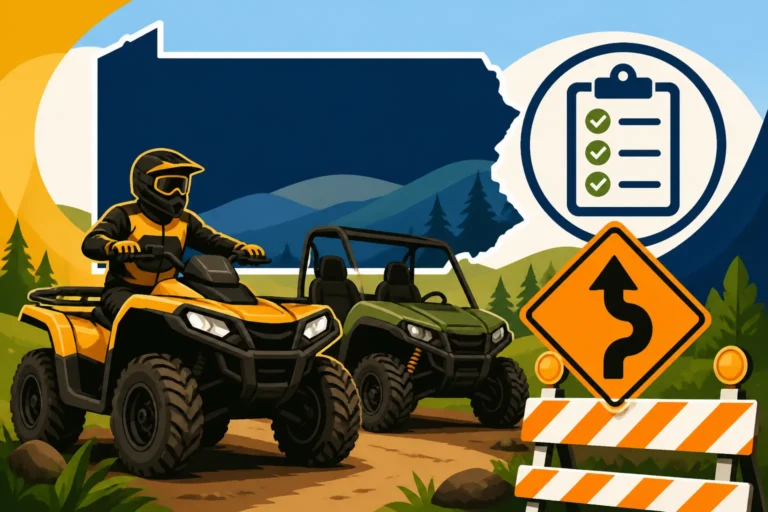
So, how do you know if Patton Borough, or any other municipality for that matter, has opened roads to ATV traffic? The most reliable way is through official signage and local ordinances. Look for the distinct [The Green Sign on a Pennsylvania Township Road] that explicitly states the road is open for ATV use. These signs are usually posted prominently at the entry points of designated routes. They might also specify hours of operation or other restrictions.
Beyond looking for signs, it's always a good idea to check the borough's official website or contact the municipal office directly. Many progressive municipalities, especially those looking to attract ATV tourism, will publish maps or lists of their designated ATV routes. Don't rely on third-party apps or hearsay, as information can quickly become outdated. A designated road in Patton might be just what you need to legally access a nearby trail, but the onus is on you to confirm its status before you roll a tire onto it. You might find that the borough has a comprehensive plan for [Riding Into Town on a Pennsylvania ATV], but only on specific routes and with specific rules.
Table: Key Differences: Designated Roads vs. Trails
| Feature | Designated Township/Borough Road | State Forest/Private ATV Trail System |
|---|---|---|
| Legal Status | Closed by default; explicitly posted open by local ordinance. | Designed and managed for ATV use; may require permits. |
| Signage | Green "ATV Use Permitted" signs at entry/exit points. | Trail markers, maps, trailhead signs, difficulty ratings. |
| Traffic | Shared with cars, trucks, and pedestrians. | Primarily ATV/UTV traffic, possibly dirt bikes; no highway vehicles. |
| Speed Limits | Strict adherence to posted road speed limits (often 25-35 mph). | Varies by trail; often lower (e.g., 15-25 mph) or conditional. |
| Rider Conduct | Single file, obey all traffic laws, yield to vehicles/pedestrians. | Yield to uphill traffic, respect trail etiquette, stay on marked trail. |
| Requirements | PA ATV registration, insurance, helmet, age 16+, specific lighting. | PA ATV registration, permit (e.g., DCNR, Allegheny), insurance, helmet, age rules. |
Rules for Riding Through Town: Insurance, Helmets, and More
Just because a road is designated "open" doesn't mean it's a free-for-all. When you're operating an ATV or UTV on a public road, even a designated one, you're expected to act like a responsible driver of any other vehicle. This means adhering to a host of state-mandated requirements. First and foremost, you absolutely need insurance. [Pennsylvania's Mandatory Insurance Off Your Own Land] applies not just on trails but also on any public road. This isn't optional; it's a basic safety net for everyone involved. Without it, you're looking at a hefty fine if stopped.
Beyond insurance, helmets are non-negotiable. Pennsylvania law requires [Pennsylvania Helmets for Operator and Passenger] on all ATVs and UTVs when riding on any public land or designated public road. This means both the operator and any passenger must wear an approved helmet. And it's not just about what you wear. Your machine itself needs to be compliant. Are your lights working? Do you have proper mirrors? While not always strictly enforced for off-road use, when you're on a public road, you are now sharing that space with traditional highway vehicles. You need to be visible and predictable. Things like turn signals, which many ATVs don't come with stock, become essential for safety on a road. A company like SuperATV offers robust aftermarket lighting kits and mirrors that can significantly improve your visibility and signaling capabilities when transitioning between trail and road. Remember to keep your speed appropriate for the area, especially in a residential borough like Patton. Blasting through town at high speed is not only dangerous but also gives all riders a bad name, potentially leading to road closures in the future.
Reaching "The Gate": Connecting to Off-Road Trails
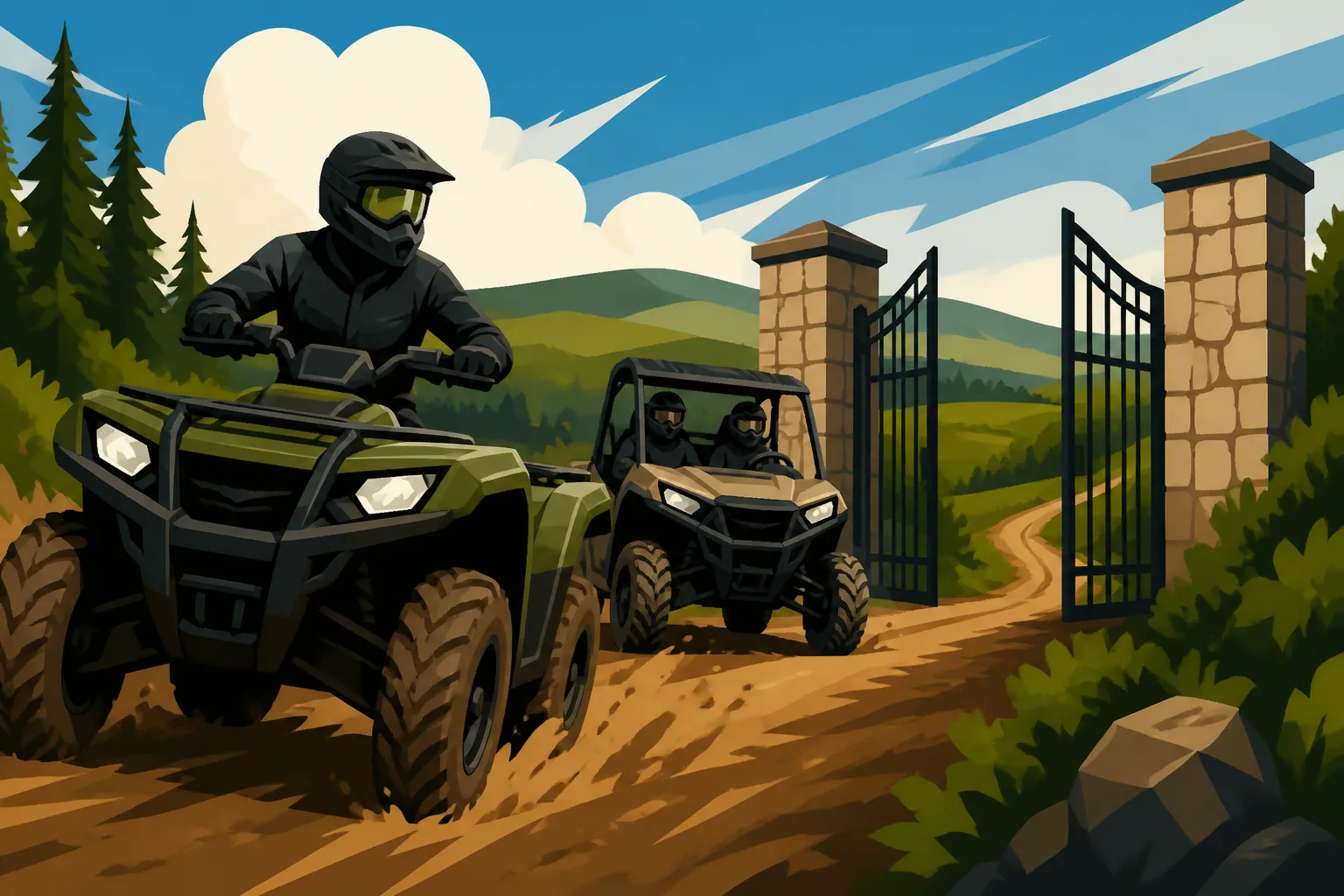
The whole point of riding through Patton, or any other town, is usually to get to a trail system – "the gate" in our scenario often signifying the entrance to a DCNR State Forest trail, a private riding park, or leased club grounds. Making this connection legally is paramount.
The Importance of a Legal Connector Route
Imagine you've successfully navigated the designated roads of Patton, feeling confident you're riding legally. But what if the designated road ends a quarter-mile before the actual trail entrance, and that last quarter-mile is not designated? That's a common trap. You cannot simply ride an undesignated stretch, even if it's short, to connect to a trail. Every inch of pavement or gravel road you travel on your ATV or UTV must be part of a legally designated route.
This is precisely why you need to carefully review maps and confirm the entire route. [Riding to a Trailhead on a Township Road] is only legal if the entirety of that road segment from your starting point to the trail is posted. There are no "close enough" exemptions. If the designated road ends and the trail access is still down an undesignated section, you're back to needing to trailer your machine for that last bit. This can be frustrating, especially if the gap is small, but adherence to this rule protects you from citations and protects the privilege of riding on the roads that are open. Always plan your route meticulously, ensuring a seamless, legal transition from road to trail.
Permit and Registration Checks at the Trailhead
Once you've safely and legally reached "the gate" – be it a DCNR trailhead or a private riding park entrance – don't assume your journey is over in terms of compliance. This is where staff, rangers, or volunteers often conduct checks to ensure riders have all their ducks in a row before hitting the dirt. The first thing they'll look for is your Pennsylvania ATV registration. Your machine needs to be properly registered with the DCNR, and you should carry your wallet card as proof. This is distinct from a vehicle registration with PennDOT; for ATVs, it's always DCNR. If you're wondering about the cost, you can find details on [Pennsylvania ATV Registration Cost].
Beyond registration, many state forest trail systems and private parks require a trail permit. For instance, the DCNR has specific permits for their regional trail systems, like the Northcentral Regional Trail Permit, which covers a vast network of trails. You can find comprehensive information on [Pennsylvania ATV Trail Permits Explained] to ensure you have the correct one for the area you plan to ride. And don't forget proof of insurance! Many trail systems, especially those on public land, require you to carry proof of your liability insurance. Ranger checks at places like [Registration Checks at Bloody Skillet] or [Registration Checks at Whiskey Springs] are routine. Failure to produce valid registration, insurance, or the required permit can lead to immediate fines, as outlined in [Pennsylvania ATV Registration Fines], and being turned away from the trail. A durable, waterproof document holder—perhaps one from SuperATV designed for powersports vehicles—can be a real lifesaver for keeping your paperwork safe and accessible on the trail.
Responsible Riding and Community Relations
Riding ATVs and UTVs on public roads, even designated ones, is a privilege that can easily be lost if riders aren't responsible. Being a good ambassador for the sport is crucial, especially when you're passing through residential areas like Patton Borough. Your actions directly impact how communities view ATV riders and influence future decisions about road access.
Being a Good Neighbor on Shared Roads
When you're riding through a town or township, you are interacting directly with residents, pedestrians, and other motorists. This means being acutely aware of your impact. Noise is a major concern for many communities. While your machine might sound great on the trail, loud exhausts can be genuinely disruptive in residential areas. Keep your speeds down, especially in neighborhoods, and avoid any unnecessary revving or aggressive riding. Dust is another often-overlooked issue; kicking up clouds of dust on gravel or dirt roads can be a significant nuisance for homes nearby. Drive slowly and considerately to minimize dust clouds.
Respect private property at all times. Designated roads do not give you permission to stray onto someone's lawn or property. Stay on the pavement or gravel and respect posted signs. Remember, residents in these areas are likely to be the ones who contact local authorities if they observe reckless or disrespectful riding. Their opinions can swing future decisions on whether to keep roads open or close them. Every time you ride [Riding Through Coal Township] or any other community, you are representing the entire ATV riding community. Positive interactions build goodwill; negative ones can erode it quickly.
Gear Up for Safety and Compliance
Beyond legal requirements, gearing up appropriately demonstrates a commitment to safety and responsible riding, both for yourself and for those around you. We've already discussed helmets and insurance, but let's reiterate their absolute importance. Wearing your helmet, even for a short ride through town, sets a good example and protects you in an unforeseen incident.
Think about visibility. On a trail, other riders might expect an ATV, but on a public road, you might be less conspicuous to a car driver. Brightly colored gear, working headlights and taillights, and even an aftermarket horn (many stock ATV horns are quite weak) can improve your presence on the road. SuperATV, for example, offers various accessories that can enhance safety and visibility, from full windshields that protect against debris to LED light bars that vastly improve illumination for night riding, should designated roads allow it. Also, ensure your [Pennsylvania ATV Plates and Where They Mount] are securely fastened and clean, making them easily readable from behind. A plate that's obscured by mud or about to fall off looks irresponsible and can attract unwanted attention from law enforcement.
Remember, the goal is to enjoy the ride, stay safe, and ensure that the privilege of connecting roads to trails remains for all riders. By being informed, compliant, and respectful, you can make that ride through Patton to the gate a smooth and legal part of your next great Pennsylvania ATV adventure.
Disclaimer
This article is for general informational purposes only and does not constitute professional advice. Laws, prices and regulations vary by location and change over time. Consult a qualified professional for guidance on your specific situation.