Pennsylvania Rules for Riding in Winter
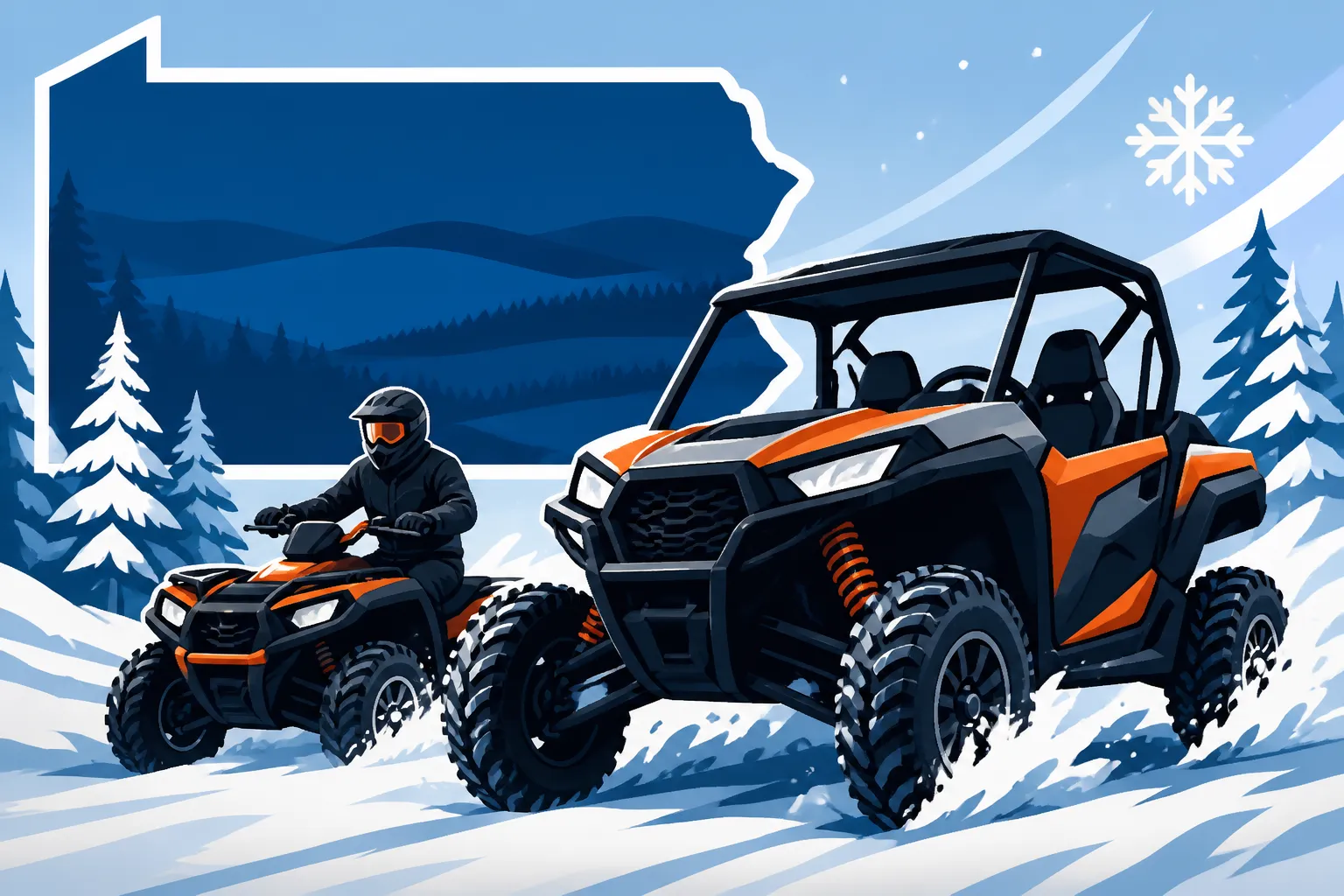
Riding your ATV or UTV through Pennsylvania's winter wonderland can be an incredible experience – crisp air, snow-dusted trees, and trails transformed into something new. But let's be real, winter riding isn't just about bundling up and hitting the gas. It comes with its own unique set of challenges and, more importantly, rules. Many riders get frustrated trying to figure out which trails are open, how deep the snow needs to be, or what gear is truly essential for staying safe and warm. This guide is here to clear up the confusion, helping you understand Pennsylvania's specific regulations and best practices so you can enjoy the snowy season responsibly and to the fullest.
Understanding Pennsylvania's Winter Trail Season
The idea of riding through a blanket of fresh snow on your quad or side-by-side sounds like a dream for many of us. However, unlike some of the more open-ended private lands, Pennsylvania's state forest and park trails operate on a very specific calendar. It's not just about when the snow falls; it's about designated seasons and conditions. Ignoring these can lead to fines, trail damage, and a very unpleasant day out in the cold.
When Trails Reopen for Winter Riding
Pennsylvania's state-managed ATV trails are not open year-round for continuous riding. Most state forest trails that permit ATVs will close down for a period in the fall and early winter before reopening for a dedicated winter season. This is crucial for trail maintenance, reducing user conflict during hunting seasons, and allowing the ground to freeze properly.
Typically, many state forest trails will close after the last full weekend in September. Then, after a period of being shut down, they often reopen for the winter season, usually around the day after antlerless deer season closes. This period can vary slightly year to year, so it's always, always best to check the Pennsylvania Department of Conservation and Natural Resources (DCNR) website directly for the most current information. Think of it like this: just because you see snow doesn't mean the gate is open. You might be eager to hit the trails the moment the first flakes fly, but riding a closed trail, even if it looks perfect, can land you in serious trouble. The DCNR uses these closures to protect the trails from damage during freeze-thaw cycles and muddy conditions, which can lead to ruts and erosion. This also ensures that the trails are as safe as possible for all users once they do officially open. Remember to also check the specific seasonal dates for the trails you plan to visit, as some might have slightly different schedules. For a general overview, you can look up [Pennsylvania's Winter Season Dates].
Snow Depth and Trail Access
This is where things get a little tricky, and it's a common source of confusion and frustration for riders. Many assume that if there's enough snow for a snowmobile, it's fair game for an ATV. This is absolutely not the case. While some ATV trails do allow riding in winter, there might be specific guidelines regarding snow depth, especially if they share corridors or are adjacent to designated snowmobile trails.
Snowmobile trails are designed for machines that glide over the snow. ATVs and UTVs, with their wheels and suspension, tend to dig into it. Riding an ATV on a dedicated snowmobile trail, particularly when snow depth is minimal or conditions are soft, can quickly ruin the trail surface for snowmobilers, creating ruts and unsafe conditions. It's a major point of contention between user groups, and it's vital to respect the designated use of each trail. Always be mindful of whether you are on an ATV trail that happens to be snow-covered or a trail specifically managed for snowmobiles. You might find information on [Riding a Snowmobile Trail on a Quad] for more specific guidance.
Furthermore, excessive snow depth on ATV trails can also lead to closures. What might seem like an epic powder day can actually hide obstacles like fallen branches, rocks, or even small logs that become invisible beneath a deep blanket of snow. These hidden hazards pose significant risks, not just to your machine, but to your safety. DCNR and private park operators monitor these conditions closely, and if the snow becomes too deep to safely navigate or maintain, they will close the trails. Always check the official DCNR trail condition reports or the websites of private riding parks like the Anthracite Outdoor Adventure Area (AOAA) or Rock Run Recreation before you hitch up your trailer. It's much better to reschedule than to drive hours only to find a closed gate or, worse, get into a dangerous situation.
Specific Gear and Machine Considerations for Winter Riding
Winter riding isn't just about following the rules of the trail; it's also about preparing yourself and your machine for the harsh realities of cold weather. Trust me, nothing ruins a day faster than numb fingers, a dead battery, or getting stuck in a snowdrift without the right tools. Investing in the proper gear and taking the time to prep your ATV or UTV can make all the difference between a miserable outing and an unforgettable adventure.
Tires and Traction in Snow and Ice
Let's face it, your everyday all-terrain tires that perform great on dirt and mud might not cut it when the ground turns to ice and packed snow. Traction is paramount in winter, not just for moving forward, but for safe braking and control. Many riders find their stock tires simply spin and slide, making even gentle inclines a challenge and descents downright terrifying.
This is where specialized winter tires come into play. Some riders opt for tires with more aggressive, open tread patterns designed to "paddle" through snow. Others take it a step further and choose studded tires. These tires, which have small metal studs embedded in the tread, provide significantly better grip on ice and hard-packed snow. They can dramatically improve your confidence and control in slick conditions. Before you buy, consider the types of conditions you'll primarily be riding in. Will it be mostly fresh powder, packed snow, or icy patches? This will guide your tire choice. When you're looking for serious off-road performance in challenging conditions, many riders turn to aftermarket suppliers. Companies like SuperATV offer a range of specialized tires and accessories designed to enhance traction, which can be a game-changer for winter riding. Remember that tire pressure also plays a role; you might need to slightly lower your tire pressure for a larger contact patch in deep snow, but be cautious not to go too low, especially if you'll encounter sections of exposed rock or hard ground. You can learn more about [Studded Tires on a Snow-Covered Road] if you plan on encountering mixed conditions.
Preparing Your Machine for Cold Weather
Your ATV or UTV needs a little extra love and attention before it heads out into freezing temperatures. Just like you bundle up, your machine needs to be prepared to prevent breakdowns and ensure reliable operation.
First, battery health is critical. Cold weather significantly reduces battery efficiency. Make sure your battery is fully charged and in good condition. If it's an older battery, consider replacing it. A battery tender or trickle charger can keep it topped off between rides. Second, fluids. Check your coolant level and ensure it's rated for freezing temperatures. Engine oil viscosity is also important; consult your owner's manual for recommended winter-grade oils. Fuel stabilization is also a good idea, especially if your machine might sit for a few weeks between rides, to prevent fuel system issues.
Beyond the engine, think about recovery gear. Getting stuck in deep snow is a very real possibility. A quality winch, like the robust options available from SuperATV, can be an absolute lifesaver. Ensure it's in good working order and that you have a tree saver strap and shackles. A shovel, even a small folding one, is also essential for digging out around tires. Consider a small tool kit, a first-aid kit, and a way to communicate (like a fully charged cell phone or satellite messenger, as cell service can be spotty in remote Pennsylvania forests). Engine warm-up is also crucial; don't just fire up your machine and immediately hit the throttle. Let it idle for a few minutes to allow fluids to circulate and components to warm up, reducing wear and tear.
Road and Crossing Rules in Winter Conditions
While the primary joy of winter riding is often on designated trails, there are situations where you might encounter roads – whether it's riding a designated joint-use road to connect trail sections or crossing a state highway. Winter conditions add an entirely new layer of complexity and risk to these scenarios. It's not just about knowing the rules; it's about exercising extreme caution.
Riding Snow-Covered Roads
Pennsylvania has very strict rules about where ATVs and UTVs can operate on public roads. Generally, ATVs are not street legal. However, certain townships and boroughs may designate specific roads as "joint-use roads" or "connector roads" for ATVs. The key here is designated. Just because a road is covered in snow doesn't suddenly make it an ATV trail, nor does it override the standing legal restrictions.
If you are on a properly designated ATV road, riding it when it's snow-covered comes with its own set of challenges. Visibility can be a major issue. Your machine might kick up a significant plume of snow, especially if the snow is fresh and light, which can obscure your view and make it hard for other motorists to see you. Conversely, snowplows might have pushed snow to the sides, creating narrow passages or berms that can be hazardous. Always ride defensively, assume other drivers don't see you, and maintain a safe speed that allows you to react to changing conditions. Be aware of hidden patches of black ice, especially in shaded areas or on bridges. It's a fine balance between enjoying the ride and ensuring your safety and the safety of others. Knowing the specific township roads open to Pennsylvania ATVs is crucial, and that information needs to be verified directly with the local municipality or DCNR, not just assumed based on snow cover.
Crossing Highways and Bridges
Crossing public roads and highways on an ATV in Pennsylvania is already governed by specific regulations, even in dry conditions. These rules, such as stopping before crossing, proceeding at a 90-degree angle, and yielding to traffic, remain fully in effect during winter – and become even more critical.
When approaching a highway crossing in winter, visibility for all parties is likely to be reduced. Snow banks can block sightlines, and slick road surfaces can increase stopping distances for cars. Take extra time to look in both directions, multiple times, before committing to a crossing. Wait for a completely clear window. Ice on bridges is particularly dangerous. Bridge decks freeze before road surfaces, and they can remain slick even if the rest of the road appears clear. Your ATV or UTV might lose traction instantly on an icy bridge, making control extremely difficult. Approach all bridges with extreme caution, reduce your speed, and maintain a straight line. Never attempt to cross a busy highway in conditions of poor visibility or extreme ice. Your personal safety is far more important than saving a few minutes. Always ensure your lights are fully functional and clean of snow and ice, as being visible to other vehicles is critical. Don't forget, [Pennsylvania's Sixteen-Year-Old Road Rule] applies year-round, regardless of conditions.
Safety and Etiquette for Winter Riding
Winter riding in Pennsylvania offers a unique thrill, but it also amplifies the need for meticulous safety planning and respectful trail etiquette. The cold, shorter daylight hours, and presence of other users – including hunters – all demand a heightened sense of awareness. Ignoring these aspects can turn a fun outing into a dangerous or regrettable experience.
Layering Up and Staying Warm
This might seem obvious, but proper cold-weather gear is not just about comfort; it's a critical safety measure. Hypothermia is a very real threat when you're exposed to cold, wind, and potentially moisture for extended periods, especially if you have a mechanical breakdown or get stuck.
Forget about a single thick coat. The key to staying warm is layering. Start with a moisture-wicking base layer (avoid cotton, which traps moisture). Add an insulating mid-layer (fleece or down), and top it off with a waterproof and windproof outer shell. Protect your extremities: warm, waterproof gloves or mittens (perhaps with hand warmers), insulated boots, and a warm helmet liner or balaclava are non-negotiable. Don't forget quality eye protection – goggles that won't fog up are essential for maintaining visibility. A hot thermos of coffee, tea, or even just hot water can be a lifesaver if you get stuck or need a quick internal warm-up. Pack extra layers, even if you don't think you'll need them. You never know when conditions will change or if you'll need to stop for an extended period. Staying hydrated is also important, even in the cold, so bring plenty of water.
| Winter Riding Gear Essential | Purpose | Key Considerations |
|---|---|---|
| Base Layers | Wicking moisture away from skin | Synthetic or wool; NOT cotton |
| Mid-Layers | Insulation and warmth | Fleece, down, synthetic fill; allows air circulation |
| Outer Shell | Windproof, waterproof, breathable | Durable, good zippers, adjustable cuffs |
| Helmet Liner/Balaclava | Head, face, and neck warmth | Fits under helmet, covers exposed skin |
| Insulated Gloves/Mittens | Hand protection and warmth | Waterproof, allow dexterity (mittens for extreme cold) |
| Insulated Waterproof Boots | Foot warmth and dry protection | Good traction, ankle support, tall enough for snow |
| Goggles | Eye protection, prevent fogging | Anti-fog coating, good ventilation, clear vision |
| Hand/Foot Warmers | Supplemental heat for extremities | Chemical packets; useful in gloves/boots |
| Thermos | Hot beverage for warmth and hydration | Insulated, spill-proof |
| Emergency Blanket | Hypothermia prevention if stranded | Mylar or wool; lightweight to carry |
Awareness of Hunters and Wildlife
Pennsylvania's winter riding season often overlaps with various hunting seasons. This means you're sharing the woods and trails with individuals who are focused on their pursuit, and their presence adds another layer of responsibility for ATV and UTV riders.
Always assume there are hunters in the woods. While most hunters are very respectful, unexpected encounters can be startling for both parties. To make yourself more visible, wear blaze orange, especially during deer season. Even if it's not legally required for ATV riders on a specific trail, it's a smart safety practice. Make sure your machine's lights are on, and consider adding a flag. Being seen is being safe. Be mindful of noise, too. While ATVs are inherently noisy, try to avoid revving your engine unnecessarily near hunting areas.
Wildlife behavior also changes in winter. Animals are often under stress due to food scarcity and cold. You might encounter deer, elk, or other wildlife crossing trails as they move to feeding or bedding areas. Slow down in areas with limited visibility (like dense woods or around bends) to avoid startling animals, which could lead to a collision. Remember, your goal is to enjoy the outdoors responsibly, which includes respecting both fellow outdoor enthusiasts and the natural environment.
Trail Etiquette in Snow
Riding in snowy conditions introduces new etiquette considerations that go beyond what you might practice during other seasons. Proper trail etiquette helps maintain positive relationships among different user groups and preserves the trails for everyone.
Firstly, if you are on a joint-use trail that also sees snowmobile traffic, be hyper-aware of your impact. As mentioned before, ATVs can dig up snowmobile trails, especially when the snow is shallow or slushy. Stick to the designated ATV portions, even if other trails look tempting. If you must cross a snowmobile trail, do so quickly and efficiently, minimizing your impact. Similarly, if you encounter snowmobilers, yield the right-of-way and be courteous.
Secondly, avoid tearing up the trail. If the snow is soft and you're spinning your tires excessively, you're likely creating ruts that will harden into problematic uneven surfaces when the snow freezes, making it harder for subsequent riders. Ride within your limits and the machine's capabilities. If you get stuck, try to recover your machine with minimal damage to the trail surface.
Finally, always "ride sober, ride safe." This applies year-round, but the risks are amplified in winter. Impaired judgment in freezing temperatures with reduced visibility is a recipe for disaster. Pack out everything you pack in, and leave no trace behind, especially in pristine snowy environments. Make sure your [Pennsylvania ATV Registration and Trail Access] is up to date, and carry all necessary documents. Don't forget to check [Pennsylvania Trail Conditions Before You Go] as they can change rapidly with winter weather.
Disclaimer
This article is for general informational purposes only and does not constitute professional advice. Laws, prices and regulations vary by location and change over time. Consult a qualified professional for guidance on your specific situation.