Can a 15-Year-Old Ride a Designated Road?
It's a common and totally understandable question that pops up in conversations among Pennsylvania ATV and UTV enthusiasts, especially for those of us with teenagers itching to hit the trails: "Can my 15-year-old ride a designated road?" This guide is here to clear up the rules surrounding age limits for riding ATVs and UTVs on public roads in the Keystone State, ensuring you and your family can ride safely and legally.
The Core Rule: Sixteen and Up for Designated Roads
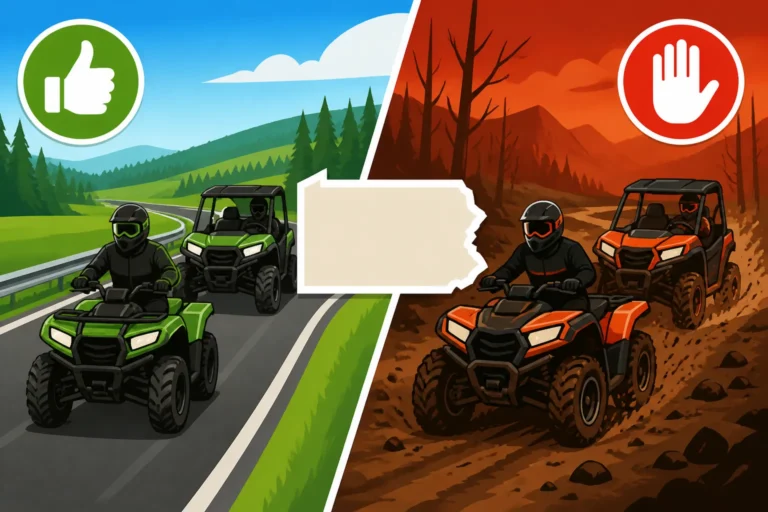
Let's cut right to the chase, because this is often where the confusion begins and ends. In Pennsylvania, the law is pretty clear: to operate an ATV or UTV on any road that has been officially designated and opened for ATV use, the operator must be at least 16 years old. This isn't just a suggestion; it's a hard and fast rule set in place for the safety of everyone on the road.
Why Pennsylvania Sets This Age Limit
The 16-year-old age requirement isn't arbitrary. It’s rooted in a few key factors that acknowledge the unique challenges and responsibilities that come with operating an off-road vehicle on a public thoroughfare. For starters, designated roads, even if they're quiet township lanes or connectors between trail systems, are still shared spaces. You're interacting with cars, trucks, bicycles, and sometimes even pedestrians. This requires a level of maturity, judgment, and spatial awareness that younger riders, despite their skill on a trail, might not yet possess when navigating complex traffic scenarios.
Think about the ability to quickly assess blind turns, react to unexpected oncoming vehicles, or understand complex signage and right-of-way rules. These are skills that typically develop with more driving experience, which is why the age often aligns with the minimum age for obtaining a driver's license. The state wants to ensure that anyone operating these powerful machines on public roads has a baseline understanding of road etiquette and safety that typically comes with being 16 or older.
What a "Designated Road" Actually Means
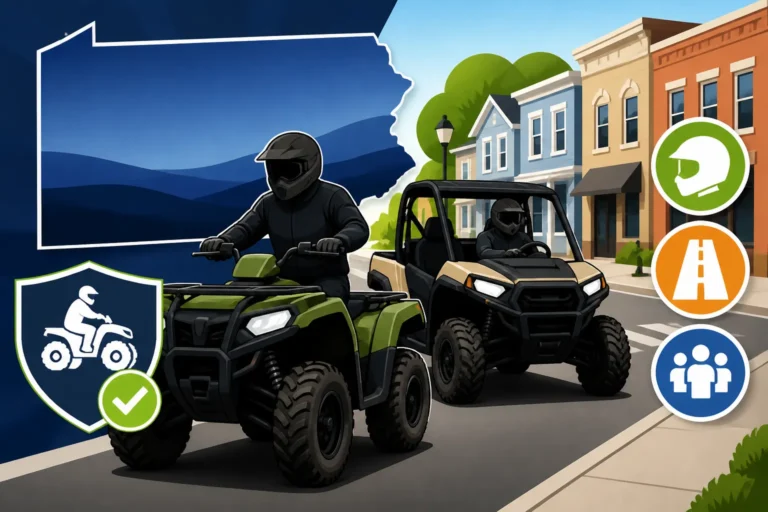
When we talk about "designated roads," we're referring to specific public roads or sections of roads that local municipalities, like a township or borough, have officially opened for ATV and UTV use. These aren't just any old country roads; they have to be explicitly designated. How do you know if a road is designated? Often, you'll see specific signage indicating that ATVs are permitted, sometimes even noting the hours of operation or other restrictions. This might be a green sign, similar to what you’d see for other road designations, clearly stating that off-highway vehicles are allowed. [The Green Sign on a Pennsylvania Township Road]
It’s crucial not to confuse these designated roads with private access roads, dirt lanes on personal property, or even unposted forest roads that are generally closed to ATVs. If a road isn't clearly marked as open for ATV use, assume it's closed, especially for riders under 16. Local communities, like Windber Borough, sometimes publish lists of their designated roads, and it’s always a good idea to check with local authorities or consult DCNR resources for clarity before planning a ride. [Pennsylvania Designated ATV Road List]
The Legal Implications for Younger Riders
Allowing a 15-year-old to ride an ATV or UTV on a designated road, even if it's just a short hop, carries significant legal risks. If an officer encounters a rider under 16 on a designated road, it’s not just a slap on the wrist. There can be fines, and the incident could be considered a violation of the state's ATV laws. [Pennsylvania Fines for Riding Illegally] These fines can be substantial, and beyond the monetary penalty, there are often court costs and administrative fees that pile on.
More importantly, in the event of an accident, having an underage, unlicensed operator on a public road can lead to much more serious consequences for both the rider and the supervising adult. Insurance coverage might be voided, and there could be civil liabilities far exceeding typical accident claims. It's a risk that simply isn't worth taking. The intent of the law is to protect young riders and the public, and disregarding it can have long-lasting repercussions.
Exceptions and Misconceptions: Where Younger Riders CAN Ride
While designated public roads are off-limits for 15-year-olds, it doesn't mean they can't ride at all. Pennsylvania has several avenues for younger riders to enjoy their ATVs and UTVs safely and legally, just not on those specific public road sections. It's all about knowing the correct environment for their age and skill level.
Private Property vs. Public Roads
The biggest "exception" to the age rule for designated roads is private property. If you own the land, or have explicit, written permission from the landowner, a 15-year-old can ride an ATV or UTV on that private land. This is where most young riders gain their experience and hone their skills. There's no state-mandated age restriction for riding on private property, although common sense and safety training are always paramount.
However, "private property" means just that—it's not publicly accessible land, and it doesn't magically extend to the road shoulder or the connector path to a neighbor's property if that path is public. Even a short distance on a public access road, regardless of how remote, falls under the state's age restrictions. Always ensure you have clear boundaries and explicit permission if your child is riding on land that isn't yours. [Pennsylvania Rules for Riding Private Land]
State-Designated Trails and Age Requirements
Pennsylvania boasts an impressive network of state-designated ATV trails within state forests and other managed riding areas, as well as privately operated parks like the Anthracite Outdoor Adventure Area (AOAA) or Rock Run Recreation Area. These trails often have their own specific age and supervision requirements, which differ from public road rules.
For example, on state forest trails, riders as young as 8 can operate an ATV, but with significant restrictions based on engine size (70cc cap for 8 and 9-year-olds) and strict supervision rules for those under 16. All riders under 16 must also possess a valid ATV Safety Certificate issued by the DCNR or an approved equivalent from another state that Pennsylvania has reciprocity with. These certificates demonstrate that the rider has received proper training in ATV operation and safety. [Pennsylvania Minimum Age to Ride an ATV], [Pennsylvania ATV Safety Certificates]
So, while your 15-year-old can't ride a designated road, they absolutely can, and should, ride these fantastic trails, provided they meet the specific safety course and supervision requirements. It's a great way for them to gain experience in a controlled and appropriately challenging environment.
Agricultural Use Exemptions (with caveats)
You might have heard about agricultural exemptions for ATV use, and it's true that in some specific circumstances, ATVs used for farming purposes have different rules. For instance, farmers and their employees might be exempt from certain helmet requirements when operating an ATV directly for agricultural activities on land they own or lease. [Pennsylvania's Agricultural Exception to the Helmet Rule]
However, it's critical to understand that this exemption is narrowly defined. It applies to legitimate farming tasks, like checking fence lines, moving equipment, or tending to livestock, and typically on the farm property itself. It absolutely does not extend to recreational riding on public roads, even if those roads pass through farmland. A 15-year-old riding recreationally on a designated road, even if their family owns a farm nearby, would still be in violation of the 16-year-old age rule. This is a very specific exemption for work, not for play.
Preparing a Young Rider for Legal and Safe Riding
Even if your 15-year-old can't legally ride on designated roads yet, preparing them for future safe and legal riding is crucial. This involves not just skill development, but also instilling a deep understanding of responsibility and respect for the rules.
Mandatory Safety Training and Supervision
For any young rider in Pennsylvania, safety training isn't just a good idea; it's often a legal requirement for riding on state lands and strongly recommended everywhere else. Riders between the ages of 8 and 15 must complete an approved ATV safety course and carry their Pennsylvania ATV Safety Certificate while riding on public access lands. Even for private land use, this training is invaluable. It teaches proper riding techniques, hazard awareness, environmental responsibility, and crucial first-aid skills.
Parents or guardians also have a significant role. For riders under 16, direct supervision by an adult is required on public lands. This means being present and actively monitoring their riding. Taking a safety course together can be a fantastic bonding experience and ensures both parent and child are on the same page regarding safe practices. [Pennsylvania ATV Safety Certificate Requirements]
Essential Gear and Machine Sizing
Regardless of age or location, proper safety gear is non-negotiable. This includes a DOT-approved helmet, eye protection (goggles or a face shield), long pants, a long-sleeved shirt, gloves, and over-the-ankle boots. The state has specific helmet laws that apply to all riders, especially on public roads or trails. [Pennsylvania Helmet Law for ATV Riders]
Equally important is ensuring the machine itself is appropriate for the rider's size, age, and skill level. Youth ATVs are designed with specific engine size caps and physical dimensions to match a child's capabilities. For instance, 8 and 9-year-olds are generally restricted to machines 70cc or less. A 15-year-old might be on a larger youth model or even a smaller adult machine, but it must fit them properly. Their feet should reach the footrests, their hands should comfortably reach the controls, and they should be able to operate the throttle, brakes, and steering without stretching or straining. Putting a young rider on a machine that is too large or powerful for them is incredibly dangerous. [Youth Machine Sizes and Pennsylvania Rules]
Understanding the Machine and Road Rules
Part of preparing a young rider involves teaching them not just how to operate their ATV or UTV, but also how to understand its capabilities and limitations. They need to know how their machine handles on different terrains, how to maintain it, and how to perform basic pre-ride checks.
Beyond the mechanics, it's vital to educate them about the rules of the road, even if they can't ride on them yet. Discuss speed limits, yielding to traffic, understanding stop signs and traffic signals, and general road etiquette. This foundational knowledge will serve them well when they eventually turn 16 and can legally operate on designated roads. Discussing scenarios, such as what to do if they encounter an unexpected obstacle or another vehicle, builds critical thinking skills that are essential for safe riding.
Navigating the Confusion: Common Scenarios and What to Do
The rules can feel like a labyrinth sometimes, especially when you're trying to figure out how they apply to real-world situations. Let's tackle some common questions that often cause head-scratching for ATV and UTV families.
Riding to a Trailhead on a Connector Road
This is perhaps one of the most common points of confusion and frustration for riders of all ages. Many fantastic trail systems, like parts of Bloody Skillet or Whiskey Springs, are connected by short stretches of township or state forest roads. It's incredibly convenient to ride directly from your camp or staging area to the trailhead. However, if that "connector road" is a public road, even if it's designated as an ATV route, your 15-year-old cannot legally operate their machine on it.
The 16-year-old rule for designated roads applies to any segment of public road. So, while you, as a legal adult, might be able to ride that connector, your younger rider would need to be trailered to the trailhead. It's a bummer, for sure, but safety and legality must come first. Always check the specific regulations for the area you plan to ride, as some private parks might have their own internal connector rules that differ from public road laws, but generally speaking, assume the state age limit applies on public connectors. [Riding to a Trailhead on a Township Road]
Using a UTV vs. an ATV on Roads
The growing popularity of UTVs (Utility Terrain Vehicles or side-by-sides) sometimes leads people to wonder if their rules are different from ATVs, especially regarding road use and age limits. Unfortunately, for the purposes of designated road operation in Pennsylvania, UTVs are generally treated the same as ATVs. The 16-year-old age requirement applies equally to UTV operators on public roads. [Pennsylvania Rules for a UTV on a Road]
While UTVs offer features like roll cages, seat belts, and sometimes even windshields, which might feel safer or more car-like, the state's classification lumps them together with ATVs for road-use regulations. Many riders, particularly those with UTVs who enjoy upgrading their machines for optimal trail performance, might look to brands like SuperATV for aftermarket parts and accessories to enhance their off-road experience. These upgrades are fantastic for trail riding, but they don't change the fundamental age restrictions for designated road access. So, whether it's a quad or a side-by-side, if it's on a designated public road, the operator must be 16 or older.
The Role of Parental Responsibility
Ultimately, the responsibility for ensuring a 15-year-old rider complies with Pennsylvania's ATV and UTV laws falls squarely on the shoulders of parents or legal guardians. This includes understanding where they can and cannot ride, ensuring they have the necessary safety training and gear, and providing appropriate supervision.
Ignoring these rules, even with the best intentions or under the assumption that a remote road is "safe enough," can have serious consequences. It not only puts your child at risk but also exposes you to legal liability and potentially contributes to a negative perception of the ATV/UTV riding community. By upholding the laws, you're helping to ensure the long-term viability and positive image of our sport in Pennsylvania.
To help clarify the differences, here's a quick look at where a 15-year-old can generally ride:
| Riding Location | 15-Year-Old Permitted? | Key Requirements/Notes |
|---|---|---|
| Designated Public Roads | No | Operator must be 16 years old. No exceptions for recreational riding. |
| Private Property | Yes | With landowner permission. No state age minimum, but safety is paramount. |
| State Forest Trails | Yes | Must have PA ATV Safety Certificate; parental supervision required. Engine size limits may apply for younger riders (though not 15). |
| Private Riding Parks | Yes | Specific park rules apply; usually require safety certification and/or adult supervision. |
| Farm for Agricultural Use | Yes | Only for legitimate farming tasks on farm property. Not for recreational road use. |
| Unposted Public Roads | No | No ATVs permitted on unposted public roads, regardless of age. |
Remember, the goal is to foster a love for riding in a safe and responsible manner. While waiting until 16 to ride designated roads might feel like an eternity for an eager teen, there are plenty of amazing trails and private lands in Pennsylvania where they can ride, learn, and grow their skills. Happy (and legal!) riding!
Disclaimer
This article is for general informational purposes only and does not constitute professional advice. Laws, prices and regulations vary by location and change over time. Consult a qualified professional for guidance on your specific situation.