Night Riding on a Joint-Use Road
For many Pennsylvania ATV and UTV enthusiasts, the call of the trail doesn't end when the sun goes down. Whether you're heading back to camp after a long day of adventuring, traversing a connector road to another trail system, or simply enjoying the unique tranquility of an evening ride, the idea of night riding holds a special appeal. However, hitting the roads after dark, even on designated joint-use routes, comes with its own set of rules and critical safety considerations that can easily trip up an unprepared rider. This guide is here to untangle the complexities, clearly outlining the legal requirements, essential gear, and vital safety practices you need to master before you flip on your headlights and explore Pennsylvania's trails and roads under the stars.
Understanding Pennsylvania's Joint-Use Roads and Night Riding Rules
Pennsylvania offers some unique opportunities for ATV and UTV riders, particularly with its designated joint-use roads. These aren't just any old country roads; they are specific routes that townships, boroughs, or even the state have officially opened to off-highway vehicles (OHVs) to help riders connect trail systems, access services, or reach staging areas. But the privilege of using these roads, especially after dark, comes with strict regulations designed to ensure the safety of everyone sharing the pavement.
What Exactly is a Joint-Use Road in Pennsylvania?
Think of a joint-use road as a shared thoroughfare. It's a public road, often a township or borough street, where ATVs and UTVs are permitted to operate alongside traditional motor vehicles. This designation is crucial because, in Pennsylvania, ATVs and UTVs are generally not street legal. The exception comes when a specific stretch of road has been officially designated for shared use. You'll typically spot these roads by special green signs indicating that ATV use is permitted. Without that sign, assume the road is off-limits. These roads are vital connectors, enabling riders to navigate the landscape without having to trailer their machines between segments of a trail or to reach a local store for supplies. Understanding [Pennsylvania's Joint-Use Roads] is the first step toward legal and safe riding. These aren't simply "any old dirt road" you might find; they are deliberate decisions made by local authorities to facilitate responsible OHV use.
When Can You Ride at Night on These Roads?
The state's regulations, particularly 17 Pennsylvania Code Chapter 51, don't set a specific "curfew" for ATVs on designated joint-use roads. If a road is open for ATV use, it's generally open 24/7, provided you meet all other requirements for night operation. However, "night" in legal terms usually refers to the period from sunset to sunrise, or often, the half-hour before sunset to the half-hour after sunrise, depending on specific statutes. This means if you're out there after dusk, your machine must be equipped as if it were a street-legal vehicle for visibility and signaling. You can't just rely on daylight savings or the changing seasons to dictate your readiness. It's an important distinction because riding after sunset significantly elevates the safety stakes and the equipment you’re required to have. You'll want to review [Pennsylvania Rules for Riding After Dark] to ensure you're fully compliant with all the time-specific details.
Pennsylvania's Minimum Age to Ride a Road After Dark
Age restrictions for ATV and UTV operation are always a hot topic, and they become even more stringent when you introduce roads and darkness into the mix. In Pennsylvania, an ATV operator must be at least 16 years old to ride on a designated joint-use road. This isn't just about daylight; it applies around the clock. The thinking behind this rule is that operating an OHV on a public road, especially one shared with cars and trucks, demands a higher level of maturity, judgment, and experience than riding exclusively on private trails. Add darkness, and those demands intensify. A younger rider, even if permitted on trails during the day under supervision, is generally not permitted on these roads at night. It's crucial for parents and guardians to understand these rules, as allowing an underage rider on a joint-use road, day or night, can lead to significant penalties. This 16-year-old minimum is a firm line in the sand, and it’s important to respect it, considering the increased risks associated with [Pennsylvania Minimum Age to Ride a Road].
Essential Lighting and Equipment for Night Riding
When the sun dips below the horizon, your ATV or UTV transforms from a daylight trail warrior into a machine that absolutely must be seen and heard on public roads. Pennsylvania has clear, non-negotiable requirements for lighting and other equipment when operating on designated joint-use roads at night. Skimping on these can lead to fines, accidents, and put your life and others' at risk.
Mandatory Lighting Requirements for Pennsylvania ATVs and UTVs
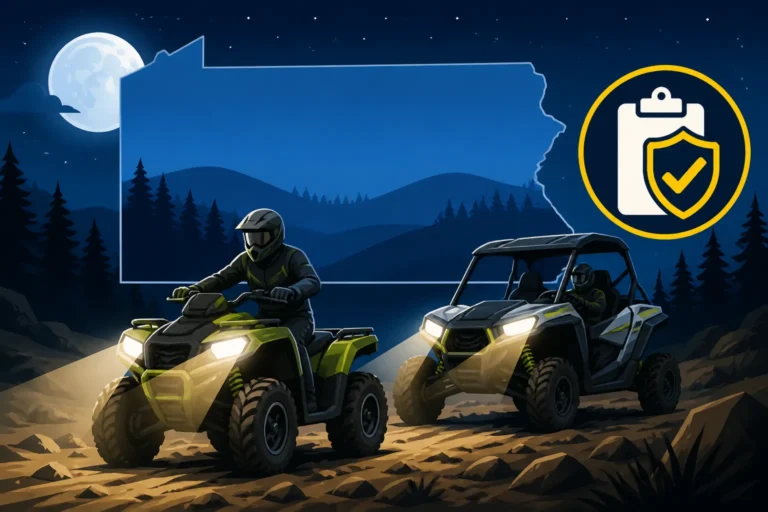
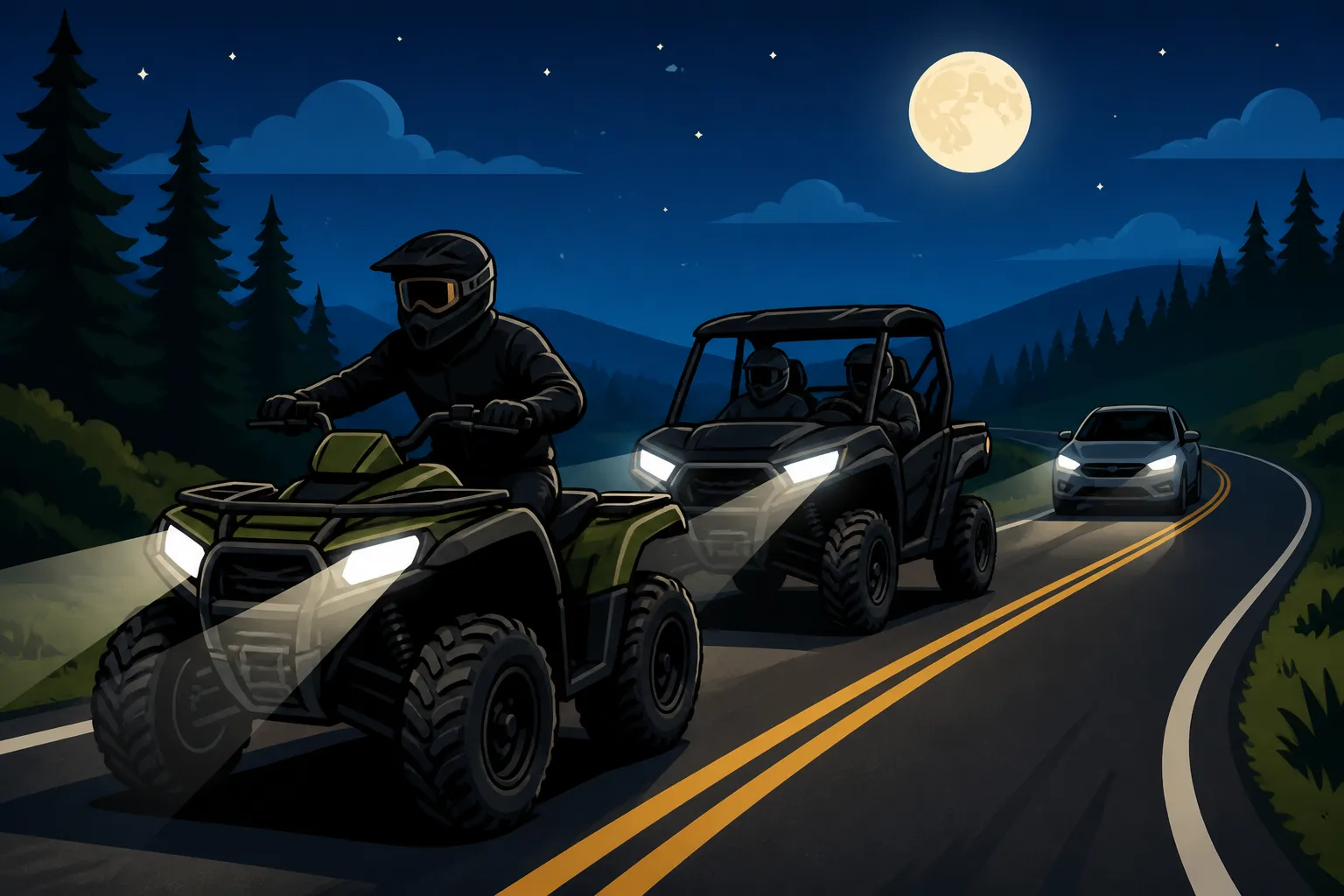
This is where the rubber meets the road, quite literally. To legally operate your ATV or UTV on a joint-use road after dark, your machine must be equipped with specific lighting that mirrors what's expected of a car or truck. You'll need at least one white headlight visible for at least 500 feet, and at least one red taillight visible for at least 500 feet. But that's just the bare minimum. Many riders enhance these with brighter aftermarket options. For instance, a quality LED light bar from a company like SuperATV can dramatically improve your forward visibility, turning shadowy paths into clear routes.
Beyond the main lights, your machine also needs to display a red stop lamp (brake light) visible from at least 100 feet. If you’re riding a UTV, or an ATV that has turn signals, they must also be functional and clearly visible. The whole idea is that your machine should be as predictable and visible as any other vehicle on the road. This means checking all your bulbs and wiring before heading out. Don't assume your trail lights are adequate; they might not meet the brightness or beam pattern required for road use, especially when cars are coming at you from the opposite direction. It’s not just about seeing; it’s about being seen from all angles. For a deeper dive into what Pennsylvania mandates, look into [Pennsylvania Lighting Rules for Night Riding].
Reflectors and Other Visibility Aids for Night Riding
Lights are primary, but reflectors are your passive safety net. Even with your lights blazing, reflective materials significantly boost your visibility to other drivers, especially if your electrical system fails or if a light gets obscured by mud or debris. Pennsylvania law requires ATVs and UTVs to have at least one red reflector on the rear, visible from 500 feet when illuminated by a vehicle's headlamps.
However, smart riders go beyond the minimum. Adding amber reflectors on the sides and white or amber reflectors on the front can create a full 360-degree profile of your machine, making it much easier for other drivers to gauge your size and position in the dark. Reflective tape on your helmet, riding gear, and even on parts of your machine's frame can make a huge difference. Think about what a deer looks like at night – a tiny, quickly moving target. You want to be the opposite: large, clearly defined, and impossible to miss. Products like reflective decals or even reflective wraps for your machine can provide an extra layer of protection, particularly when you're on a long, straight stretch of road with fast-moving traffic. Remember, [Being Seen on a Rural Road at Dusk] is just as important as seeing where you're going.
Headlight Aiming and Visibility for Nighttime Travel
Having powerful headlights is one thing; having them aimed correctly is another entirely. On designated joint-use roads, improper headlight aim can be just as dangerous as insufficient lighting. If your headlights are aimed too high, you'll blind oncoming drivers. Aimed too low, and you'll outrun your light beam, creating dangerous blind spots and reducing your reaction time for obstacles further down the road.
Your goal should be to illuminate the road ahead sufficiently without projecting glaring light into the eyes of other road users. This might require some adjustment from how you typically aim your lights for pure trail riding, where often a higher, broader beam is preferred. When setting your lights, consider pulling up to a wall or garage door in the dark, about 25 feet away. Your low beams should generally illuminate the road surface and about halfway up the wall without creating a blinding hot spot for oncoming traffic. If you've installed an aftermarket light bar, ensure it's aimed to complement your main headlights, providing fill light where needed, rather than acting as a high beam that should only be used off-road or when no other vehicles are present. A properly aimed lighting setup isn't just about legality; it's a critical component of safe [Pennsylvania Rules for Night Riding].
Safety Considerations and Best Practices for Night Riding
Night riding on joint-use roads isn't just about flicking on your lights and hitting the throttle. It demands a heightened sense of awareness, a different approach to riding, and a commitment to personal and machine readiness. The reduced visibility, potential for wildlife, and sharing the road with unexpected traffic all contribute to a unique set of challenges.
Scanning for Hazards in Low Light Conditions
One of the biggest challenges of night riding is the limited field of vision. Your headlights only illuminate a cone directly in front of you, leaving the periphery in darkness. This significantly reduces your ability to spot hazards lurking just outside your light's reach. When riding at night, it's crucial to adjust your speed accordingly. You should always be able to stop within the distance you can clearly see with your headlights. If you're going too fast, you might only see an obstacle – a pothole, a fallen branch, or even an animal – when it's too late to react.
Your eyes need to constantly scan, not just straight ahead, but from side to side, watching for reflections or movements that might indicate an animal or another vehicle approaching from a side road. Deer are a huge concern in Pennsylvania, especially at dawn and dusk, and their eyes reflecting in your headlights can be your first warning. Maintaining a safe following distance from other vehicles is even more critical at night, as it gives you more time to react to their brake lights or swerving. You might also consider a helmet-mounted light as a supplementary tool, allowing you to quickly illuminate where you're looking, rather than just where your handlebars are pointed.
Riding Etiquette and Sharing the Road at Night
Riding on joint-use roads means you're sharing the space with other road users – cars, trucks, and potentially even pedestrians or cyclists. At night, this shared environment becomes even more delicate. Always use your low beams when encountering oncoming traffic or when following another vehicle. Blinding another driver with your high beams or an overly bright light bar is not only dangerous but also incredibly rude and can lead to aggressive driving from others.
Signal your turns clearly and well in advance. Maintain your lane, just as any other vehicle would. Avoid sudden movements or erratic driving, which can be disorienting and alarming to other drivers, especially when your machine might already be perceived as "different" on a public road. A general rule of thumb is to act as predictably and respectfully as possible. You are an ambassador for the entire ATV and UTV community every time you ride on a joint-use road, and this responsibility is magnified at night. Your [Pennsylvania Rules for a UTV on a Road] also include specific considerations for wider machines, which become even more important for visibility at night.
Preparing Your Machine for Nighttime Adventures
Beyond the mandatory lighting, a well-prepared machine makes night riding safer and more enjoyable. Think about the small things that can make a big difference.
- Windshield/Visor Cleanliness: A dirty windshield or visor can create glare and significantly reduce visibility from oncoming headlights. Always start with a crystal-clear view. For UTVs, a quality scratch-resistant windshield from a company like SuperATV can make a world of difference in keeping your view clear, even after a dusty day.
- Battery Condition: Your lighting system draws power, and a weak battery can leave you stranded in the dark. Ensure your battery is fully charged and in good health before any night ride.
- Tires and Brakes: Night riding often means reduced speeds, but responsive brakes and tires with good tread are always critical. You need to be able to stop quickly if an unforeseen obstacle emerges from the darkness.
- Mirrors: Ensure your mirrors are clean and properly adjusted. They are vital for monitoring traffic behind you, which can be challenging to judge at night.
- Backup Lights/Flashlight: Always carry a reliable flashlight, headlamp, or even backup auxiliary lights. If your main lights fail, or you need to perform a roadside repair, a personal light source is invaluable.
- Warm Gear: Even if the day was mild, temperatures can drop significantly after dark, especially at speed. Dress in layers to stay warm and comfortable, which helps maintain focus and reaction time.
A thorough pre-ride inspection is always important, but for a night ride, it's absolutely non-negotiable.
Common Pitfalls and Fines for Unprepared Night Riders
Ignoring Pennsylvania's regulations for night riding on joint-use roads isn't just a minor oversight; it's a serious infraction that can lead to substantial fines, points against your driving record, and even the impoundment of your machine. The state takes road safety very seriously, and that applies just as much to OHVs as it does to cars.
The Automatic Fines for Insufficient Lighting
One of the most direct consequences of riding at night without proper lighting is a citation for insufficient equipment. If a DCNR ranger or local law enforcement officer spots you on a joint-use road after dark with, say, no taillight, or a headlight that's too dim or improperly aimed, you're looking at an automatic fine. These aren't warnings; they're tickets. The specific amount can vary, but generally, expect fines to start at several hundred dollars, plus court costs. And it's not just the absence of lights; it's also about their functionality. A broken brake light or a headlight that flickers on and off can also lead to a ticket. This is why a thorough pre-ride check is so vital. Your machine should be ready for legal operation, including proper [Pennsylvania Lighting Requirements for ATVs].
Other Violations That Can Arise from Night Riding
Beyond just lighting, riding at night can expose you to other violations if you're not careful.
- Unregistered Machine: If you're on a joint-use road, your ATV or UTV must be registered with DCNR. This is true day or night, but night patrols might be specifically looking for compliance. Riding an unregistered machine on any public land or road can result in a significant fine, often starting at $300.
- No Insurance: [Pennsylvania ATV Insurance Requirement] mandates that you carry liability insurance if you're riding off your own private property, which absolutely includes designated joint-use roads. Failure to have proof of insurance can lead to another hefty fine.
- Expired Registration: Just like an unregistered machine, an expired registration means you shouldn't be on that road. Officers often check registrations visually via the plate or by scanning the plate number.
- Age Violations: As discussed, the 16-year-old minimum for road use is strictly enforced. Allowing a younger rider on a joint-use road after dark (or during the day) can bring severe penalties for both the rider and the adult responsible.
- Helmet Violations: While Pennsylvania has some exceptions for helmets on private land, for any rider under 16, a helmet is always required. And for those 16 and older, a helmet is required on any road or highway open to public use. So, if you're on a joint-use road, day or night, helmets are typically mandatory for all riders. This is covered in [Pennsylvania Helmet Law for ATV Riders].
- Operating Under the Influence: This is perhaps the most serious. Operating an ATV or UTV on a public road while impaired is treated similarly to DUI in a car, with severe penalties including fines, license suspension, and even jail time.
These violations add up quickly, turning what was supposed to be a fun night ride into a very expensive and potentially damaging experience.
Avoiding Common Mistakes After Sundown
The best way to avoid fines and ensure a safe night ride is to be meticulously prepared and informed.
- Don't Assume: Never assume a road is a joint-use road unless you see the official green signs. Riding on an undesignated road, especially at night, is trespassing and illegal operation.
- Check Before You Go: Make a pre-ride checklist: lights (headlight, taillight, brake light, turn signals if applicable), reflectors, registration, insurance card, helmet, and appropriate cold-weather gear. Test everything!
- Ride Defensively: Reduce your speed, increase your following distance, and be extra cautious at intersections and blind curves. Assume other drivers might not see you, even with your lights on.
- Stay Sober: Do not mix alcohol or drugs with night riding. Your reaction time and judgment are already challenged by the darkness; impairment is an invitation to disaster.
- Know Your Route: While a GPS is helpful, having a general understanding of your intended route, especially unfamiliar sections, can prevent you from getting lost or straying onto unauthorized roads in the dark.
By taking these precautions seriously, you not only protect yourself from the legal repercussions of [Pennsylvania Fines for Riding Illegally] but, more importantly, you safeguard your well-being and that of others on the road.
Pennsylvania ATV Lighting & Equipment Checklist for Joint-Use Roads at Night
Here's a quick reference table to ensure your ATV or UTV is properly equipped for night riding on Pennsylvania's joint-use roads.
| Item | Requirement | Recommended Additions/Tips |
|---|---|---|
| Headlight | At least one white headlight, visible 500 ft. ahead. | Brighter LED headlight (e.g., from SuperATV) for enhanced visibility and penetration. Proper aiming (low beam for oncoming traffic). |
| Taillight | At least one red taillight, visible 500 ft. from rear. | Brighter LED taillight for increased visibility. |
| Brake Light | At least one red stop lamp, visible 100 ft. from rear. | Ensure it's responsive and clearly visible. |
| Reflectors | At least one red reflector on the rear, visible 500 ft. when illuminated by headlights. | Amber reflectors on sides, white/amber on front. Reflective tape on helmet, gear, and machine for 360-degree visibility. |
| Turn Signals | If equipped, must be functional and visible. (Generally required for UTVs on roads, sometimes ATVs). | Ensure all bulbs are working, and lenses are clean. |
| Muffler | Standard muffler with a spark arrester. Noise levels must comply with regulations. | Check for damage or modifications that could increase noise. |
| Rearview Mirrors | Required for UTVs. Recommended for ATVs. | Clean and properly adjusted for monitoring rear traffic. |
| Windshield | Required for UTVs (if not wearing eye protection). | Clean and scratch-free. A high-quality, durable windshield (like those from SuperATV) improves visibility and rider comfort, especially at night. |
| Registration | Current DCNR registration plate properly mounted (e.g., [Where Pennsylvania Wants the Plate Mounted]). | Ensure sticker is current ([Where the Sticker Goes on the Plate]) and carry your DCNR wallet card ([What the DCNR Wallet Card Is For]). |
| Insurance Proof | Valid liability insurance card. | Carry physical or digital proof. |
| Helmet | Required for all riders on joint-use roads and for those under 16, always. | DOT-approved, clean visor/goggles, consider reflective accents. |
| Speedometer | Recommended for monitoring legal speed limits on roads. | Ensure it's accurate and illuminated for night use. |
| Horn | Required for UTVs. Recommended for ATVs. | Functional for signaling other drivers or warning wildlife. |
| First Aid/Tools | Essential for any ride, especially at night. | Flashlight/headlamp, basic repair kit, phone for emergencies, warm layers, water, snacks. |
Navigating Pennsylvania's joint-use roads after dark can be a truly rewarding experience, offering a unique perspective on the state's beautiful landscapes. By understanding and rigorously adhering to the state's lighting, equipment, and safety regulations, you can ensure your night rides are not only enjoyable but also safe and legal. Always remember that responsibility is your most important piece of gear when you venture out under the stars.
Disclaimer
This article is for general informational purposes only and does not constitute professional advice. Laws, prices and regulations vary by location and change over time. Consult a qualified professional for guidance on your specific situation.