Pennsylvania Trails That Reopen for Winter
Winter riding in Pennsylvania can feel confusing: a trail may look open on a map while a seasonal closure, thaw, or local restriction keeps the gate shut. This guide explains what winter reopening usually means, where to check before hauling your ATV or UTV, how to plan around changing conditions, and what to prepare before riding cold, wet, or snow-covered trails.
What Winter Reopening Means in Pennsylvania
A seasonal reopening is not a guarantee of access
Pennsylvania’s winter riding season is a specific access window, not a promise that every trail will be open whenever temperatures drop. Some state forest ATV trails close during spring and summer shoulder periods, then reopen after the fall hunting season. The exact dates can vary by trail system, forest district, and annual conditions, so a familiar trail is not automatically open just because it is winter.
The practical distinction is between a trail’s usual seasonal schedule and its actual status on the day you plan to ride. A trail may be scheduled to reopen but temporarily closed because of snow damage, ice, fallen trees, maintenance, wildlife concerns, or a management decision. A posted gate, closure notice, or official district update takes precedence over what a map or old trip report suggests.
This is especially important when you are driving several hours from home. A rider leaving Pittsburgh, Philadelphia, or Erie may have planned the whole weekend around a trail in north-central Pennsylvania. Before loading up, check the relevant trail manager’s current notices and the specific access point you intend to use. For broader seasonal context, see [Pennsylvania's Winter Season Dates] and [Pennsylvania Trails Closed in Spring].
Different trail systems follow different calendars
Pennsylvania riding areas do not all share one winter schedule. State forest trails, national forest roads, privately operated parks, and club-managed properties can each set their own dates, hours, permit rules, and closure procedures. A winter opening on one network does not mean nearby trails are open too.
For example, state forest ATV trails may follow seasonal dates published by the forest district. A private recreation area may publish its own operating calendar and require riders to register or pay at the entrance. A club trail may depend on membership, landowner agreements, or a particular weekend event. National forest routes have their own rules and may be affected by road conditions or seasonal management restrictions.
Before building an itinerary, identify who manages each trail segment. Then check that manager’s rules rather than relying on a broad search result for “Pennsylvania ATV trails open in winter.” The general overview in Pennsylvania's ATV Trail Season can help you frame the question, but the specific system’s current notices are what determine whether you can ride.
Winter access is different from winter trail suitability
A trail can be legally open and still be a poor choice for your machine or experience level. A narrow, rocky route that feels manageable in dry weather may become difficult when covered by snow, glazed ice, or churned slush. A trailhead can also be accessible while a farther section is blocked by a drift, washout, or fallen limb.
Think of “open” as permission to use the route, not a report that conditions are easy. In winter, even a modest climb can become a challenge if the surface is frozen and your tires cannot find traction. A low spot that usually drains well may hold water beneath a thin layer of ice.
That distinction matters when planning with children, newer riders, or a group using machines with different capabilities. If conditions are uncertain, choose a shorter out-and-back route, stay close to the staging area, and leave time to turn around. It is usually better to have a shorter, enjoyable ride than to push a cold group into a trail section no one can safely manage.
Which Pennsylvania Trails May Reopen for Winter
State forest ATV trails in the north-central region
Pennsylvania’s north-central state forest trail network is a major focus for winter ATV riding. The system includes routes in Clinton, Lycoming, Potter, and Tioga counties, with well-known riding areas such as Whiskey Springs, Bloody Skillet, and the Potter County Trail. The state forest setting offers a very different experience from a privately managed off-road park: routes may be longer, more remote, and subject to seasonal forest access rules.
These trails can be appealing when you want a day that feels like a backcountry ride rather than a compact loop near a staging area. But that remoteness makes preparation more important. A short distance on a map can take a long time in snow or rough winter conditions, and cell coverage can be inconsistent. Confirm the trailhead, the route you intend to use, and any access restrictions before setting out.
A permit may be required on the north-central regional trail system. Do not assume that a Pennsylvania ATV registration or a permit from another riding area covers it. Review [Pennsylvania's Northcentral Regional Trail Permit], [The Four Pennsylvania Counties the Permit Covers], and [Pennsylvania's Nearly 1,000 Permit Miles] when sorting out where the regional permit applies. The permit requirement and trail opening schedule are separate questions: you need to meet both.
Other state forest and public-land routes
Not every Pennsylvania state forest trail has the same access rules, and not every public road through a forest is open to ATVs. Some routes may be designated for particular uses, while others are closed to motorized recreation or limited to highway-registered vehicles. A forest road that looks broad enough for an ATV is not necessarily an approved ATV route.
The Allegheny National Forest is another distinct destination with its own designated routes, permit rules, and seasonal considerations. Do not transfer assumptions from state forest trails to national forest roads. Check the national forest’s official information for route eligibility and current restrictions before riding, especially if your trip involves several trail areas or a forest permit.
State game lands are not a general-purpose ATV trail network. Riders should not treat a game lands road as a convenient shortcut unless a specific, valid access authorization applies. The rules differ from those on state forest trails, and riding where it is not allowed can cause problems for both the rider and wildlife management. Related guidance includes Pennsylvania Rules for Riding a State Forest Road, [Pennsylvania Rules for Riding a National Forest], and [Pennsylvania Game Lands and ATVs].
Private parks and club-managed trails
Private parks and club trails can be practical options when public seasonal schedules do not match your available weekend. Areas such as AOAA and Rock Run operate under their own rules, and their open dates, operating hours, rider requirements, and closures can differ from public land. Check the facility’s own information before leaving home rather than assuming it follows the state forest winter calendar.
A privately managed riding area may be more convenient for a group that wants a clear check-in process, defined staging, and a range of routes. On the other hand, a park may close for weather, maintenance, events, or other operational reasons. A private property’s usual winter schedule is not a substitute for confirming that it is open on your exact riding date.
Club trails require their own check. Some are on leased or privately controlled land, and access may depend on club membership, a trail pass, or a particular event. A state permit does not necessarily give access to a club system, and a club sticker does not automatically cover public forest trails. For a broader look at options, see [Pennsylvania Private Trail Systems] and [Riding Private Club Land in Pennsylvania].
When Winter Trails Reopen and What Can Change the Dates
The usual pattern around hunting season
Some state forest ATV trail schedules include a winter riding period that begins after the fall firearms deer season, including the antlerless season where applicable. That timing reflects the way public land is shared and managed through the hunting calendar. It is a useful planning pattern, but it is not a substitute for checking the current schedule for the exact forest and trail system.
Avoid planning around a single date you remember from a past season. Access rules can vary by trail area, and a closure may remain in effect even when the general winter season has begun. If a route crosses different management areas, each segment may have separate restrictions. In a group ride, one person should verify the schedule for the whole planned route, not just the main trailhead.
The calendar also interacts with local weather. A warm, rainy stretch can soften the ground and make a route vulnerable to rutting, even when the date falls inside the normal riding window. Frozen ground can support a machine in the morning and turn slick or soft after temperatures rise. For the seasonal relationship, see [Pennsylvania's Antlerless Season and Winter Reopening].
Spring closures and freeze-thaw conditions
Winter riding does not simply continue until the weather feels like spring. Seasonal trails can close in early spring to prevent damage when snow melts and the ground is saturated. A machine that leaves deep ruts in thawing soil can damage drainage, widen the trail, and make the route harder and more expensive to maintain.
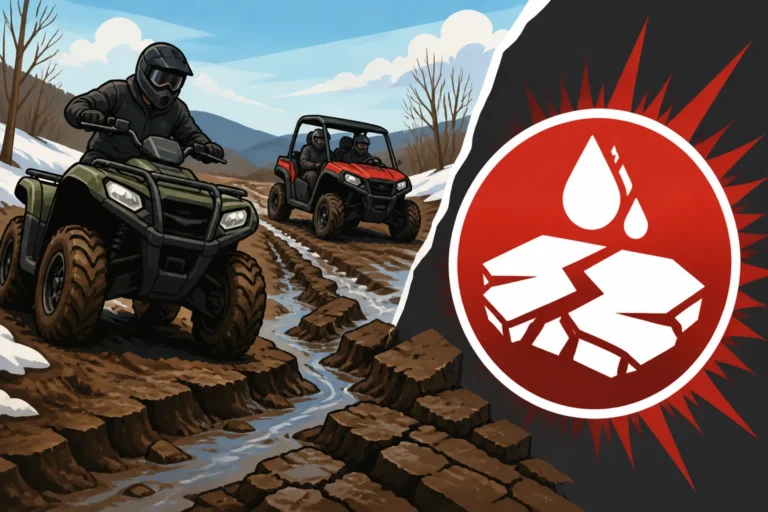
Freeze-thaw cycles are particularly rough on trail surfaces. Water seeps into small cracks, freezes, expands, and then loosens soil or rock as temperatures change. A route may look firm at the trailhead but become soft farther along, especially in shaded hollows or low-lying areas. Tires can quickly turn a vulnerable section into a muddy trench.
If a closure is posted, respect it even if the trail looks passable or another rider says they went through recently. The decision may be based on damage risk or conditions farther down the route that you cannot see from the entrance. Checking [Why Pennsylvania Trails Close April 1] and [Trails Damaged by Spring Thaw] can help explain why “it seems dry enough” is not the only consideration.
Verify dates and notices before you travel
A reliable pre-trip check should involve the official manager of the area, not just a social media post or an old trail report. Look for seasonal opening and closing notices, temporary closures, event restrictions, gate updates, and any instructions about trailheads or parking. If the information is unclear, contact the managing office before making a long drive.
Use maps for orientation, not as final proof that a route is open. An app such as onX Offroad can help you study a route and identify nearby roads or access points, but a mapped line does not override a closure or establish that motorized use is allowed. Compare any digital route with official trail information and posted signs at the site.
It also helps to check again on the morning of your ride. Weather can change rapidly in the mountains, and a storm or thaw can affect access after you first planned the trip. Keep a second route in mind, and be willing to switch destinations or call off the ride if conditions are unsafe or access is uncertain.
Planning a Winter ATV or UTV Ride
Choose a route that fits the day
In winter, route planning should account for daylight, temperature, surface conditions, and how far the group is willing to travel before turning around. A long route that works well in summer may not be a good first choice in snow. Pick a loop or out-and-back that gives you options to shorten the ride if someone gets cold, a machine has trouble, or the trail becomes difficult.
Be honest about the least experienced rider and the least capable machine in the group. If one person is on a stock ATV with standard tires and another has a modified UTV, the group should plan around what everyone can safely handle. Technical features that are manageable for one rider can become a source of pressure for someone who is cold, tired, or riding on unfamiliar terrain.
Before departure, agree on a turnaround point and a simple communication plan. If the group becomes separated, riders should know whether to wait at a junction, return to the last marked trailhead, or stay with the stopped machine. These decisions are easier to make beside a warm vehicle than on a cold trail with dwindling daylight.
Read maps as a planning aid, not permission
Digital mapping tools can help you understand the shape of a route, locate nearby access roads, and estimate how trails connect. onX Offroad may be useful for trip planning, but no app should be treated as the final authority on legal access, current closures, or seasonal restrictions. Confirm a route with the trail manager and obey signs and gates on the ground.
Pay close attention to where a mapped line meets a public road or crosses another management area. A trail may appear continuous on a screen while the legal route ends at a gate, changes ownership, or becomes a road with different rules. Zooming out can also hide details such as a limited-width trail or an access point that is not suitable for a trailer.
Save the information you need before leaving home. In remote areas, mobile reception may be limited, and a digital map that depends on a live connection can be less useful than expected. Carry an offline map or a paper backup where practical, and make sure everyone in the group understands the route instead of relying on one person’s phone.
Plan for daylight, cold, and delays
Winter days offer less usable daylight than summer rides, and cold conditions can make even a short delay uncomfortable. A slow section, a stuck machine, or an unexpected route closure can add time. Start early enough to finish well before dark rather than treating sunset as a flexible target.
Tell someone who is not riding where you plan to go and when you expect to return. Give them the trail system, the parking area, your planned route, and the time you will check in. If you change plans, update that person whenever possible. A basic plan can help others respond appropriately if a group does not return when expected.
Build a margin into the day. Bring enough food, water, and warm clothing to handle a longer ride than planned. Keep a charged phone and a backup way to communicate if you have one, but do not depend on cell service throughout a remote forest. A route that looks short on a map may take much longer when snow, mud, or mechanical trouble slows the group.
Preparing Your Machine for Cold-Weather Trails
Inspect tires, brakes, and basic controls
Cold weather puts extra emphasis on a pre-ride inspection. Check tire pressure according to the machine manufacturer’s guidance and inspect the tread for cuts, embedded debris, or unusual wear. Tires that are acceptable on dry ground may struggle on ice or packed snow, and no tire choice makes every winter surface safe.
Test the brakes before heading onto a trail. Mud, water, and freezing temperatures can affect feel and performance. Confirm that the throttle moves freely and returns as expected, and check steering, lights, and other controls. If anything feels different from your last ride, troubleshoot it before you are far from the staging area.
For UTVs, check the condition of belts, drive components, and any protective covers. For ATVs, inspect the chain or other drivetrain components as appropriate for your model. Follow the owner’s manual for maintenance and cold-weather operation; riding with a worn belt, loose chain, or weak battery can turn a routine outing into a recovery job.
Prepare for snow, slush, and mud
Winter trails can change from hard-packed snow to wet slush, ice, standing water, or exposed rock within a short distance. A winch can be helpful if a machine gets stuck, but it is not a reason to enter a route beyond your ability. Know how to use the winch safely, keep people clear of the cable, and carry suitable recovery equipment for your vehicle and group.
Mud deserves particular caution when it is mixed with cold weather. A deep mud hole can hide rocks, branches, or abrupt changes in depth, and water can leave a rider wet and chilled. Do not assume that following tire tracks is safe; the surface may have changed since the previous machine passed through. If a section looks questionable, walk it if safe and permitted, choose another route, or turn around.
Avoid adding aggressive modifications simply because you expect winter conditions. Equipment choices should suit the machine, the terrain, and the manufacturer’s guidance. Studded tires, chains, or other traction devices may be subject to rules for a particular area or surface. Check local requirements before using them, and remember that more traction can also increase stress on components or change handling.
Protect the machine from cold and moisture
Cold weather can expose a weak battery. Check battery condition and terminals before the trip, and make sure the machine starts reliably before you load it. If the vehicle has been sitting for a long period, follow the manufacturer’s recommendations for fuel, battery care, and winter storage rather than improvising.
After a ride, clear packed snow and mud from the machine, especially around moving parts, brakes, and cooling areas. Moisture left in vulnerable places can freeze, and road salt or abrasive grit can contribute to corrosion if you have traveled on treated roads to reach a trailhead. Let the machine dry in a suitable place and inspect it before the next outing.
A quick post-ride check can catch damage early. Look for loose fasteners, damaged plastics, bent guards, leaks, and branches or debris caught in the chassis. If you heard a new noise or felt unusual vibration on the trail, investigate it before the next ride. Winter riding tends to magnify the inconvenience of small mechanical problems because cold hands and short daylight make roadside repairs harder.
Staying Safe and Following Pennsylvania Rules
Dress for a stopped machine, not just a moving one
Riding can feel warm while the machine is moving and painfully cold as soon as the group stops. Dress in layers that manage moisture and block wind, and bring a spare dry layer in a waterproof bag. Gloves that work well for steering may not be warm enough for standing around during a recovery, so consider carrying a warmer backup pair.
A helmet and suitable eye protection are essential parts of riding preparation. Fogging, snow, and blowing grit can make vision difficult, so check that your goggles or face shield work with your helmet and layers. Keep visibility in mind when the group is riding through shaded forest sections, where snow and light levels can change quickly.
Do not overlook hands, feet, and exposed skin. Wet socks, tight boots, or gloves that restrict circulation can become a problem long before a rider recognizes how cold they are. If someone becomes clumsy, unusually quiet, confused, or unable to operate controls comfortably, stop and address the cold rather than pressing on.
Understand registration, permits, and trail rules
Registration, a trail permit, and permission to ride are not interchangeable. A registration document does not necessarily grant access to every trail system, while a trail permit may apply only to a defined network or use period. Confirm which documents are required for your machine and destination, and keep them accessible during the ride.
A Pennsylvania state forest trail permit does not automatically cover every public or private riding area. Likewise, a permit for one forest or park does not give you permission to ride on an unrelated road or trail. Verify the specific rules for your chosen location, including machine width, permitted vehicle type, seasonal dates, and any age-related requirements.
Keep your registration, permit, and any required proof of insurance protected from water and snow. A wallet card holder or waterproof pouch can help prevent paperwork from becoming unreadable after a wet ride. If you need a refresher on how the state forest permit differs from other access requirements, see Why Both Might Be Required and [Pennsylvania ATV Trail Permits Explained].
Ride considerately around hunters and other users
Winter access overlaps with other outdoor activities, including hunting, forestry work, and snowmobile use where permitted. Reduce speed near trailheads, blind corners, road crossings, and places where people may be on foot. Use lights when visibility is poor and make your approach predictable rather than surprising someone around a bend.
Stay on the designated route. Riding around a gate or widening a trail to avoid snow, mud, or a puddle can cause damage and may violate access rules. On narrow trails, give other users room and avoid blocking a junction while the group catches up. If a trail is too slick or narrow for a safe pass, stop in a suitable place and communicate before moving.
Be especially careful around work vehicles and forestry operations. A logging truck may need most of the road, and its driver may not be able to stop quickly on a slippery surface. Move well out of the way where it is safe to do so, avoid stopping on a blind corner, and follow any temporary signs or directions from workers.
Winter Trail Conditions and Common Planning Mistakes
Do not assume snow makes every trail easier
Snow can smooth small bumps, but it can also conceal rocks, ruts, holes, and drainage channels. A thin layer may hide ice, while deeper snow can collect in low areas or against fallen branches. The surface may change from packed to loose and back again over a short distance.
A route that is easy to follow in summer can become difficult to recognize after snowfall. Junction signs may be partly covered, tracks may lead off route, and familiar landmarks may look different. Stop at intersections to confirm the route rather than following the freshest tracks automatically.
If the group encounters conditions beyond its ability, turn back before people become exhausted or machines become stuck. The fact that another rider made it through does not mean your group has the same equipment, skill, or conditions. Winter riding rewards conservative decisions.
Avoid relying on old reports and unofficial track lines
A trail report from last weekend may describe very different conditions from today. Snowfall, a warm rain, wind, or maintenance can change a trail quickly. Old tracks can also remain visible after a route has closed, which can make an unauthorized route look deceptively established.
Treat maps and online reports as clues that need confirmation. onX Offroad and similar mapping tools can help you visualize a plan, but they cannot tell you whether a temporary gate closure was posted after the map data was created. Confirm current access with the land manager and follow signs at the trailhead.
Be cautious with shared GPS tracks from other riders. A track may cross private land, use an unapproved connector, or reflect an outdated route. Do not treat another person’s recorded line as permission. If a route is unclear, stop and verify it before proceeding.
Keep a backup plan for closures and weather
A good winter itinerary includes an alternative, not just a primary destination. Choose a second riding area or a non-riding option for the day, and decide in advance what conditions will make you switch plans. This helps avoid the temptation to push ahead simply because the group has already driven a long distance.
Check the forecast for the trail area, not only your home town. Mountain weather can differ from conditions in a nearby city, and elevation, shade, and wind can make temperatures feel colder. Pay attention to precipitation and thaw conditions as well as the temperature itself.
If a route closes unexpectedly, do not search for an informal way around the gate. Move to a legal alternative or call it a day. A closure may protect a fragile trail surface, respond to a safety issue, or reflect a change in land management. Respecting it keeps access safer and more sustainable for everyone.
A Practical Winter Ride Checklist
Before you load the trailer
Start by confirming that your chosen trail system is open for the specific date. Check seasonal dates, temporary notices, permit rules, trailhead access, and any restrictions for your machine. Verify that the parking area can accommodate your trailer and that you have a backup plan if conditions change.
Then prepare the machine and the group. Check tires, brakes, controls, battery, lights, and recovery equipment. Pack warm layers, food, water, a first-aid kit, basic tools, and any required registration or permit documents. Tell someone at home where you plan to ride and when you expect to return.
A simple pre-trip checklist is more reliable than hoping you remember everything while loading in the dark. If you ride regularly, keep a winter kit together so you are not rebuilding it from scratch each weekend. Replace items that were used or damaged after every trip.
At the trailhead and during the ride
At the trailhead, read posted notices before unloading. Confirm that you are at the correct access point and that the route is open to your vehicle. If the parking area is icy or crowded, take your time unloading and keep machines away from moving traffic.
During the ride, reassess conditions at every major change in terrain. Watch for ice, soft ground, fallen branches, deep snow, and reduced visibility. Keep enough space between machines to stop without a collision, and avoid pressuring a rider who wants to slow down or turn back.
When you return, check that everyone is accounted for and that the machine is safe to transport. Clear debris, inspect for damage, and report a significant hazard or closure issue to the appropriate manager when there is a clear way to do so. A careful post-ride routine makes the next winter trip easier—and helps preserve the trails for the riders who come after you.
Disclaimer
This article is for general informational purposes only and does not constitute professional advice. Laws, prices and regulations vary by location and change over time. Consult a qualified professional for guidance on your specific situation.