Pennsylvania Riding During Rifle Season
A late-fall ATV ride in Pennsylvania can put you on the same forest roads as hunters, sometimes with limited daylight, changing trail conditions, and seasonal closures to sort out. Riding during rifle season is not automatically prohibited, but access depends on where you ride and whether a route is open. This guide explains how to check, prepare, and share the woods responsibly.
Can You Ride an ATV in Pennsylvania During Rifle Season
The hunting season does not open every route to ATVs
Rifle season does not create a general statewide ban on ATV riding, and it does not grant riders permission to use every road or trail. Your access still depends on the land manager’s rules, the route’s posted status, and any permit or registration requirements that apply. A trail shown on a map may be closed for the season or restricted to a particular kind of vehicle.
That distinction matters in places such as Susquehannock State Forest, the Allegheny National Forest, and the trail areas around Whiskey Springs and Bloody Skillet. A route can pass through land that looks continuous on a map but is managed under different rules along the way. Check the official information for the specific property and route before unloading your machine.
State forest trails, National Forest routes, game lands, private property, and roads designated for joint use are not interchangeable. For example, state game lands generally are not places to take an ATV simply because a road or path appears rideable. Review [Pennsylvania State Game Lands and ATVs] before planning a route across or alongside game lands.
Dates and closures change from season to season
Pennsylvania’s rifle-season dates vary, and trail access can also change because of weather, maintenance, hunting activity, or land-management decisions. Do not rely on a trip report from last season, an old screenshot, or a general statement that a trail is “usually open.” Verify the route shortly before you travel and again if conditions change.
A useful starting point is the official trail information from the agency or property manager responsible for the area. Look for seasonal notices, closure postings, road restrictions, and any requirements for permits. For state forest routes, consult [Pennsylvania Trail Closures to Check First] and [Pennsylvania State Forest Trails] as part of your planning, then confirm the details with the relevant forest district.
Mapping apps can help you understand the shape of a route and identify nearby roads, trailheads, or turnoffs. Riders may use onX Offroad to review route options and keep a digital map available, but an app should not be treated as proof that a trail is open or legal to ride. Compare what you see on a map with current official closure and access information.
Keep land access and riding permission separate
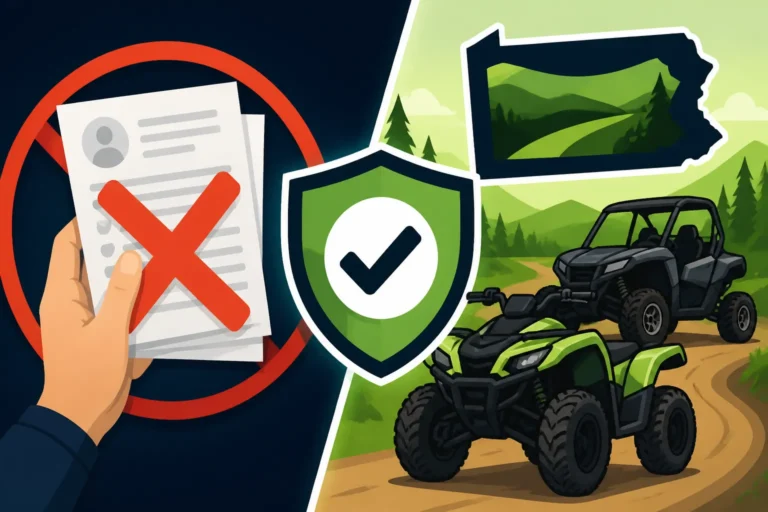
Registration, trail permits, and permission to ride answer different questions. A valid registration does not automatically provide access to a trail, and a trail permit does not make a closed route legal. Before leaving home, check each requirement that applies to your machine and destination.
If your route includes private land, get permission from the landowner rather than assuming a road or trail is open because other people use it. For public land, follow the posted rules and route markings. [Pennsylvania Rules for Riding a Closed Trail] explains why a visible track or tire marks are not reliable evidence that riding is allowed.
A visitor riding a machine registered elsewhere should also check whether Pennsylvania recognizes that registration for the planned trip and whether the particular trail system has its own permit rules. [Pennsylvania ATV Reciprocity With Other States] is a useful starting point, but trail access requirements still need to be checked separately.
How to Plan a Rifle-Season Ride
Confirm the route from the trailhead to the turnaround
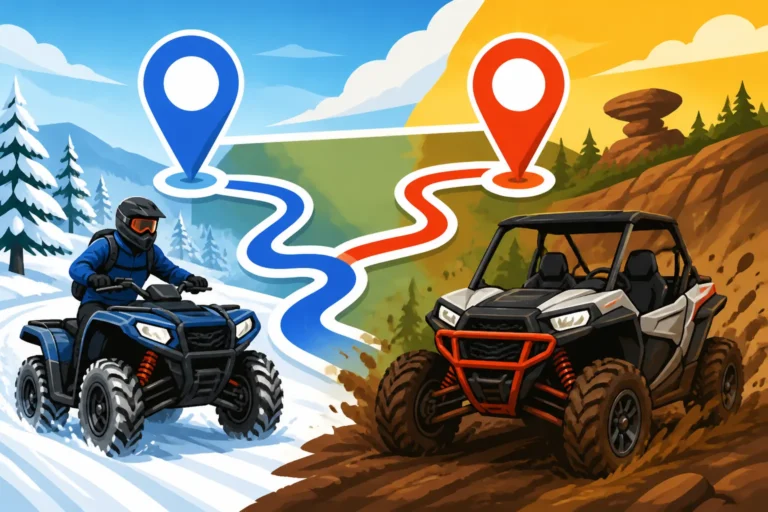
Do not check only the destination trail. Review the complete trip, including the road to the staging area, connections between trail sections, and the route you plan to take back. A closure on one connector can turn a straightforward loop into an out-and-back ride or leave you needing to retrace your route.
Use a current map to make a plan, then compare it with official notices and posted signs. onX Offroad can be useful for visualizing the route and saving a map for areas where cell service may be weak. Still, confirm the legal status of each segment through the land manager. A route line in an app is a planning aid, not authorization.
Before you travel, write down the trailhead name, intended route, planned turnaround point, and any alternate route that is confirmed open. In areas near Westport, Kettle Creek, or the Allegheny National Forest, a familiar name may refer to more than one access point or trail segment. Specific route details help avoid confusion once you are in the woods.
Check permits, registration, and machine limits
Make sure your machine is properly registered and that you have the permits required for the particular riding area. Pennsylvania’s state forest riding opportunities and permit requirements can differ by location; some trails have specific access rules, while other areas may not require the same permit. Start with [Pennsylvania ATV Trail Permits Explained] and confirm the rules for your destination before you go.
Also check restrictions on vehicle dimensions, weight, or permitted machine type. A side-by-side that is legal to operate in one location may not fit the limits for a particular trail system. Do not assume that a route suitable for a narrow ATV will accommodate a wider UTV. [Pennsylvania Trails for a Wide Machine] can help frame what to investigate before loading up.
Carry the required registration and permit proof with you, and keep it protected from water and mud. If you are riding with a group, make sure each operator understands which paperwork applies to their own machine. One rider’s documents do not cover the rest of the group.
Plan for short days and limited phone service
Late-fall daylight can disappear quickly, especially under a dense canopy or along a shaded mountain road. Set a turnaround time that leaves room for delays, a slow section, or a minor repair. If the group is moving more slowly than expected, shorten the route rather than pressing on toward a planned destination.
Tell someone who is not riding where you are going and when you expect to return. Include the staging area and the general route, not just the name of a nearby town. Download or save essential map information before leaving service, and carry a backup navigation option if you have one.
A mapping tool such as onX Offroad may help you follow a planned route when reception is poor, but batteries, devices, and downloaded maps can fail or become difficult to use in cold weather. Keep a charged phone in a secure pocket, consider a portable battery, and know how to retrace your route without relying on a live connection.
| Before the ride | What to verify | Why it matters |
|---|---|---|
| Route access | Current openings, closures, and posted restrictions | A mapped route may be seasonally closed |
| Land status | State forest, National Forest, game lands, or private property | Rules differ between land managers |
| Permits and registration | Requirements for the machine and riding area | Registration alone may not authorize trail access |
| Machine fit | Width, weight, and vehicle-type restrictions | A route may not accommodate every ATV or UTV |
| Weather and daylight | Forecast, surface conditions, and return time | Mud, ice, and early darkness can slow a ride |
| Group plan | Route, turnaround point, and emergency contact | Helps everyone respond if the group gets separated |
Sharing the Woods With Hunters
Make yourself visible without assuming orange is a legal substitute
Hunters and riders may be using the same general area during rifle season, even when their activities take place on separate routes. Wear conspicuous clothing, such as blaze orange, so you are easier to see among trees and brush. Keep lights in good working order, and avoid dark clothing that blends into the late-fall landscape.
Visibility is a safety choice, not permission to ride where you are not allowed. Follow the requirements that apply to the land and activity, and do not assume that wearing orange replaces a trail permit, registration, or posted-route rule. If you are unsure what a sign means, stop and check before continuing.
Make yourself visible to other riders, too. On narrow forest roads, slow down before bends and rises where someone approaching from the other direction may not see you. If visibility is limited, reduce speed enough that you can stop within the distance you can see clearly.
Keep noise and speed under control
A loud or fast-moving group can disrupt hunters, wildlife, and nearby residents. Ride at a controlled pace, stay on the authorized route, and avoid revving the engine unnecessarily while stopped. If you meet people on foot, slow down well in advance and give them room to move safely.
Use extra caution near trailheads, parking areas, and road crossings. A hunter may be walking between locations or carrying equipment, and a vehicle may be approaching from a side road. Stop when necessary, make eye contact where possible, and wait until the route is clear before proceeding.
Keep group size manageable and agree on basic riding etiquette before setting off. Choose a lead rider who knows the plan and a sweep rider who can make sure nobody falls behind. If the group becomes separated, stop at an agreed meeting point rather than having riders search different roads independently.
Respect signs, gates, and people on foot
A gate, closure notice, or posted restriction is not an invitation to find a way around. Do not ride around a barrier, cut across vegetation, or follow an unofficial track to reconnect with your route. Those shortcuts can damage land, create conflict, and take you onto property or roads where riding is prohibited.
If you encounter hunters or other land users, give them space and avoid lingering nearby. Do not approach someone who is actively hunting just to ask whether a trail is open. Check signs and official information instead, and turn around if the status is unclear.
Dogs, children, passengers, and inexperienced riders need additional planning. Keep the group together, make sure every operator understands the route, and avoid adding unplanned detours. A calm, predictable group is easier for others to notice and safer to pass.
Riding Safely in Late-Fall Conditions
Expect mud, leaves, and hidden obstacles
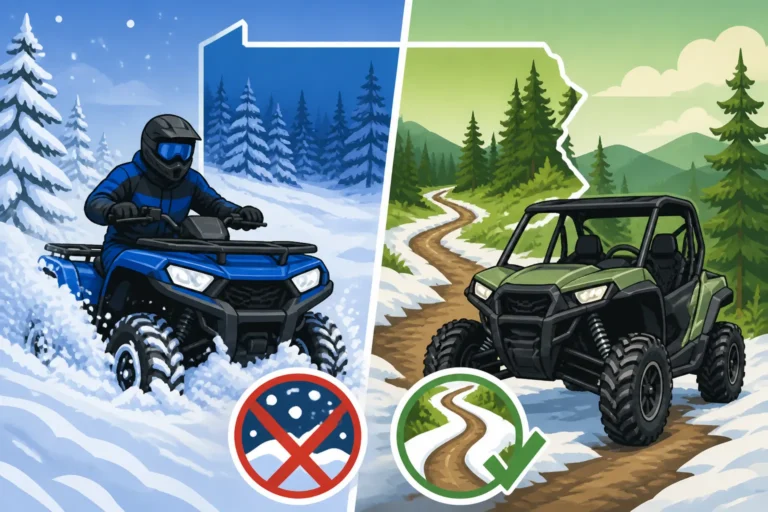
A trail that was firm earlier in the season can become slick after rain or a freeze-thaw cycle. Wet leaves can conceal roots, rocks, ruts, and drainage cuts. Ride at a pace that gives you time to react, and do not assume that a familiar trail will have the same surface each time you visit.
Mud is more than an inconvenience. Spinning tires can deepen ruts and damage a route, while a machine stuck in a remote area can create a difficult recovery for the entire group. If a trail is too soft or visibly deteriorating, turn around rather than trying to power through. [Pennsylvania Trails After Heavy Rain] offers related guidance on recognizing when conditions are better left alone.
Carry equipment appropriate to your machine and route, such as basic tools, a first-aid kit, water, and recovery gear suited to your group’s experience. Tell the group what equipment is available before you need it. A winch or tow strap is useful only when riders know how to use it safely and have suitable attachment points.
Prepare for cold, darkness, and changing weather
Dress in layers that can handle wind and damp conditions. Gloves that become wet can make it harder to operate controls, while a cold rider may become tired or impatient. Keep spare dry clothing protected from rain and mud, especially on longer rides or trips far from the staging area.
Check lights and reflectors before leaving. Plan to finish well before dark rather than relying on headlights to extend a ride that is already running late. If your route includes a road open to vehicles, understand the rules for that specific road and avoid assuming that a forest road is automatically an ATV route.
Carry water and food even if the ride is short. A mechanical problem, blocked route, or slow-moving group can turn a quick outing into a long one. A charged phone and saved map are useful, but tell someone your plan as a backup.
Know when to cancel or turn around
Cancel if official information indicates that the route is closed, if a permit requirement is unclear, or if the forecast suggests conditions your group cannot manage. The same goes for a machine that is not suited to the route or a rider who is not comfortable with the terrain. Saving the trip for another day is better than forcing an uncertain ride.
Turn around if you encounter a closure, a washed-out section, unsafe ice, or a route that appears to continue onto land where you do not have permission. Do not treat a closure as a puzzle to solve by finding an alternate track. Check an official source before choosing another route.
During rifle season, a good ride is one that respects both the riding rules and the people using the forest. Confirm access, carry the right paperwork, make yourself visible, and leave enough time to get back safely. These habits make it easier to enjoy Pennsylvania’s woods without turning a day out into a preventable problem.
Disclaimer
This article is for general informational purposes only and does not constitute professional advice. Laws, prices and regulations vary by location and change over time. Consult a qualified professional for guidance on your specific situation.