Pennsylvania’s Conditional Reciprocity Rule
Pennsylvania’s Conditional Reciprocity Rule
Bringing an ATV or UTV into Pennsylvania can raise a confusing question: does a registration from another state let you ride here? The answer depends on reciprocity, and reciprocity is not blanket permission for every machine, trail, or road. This guide explains what the rule generally means, what to verify before a trip, and which Pennsylvania requirements can still apply.
What conditional reciprocity means in Pennsylvania
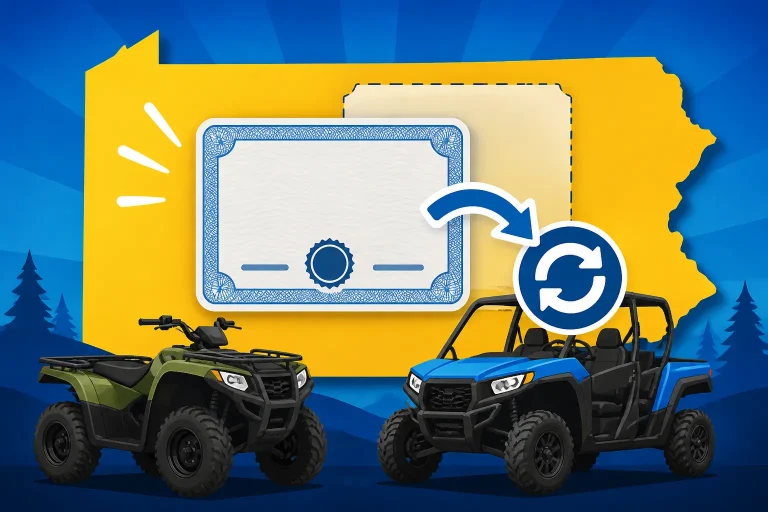
Reciprocity is an agreement or policy under which Pennsylvania recognizes another state’s ATV registration for a visitor, generally when that state also recognizes Pennsylvania registrations. The “conditional” part matters: having an out-of-state plate does not automatically settle whether your machine meets Pennsylvania’s registration requirement.
The key issue is whether Pennsylvania recognizes the registration issued by your home state for the machine and the kind of riding you plan to do. Rules can differ between states, and the relevant requirements can change. Do not assume that registration in one state is automatically accepted in another just because both states issue ATV registrations.
For a visitor, reciprocity is mainly about whether the machine’s home-state registration can serve in place of Pennsylvania registration. It does not turn an ATV into a road-legal vehicle, provide permission to enter private property, or replace any separate trail permit. Registration and access are different questions.
This distinction matters because riders often use the word “permit” to mean several different things. Pennsylvania registration identifies the machine under the state’s registration system. A trail permit, where required, is tied to access on particular land or trail systems. A safety certificate, insurance, and permission to ride a particular property are separate requirements.
If your home-state registration is valid and Pennsylvania recognizes it for your situation, you may be able to ride as a visitor without obtaining Pennsylvania registration. If it is not recognized, or if your machine is not registered in its home state when registration is required there, you may need Pennsylvania registration before riding. The right answer depends on your home state, the machine, and where you intend to ride.
| Question | What reciprocity may affect | What it does not automatically provide |
|---|---|---|
| Is the machine registered in another state? | Whether Pennsylvania may recognize that registration for a visitor | Permission to ride every Pennsylvania trail or road |
| Does the home state recognize Pennsylvania registrations? | Whether the states’ rules may allow reciprocal recognition | A guarantee that every machine or rider qualifies |
| Do you plan to ride a designated trail system? | Usually not the separate access rules for that system | A trail permit or landowner permission |
| Are you riding on a road? | Registration status alone does not make the road open to ATVs | Street legality or permission to use a road |
For a broader overview of how states’ rules interact, see Pennsylvania ATV Reciprocity With Other States. If you need the narrower question of whether Pennsylvania recognizes a particular out-of-state registration, Does Pennsylvania Honor an Out-of-State Registration? covers that issue directly.
What to verify before riding as a visitor
The safest approach is to check the details before loading your machine. Reciprocity can be straightforward when your registration is current and the rules are clear, but uncertainty at the trailhead can mean a wasted trip or a citation.
Confirm that your home-state registration is valid
Check that the registration is current and applies to the ATV or UTV you plan to bring. If your home state requires registration, do not rely on a bill of sale, a registration application, or a plate that belongs to a different machine as a substitute for a valid registration.
Make sure the identifying information matches the machine. If the registration record includes a vehicle identification number, compare it with the VIN on the frame. Keep the registration document or other accepted proof with you; a plate alone may not answer every question during a roadside or trail check.
If you are uncertain about the machine’s registration status, resolve that at home before travelling. A state may have different rules for residents and nonresidents, different machine classifications, or separate requirements for public-land use. A machine that is exempt from registration in one state is not necessarily exempt from Pennsylvania’s requirements.
Ask whether Pennsylvania recognizes your state’s registration
Do not rely on assumptions based on a neighboring state, an old trip, or what another rider remembers. Verify the current rule with Pennsylvania’s official ATV registration information or the relevant state agency. Ask specifically whether Pennsylvania recognizes your machine’s home-state registration for a nonresident, and whether any conditions apply.
It can help to have these details ready:
- Your state of residence
- The state that issued the registration
- Whether the registration is current
- Whether the machine is an ATV or UTV
- The type of riding you plan to do
- The Pennsylvania trail system or land area you plan to visit
A general question such as “Does Pennsylvania have reciprocity?” may not produce a useful answer if the rule depends on your home state or machine type. A precise question makes it easier to confirm what applies.
For practical trip preparation, Riding Pennsylvania With an Out-of-State Plate and Carrying Proof of an Out-of-State Registration address what visitors should carry and consider while riding.
Find out what to do if your state does not qualify
If Pennsylvania does not recognize your home-state registration for your circumstances, ask whether you need Pennsylvania general registration before riding. A nonresident who needs Pennsylvania registration should not assume that a limited registration is a visitor substitute. Pennsylvania’s limited registration is intended for restricted use on the owner’s own land, not general public trail riding.
If you are considering Pennsylvania registration, check the application requirements before travelling. The paperwork may depend on ownership, title status, how you acquired the machine, and whether a sales tax issue needs to be documented. Registering an Out-of-State Machine in Pennsylvania explains the process for machines coming from another state.
Do not make a last-minute decision based only on whether your machine has a visible plate. Registration recognition depends on the underlying rules and documentation, not just the appearance of the machine.
Reciprocity does not replace trail permits or access permission
A common mistake is to treat registration as an all-purpose riding pass. It is not. Even if Pennsylvania recognizes your out-of-state registration, you may still need a separate permit for the land or trail system you want to ride.
Pennsylvania has different access arrangements for different places. Some designated state forest trails require a regional trail permit. The Allegheny National Forest has its own permit requirements. Private parks and clubs can set their own entry rules. On private land, you generally need permission from the landowner or the organization that controls access.
Before travelling, identify the specific trail system rather than planning around the state as a whole. Check whether the route is open, whether a permit is required, what machine types are allowed, and whether there are width or seasonal restrictions. A registration accepted for use in Pennsylvania does not override local closures or trail rules.
For example, riders planning to use the northcentral state forest trail system should review Pennsylvania’s Northcentral Regional Trail Permit. Visitors heading to the Allegheny National Forest should check Pennsylvania’s Allegheny National Forest Permit. These requirements are separate from whether Pennsylvania recognizes the registration on your machine.
Also check whether the route you plan to ride is actually open to ATVs or UTVs. A road, forest route, or trail may be closed to motorized recreation even when the machine is registered and the rider has the appropriate permit. Road use has its own restrictions; a registration from another state does not make a public road legal for ATV travel. For more on visitor requirements, see What Pennsylvania Charges Visitors to Ride.
A useful planning order is:
- Choose the trail system or property you intend to visit.
- Confirm that the machine is permitted on that system.
- Check for separate trail permits, passes, or club requirements.
- Confirm whether Pennsylvania recognizes your home-state registration.
- Check insurance, safety, equipment, and age rules that may apply.
- Carry proof of registration and any required permits or permission.
This order helps avoid buying a permit for a place your machine cannot use, or arriving with valid registration but no required access permit.
Registration, insurance, safety, and road rules are separate
Reciprocity usually answers a limited question about registration. Other Pennsylvania rules may still apply to an out-of-state visitor. Check each requirement separately instead of assuming that a valid home-state plate settles everything.
Insurance
Pennsylvania’s insurance requirements can depend on where and how you ride. Do not assume that a home-state insurance card automatically proves that your policy covers ATV or UTV use in Pennsylvania. Check the policy language, including whether it covers off-road use and any passenger or liability circumstances relevant to your ride.
Carry the proof required for your situation. If you are unsure what documentation Pennsylvania expects, confirm it before the trip. The related article Pennsylvania ATV Registration and Insurance Proof can help separate registration documents from insurance evidence.
Safety requirements
Age and safety rules may apply regardless of where the machine is registered. A certificate issued by another state is a separate matter from registration reciprocity; one does not automatically establish the other. Families travelling with young riders should verify Pennsylvania’s age, supervision, machine-size, and training rules for the specific place they plan to ride.
For certificate recognition, see Does Pennsylvania Honor an Out-of-State Safety Certificate?. If a younger rider is coming along, also review Pennsylvania Rules for Riders Aged 8 to 15 before choosing a route or machine.
Roads and crossings
A plate from another state does not make an ATV street legal in Pennsylvania. Road use is limited to circumstances allowed under Pennsylvania law, including any applicable designated-road rules and crossing requirements. A road being convenient, unposted, or commonly used by local traffic does not by itself mean ATVs may ride there.
Plan routes using roads and trails that are specifically open to ATV use. Do not use reciprocity as a reason to ride an unapproved connector between trail systems or to travel from a staging area to a trailhead on a road that is closed to ATVs. For the state’s general road-use rules, see Street Legal ATVs in Pennsylvania: The Short Answer.
Machine type and trail restrictions
A UTV may be treated differently from an ATV for access on a particular trail, even when both are registered. Trail systems may limit width, weight, or machine class. Verify the rules for your specific vehicle, especially if it is a side-by-side or a modified machine.
A registration accepted for a narrow ATV does not guarantee that a wider UTV can use the same trail. Confirm dimensions and permitted machine types directly with the trail operator or land manager. If the machine is too wide for the route, a valid plate and permit will not make it eligible.
A practical checklist for out-of-state riders
Before leaving home, gather the information that proves your machine and ride are in order. Keep copies accessible, and do not rely on a phone signal at a remote trailhead to retrieve documents or clarify a rule.
Before the trip
- Confirm the machine is currently registered in its home state, if required.
- Check that the registration information matches the machine.
- Verify whether Pennsylvania recognizes that registration for a visitor.
- Ask whether Pennsylvania registration is needed if reciprocity does not apply.
- Confirm whether the destination requires a separate trail permit or pass.
- Check trail openings, seasonal closures, and machine-width limits.
- Review insurance coverage for ATV or UTV use in Pennsylvania.
- Confirm applicable age, supervision, helmet, and safety-certificate rules.
- Plan road crossings and any permitted road segments in advance.
- Get permission for private or club land if required.
Carry on the ride
Bring proof of registration and the required access permit or pass. Carry insurance proof if it applies, along with any safety certificate or other document required for the rider. Keep papers dry and protected, but make sure they can be produced if requested.
If travelling in a group, each rider should know which documents apply to their machine. One person’s registration or permit may not cover every machine in the group. Likewise, a permit may be tied to a specific vehicle or have other conditions; read its terms rather than assuming that a single purchase covers all riders.
If you cannot confirm reciprocity
Pause before riding and contact the appropriate Pennsylvania agency or trail operator. Ask whether your home-state registration is recognized and what alternative registration, if any, is required. Keep a note of the guidance and the date you checked, but follow the official rule if it differs from informal advice.
If you need Pennsylvania registration, leave enough time to meet the application and documentation requirements. If the issue is trail access rather than registration, resolve the permit or permission requirement with the land manager. These are different problems and may require different answers.
When a visit involves several trail systems, check each one separately. A registration may be recognized statewide while access permits, allowable machine sizes, and seasonal rules vary by destination. A little preparation is more reliable than assuming that one plate covers the entire trip.
Frequently Asked Questions
Can I ride in Pennsylvania with an out-of-state ATV registration?
Possibly. Pennsylvania’s conditional reciprocity depends on whether the state that issued your registration is recognized under Pennsylvania’s rules and whether your machine and circumstances qualify. Confirm the current requirement before riding.
Does reciprocity include a Pennsylvania trail permit?
No. Registration recognition and trail access are separate. A trail system may require its own permit, pass, membership, or permission even when your out-of-state registration is accepted.
Does an out-of-state plate make my ATV street legal in Pennsylvania?
No. Registration does not grant general road access. Use only roads and crossings that Pennsylvania allows for ATV travel, and check the rules for each route.
What if my home state does not register my machine?
Do not assume that the machine is exempt in Pennsylvania. Ask Pennsylvania’s registration authority whether you need Pennsylvania registration before riding, and confirm any paperwork requirements.
Disclaimer
This article is for general informational purposes only and does not constitute professional advice. Laws, prices and regulations vary by location and change over time. Consult a qualified professional for guidance on your specific situation.