Replacing a Lost Pennsylvania Certificate
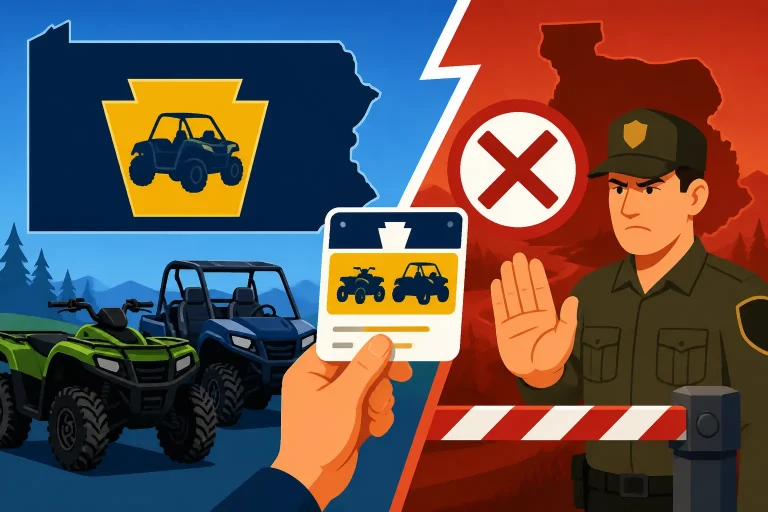
A lost ATV safety certificate can leave a young Pennsylvania rider unsure whether they can ride, even if they already completed the course. The practical first step is to identify who issued the certificate and ask how to verify or replace the record. Then check what the specific trail or land manager requires you to carry; a photo or course completion alone may not meet every rule.
Start with the organization that issued the certificate
A replacement is easiest to arrange when you can identify where and when the rider completed the safety course. Check old emails, course paperwork, school or instructor messages, and family files for a course confirmation or certificate copy. The provider or instructor may be able to locate the completion record and explain what proof they can issue.
If you do not know who ran the course, gather what you can before contacting anyone:
- The rider’s full name at the time of the course
- Date of birth
- Approximate course date and location
- Instructor, school, club, or training provider name, if remembered
- Any course confirmation number, email, or other paperwork
- Current mailing address and a reliable contact method
Give the issuer enough information to search, but do not send sensitive personal information through an unverified email address or social media account. Use contact details from the original course materials or the provider’s official website.
If the instructor or provider is no longer available, ask the Pennsylvania agency or office responsible for ATV safety training which organization maintains the training record and what it accepts as a replacement request. The Pennsylvania DCNR Snowmobile and ATV Section is a useful starting point for questions about the state’s ATV program. For related background on who must complete training, see Pennsylvania ATV Safety Certificate Requirements and Pennsylvania Safety Certificates for Ages 8 to 15.
Ask for proof of the old record, not just a new course
When you contact the issuer, explain that the rider completed the course and needs a replacement certificate or another way to verify completion. Ask whether it can:
- Reprint or reissue the original certificate
- Provide a replacement card or document
- Send written confirmation of the completion record
- Explain how to correct a name or address error on the record
- Confirm whether the rider must repeat any part of the course
A replacement process may depend on who ran the original course and how its records are kept. A provider may ask for identifying information or a written request. Do not assume that a missing card means the rider must take the course again, and do not assume that an email saying “completed” is an acceptable substitute for the certificate. Get a clear answer from the issuer.
If the original course was taken through a school, club, or local instructor, start there rather than signing up for another course immediately. If you need help finding a course or instructor, Where to Take a Pennsylvania ATV Safety Course explains the next step.
What to do while you wait for a replacement
Until the record is verified, avoid putting a young rider in a situation where they may be expected to show a certificate and cannot do so. A parent’s statement that the course was completed may not be enough for a land manager, event organizer, or enforcement officer. Requirements can depend on the rider’s age and where they are riding, so check the rule for the exact place and activity.
If the rider needs to ride soon, call the trail operator or land manager before leaving home. Ask whether they require the original certificate, accept a reprint, or will accept another form of verification while a replacement is being processed. Get the answer from the organization responsible for that riding area, not only from someone who has heard what another trail accepts.
A screenshot, scan, or photograph of the lost certificate may help confirm details, but it should not be treated as an official replacement unless the relevant authority says it is acceptable. The same is true of a course enrollment email, an instructor’s informal note, or a parent’s copy of the rider’s information. Keep any available copy handy while you seek a verified replacement, but confirm what proof is valid before relying on it.
| Situation | Practical next step | What not to assume |
|---|---|---|
| You know the course provider | Contact it and request a replacement or completion verification | That a new course is automatically required |
| You remember the instructor but not the provider | Ask the instructor where the training record is held | That the instructor can issue an official replacement |
| You cannot identify the course provider | Contact the state ATV program for direction | That any course provider can retrieve another provider’s records |
| You have a photo or scan | Keep it available and ask whether it is accepted | That a digital image is always valid proof |
| The rider is scheduled for a ride soon | Confirm requirements with that trail or land manager first | That one trail’s policy applies everywhere |
A replacement certificate is separate from machine registration, a trail permit, and insurance. A rider may need one or more of those items depending on the machine and destination, but replacing a training certificate does not renew or replace them. For age-related rules, review Pennsylvania Rules for Riders Aged 8 to 15 and confirm requirements with the organization responsible for the riding area.
Keep the replacement easy to find and readable
Once the issuer provides a replacement, check it before putting it away. Make sure the rider’s name and other identifying details are correct, that the document clearly shows course completion, and that the certificate is legible. If something is wrong, contact the issuer promptly while the record is available.
Store the original in a dry, secure place at home, and keep a separate copy where a parent or guardian can find it. A digital scan can be useful as a backup, but it should supplement—not replace—the accepted proof unless the relevant authority confirms otherwise. If the certificate is a card, a clear waterproof sleeve can help protect it from rain and mud. Keep contact information for the issuer with the saved copy so a future replacement request is easier.
Before a ride, check what the rider must carry and who needs to be able to show it. An event organizer may want to see a document during registration, while a trail operator may have its own instructions. The guidance in Carrying the Certificate on a Ride can help you think through how to keep proof accessible, but always follow the specific destination’s current requirements.
It also helps to keep safety-course documentation separate from the ATV’s registration papers. A certificate belongs to the rider, while registration documents relate to the machine. Store them in separate labeled sleeves or folders so a parent does not accidentally bring the machine paperwork and leave the rider’s proof at home. A small waterproof document holder, including one sold through Amazon, can help keep a paper copy dry, but it does not change which documents an authority accepts.
If a rider has more than one certificate or has taken an additional course, save each record with its course name and completion date. That makes it easier to provide the right document when a trail or program asks for proof. Avoid writing extra personal details on the certificate itself; keep any notes on a separate page or in a secure digital file.
When a replacement may not be available
Sometimes the organization cannot find a record, or the rider cannot remember enough information to identify the course. Ask the provider to search using reasonable variations, such as a former name, alternate spelling, or approximate course date. If the provider has closed or transferred its records, ask where those records went and whether the state ATV program can direct you to the current record holder.
If no completion record can be verified, ask an authorized training provider whether the rider needs to take the course again. Do not rely on a certificate issued by a different organization unless it is accepted for the purpose at hand. The question is not simply whether the rider has attended some ATV instruction; it is whether the rider can show proof that meets the applicable Pennsylvania and riding-site requirements. For questions about training taken outside Pennsylvania, see Does Pennsylvania Accept an Out-of-State Safety Certificate?.
Keep notes of calls and emails: the date, the organization contacted, the person or office you reached, and the instructions they gave. If the issuer says a replacement is on its way, ask how it will be delivered and what to do if it does not arrive. If a deadline or riding event is approaching, ask whether the issuer can provide written confirmation while the replacement is prepared, and verify separately whether the destination will accept that confirmation.
A lost certificate is usually a records problem, not proof that the rider never completed training. Start with the original issuer, verify the record, and ask the place where the rider plans to ride what documentation it accepts. Once the replacement arrives, check it for accuracy and keep both a protected original and a backup copy.
Disclaimer
This article is for general informational purposes only and does not constitute professional advice. Laws, prices and regulations vary by location and change over time. Consult a qualified professional for guidance on your specific situation.