Pennsylvania Safety Certificates for Ages 8 to 15
Pennsylvania parents often have to sort out three separate questions before a child rides: whether the child needs a safety certificate, where the course comes from, and whether the machine and riding area allow that child to ride. The key is that a certificate is a rider credential, not a pass to ride anywhere. Here’s how to prepare for riding on Pennsylvania public land.
What Pennsylvania’s Safety Certificate Does
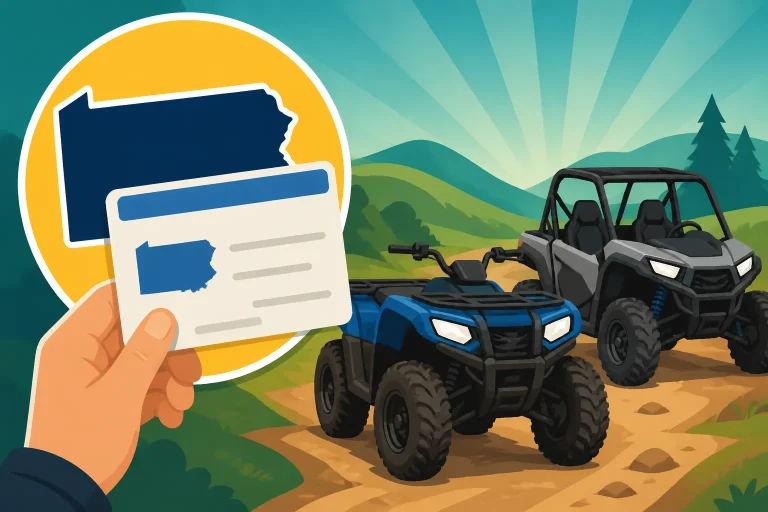
For riders ages 8 to 15, Pennsylvania’s ATV safety certificate is a record that the rider has completed an approved safety course. It is a rider-specific requirement for young people operating on public land, not a registration document for the ATV or UTV. Pennsylvania’s rules for young riders also involve age, machine size, supervision, and the rules of the land where they ride.
That distinction matters. A child might have completed a course but still be too young to ride a particular machine, or the machine might not have the registration or permit needed for the planned trail. A certificate also does not give permission to ride on private property or override a closure, trail rule, or landowner restriction.
| Requirement or document | What it applies to | What it does not replace |
|---|---|---|
| Safety certificate | The young rider’s completion of approved safety training | Vehicle registration, trail permits, or permission to ride |
| ATV registration | The machine’s registration status | The rider’s safety certificate |
| Trail permit, where required | Access to certain designated trails or lands | Registration or youth safety requirements |
| Landowner permission | Access to private land | Public-land rules or required documents |
For a wider overview of the age and training rules, see [Pennsylvania ATV Safety Certificate Requirements] and Pennsylvania Rules for Riders Aged 8 to 15. If a rider is younger than eight, do not treat a certificate as a way around the minimum-age restrictions. Pennsylvania’s rules for riding on state land set a lower age boundary; check the current requirements before planning a trip.
A certificate should also not be confused with a state forest trail permit. Some trails require a separate permit for the machine, and other rules may apply based on where the trail is located. The certificate addresses the rider’s safety training; it does not authorize the vehicle to use a trail.
Who Needs a Certificate and What the Age Rules Mean
The certificate question usually comes up when a child is going to ride on public land, including a permitted trail system. Parents should confirm the requirement for the specific land and route, because public-land access rules can differ from rules on private property. When in doubt, treat the certificate as necessary for a rider in the 8-to-15 age group and verify the details with the land manager or Pennsylvania’s DCNR.
The age range is important, but it is not the only limit. Pennsylvania places restrictions on which machines younger riders may operate. For example, riders who are eight or nine face a 70cc engine-size cap. Do not rely on a child’s height, experience, or ability to reach the controls as a substitute for checking the legal machine limit. The rules can vary by age, and the machine’s specifications matter.
A practical pre-ride check includes:
- Confirm the rider’s age and the rules that apply to that age.
- Check the ATV or UTV’s engine size and any applicable width or trail restrictions.
- Confirm that the rider has the required safety certificate for the riding area.
- Check the vehicle’s registration and any trail-specific permit requirements.
- Review supervision, helmet, insurance, and route rules for the location.
- Confirm that the trail is open to that type and size of machine on the planned date.
For a closer look at the rules for a younger child, see [Pennsylvania Rules for a Nine-Year-Old Rider] and [Pennsylvania Minimum Age to Ride an ATV]. These details are useful when choosing a machine as well as when deciding whether a planned ride is appropriate.
A safety certificate does not mean that every trail is suitable for every young rider. Trail width limits, surface conditions, steep or rocky sections, and traffic can make a route inappropriate even when the machine and rider meet the basic requirements. Parents should look at both the legal rules and the child’s ability to manage the terrain safely.
Supervision is another point to confirm before riding. A certificate shows that training was completed; it does not mean a young rider can automatically ride alone or without an adult nearby. The land manager may have additional requirements, and the safest plan is to have a responsible adult supervise closely, particularly on unfamiliar trails.
How Riders Ages 8 to 15 Get the Certificate
Young riders should use an approved course rather than assume that any ATV class or online video will count. Pennsylvania offers safety training for youth through qualified instructors. The course format and availability can depend on the location, so families should check the current options before making travel plans.
For this age group, start with Pennsylvania ATV Course for Ages 8 to 15 and Where to Take a Pennsylvania ATV Safety Course. If you need a local option, Finding a Pennsylvania Youth Safety Instructor can help narrow down the next step. Ask the instructor or program administrator whether the specific course results in the certificate Pennsylvania requires for the intended use.
A good course is more than a formality. Training can help a young rider understand basic controls, protective equipment, safe starting and stopping, riding within their ability, and how to respond to hazards. Parents can make the course more useful by discussing the family’s own machine and riding plans before and after the training.
Before registering for a course, confirm:
- The course is intended for the rider’s age group.
- The provider is approved or otherwise recognized for Pennsylvania’s requirement.
- The course provides the required certificate after successful completion.
- The family understands what identification or paperwork the rider should bring.
- The provider explains how the certificate is issued and what to do if it is lost.
- The training date and location work for the child and accompanying adult.
Do not assume a course completion email, registration receipt, or attendance slip is the same as the certificate. Ask what proof the rider will receive and whether a card or other official document must be carried. If the certificate is mailed or issued later, allow enough time before the planned ride to receive it.
Online training deserves a separate check. Pennsylvania has different course options for different ages; an online course designed for older riders should not be assumed to satisfy the youth requirement. The fact that a course discusses ATV safety does not by itself establish that it is accepted for a particular age group. Check the age eligibility and certificate recognition before paying for or taking a course. For the older age group, see Pennsylvania Online Courses for Riders Sixteen and Over.
If the rider has taken a course in another state, do not assume the document automatically meets Pennsylvania’s requirement. Acceptance can depend on the course and the certificate. Ask DCNR or the relevant land manager before traveling, and keep the certificate available while that question is resolved. A visiting family should also check whether the machine’s home-state registration is recognized for the specific Pennsylvania riding area.
What to Carry and Check Before Riding
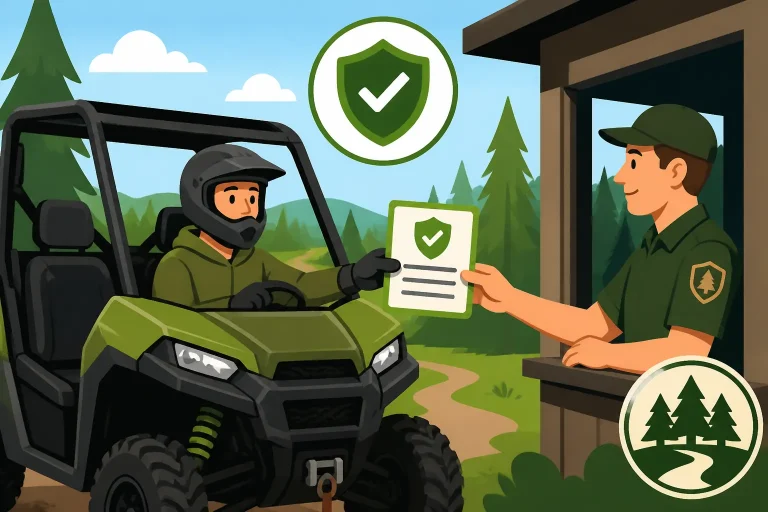
A completed course is only useful if the family can show that the rider has the required proof. Keep the certificate in a secure, dry place and make sure the young rider and supervising adult know where it is. A phone photo can be a helpful backup, but do not rely on it as a replacement for the required certificate unless the authority responsible for the ride confirms that digital proof is accepted.
The rider and adult should also separate the paperwork by purpose. The certificate belongs to the rider; registration and permit documents relate to the machine or trail access. For public-land riding, check the rules for the exact trail system rather than assuming that registration alone is enough. Pennsylvania’s trail systems do not all have identical access requirements.
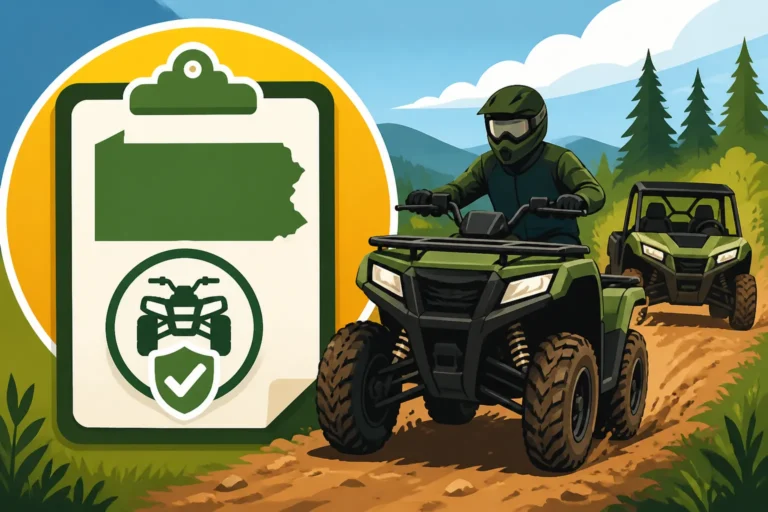
Before leaving home, use this checklist:
- The rider is old enough for the intended riding area.
- The rider has completed the appropriate approved safety course.
- The required certificate is available to carry.
- The machine complies with age-based engine-size rules and trail limits.
- Registration is current and the plate or other required identification is properly displayed.
- Any required trail permit has been obtained for the machine.
- Insurance and proof of coverage meet the rules for the location and ride.
- The adult has checked operating hours, seasonal closures, and route restrictions.
- The child has a properly fitting helmet and other suitable protective gear.
- The machine’s controls and safety features have been reviewed with the rider.
A safety certificate does not replace helmet requirements or insurance rules. It also does not make an otherwise ineligible machine legal for a child to operate. Keep those checks separate: certificate for the rider, registration and permits for the machine and access, and protective equipment and supervision for safe operation.
If the certificate is lost, ask the course provider or the appropriate Pennsylvania office how to obtain a replacement. Do not assume that a past course can be verified quickly at a trailhead. [Replacing a Lost Pennsylvania Certificate] covers the replacement question, and Carrying the Certificate on a Ride explains why having the proof with the rider matters.
Families visiting from another state should check both the safety certificate and machine documentation before setting out. A home-state registration may not automatically satisfy every Pennsylvania trail requirement, and an out-of-state training document may need confirmation. See Does Pennsylvania Accept an Out-of-State Safety Certificate? and Does Pennsylvania Honor Out-of-State Registration? for those separate questions.
Common Mistakes to Avoid
The most common mistake is treating a safety certificate as a universal riding pass. It is not. A certificate does not open a closed trail, grant access to private property, replace a registration, or satisfy a separate trail permit requirement. Families should verify each part of the trip independently.
Another frequent error is buying a machine first and checking the child’s age restrictions later. Engine size and trail dimensions can limit where a machine may go, even if the child has experience and has completed training. Check the age-based machine rules and the intended trail requirements before purchasing or borrowing an ATV.
Families can also get tripped up by course labels. A class may be advertised as ATV training without clearly stating whether it is approved for Pennsylvania youth certification. Confirm the age range, recognition, and exact certificate provided before enrolling.
Finally, do not leave the certificate at home because the adult took the course with the child or believes the paperwork is already on file. The rider should have the required proof available when riding. Carry it with registration and permit documents, but keep each document easy to identify.
The safest plan is straightforward: confirm the rider’s age eligibility, take the right course, carry the certificate, choose a compliant machine, and verify the access rules for the specific trail. That keeps training from being mistaken for permission and helps families avoid a wasted trip or an unsafe ride.
Frequently Asked Questions
Does every Pennsylvania rider under 16 need a safety certificate?
The requirement is especially relevant to riders ages 8 to 15 operating on public land. Check the rules for the specific riding area, and do not assume a certificate removes other age or machine restrictions.
Can a safety certificate replace ATV registration?
No. The certificate applies to the rider’s training. Registration applies to the machine, and a trail permit may be a separate requirement.
Can a child use an online ATV course?
Do not assume so. Course options vary by age, and an online course for older riders may not satisfy the youth requirement. Confirm the course’s age eligibility and acceptance before enrolling.
What should a family do if the certificate is lost?
Contact the course provider or the appropriate Pennsylvania office to ask about replacement proof. Carry the required certificate on rides rather than relying on an unconfirmed substitute.
Disclaimer
This article is for general informational purposes only and does not constitute professional advice. Laws, prices and regulations vary by location and change over time. Consult a qualified professional for guidance on your specific situation.