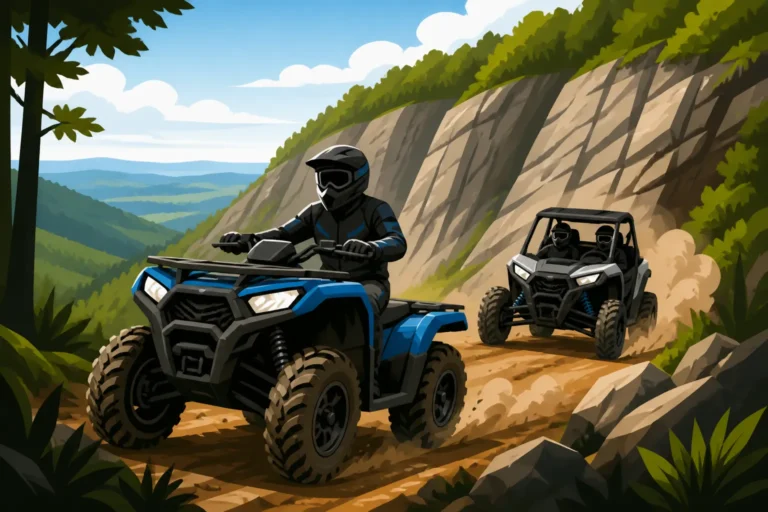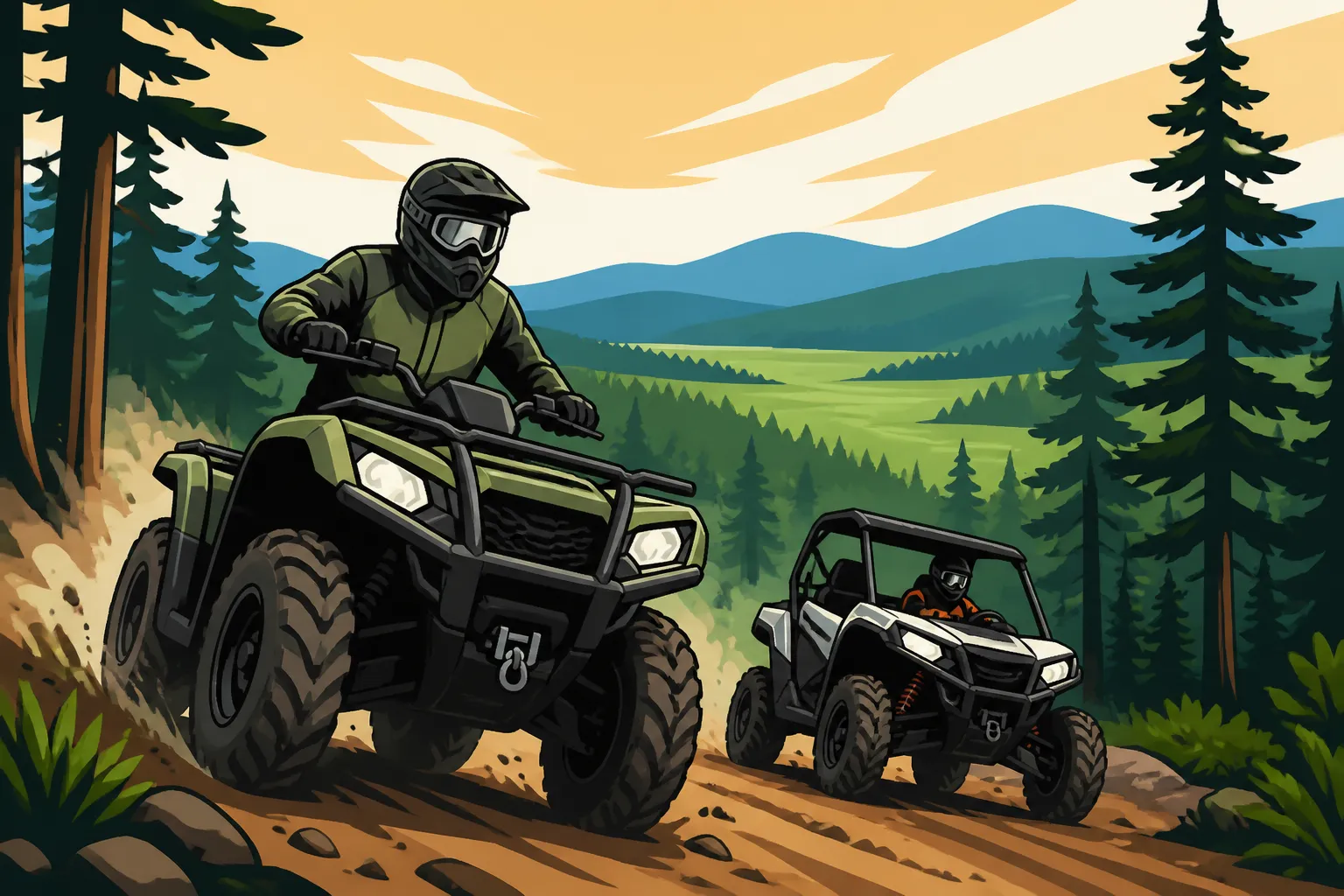
Big Flat and Pine Grove in Michaux
Michaux State Forest can make for a rewarding ATV ride, but planning a day on Big Flat or Pine Grove takes more than picking a trail on a map. Seasonal closures, machine-width limits, registration rules, and access points can all affect your plans. This guide explains how to prepare, what to check before you unload, and how to ride these trails responsibly.
Planning a Ride on Big Flat and Pine Grove
Understand where these trails fit in Michaux
Big Flat and Pine Grove are riding areas associated with Michaux State Forest in south-central Pennsylvania. Michaux spans parts of Adams, Cumberland, and Franklin counties, a region where forest roads, public recreation areas, and local communities sit close together. That makes the area appealing for a day trip, but it also means riders need to be clear about which routes are designated for ATV use.
A line that looks like a trail on a phone map is not automatically an ATV route. Forest roads and paths may be closed to motorized recreation, reserved for other uses, or subject to seasonal restrictions. Treat the official trail map and current forest notices as your starting point, then use a navigation app such as onX Offroad as a planning aid rather than as proof that a route is open.
It is also worth checking how far you will need to travel from your staging area to the trail itself. A route that seems close on a screen may involve a longer drive on local roads, and an ATV cannot simply use a public road to connect between trail sections unless that road is specifically open to ATV traffic. For road-use details, see [Pennsylvania's Designated ATV Roads].
Decide whether the trail suits your machine
Before loading up, compare your ATV or UTV with the restrictions for the specific trail. Pennsylvania state forest trails can have width and weight limits, and some routes are intended for narrower machines. The commonly referenced state forest trail width ceiling is not an invitation to assume every machine under that measurement is allowed everywhere; trail-specific rules still matter. Start with [The 64-Inch Width Limit in Pennsylvania] and confirm the current information for Big Flat or Pine Grove.
This is especially important for side-by-sides. A UTV may be comfortable for a long day and useful for carrying gear, but its width can rule it out on a trail designed for smaller machines. Measure the machine at its widest point, including tires or accessories if relevant, and compare that measurement with the applicable rules. For a closer look at the decision, read [Pennsylvania's Class II Trail Width Limit].
A simple pre-trip check can prevent a frustrating drive to the staging area followed by a quick turn-around:
- Identify the exact trail or trail section you plan to ride.
- Check whether the route is currently open to your type of machine.
- Confirm width, weight, and other posted limits.
- Verify the location of an approved parking or staging area.
- Recheck conditions and closure notices before leaving home.
| Planning question | What to confirm before riding |
|---|---|
| Is the route open? | Check current forest notices and trail information |
| Is my machine allowed? | Compare machine type, width, and weight with posted restrictions |
| Where can I unload? | Use an identified staging area and follow parking signs |
| Can I ride the connecting road? | Confirm it is an authorized ATV route, not merely a public road |
| Do I need extra paperwork? | Check registration, insurance, and any location-specific requirements |
Choosing the Right Season and Preparing for Conditions
Treat seasonal access as part of the plan
A trail that was open on a previous visit may not be open when you return. Pennsylvania riding areas can have designated operating seasons, weather-related closures, and temporary restrictions intended to protect trail surfaces. Big Flat and Pine Grove should be checked individually before a ride, rather than treated as open year-round simply because they appear on a map.
Seasonal dates are particularly important around spring thaw and after sustained rain. A trail can become soft and vulnerable even when the weather feels pleasant at the staging area. Riding when the ground is saturated can deepen ruts, damage the route, and make the next rider’s day worse. For the broader seasonal picture, review [Pennsylvania's ATV Trail Season] and [Why Pennsylvania Trails Close April 1].
Winter riding also comes with its own uncertainties. Frozen ground can change quickly, and snow or ice may hide rocks, drainage channels, and trail edges. A trail that was manageable in summer can feel substantially different when visibility is reduced or the surface is slick. Check for winter-specific access information rather than assuming that a cold forecast means a route is open.
Match your ride to the day’s conditions
The most useful pre-ride check is not just “Is it open?” but “Is it sensible for my group today?” Recent rain, windfall, mud, snow, and low visibility can all affect how safely you can travel. A beginner riding a stock ATV may want to choose a short outing and leave extra time for slow sections, while an experienced rider can still benefit from avoiding a route that has become badly rutted or blocked.
Pack for a delay, not just the ideal version of the day. Bring water, basic tools, a first-aid kit, a charged phone, and clothing suited to the forecast. If you ride with a group, agree on a meeting point before entering an area where riders may become separated. A navigation app such as onX Offroad can help you keep track of your planned route, but phone signal and battery life are not guaranteed in wooded terrain.
After heavy rain, consider postponing rather than trying to “get through” soft sections. Spinning tires can quickly worsen a muddy patch, and a machine stuck in a rut can turn a relaxing ride into a recovery job. The practical guidance in [Pennsylvania Trails After Heavy Rain] and [Trails Damaged by Spring Thaw] is useful when deciding whether conditions are worth the trip.
Registration, Permits, and Rules to Check
Sort out registration and insurance before you travel
Before riding, make sure your machine’s registration is appropriate for the use you have planned. Pennsylvania has different registration types, and the right option depends on where and how you ride. A registration that suits riding on your own property may not be the right fit for a trip to a public riding area. If you are sorting out the basics, start with [Pennsylvania's Limited and General Registrations].
Registration and trail access are related, but they are not the same thing. A registered machine is not automatically entitled to ride every forest route, and a trail permit does not replace any registration or insurance requirement that applies. Keep the registration documents and required proof of insurance accessible while riding. A tidy folder or waterproof holder can save a lot of rummaging when you are at the trailhead.
Permit rules depend on the riding area. Pennsylvania’s Northcentral Regional Trail Permit applies to specified trail systems in its covered region, and the Allegheny National Forest has its own requirements. Do not assume either applies to Michaux, and do not assume that a permit from one location grants access elsewhere. Check the rules for the precise trail you intend to ride and use [Pennsylvania ATV Trail Permits Explained] as a starting point for understanding the difference between registration and trail access.
Know the basic riding responsibilities
A designated trail is shared space. You may encounter other riders, hikers near access points, maintenance activity, or changing trail conditions around blind corners. Ride at a speed that lets you stop within the visible distance, stay on the marked route, and give other users room. If the trail is narrow, slow down well before passing rather than expecting the other person to move aside at the last moment.
Make sure each rider in your group understands the rules that apply to them. Age, supervision, safety training, helmet use, and passenger restrictions can affect whether a particular rider may operate or ride on a machine. Do not rely on a quick conversation in the parking area to settle those questions; review the rules in advance, especially when children or new riders are coming along. [Pennsylvania ATV Safety Certificate Requirements] is a useful place to begin.
Responsible riding also means leaving the trail as you found it. Avoid cutting corners, widening the route, riding around a closure, or spinning tires to force through a muddy section. Those choices can damage the trail and lead to restrictions that affect everyone. If you encounter a blocked or damaged area, turn around when safe and report the issue through the appropriate forest or trail contact rather than creating a new route around it.
Making the Most of Big Flat and Pine Grove
Set realistic expectations for your route
A common planning mistake is assuming two named trail areas form one easy continuous loop. Do not count on that without confirming the route, connections, and legal access points. A route shown as nearby on a map may be separated by roads or land where ATV travel is not allowed. If you are unfamiliar with Michaux, plan a conservative first outing and leave time to return to your staging area without rushing.
Use a map to understand the shape of the ride, but build in flexibility. A closure, trail maintenance, or a difficult surface can change your plan after you arrive. Mark your intended turnaround point, identify a safe way back, and make sure everyone in the group knows the plan. onX Offroad can be handy for viewing a planned route and keeping a sense of direction, but confirm trail access with the current official information.
For a first visit, a shorter ride can be more enjoyable than trying to cover every available section. You will have more time to learn the terrain, make careful decisions at intersections, and notice how your machine handles the surface. Once you understand the layout and conditions, you can plan a longer day with better estimates for fuel, breaks, and daylight.
Make the trailhead part of your preparation
Arrive with enough time to unload safely and review any posted information. Park only where permitted, keep access lanes clear, and secure your trailer and vehicle without blocking other users. If a parking area is busy, be patient and avoid unloading in a way that forces other drivers to maneuver around your equipment.
Before setting off, check that your helmet and protective gear fit correctly, your tires are in good condition, and your fuel level is adequate for the planned route. Carry the essentials on the machine, but avoid overloading it with loose gear that can shift on uneven ground. Tell someone who is not riding with you where you are going and when you expect to be back, particularly if you are visiting an unfamiliar section of forest.
Trail maps can help with orientation, but map interpretation takes care. A trail line does not tell you whether a section is muddy, rocky, blocked, or temporarily closed. Use [Pennsylvania Trail Maps From DCNR] alongside current notices, and keep a second way to navigate if your phone loses power. A downloaded map or a paper backup can be reassuring when your screen is suddenly more useful as a flashlight than as a map.
Riding Considerately and Handling Common Problems
Share a narrow trail without pressure
On a narrow or uneven section, the safer response is usually to slow down early and communicate clearly. Avoid crowding another rider from behind or assuming they can pull aside immediately. If you are traveling as a group, keep enough space between machines that each rider can react to a stop or obstacle without a chain reaction.
Dust can reduce visibility even when the trail is dry, while mud and wet leaves can make braking unpredictable. Leave a larger following gap than you would on a paved road, and resist the urge to pass unless the trail is wide enough and visibility is clear. Give walkers or other non-motorized users time and room, and follow any local signs or instructions about shared use.
Keep the group together at junctions. The lead rider should stop at a decision point when needed, and the last rider should know how to signal if someone has fallen behind. That small habit can prevent a rider from taking the wrong turn while everyone else assumes they are still directly behind.
Know when to turn around
Turning back is not a failed ride. It is often the best decision when a machine is outside the trail’s limits, a section is badly damaged, weather has changed, or a rider in the group is uncomfortable. Pressing on because you have already driven a long way can make a manageable inconvenience into a recovery, injury, or trail-damage problem.
If your machine becomes stuck, avoid repeated high-throttle attempts that dig it deeper. Stop, assess the surface, and use safe recovery techniques suited to your equipment and experience. Keep people clear of tensioned straps and winch lines, and never position yourself where a machine could slide or roll toward you. If the recovery is beyond the group’s ability, seek appropriate help rather than taking a dangerous shortcut.
Finally, report significant hazards or closures through the relevant forest or trail channel. A downed tree, washout, or damaged sign may affect the next rider too. Leave gates and barriers as you find them, stay on designated routes, and do not use a private drive or unmarked forest road as an improvised connector. That restraint helps keep Big Flat, Pine Grove, and the wider Michaux riding area available for responsible recreation.
Disclaimer
This article is for general informational purposes only and does not constitute professional advice. Laws, prices and regulations vary by location and change over time. Consult a qualified professional for guidance on your specific situation.