Buying From a Neighbor and Registering It
Buying an ATV or UTV from a neighbor, friend, or even a stranger through a local listing feels straightforward at first. You see the machine, you like it, you agree on a price, and boom, it's yours, right? Well, in Pennsylvania, when it comes to getting that machine legally registered to ride, a private sale often comes with its own unique set of hoops and hurdles that many first-time buyers find incredibly frustrating. This guide is here to walk you through exactly what you need to do, step by step, to successfully register an ATV or UTV you bought from a private seller in Pennsylvania, ensuring you don't hit any unexpected roadblocks down the trail.
The Unique Challenges of a Private ATV Sale in Pennsylvania
When you buy an ATV or UTV from a private seller, you're essentially stepping into the role of the sales and paperwork department yourself. There's no dealership to handle the details, no finance manager to push the forms, and no service department to give it a once-over before you sign. It's all on you, and while it can save you some money on dealer fees, it also means you need to be extra diligent.
Why a Dealer Makes Things Easier (and What You're Missing)
Think about buying a car from a dealership. They handle all the title transfers, calculate and collect the sales tax, submit all the paperwork to PennDOT, and even give you a temporary tag so you can drive it off the lot legally that day. When it comes to ATVs and UTVs in Pennsylvania, the DCNR (Department of Conservation and Natural Resources) handles registration, not PennDOT, but the principle is similar. A power sports dealer will gather your information, ensure the previous title is properly signed over, calculate and collect the required sales tax, fill out the DCNR registration forms, and often provide a temporary 45-day sticker so you can hit the trails almost immediately while your official plate is processed.
In a private sale, you're taking on every single one of those tasks. You'll need to make sure the seller provides all the correct documentation, accurately fill out the DCNR forms, prove sales tax was paid, and then either mail everything in or make a trip to a DCNR office. It's not impossible, but it requires careful attention to detail to avoid delays or rejection of your application.
The Importance of a Solid Bill of Sale (and Why a Handshake Isn't Enough)
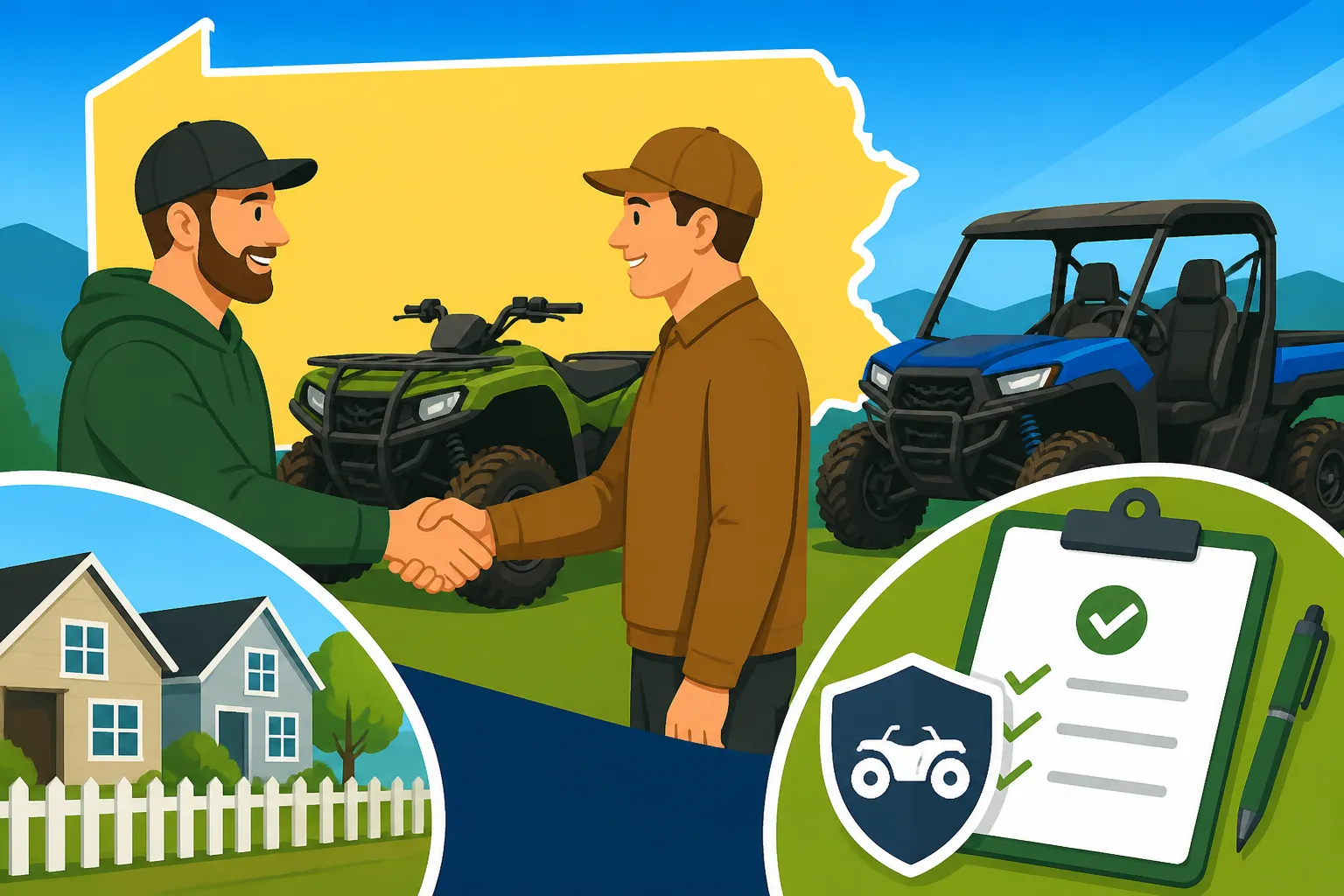
This cannot be stressed enough: get a written bill of sale. A handshake might seal the deal between you and your neighbor, but it does absolutely nothing for the DCNR when you try to register your machine. The bill of sale is your proof of purchase, and it's absolutely vital for several reasons. First, it legally transfers ownership from the seller to you. Second, and crucially for registration, it proves how much you paid for the machine, which the DCNR uses to verify the Pennsylvania sales tax you've paid.
A good bill of sale should include the full names and addresses of both the buyer and seller, the date of the sale, the purchase price, and a detailed description of the ATV or UTV, including its make, model, year, and—most importantly—its Vehicle Identification Number (VIN). It should also clearly state that the machine is sold "as-is," which protects both parties. You can find excellent templates online from resources like LawDepot, which offer customizable forms to ensure you cover all your bases. Don't skip this step; it's the foundation of your entire registration process. For a complete overview, you might want to review [Pennsylvania ATV Bill of Sale Requirements].
Verifying Ownership and Liens Before You Buy
Before you hand over any money, you need to ensure the person selling the ATV actually owns it and that there aren't any outstanding loans or liens on the machine. This is where the title comes into play. Ask the seller to show you the physical title certificate. Check that their name is on the title as the owner. Then, compare the VIN on the title to the VIN stamped on the machine's frame. They must match perfectly.
If there's a lien listed on the title, it means a bank or lender still has a financial interest in the ATV. The seller needs to provide proof that the lien has been satisfied (paid off) before the title can be legally transferred to you. Buying a machine with an active lien is a huge risk, as the lender could repossess the ATV if the original owner defaults on their loan, even if you've paid cash for it. Take your time, ask questions, and be wary of any seller who is hesitant to provide the title or seems evasive about its history. [Checking a VIN Before You Buy Used] is always a smart move to ensure you're getting a clear title.
Gathering Your Paperwork: What DCNR Needs From You
Alright, you've found your machine, you've shaken hands (and gotten a bill of sale!), and you're ready to make it official. Now comes the nitty-gritty: compiling all the documents the DCNR needs to get you registered. This is where most people get tripped up if they aren't prepared.
The All-Important Title (or Lack Thereof for Older Machines)
For most ATVs and UTVs sold in Pennsylvania today, a title certificate is a mandatory document. It's essentially the birth certificate of your machine, proving legal ownership and providing a detailed history. When you buy from a private seller, they should sign over their existing title to you. Make sure they sign in the correct spots as indicated on the title certificate itself – usually, there's a seller's signature line and a buyer's signature line on the back. Any errors or omissions here will cause your application to be rejected.
However, there's a significant exception: older machines. Pennsylvania has a specific cutoff date. If your ATV or UTV was purchased new and registered in Pennsylvania before February 1987, it might be exempt from titling requirements. For these machines, you wouldn't receive a title. Instead, you'd typically need to provide a bill of sale and possibly the previous registration card to prove ownership. It's crucial to confirm if your machine falls into this category by checking [Do You Need a Title for an Older Pennsylvania ATV?]. If the seller claims it's an older machine without a title, make sure you verify this against DCNR guidelines.
Proving You Paid Sales Tax (and How the Bill of Sale Helps)
Pennsylvania requires a 6% state sales tax on the purchase of an ATV or UTV, even in a private sale. If you're in Allegheny County, there's an additional 1% local sales tax, and in Philadelphia, it's an additional 2%. The DCNR will require proof that this sales tax has been paid before they will issue a registration. This is where your well-crafted bill of sale becomes your best friend.
When you submit your registration application, you'll need to include the bill of sale, which clearly states the purchase price. Based on this price, you'll calculate the sales tax due. You can then remit this payment directly to the DCNR along with your registration fees. If for some reason the sales tax wasn't explicitly handled at the point of sale (which it often isn't in a private transaction, unlike with a dealer), you, as the buyer, are responsible for paying the use tax when you register the machine. Your [Pennsylvania ATV Sales Tax on a Private Purchase] outlines this process in detail. Make sure your bill of sale is legible and includes all the necessary details to avoid any questions about the purchase price or tax calculation.
Completing Form DCNR-43 (Your Registration Application)
Form DCNR-43 is the official Pennsylvania ATV/Snowmobile Registration Application. This form is absolutely essential, and it needs to be filled out completely and accurately. You can usually download this form directly from the DCNR website. It asks for a lot of information about both you (the owner) and the machine itself.
Here's a breakdown of what you'll typically need to provide:
- Applicant Information: Your full name, address, date of birth, and contact information.
- Machine Information: Make, model, year, engine size (CCs), color, and the all-important VIN. Double-check the VIN against the frame and title to prevent discrepancies.
- Previous Owner Information: Details of the person you bought the ATV from, which helps the DCNR trace ownership.
- Sales Tax Calculation: You'll need to fill in the purchase price from your bill of sale and calculate the sales tax due.
- Registration Type: You'll indicate whether you want a Limited Registration (for riding only on your own private land or private land where you have permission) or a General Registration (for riding on designated state and federal trails, as well as private land). More on this distinction shortly.
- Signatures: Both you as the buyer and, in some cases, the previous owner may need to sign certain sections, especially for title transfers.
Review [What Pennsylvania Asks on Form DCNR-43] before you start filling it out to ensure you have all the answers at hand. Take your time, use black or blue ink, and avoid any corrections with white-out, as this can sometimes lead to rejection. If you make a mistake, it's often better to start with a fresh form.
The Registration Process Itself: Getting Your Plate and Sticker
Once you've diligently gathered all your paperwork, the next step is actually submitting it to the DCNR to get your official plate, sticker, and wallet card. This part is relatively straightforward, but patience is key.
Mail-In Versus In-Person (and Why Some Prefer In-Person)
You essentially have two main options for submitting your application and supporting documents:
- Mail-In: This is the most common method, especially for private sales where there's no dealer to handle things electronically. You'll put your completed Form DCNR-43, the signed-over title (or proof of ownership for older machines), the bill of sale, and a check or money order for the registration fees and sales tax into an envelope and send it to the DCNR Snowmobile and ATV Section. Make sure to use certified mail with a return receipt if you want proof that your documents arrived safely. The downside is that processing times can vary, and if there's any issue with your paperwork, it can take weeks for you to be notified and correct it.
- In-Person: For some, especially those who live near a DCNR regional office or the main Harrisburg office, submitting in person can be appealing. This allows you to potentially get immediate feedback if something is missing or incorrect with your forms. However, not all DCNR offices handle direct over-the-counter registration processing, so it's wise to call ahead and confirm before making a trip. This method can save you mailing time and prevent back-and-forth if there are minor issues.
Regardless of the method, double-check that you've included all required items from the [Pennsylvania ATV Registration Paperwork Checklist] before sending or dropping off your application.
Understanding Limited vs. General Registration
Pennsylvania offers two distinct types of ATV registration, and it's vital to choose the one that aligns with how you plan to ride your new machine:
- Limited Registration: This option is for ATVs that will primarily be operated on the owner's private property or on private land where the owner has explicit permission. It's often chosen by farmers, property owners, or those who only ride on specific private club trails. It comes with a specific type of registration plate that is green. While it's free, it severely restricts where you can legally ride. Learn more about its specifics in [Pennsylvania's Limited Registration for Your Own Land].
- General Registration: This is the more common choice for most riders. A General Registration allows you to operate your ATV on approved state forest trails, designated DCNR-managed trails, and other legal riding areas across Pennsylvania, in addition to private land. This registration costs money, but it gives you much broader access. The plate associated with General Registration is white, and it will have an annual sticker indicating the year of validity. [Pennsylvania's General Registration for Everywhere Else] provides more details on this option.
Most private buyers looking to explore Pennsylvania's extensive trail system will opt for General Registration. Your choice affects the fees you pay and the type of plate you receive. [Pennsylvania ATV Registration Cost] gives a good overview of the fees involved.
What You Get Back (Plate, Sticker, and Wallet Card)
Once your application is processed and approved, the DCNR will mail you a package containing everything you need to legally operate your ATV or UTV. This typically includes:
- Your Registration Plate: This is a small, rectangular metal plate with your registration number. Depending on whether you chose Limited or General Registration, it will be green or white. You'll need to securely mount this to the rear of your ATV, usually in a visible location away from the exhaust or tires. [Pennsylvania ATV Plates and Where They Mount] offers guidance on proper placement.
- Annual Registration Sticker: If you opted for General Registration, you'll receive a colored sticker (the color changes each year) that you must affix to your registration plate. This sticker shows the year your registration is valid through.
- Registration Wallet Card: This is a small, durable card that fits perfectly in your wallet. It contains your machine's information, your name, and your registration number. You are legally required to carry this card with you whenever you are operating your ATV off your own private property. It's your proof of registration if a DCNR ranger or law enforcement officer stops you. This is why [Why Both Pennsylvania Registrations Include a Wallet Card] is such an important detail.
The DCNR processes applications in the order they are received, and processing times can fluctuate depending on the time of year and volume. Be patient, but if you haven't heard anything after several weeks, you can reach out to the DCNR Snowmobile and ATV Section to inquire about the status of your application.
Common Pitfalls and How to Avoid Them
Even with all the right information, private sales can sometimes throw curveballs. Being aware of potential issues ahead of time can help you navigate them more smoothly.
The Seller Who Can't Find the Title
One of the most common headaches in a private sale is when the seller admits they've lost the original title certificate. While inconvenient, it's not always a deal-breaker, but it does add an extra layer of complexity. If the seller has lost the title, they typically need to apply for a duplicate title from the DCNR before they can legally transfer ownership to you. This means delays, as they'll have to wait for the duplicate title to be processed and mailed to them.
As a buyer, you should be very cautious about purchasing an ATV without a title (unless it's truly an older, pre-1987 machine that was never titled). Never accept a handwritten note or a promise that "they'll send it later." That's a recipe for disaster. Insist that the seller obtains a duplicate title first, or walk away from the deal. [Buying When the Seller Cannot Find the Title] is a helpful resource if you encounter this situation, offering guidance on how to proceed, often through an affidavit process if the DCNR allows it for a specific case.
Disputed Sales Tax Amount or Proof
Sometimes, sellers might try to "help" by suggesting you list a lower price on the bill of sale to save on sales tax. This is illegal, and it can cause significant problems for you down the line. The DCNR can dispute the declared purchase price if it seems unusually low for the make and model of the ATV, potentially requiring you to pay the difference plus penalties. Always list the true purchase price on your bill of sale.
Another issue can arise if you or the seller neglect to include sales tax information on the bill of sale, or if the calculation is incorrect. As the buyer, you are responsible for ensuring the correct sales tax is paid. If your bill of sale clearly states the purchase price, you can calculate the tax and include a separate check or money order for that amount with your DCNR application. If there's any ambiguity, call the DCNR to clarify before submitting to avoid delays. Remember, LawDepot provides bill of sale templates that can guide you in properly documenting the transaction to prevent such disputes.
Unforeseen Issues After the Sale
While not directly related to registration, it's crucial to perform a thorough inspection of the ATV before buying, especially since private sales are usually "as-is." Issues like a bent frame, worn-out suspension components, or engine problems can quickly turn your great deal into a money pit. Always ask for maintenance records, and if you're not mechanically inclined, consider having a trusted mechanic inspect the machine.
Beyond the mechanical, always double-check the VIN. Not only does it need to match the title, but running a quick VIN check through various online services (some free, some paid) can reveal if the ATV has been reported stolen or has a salvage title. This is a critical step that can save you from a lot of legal trouble. As discussed earlier, [Checking a VIN Before You Buy Used] is an absolute must-do for any private purchase. While the DCNR will verify the VIN during registration, uncovering these issues before you buy protects your investment and ensures a smooth transfer of ownership and subsequent registration.
| Document / Item Required | Purpose | Notes |
|---|---|---|
| Completed Form DCNR-43 | Official registration application | Fill out accurately; available on DCNR website. |
| Signed-Over Title Certificate | Proof of legal ownership transfer | Ensure previous owner signed correctly; required for most machines unless pre-1987. If lost, seller must apply for duplicate. |
| Detailed Bill of Sale | Proof of purchase price for tax, and ownership transfer | Essential for all private sales. Include buyer/seller info, date, price, VIN. Consider using a template from a service like LawDepot. |
| Proof of Sales Tax Payment / Funds | Payment of Pennsylvania's 6% (or more) sales/use tax | Calculated from the bill of sale purchase price. Can be included in a check with registration fees. |
| Registration Fee Payment | Covers the cost of your chosen registration type (Limited or General) | Check current DCNR fees. Limited is free, General has a fee for a two-year period. |
| Copy of Previous Registration (Optional) | Helps verify ownership for older, untitled machines | If no title exists, this, along with a bill of sale, can help prove a chain of ownership. |
The process of buying an ATV from a neighbor or private seller in Pennsylvania and getting it registered doesn't have to be intimidating. By understanding the required documents, meticulously filling out the forms, and being vigilant about verifying the machine's history, you can ensure a smooth transition from private owner to registered rider. Happy trails!
Disclaimer
This article is for general informational purposes only and does not constitute professional advice. Laws, prices and regulations vary by location and change over time. Consult a qualified professional for guidance on your specific situation.