The Sticker Pennsylvania Adds to General Registration
It’s easy to get a little lost in all the paperwork and pieces that come with owning an ATV or UTV here in Pennsylvania. From titles to wallet cards, and then, of course, the actual registration plate, there are several components to keep track of. But one small, yet incredibly important, detail that often sparks questions is that distinct sticker that gets added to your general registration plate. This guide is here to demystify that sticker, explaining what it is, why it's there, and what it means for your off-road adventures across our beautiful state.
Understanding Pennsylvania's General ATV Registration
Before we dive deep into the sticker itself, let’s make sure we’re all on the same page about what "general registration" even means in the Keystone State. It's a fundamental distinction that every Pennsylvania ATV or UTV owner needs to grasp.
What "General Registration" Really Means
In Pennsylvania, the Department of Conservation and Natural Resources (DCNR) manages all ATV and UTV registrations, not PennDOT. This is a crucial difference from how your car or truck is handled. DCNR offers two main types of registration: Limited and General.
Limited registration is exactly what it sounds like – it's quite restricted. It allows you to operate your ATV or UTV only on your own land or land you lease where you have explicit permission. Think of it as a way for the state to keep track of machines even if they never touch public trails. You get a registration plate, a wallet card, and that's usually about it. There's often no fee for this type of registration, which makes it attractive for those who truly only ride on their private property. You can learn more about this by reading [Pennsylvania's Free Limited Registration].
General registration, on the other hand, is the golden ticket for most riders who want to explore. This is the registration you need if you plan to ride on Pennsylvania's extensive network of designated state forest trails, federal lands, or approved municipal and private trail systems. This is where the DCNR wants you to have a current registration because it signifies that your machine is recognized for use on these shared resources. It also comes with a fee, part of which goes directly back into maintaining and expanding these very trails, something many riders appreciate. For a deeper dive, check out [Pennsylvania's General Registration for Everywhere Else].
The Components of General Registration
When you complete your general registration for an ATV or UTV in Pennsylvania, you don't just get a piece of paper. You receive a small package of items, each serving a specific purpose:
- The Registration Plate: This is a physical, metal or durable plastic plate, often about the size of a motorcycle plate, with a unique alphanumeric code issued by the DCNR. It's designed to be affixed to the rear of your ATV or UTV. This plate identifies your specific machine to law enforcement and trail managers. You'll want to make sure you know [Pennsylvania ATV Plates and Where They Mount] to ensure compliance.
- The DCNR Wallet Card: This is a small, durable card that fits easily into a wallet or a waterproof holder on your machine. It contains important information about your ATV or UTV, including its VIN, registration number, and your name. Think of it as your proof of registration that you can easily carry on your person, separate from the plate on the machine. It's especially handy for those quick checks at trailheads. We explain more in [Why Both Pennsylvania Registrations Include a Wallet Card].
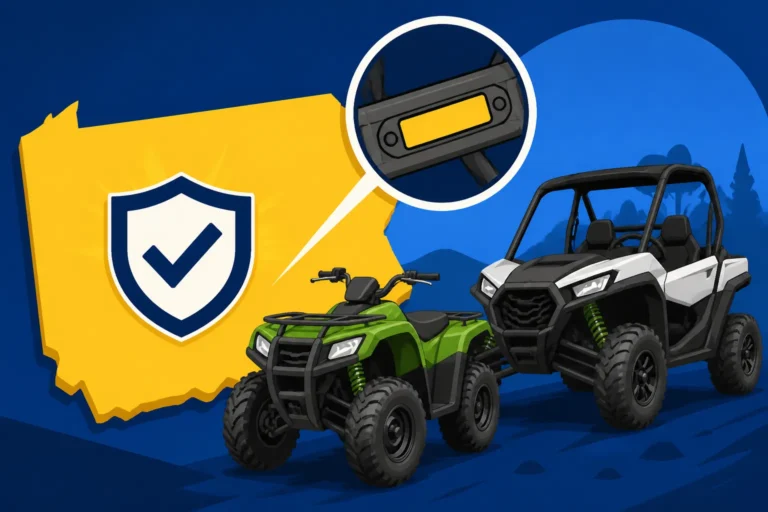
- The Sticker: Ah, the star of our show! This is a colorful, adhesive decal that gets applied directly to your registration plate. It's small, but mighty, and carries critical information about the validity of your general registration. Without this current sticker, your general registration plate is essentially incomplete and could lead to issues on the trail.
Decoding the General Registration Sticker
That little sticker might seem insignificant, but it's packed with meaning and is a vital part of your ATV's legal operation on Pennsylvania's public lands. Let's peel back the layers and understand what it's all about.
What the Sticker Looks Like and Where It Goes
The general registration sticker from the Pennsylvania DCNR is typically a small, rectangular decal, often with a different color scheme each renewal cycle to make it easy for rangers to spot an expired registration from a distance. You'll usually find the year of expiration prominently displayed on it. For instance, if your registration expires in 2025, you might see "25" or "2025" clearly printed on the sticker.
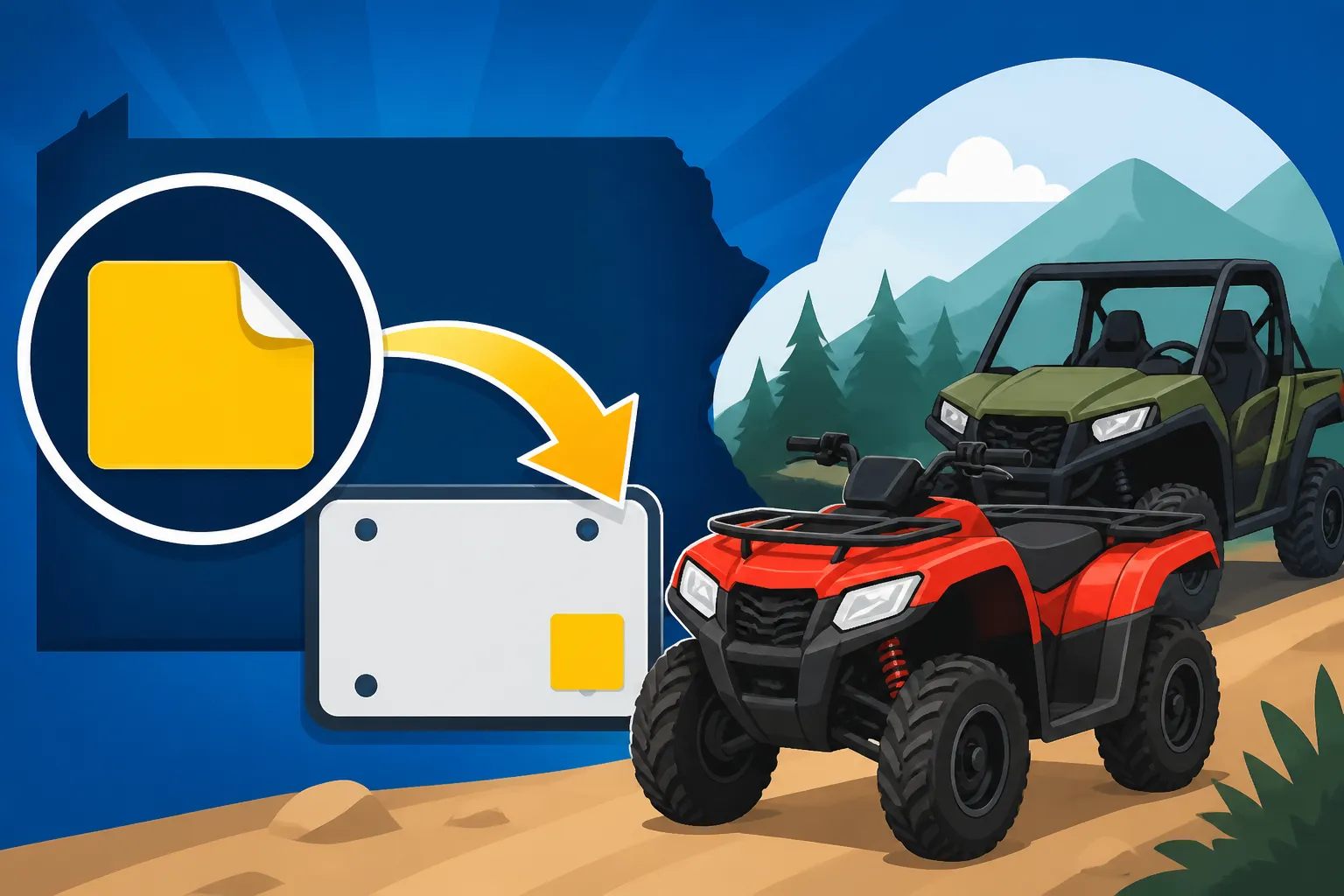
This sticker is not meant to be placed anywhere on your machine. It has a specific home: the lower right corner of your Pennsylvania ATV registration plate. The DCNR is quite particular about this placement because it ensures uniformity and makes it simple for rangers or law enforcement to quickly verify your registration status. Imagine trying to check hundreds of machines if everyone put their sticker wherever they felt like it – it would be a nightmare! Proper placement ensures that the sticker is visible, readable, and in its expected location. Riders often use the bottom-right corner of their physical registration plate for the sticker. For more details on this, you can check out [Where the Sticker Goes on Your Plate]. Ensuring it's securely attached and not obscured by mud or damage is also critical, as a missing or unreadable sticker can cause you headaches.
Key Information Displayed on the Sticker
While compact, the general registration sticker conveys vital information at a glance. Its primary purpose is to clearly show the expiration date of your current two-year registration period. This includes the month and year your registration runs out. This immediate visual cue is a time-saver for DCNR rangers and other enforcement personnel. They don't have to get up close and personal with every plate to verify the small print; the sticker's year and color provide an instant indicator of validity.
Beyond the year, the sticker might also include a unique identifier or a series of numbers that correspond to your specific registration. This adds an extra layer of verification, helping authorities cross-reference the sticker with their records if needed. The DCNR uses these details to track active registrations and ensure that every machine on public trails is accounted for and that the associated fees, which support trail maintenance and development, have been paid. This system helps keep our trails open and well-maintained for everyone to enjoy.
Why the Sticker Matters: Enforcement and Compliance
Many riders might see the sticker as just another bureaucratic detail, but it plays a crucial role in ensuring responsible riding and trail management. Ignoring it can lead to more than just a stern talking-to.
Avoiding Fines for Non-Compliance
This might be the most direct reason the sticker matters: avoiding a hefty fine. Riding on designated DCNR trails with an expired or missing general registration sticker is essentially the same as riding with an expired or missing registration plate. It signifies that your machine is not legally registered for public use.
DCNR rangers and state park officers are tasked with enforcing these regulations, and they take it seriously. They conduct regular checks at trailheads, on the trails themselves, and at staging areas. If your sticker is not present, is expired, or is improperly displayed, you could face a citation. The fines for an unregistered ATV in Pennsylvania can be substantial, often starting with an automatic $300 fine, plus additional court costs and fees. This can quickly turn a fun day of riding into a very expensive regret. To understand more about the financial consequences, read [Pennsylvania Fines for an Unregistered ATV]. It's a preventable expense that no one wants, so keeping that sticker current and visible is a small effort for a big peace of mind.
What DCNR Rangers Look For
When a DCNR ranger or other law enforcement officer stops you on a trail or performs a check at a trailhead, they're looking for several things: your safety gear, proof of insurance, and, critically, your registration. The sticker on your general registration plate is one of the first things they'll spot.
They're trained to quickly identify the color and year on the sticker to determine if your registration is current. If they see an outdated sticker, it’s an immediate red flag. They will then typically ask to see your DCNR wallet card to confirm your registration details and potentially cross-reference it with their system. The sticker, therefore, acts as a primary visual indicator. It's a quick and efficient way for them to filter out non-compliant riders without having to manually check every single plate's small print. This efficiency helps them ensure that everyone on the trails is contributing to their upkeep and adhering to state regulations. Knowing [What a Ranger Checks at a Trailhead] can help you be prepared.
The Sticker as Proof of Active Registration
Ultimately, the general registration sticker is your visible proof that you've paid your dues and your machine is currently legal to ride on Pennsylvania's DCNR-managed trails. The DCNR operates on a biennial (two-year) registration cycle for ATVs and UTVs. When you pay your registration fee, you're buying two years of legal riding access. The sticker confirms that this two-year period is active and ongoing.
It's not just a decorative element; it's a timestamp. When rangers see a current sticker, they know you're playing by the rules. This system also helps the DCNR manage resources. The fees collected from general registrations are vital for funding trail maintenance, improvements, and the expansion of the trail network across Pennsylvania. So, your sticker is more than just a sticky label; it's a contribution to the health and future of ATV and UTV riding in the state. Keeping track of your renewal dates is crucial, as highlighted in [Renewing Every Two Years in Pennsylvania].
The Practicalities of Obtaining and Maintaining Your Sticker
Understanding the 'why' is important, but knowing the 'how' is what truly keeps you on the trails without hassle. Getting and maintaining your sticker correctly is a straightforward process, but there are a few things to keep in mind.
How the Sticker Arrives After Registration
When you complete your general registration, whether online through the DCNR's Snowmobile and ATV Portal or by mail, the DCNR processes your application. Once approved and the payment is confirmed, they'll issue your registration materials. This typically includes your metal or durable plastic registration plate, your wallet card, and the all-important sticker.
These items are usually mailed to you in a single package. It's important to provide a current and accurate mailing address when you register to ensure you receive everything promptly. Once you get them, the first thing you should do is affix that sticker to the lower right corner of your plate. Don't just toss it in a drawer! Getting it on the plate and mounted correctly on your machine is the final step to full compliance. The entire process, from application to receiving your physical items, can take a few weeks, so planning ahead, especially before an anticipated ride, is always a good idea.
Dealing With a Damaged or Lost Sticker
Life happens on the trail. Rocks can fly, branches can scratch, and mud can cake up, making your plate and sticker take a beating. Or perhaps, in a moment of forgetfulness, the sticker simply peels off. If your registration sticker becomes damaged, illegible, or goes missing, you need to address it promptly. An unreadable or absent sticker is as good as an expired one in the eyes of a DCNR ranger.
Generally, if you need a replacement sticker, you'll need to contact the DCNR's Snowmobile and ATV Section. Sometimes, a replacement sticker might be issued as part of a replacement plate if the plate itself is also damaged or lost. There may be a small fee associated with obtaining replacement materials. It's best to reach out to the DCNR directly for the most current procedures and costs for replacing individual components. Remember, just like you would replace a lost or damaged physical plate, you need to ensure all components of your registration are in good order to avoid potential fines. For lost plates, specifically, you can find guidance in [Replacing a Lost Pennsylvania ATV Plate].
When to Renew and Get a New Sticker
Pennsylvania ATV and UTV general registrations are valid for two years. This means that every two years, you'll need to renew your registration and receive a new sticker to keep your machine legal for public trail use. The DCNR typically sends out renewal notices to registered owners in the months leading up to their expiration date. However, it's ultimately your responsibility to track your expiration date and initiate the renewal process.
The expiration date is clearly printed on your DCNR wallet card and, of course, the existing sticker on your plate. You can renew your registration online through the DCNR portal or by mail. When you successfully renew, the DCNR will issue a new sticker with the updated expiration year. This new sticker replaces the old one on your plate, signaling to authorities that your registration is current for another two-year cycle. Renewing in a timely manner ensures you never have a lapse in your registration, allowing for continuous, worry-free riding. If you're unsure about timing, reviewing [When a Pennsylvania ATV Registration Expires] can help you stay on track.
Common Misconceptions and Troubleshooting
Even with the clearest explanations, certain aspects of ATV and UTV registration can still cause confusion. Let's tackle some common misunderstandings about the general registration sticker to make sure you're fully informed.
Sticker vs. Plate: Clarifying the Relationship
One common point of confusion is whether the sticker itself is the "registration" or if it's just a part of it. To be crystal clear: the sticker is an integral component of your general registration plate, which in turn is part of your overall general registration. You can't have one without the other and be fully compliant.
Think of it this way: your DCNR registration plate is like the foundation of a house. It identifies your property. The sticker is like the "Certificate of Occupancy" for that house; it confirms that the foundation (the plate) is currently valid and approved for use. An ATV plate without a current sticker is not fully registered in the eyes of the DCNR for use on public trails. Similarly, having a valid sticker but no plate is obviously not compliant. They work together, and both must be present and current.
The Sticker and Trail Permits
This is a big one, and it causes a lot of head-scratching for riders, especially those new to Pennsylvania's trail systems. Your general registration sticker, which indicates your machine is registered with the DCNR for two years, is not the same thing as a specific trail permit.
Many of Pennsylvania's state forest trails, particularly in the Northcentral region (Clinton, Lycoming, Potter, and Tioga counties), require a separate trail permit to ride. This permit is an additional fee, often issued annually, and might come with its own decal or proof of purchase. The revenue from these trail permits directly supports the maintenance and management of those specific trail systems. So, you absolutely need a current general registration with its sticker to even qualify to buy and use a trail permit. But having the registration sticker alone does not grant you access to areas that require a separate permit. It's a two-tiered system for a reason. Always check the specific requirements for any trail system you plan to visit. You can learn more about these additional requirements in [Pennsylvania ATV Trail Permits Explained].
| Registration Type | Plate Issued? | Sticker Included? | Wallet Card Issued? | Where You Can Ride | Cost |
|---|---|---|---|---|---|
| Limited | Yes | No | Yes | Private Land Only | Free |
| General | Yes | Yes | Yes | Designated Public Trails | Fee |
Private Sale and Sticker Transfer
Let's say you just bought a used ATV from a friend or neighbor, and it already has a Pennsylvania general registration plate with a current sticker on it. Can you just keep using that existing plate and sticker? The short answer is no.
Pennsylvania ATV registrations, and by extension, the plates and stickers, are tied to the owner, not just the machine. When you purchase an ATV or UTV in a private sale, you, as the new owner, must register the machine in your own name. The previous owner's registration becomes invalid for you. This means you will go through the registration process, obtain a new title (if required), and then be issued your very own general registration plate, DCNR wallet card, and, yes, a brand new sticker with your name on the registration. The old plate and sticker should be removed by the seller or discarded.
This ensures that the DCNR always has the most current ownership information for every registered machine. When dealing with private sales, it's wise to ensure all ownership documents, like a bill of sale, are properly completed. Resources like LawDepot can provide templates for a clear and legally sound bill of sale, protecting both buyer and seller. You can get more details on how to handle this in [Registering After a Private Sale in Pennsylvania]. Don't assume anything carries over; always assume you need a fresh start with your own registration.
The Role of Documentation Beyond the Sticker
While the sticker is a visible sign of your registration, it's just one piece of the puzzle. Beyond the sticker and plate, maintaining proper documentation for your ATV or UTV is crucial for smooth ownership and compliance. When you initially register, you'll need proof of ownership, which could be a title or a properly executed bill of sale, especially for older machines or those acquired in a private transaction. This is where tools from platforms like LawDepot can be incredibly helpful for creating robust, legally compliant bills of sale that include all necessary details, such as VIN, purchase price, and buyer/seller information.
Furthermore, carrying your DCNR wallet card, which contains your registration number and other vital details, is mandatory when riding off your own private land. This card often acts as a backup to the sticker, providing more detailed information to an officer if needed. You also need to carry proof of insurance, as Pennsylvania requires liability insurance for any ATV or UTV operated off private property. Keeping all these documents organized, perhaps in a waterproof pouch on your machine, not only demonstrates compliance but also makes roadside checks much quicker and less stressful. Many riders use a service like LawDepot to create a document checklist for selling an ATV, ensuring they have everything ready for the next owner.
Keeping Your Information Current
Life changes, and so might your address or other contact information. If you move, it's vital to update your address with the DCNR. Not doing so could mean you miss important renewal notices for your registration, which could lead to an expired sticker and potential fines. The DCNR needs to be able to reach you, especially when it's time to send out your new registration materials, including that fresh sticker. Taking a few minutes to update your details after a move can save you a lot of hassle down the road. You can usually find information on how to update your address on the DCNR's Snowmobile and ATV Section website or by contacting their registration line.
Disclaimer
This article is for general informational purposes only and does not constitute professional advice. Laws, prices and regulations vary by location and change over time. Consult a qualified professional for guidance on your specific situation.