Crossing SR 144 Near Snow Shoe
Navigating Pennsylvania's vast trail systems often means encountering roads, and one common point of concern for riders is how to legally and safely cross state routes like SR 144 near Snow Shoe. It can feel like a high-stakes moment, with the roar of your engine meeting the hum of passing cars, and the fear of a ticket looming if you don't do it just right. This guide is here to demystify the process, offering clear, actionable advice on how to cross SR 144 and similar state roads in Pennsylvania without stress or legal trouble.
Understanding Pennsylvania's Rules for Crossing State Routes
It’s crucial to understand that in Pennsylvania, state routes are generally not open for ATVs or UTVs to ride alongside vehicle traffic for extended periods. This isn't like a township road that might be designated for shared use; state routes are primarily for street-legal vehicles. However, the state recognizes that trails and private properties often exist on both sides of these highways, necessitating a means to get from one side to the other. That's where specific crossing rules come into play, designed to ensure rider safety and minimize disruption to traffic flow.
Why State Routes Are Different
The legal framework for state routes, managed by PennDOT, differs significantly from the oversight of local township roads or the state forest trails managed by DCNR. While you might find [Pennsylvania's Designated ATV Roads] that are clearly marked for shared use, these are almost exclusively local or township roads, not major state highways. State routes like SR 144, especially in rural areas like around Snow Shoe, carry higher speed limits and more consistent traffic, making them inherently more hazardous for off-road vehicles. The state's primary concern is to facilitate the safe and efficient movement of highway vehicles, and ATVs are considered exceptions that must adhere to very strict, limited parameters when interacting with these roads.
The distinction means that while you might be riding freely on an approved DCNR trail one moment, the moment you approach a state route, you are subject to an entirely different set of rules. This isn't about finding a "loophole" to ride on the state road; it's about executing a controlled, legal maneuver to continue your journey. Ignoring this fundamental difference is where many riders get into trouble, mistaking a crossing opportunity for an invitation to ride parallel to the highway for a short distance. Always remember: state routes are for crossing, not for traveling.
The Ninety-Degree Crossing Rule
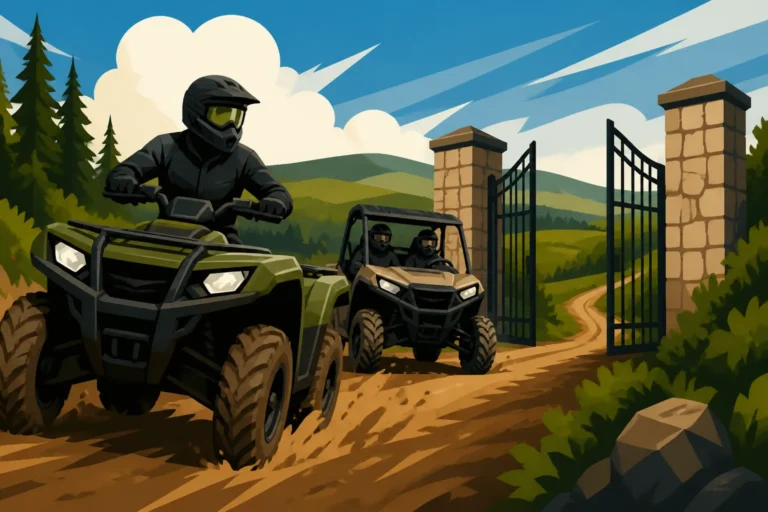
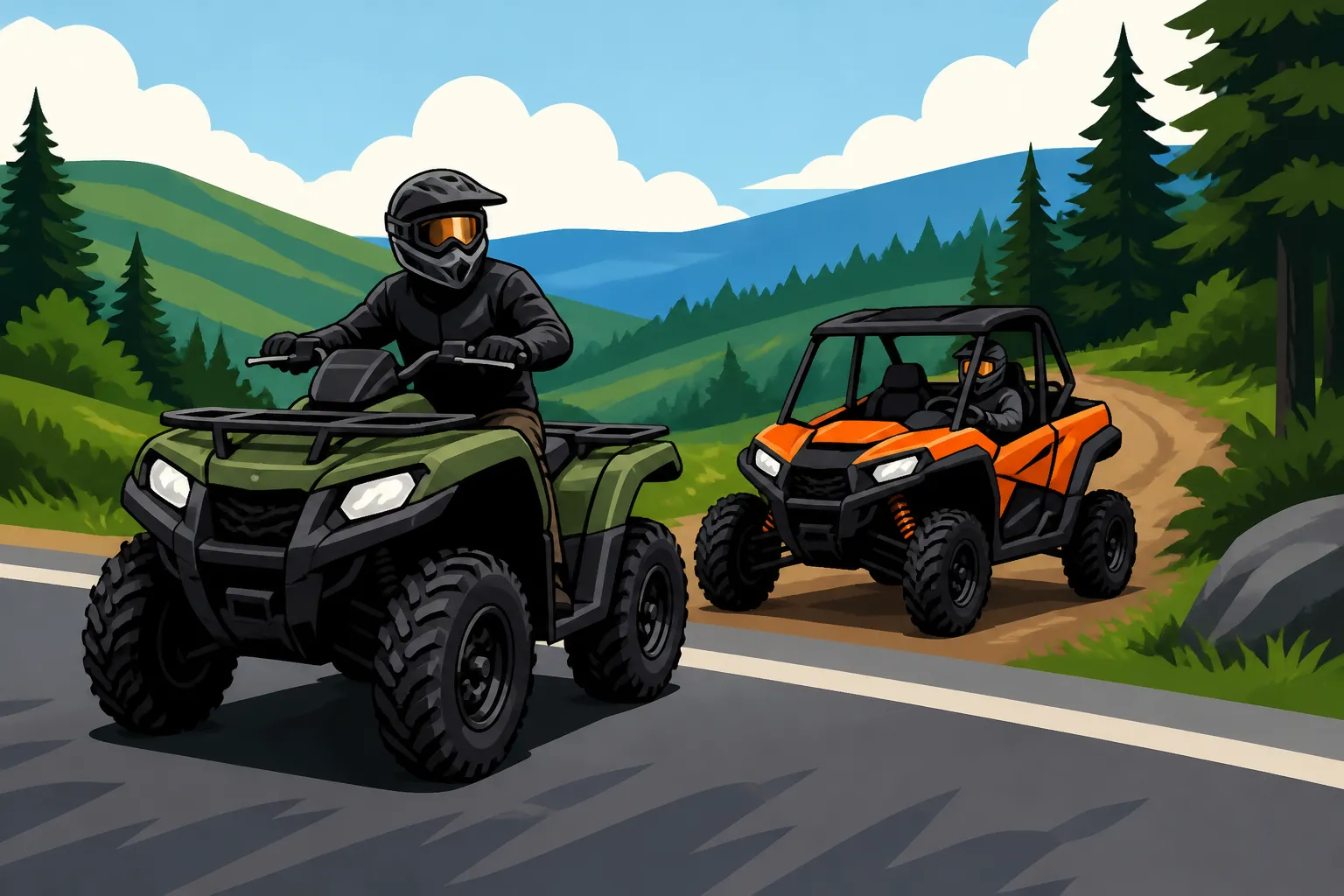
One of the most critical rules to internalize is the requirement to cross a state route, including SR 144, at a ninety-degree angle. This isn't a suggestion; it's a legal mandate. The purpose of this rule is twofold: to provide the best possible visibility for you to see oncoming traffic and for oncoming traffic to see you, and to minimize the amount of time your ATV or UTV is exposed to the flow of highway vehicles. Imagine you're riding a trail that leads directly to the edge of SR 144, and the next section of trail picks up just across the road. You must approach the edge, stop, ensure the path is clear, and then proceed straight across, perpendicular to the flow of traffic, to the other side. You are not permitted to make a wide, sweeping turn or to angle your crossing; it must be as direct a path as possible.
This rule is clearly defined in Pennsylvania law as [Crossing at Ninety Degrees in Pennsylvania]. Picture yourself on the throttle, ready to cross. Your handlebars should be turned as little as possible to maintain a straight line across the lanes. This straight-line approach allows drivers on SR 144 to quickly register your presence and direction without confusion. If you were to cross at an angle, it could create uncertainty for drivers about your intended path, increasing the risk of an accident. It's a quick, decisive maneuver, executed only when traffic allows, getting you off the asphalt and back onto the dirt as swiftly as possible. This rule applies whether you're on a solo adventure or with a group; each machine must perform this precise maneuver.
Stopping Before a Pennsylvania Crossing
Before you even think about engaging that ninety-degree crossing, Pennsylvania law demands a complete stop. This isn't a "California roll" or a slow crawl; it's a full, wheels-halted stop, just as if you encountered a stop sign at an intersection. This mandatory stop is your moment to fully assess the traffic situation on SR 144. You need to look both ways – left, right, and then left again – to ensure that no vehicles are approaching at a speed that would make your crossing unsafe. Even if you think you have a clear shot, you still must come to a complete stop.
This crucial step is highlighted in [Stopping Before a Pennsylvania Crossing]. Think of it as your final safety check. Once stopped, listen for traffic, scan for headlights, and make eye contact with any drivers you see if possible. Even if you're on a remote section of SR 144 near Snow Shoe where traffic is usually sparse, you cannot skip this step. A moment of impatience could have serious consequences. Only when the road is completely clear, and you have ample time to cross safely without impeding the flow of traffic, should you proceed. If you're riding a UTV that takes a little longer to accelerate, factor that into your decision-making. Better to wait an extra minute or two than to rush and put yourself and others at risk.
Safety Protocols for Crossing SR 144 Near Snow Shoe
Safety isn't just about following the law; it's about using common sense and proactive measures to protect yourself and others. Crossing a state highway, even for a brief moment, puts you in a high-risk environment. The responsibility falls squarely on your shoulders to make that crossing as safe as humanly possible. This means more than just a quick glance; it involves making yourself visible, being prepared, and knowing how to handle group dynamics.
Maximizing Visibility
When you're making that quick dash across SR 144, you want every driver on the road to see you, plain and simple. Maximizing your visibility is paramount. Always, always, have your headlights on, even in broad daylight. Brightly colored riding gear – jackets, helmets – can make a huge difference, especially in the dappled light of a wooded area leading up to the road. Some riders even add aftermarket flags or strobe lights to their machines, particularly if they frequently cross roads or ride with a wide UTV. Think about what a driver in a car is expecting to see, and then do everything you can to stand out from that expectation.
Many riders invest in enhanced lighting options, and brands like SuperATV offer a range of auxiliary lights that can dramatically improve your presence, not just on the trail but also during those critical road crossings. While standard lighting is sufficient for legal purposes, extra LEDs or a light bar can make you impossible to miss, even at a distance. Remember, a driver's momentary distraction could be fatal, so the more conspicuous you are, the safer you'll be. This proactive approach to visibility is a critical component of safe road interaction and extends beyond the minimum requirements detailed in [Pennsylvania Lighting Rules for Road Use].
Rider and Passenger Preparedness
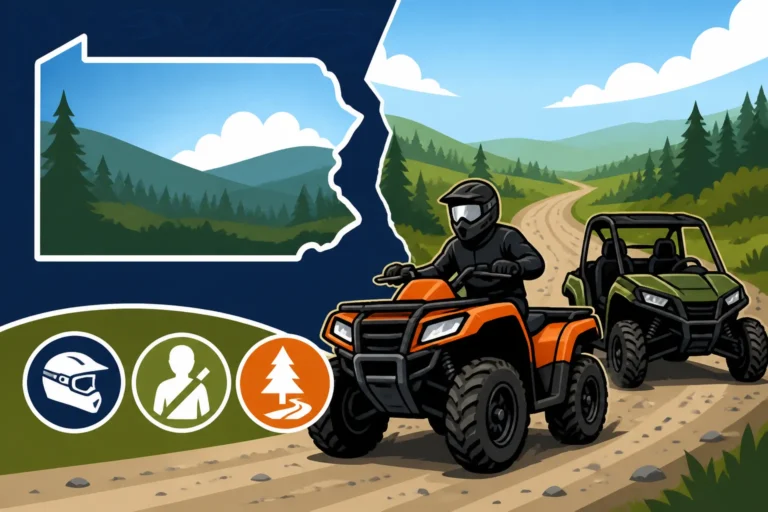
Your physical and mental preparedness is just as important as your machine's visibility. First and foremost, everyone on your ATV or UTV must be wearing a properly fitted, DOT-approved helmet. This is not optional in Pennsylvania, and it's a non-negotiable safety measure, particularly when interacting with highway traffic. [Pennsylvania Helmets for Operator and Passenger] are mandatory, and for good reason. Passengers need to be securely seated, holding on tightly, and fully aware that a road crossing is imminent. No fidgeting, no distractions, just focused attention on the task at hand.
Before you approach the road, mentally prepare yourself. Know exactly where you intend to cross to and how you will execute the ninety-degree turn. Avoid any sudden movements, quick turns, or last-minute changes of direction. This crossing is not the time for stunts or showing off; it's a serious maneuver that requires your full concentration. If you're feeling rushed or distracted, pull over to a safe spot before the road and take a moment to collect yourself. Ensure your machine is in good working order – brakes responsive, throttle smooth – before you attempt the crossing.
Crossing with a Group
Riding with friends adds a layer of complexity to road crossings, but with proper communication and discipline, it can be managed safely. The golden rule for groups is generally to cross one machine at a time. The lead rider should stop, assess traffic, cross when clear, and then immediately move to a safe spot on the other side, signaling to the next rider when it's safe to proceed. This ensures that only one ATV or UTV is in the roadway at any given moment, minimizing the risk of a multi-vehicle incident.
Communication is key. Hand signals, radio communication, or even pre-arranged verbal cues can ensure everyone in the group knows the plan and is ready to execute. Never block the road, even momentarily, to wait for your buddies. Each rider is responsible for their own safe crossing. It's helpful for the lead and tail riders to wear high-visibility gear to make the beginning and end of the crossing sequence clear to any approaching drivers. Don't be pressured by the group to cross if you don't feel it's safe; your safety is paramount. Patience is your best friend when riding in a group and encountering a state route like SR 144.
Legal Requirements and Avoiding Fines
Beyond safety, adhering to Pennsylvania's legal requirements is essential to avoid hefty fines and other repercussions. Even for a momentary crossing, your ATV or UTV isn't exempt from registration, insurance, or age requirements. These laws are in place to ensure accountability and to help fund the very trails you ride. Cutting corners here can turn a fun day of riding into a very expensive headache.
Registration and Insurance Are Non-Negotiable
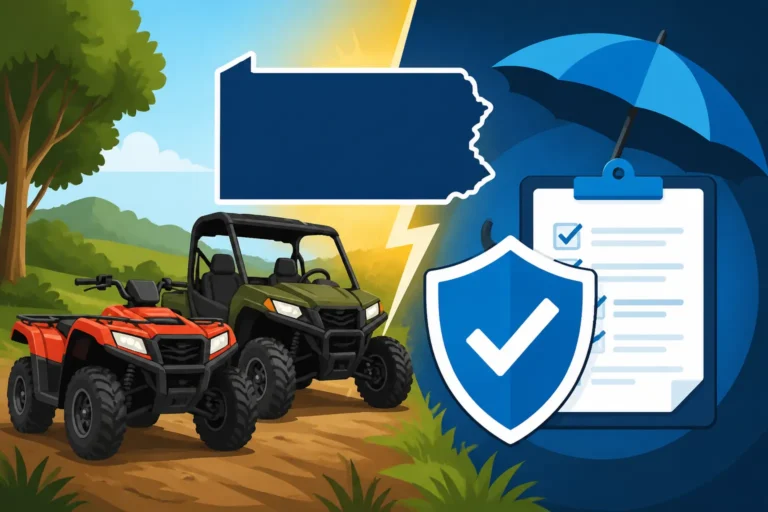
This point cannot be stressed enough: your ATV or UTV must be properly registered and insured in Pennsylvania, even if you're just using it to cross a public road. This isn't just for riding on designated trails; it's for any interaction with public property, including crossing a state route. If you're crossing SR 144 to get to public land or another trail system, you almost certainly fall under the need for [Pennsylvania's General Registration for Everywhere Else]. This includes a DCNR plate and an annual sticker. Without it, you could face significant penalties.
Similarly, valid liability insurance is mandatory. While DCNR doesn't specify minimum coverage amounts, you must be able to provide proof of insurance if requested by law enforcement, especially when operating on or crossing public roads. [Pennsylvania ATV Registration and Insurance Proof] is something you should always carry with you, perhaps in a waterproof wallet card holder. The fines for riding an unregistered machine or one without insurance are substantial. For example, [Pennsylvania Fines for an Unregistered ATV] can be an automatic $300, and [Pennsylvania Fines for No ATV Insurance] can hit you just as hard, plus potential suspension of driving privileges for highway vehicles. It's a risk simply not worth taking for the cost of a registration and an insurance policy.
Age and License Requirements for Road Use
Pennsylvania has specific age requirements for operating ATVs, and these become particularly strict when you interact with public roads, even for a crossing. While younger riders can operate ATVs on designated trails under certain conditions, the minimum age for riding on designated public roads is 16 years old. This rule, often referred to as [Pennsylvania's Sixteen-Year-Old Road Rule], applies to any situation where your ATV is legally on a public roadway. So, if you're planning to cross SR 144, the operator of the ATV must be at least 16 years old. This is distinct from requirements for trail use, which can permit younger riders with a safety certificate and supervision.
When it comes to road crossings, the state treats it as a form of road use, even if brief. Therefore, the operator must meet the age requirement for highway interactions. There isn't a specific "license" for ATVs in Pennsylvania like there is for cars, but the age restriction is firm. [Pennsylvania Minimum Age to Ride a Road] is a critical piece of information for any rider, especially those with younger family members. Failure to comply can result in fines and the machine being impounded, not to mention putting a minor rider at increased risk if they are not experienced enough for such a maneuver.
Understanding the Local Context: SR 144 and Snow Shoe Area
SR 144, winding through areas like Snow Shoe, Moshannon, and the vast expanses of the Sproul State Forest, is a prime example of a state route that intersects with numerous trail systems and access points. It's a main artery in some very popular riding country. You might find yourself needing to cross it to connect different sections of the Whiskey Springs ATV Trail or to access a private camp on the other side. Because the road is often rural and can have blind turns or elevation changes, knowing the specific crossing point is vital.
Always consult current DCNR trail maps, available via resources like [Pennsylvania ATV Trail Maps From DCNR], or local club maps to identify legal crossing points. These maps will often indicate where trails connect across state routes. While a specific designated "crossing" might not be marked on the road itself, the trail often funnels you to a point of good visibility. Be aware of the road's characteristics – some sections of SR 144 are relatively straight, offering good sight lines, while others are winding and heavily treed, requiring even greater caution. Local knowledge, shared within the riding community, can also be invaluable, but always verify information with official sources. Never assume a crossing is safe or legal just because someone else did it.
| Rule/Requirement | Description | Why it Matters for Crossing SR 144 |
|---|---|---|
| 90-Degree Crossing | You must cross the road perpendicular to traffic flow, in the most direct path. | Minimizes time in the roadway; maximizes visibility for drivers and yourself. |
| Complete Stop | Come to a full halt before entering the road, checking for clear traffic in both directions. | Essential safety check; prevents pulling out in front of moving vehicles. |
| Headlights On | Operate with headlights illuminated, even during daylight hours. | Enhances your visibility to oncoming traffic, making you easier to spot. |
| Helmet Requirement | Operator and any passengers must wear a DOT-approved helmet. | Crucial for head protection in case of an accident. |
| Valid Registration | Your ATV/UTV must have current Pennsylvania DCNR registration. | Legal requirement for operating on public property, including road crossings. Avoids fines. |
| Proof of Insurance | Carry valid liability insurance documentation. | Legal requirement for operating on public property; provides financial protection in case of an incident. |
| Minimum Age 16 | Operator must be at least 16 years old for any public road use, including crossings. | Legal age requirement for safety and liability on public roads. |
| Group Crossing | Cross one machine at a time, ensuring the road is clear for each individual crossing. | Reduces cumulative risk for a group and prevents traffic blockages. |
| Situational Awareness | Be acutely aware of road conditions, traffic speed, and potential blind spots. | Adapts your crossing strategy to the specific environment of SR 144. |
Disclaimer
This article is for general informational purposes only and does not constitute professional advice. Laws, prices and regulations vary by location and change over time. Consult a qualified professional for guidance on your specific situation.