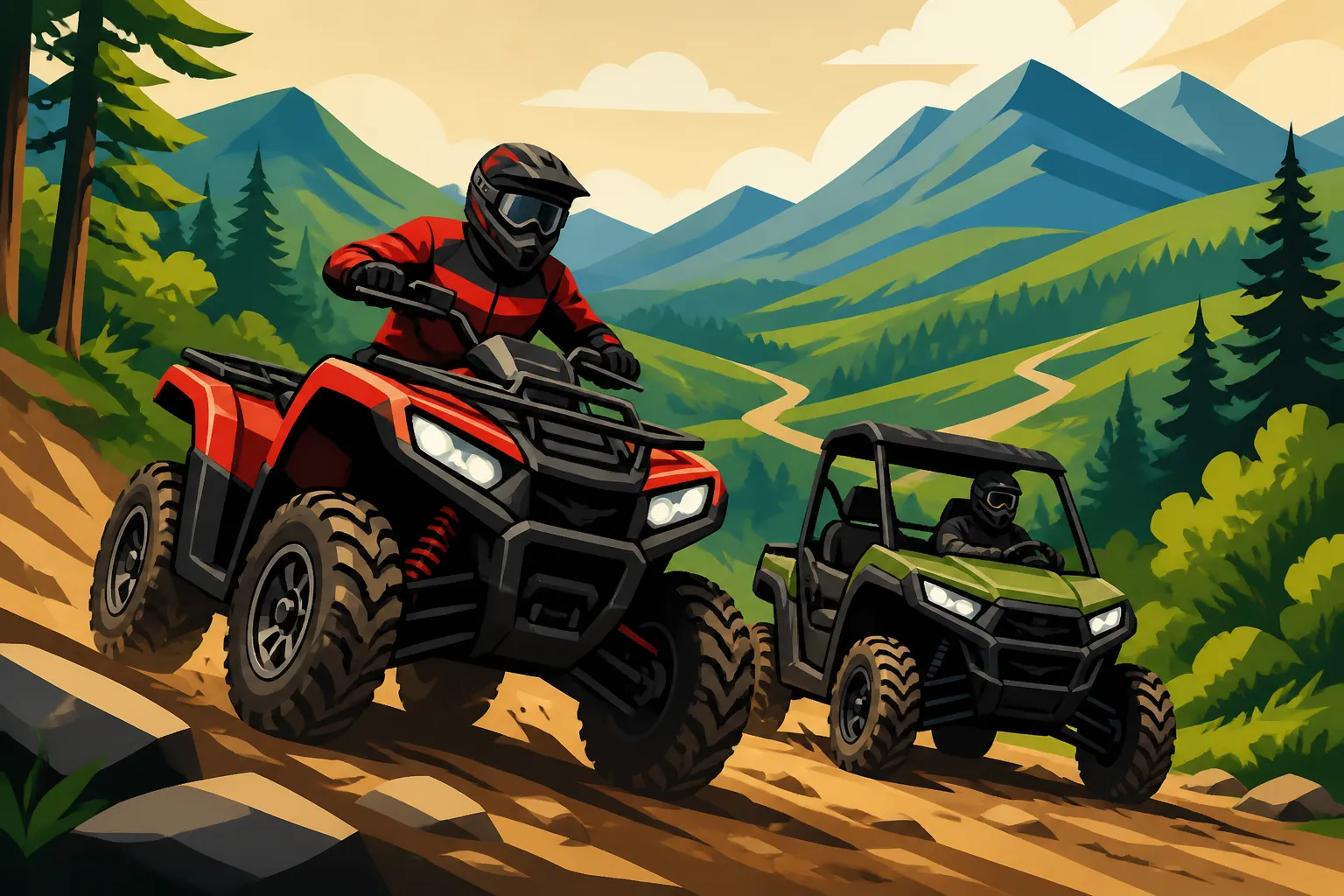
Dixon R. Miller in Pennsylvania’s Poconos
A ride at Dixon R. Miller can turn frustrating fast if you arrive with the wrong machine, miss a seasonal closure, or assume a trail permit covers every requirement. This guide explains how to plan a responsible ATV or UTV visit in the Pocono region, what to confirm before leaving home, and how to prepare for changing forest-trail conditions.
Getting oriented at Dixon R. Miller
Where the trail area is and what to confirm
Dixon R. Miller is an ATV riding area in Delaware State Forest in the Pocono region of northeastern Pennsylvania. It is a forest setting rather than a developed off-road park, so the experience is shaped by natural terrain, changing weather, and the rules that apply to state forest roads and trails. Check the official DCNR information and trail map before setting out to confirm the current access point and any notices affecting the route.
Do not rely on a town name or a familiar road as a substitute for a verified trailhead location. A navigation app may take you to a nearby forest road, gate, or property entrance that is not an authorized staging area. Before towing in, identify the designated parking or unloading location, note the route from a main road, and check whether any access roads are temporarily closed.
Paper maps and digital maps can serve different purposes. An official forest map is the best starting point for understanding designated routes and restrictions. Apps such as onX Offroad can help you organize a route and review mapping while planning, but do not treat a private app’s trail line as proof that a road is open to ATVs. Compare it with official information, and save what you need for offline use if your phone is likely to lose service.
What kind of ride to expect
Plan for a wooded, variable ride rather than a groomed, uniform track. Forest routes can include rougher surfaces, loose stone, ruts, muddy patches, uneven grades, and tight turns. Conditions can change significantly after rain or a stretch of dry weather, and a section that felt manageable on one visit may be more difficult after the surface has been disturbed by traffic or runoff.
A sensible approach is to ride within the ability of the least experienced person in your group. If someone is new to off-road riding, begin slowly, leave room between machines, and agree on a place to regroup before entering a section where riders may become spread out. A stock machine in good condition and a cautious pace are often more useful than aggressive modifications or a plan to cover every route in one outing.
Dixon R. Miller is best approached as a place to enjoy the forest and ride within posted boundaries, not as a shortcut between communities. Stay on designated routes, watch for gates and signs, and turn around if you encounter a closure or an unclear junction. For broader trip ideas, see [Dixon R. Miller in Monroe County] and [Where to Ride an ATV in Pennsylvania].
Check the rules before you load up
Registration, permits, and access are separate questions
Before the trip, check three things independently: whether your machine is properly registered, whether a trail or forest permit is required for the route you intend to ride, and whether any additional rules apply to that particular area. These requirements are not interchangeable. Having a registration plate does not automatically mean you have every access permission needed, and a permit for one trail system may not apply to another.
Pennsylvania’s requirements can differ between state forest trails, national forest routes, private riding areas, and roads designated for ATV use. Confirm the rules for Dixon R. Miller specifically rather than assuming that a permit used elsewhere in the state covers this destination. If a permit is required, check what proof you must carry and whether it must be displayed on the machine or kept with your paperwork. For a wider overview, read [Pennsylvania ATV Trail Permits Explained] and [Do You Need a Permit for Pennsylvania State Forest Trails?].
Registration and trail access are also different from road use. A registered machine is not automatically street legal, and an ATV route through a forest does not grant permission to ride on nearby public roads. If your route requires a public-road connection, verify that the road is officially designated for ATV use and follow the rules for that road. Do not assume a road is open because you see tire tracks or another rider using it.
Machine size, rider readiness, and basic safety
Check the machine’s width and overall suitability before you go. Some Pennsylvania trail systems have width limits, and a side-by-side that is comfortable on private land may be too wide for a narrow forest route. Measure the machine as it is actually equipped, including accessories that add width, and compare that measurement with the trail’s current rules. The overview at [Pennsylvania's Class II Trail Width Limit] can help explain why this check matters.
A larger machine is not automatically a better choice for a rough trail. Wide tires, racks, plows, or other add-ons may make a vehicle harder to maneuver through narrow spaces. If you ride a UTV, confirm that it is permitted on the specific route and check whether any passenger, helmet, or equipment rules apply. For more on matching a machine to the route, see [Pennsylvania Trails for a Wide Machine].
Rider experience matters just as much as machine fit. Before unloading, make sure every rider understands how to stop safely, how to signal a problem, and what to do if the group becomes separated. Carry helmets and other appropriate protective gear, and keep young or inexperienced riders within the applicable age, supervision, and training requirements. Pennsylvania’s broader trail guidance is covered in [Pennsylvania ATV Safety Certificates].
| Before you go | What to verify | Why it matters |
|---|---|---|
| Trail access | Official map, open status, and authorized trailhead | Prevents accidental entry onto a closed or unauthorized road |
| Registration | Machine registration and required proof | Registration rules are separate from trail access rules |
| Permit | Whether this specific area requires one | A permit for another trail system may not apply |
| Machine fit | Width, accessories, and route restrictions | Helps prevent reaching a section the machine cannot legally or safely use |
| Weather | Rain, surface conditions, and closure notices | Mud, runoff, or damage can change a ride considerably |
| Group plan | Meeting points, communication, and emergency supplies | Makes delays, separation, or a mechanical problem easier to handle |
Plan around seasons, weather, and trail conditions
Seasonal access can change your plans
State forest trail access may be seasonal, and dates or temporary restrictions can affect whether a planned ride is possible. Avoid making a long drive based on a post from a previous season, an old map, or a trip report that does not state when it was written. Check the current official notice for Dixon R. Miller close to your departure date, including any information about closures, maintenance, or special restrictions.
A good planning habit is to check twice: once when you are choosing a date, and again shortly before you leave. That second check is especially useful after storms, during periods of trail maintenance, or around the seasonal transitions when access may change. If the route is closed, do not ride around a barrier or look for an unofficial bypass. Treat a closure as a firm boundary and choose a currently open alternative.
For seasonal planning across the state, [Pennsylvania's ATV Trail Season] explains the broader pattern, while [Pennsylvania Trail Closures to Check First] is a useful reminder to verify the destination rather than relying on a general calendar. Area-specific information always takes priority over a broad summary.
Rain, mud, and changing surfaces
Wet weather can make a forest ride more demanding even when the route is technically open. Water can collect in low spots, loosen gravel, hide rocks, and turn a shallow rut into a deeper obstacle. A sudden downpour may also reduce visibility and make it harder to judge the condition of the trail ahead. If the surface is deteriorating, slow down or turn back rather than trying to power through.
Avoid creating a new route around a muddy section. Detours can damage vegetation, widen the disturbed area, or lead into a closed road or private property. If a section looks unsafe or badly damaged, stop at a safe location and make a conservative decision. A short ride cut short is a much better outcome than a recovery problem or damage to the trail.
Trail conditions are worth checking on the day of your ride, but treat informal reports as supporting information rather than authority. A rider’s update may refer to a different section, a different machine, or conditions from before the latest rain. Tools such as onX Offroad can help with route planning and offline orientation, but use official trail notices to confirm access and obey signs on the ground. For more detail on planning around weather, see [Pennsylvania Trails After Heavy Rain].
Prepare for a comfortable and responsible ride
Build a practical day-ride checklist
A little preparation can prevent common problems such as arriving without required paperwork, discovering a weak battery at the trailhead, or realizing that nobody packed water. Before you leave, inspect tires, brakes, lights, steering, and the machine’s general condition. Check that the plate and any required decals are secure and readable, and bring the documents or proof required for your machine and route.
Pack for a delay, not just the planned ride time. Water, food, basic first-aid supplies, a charged phone, and suitable clothing are sensible starting points. If your group uses radios or another communication method, test them before unloading. Cell service should never be assumed in a forest setting, so make sure the group knows the route and has a plan for regrouping if a rider falls behind.
If you are towing, confirm that the trailer is secure, the tie-downs are in good condition, and the tow vehicle has enough room to maneuver and park at the authorized staging area. Do not block gates, access roads, or spaces intended for other users. If you are unfamiliar with the location, arrive with enough daylight to find the correct entrance and unload without rushing.
Ride with other forest users in mind
A state forest is not only a riding area. You may encounter hikers, hunters, cyclists, workers, land managers, or vehicles using roads for authorized purposes. Slow down when visibility is limited, approach blind corners cautiously, and leave room to stop. If you meet another user, ease off the throttle, communicate clearly, and pass only when it is safe and permitted.
Noise, speed, and staying on-route all affect how riding is experienced by nearby communities and other forest users. Keep exhaust equipment compliant, avoid unnecessary revving, and do not treat a quiet or empty-looking road as permission to ride beyond the designated network. Carry out any trash you bring in, and avoid disturbing wildlife or vegetation.
Group rides need a little extra coordination. Agree on a leader and a sweep rider, choose clear stopping points, and make sure nobody feels pressured to continue through a difficult section. If a rider wants to turn back, the group should have a safe way to do so. These small decisions help keep the day enjoyable without making a challenging spot harder for everyone.
Put together a simple trip plan
Use maps without relying on a single source
A reliable route plan combines official information, a clear navigation plan, and attention to signs at the site. Start with the official map to locate authorized routes and access points. Then check a navigation tool for practical trip planning, such as organizing a saved route or keeping useful map information available offline. onX Offroad may help with that planning, but it should not replace official trail information or posted instructions.
Before leaving, write down or save the key details: the intended access point, the route you expect to ride, a backup plan, and a check-in time with someone who is not on the trip. If a phone battery dies or a navigation app loses data, the group should still know where it is headed and how to return to the staging area. Do not ride into an unfamiliar branch simply because a screen shows a line continuing ahead.
At intersections, stop long enough to identify signs and confirm the direction of travel. If a map and a posted sign appear to conflict, follow the sign and do not continue until you have clarified the route. A map can be outdated, imprecise, or based on information that does not reflect a temporary closure.
Choose a ride that matches your group
A good first visit does not need to be an all-day endurance ride. Set a realistic turnaround time, allow for breaks, and leave room for slower travel than you might expect. New riders, families, and groups on mixed machine types often enjoy the day more when the plan includes fewer miles and more time to handle stops, questions, and unexpected conditions.
For a mixed-experience group, agree beforehand that anyone can call for a pause or turn back. Keep experienced riders from disappearing far ahead, and avoid placing a less confident rider at the end of a long, fast-moving line. If the trail becomes rougher than expected, regroup in a safe spot and decide together whether to continue.
Finally, make a post-ride check part of the routine. Look over the machine for loose parts, tire damage, leaks, or debris around moving components. Confirm that all riders and equipment are accounted for before leaving the staging area. A thoughtful plan, a suitable machine, and respect for closures and other trail users make Dixon R. Miller a more rewarding destination in the Poconos.
Disclaimer
This article is for general informational purposes only and does not constitute professional advice. Laws, prices and regulations vary by location and change over time. Consult a qualified professional for guidance on your specific situation.