Why Windber Borough Publishes Its Closed Roads
Navigating the rules for riding ATVs and UTVs on public roads in Pennsylvania can feel like trying to solve a complicated riddle, and it often leads to a lot of frustration and confusion for riders just trying to enjoy their machines responsibly. Most of the time, the answer is a resounding "no" when it comes to riding your quad or side-by-side on state roads, but some forward-thinking municipalities, like Windber Borough, have created their own solutions, leading them to explicitly publish which roads are closed rather than just assuming everything is off-limits. This guide will dive deep into why Windber Borough takes this unique approach, what it means for you as a rider, and how this transparency ultimately benefits the entire community.
The Tricky Landscape of Pennsylvania ATV Road Use
Let's be honest, the vast majority of Pennsylvania's roads are simply not open to ATVs and UTVs. It's a reality that can be tough for riders to accept, especially when you just want to get from your camp to a trail, or even ride into town for a quick bite. State law generally restricts these machines to designated trails and private property, and any deviation can lead to stiff fines and headaches. This widespread prohibition often leaves riders guessing, feeling like they're always one wrong turn away from a citation.
Why Most Roads Are Off-Limits
The primary reason most roads are closed comes down to safety and legal definitions. ATVs and UTVs are not designed or manufactured to meet the same safety standards as street-legal vehicles. They lack features like crumple zones, extensive lighting, and often have higher centers of gravity, making them inherently different from cars or trucks on asphalt. From a legal standpoint, the Pennsylvania Vehicle Code classifies them as "off-highway vehicles," which means they're generally excluded from public roadways unless specifically permitted. This creates a challenging environment where riders constantly have to check the rules, and frankly, often find them restrictive and unclear. You might have your machine properly registered with DCNR, but that doesn't automatically grant you access to the main street in your hometown.
The Frustration of Unclear Rules
One of the biggest pain points for ATV and UTV enthusiasts in Pennsylvania is the sheer lack of clear, consistent information. You might find conflicting signs, hear different interpretations from locals, or simply not know where to even begin looking for definitive answers. This ambiguity isn't just annoying; it can lead to unintentional violations, expensive fines, and a sour taste for the sport. Riders often lament that they wish authorities would just tell them "yes or no," clearly marking what's allowed and what isn't. This is where a municipality like Windber Borough steps in, understanding that clarity is key to fostering responsible riding and minimizing conflicts. It's much easier for a rider to avoid a closed road when they know it's closed, rather than constantly wondering if an open road is actually secretly closed. For more on navigating these complex rules, check out [Pennsylvania's Designated ATV Roads] and [Pennsylvania's Joint-Use Roads].
Windber Borough's Proactive Approach to ATV Road Access
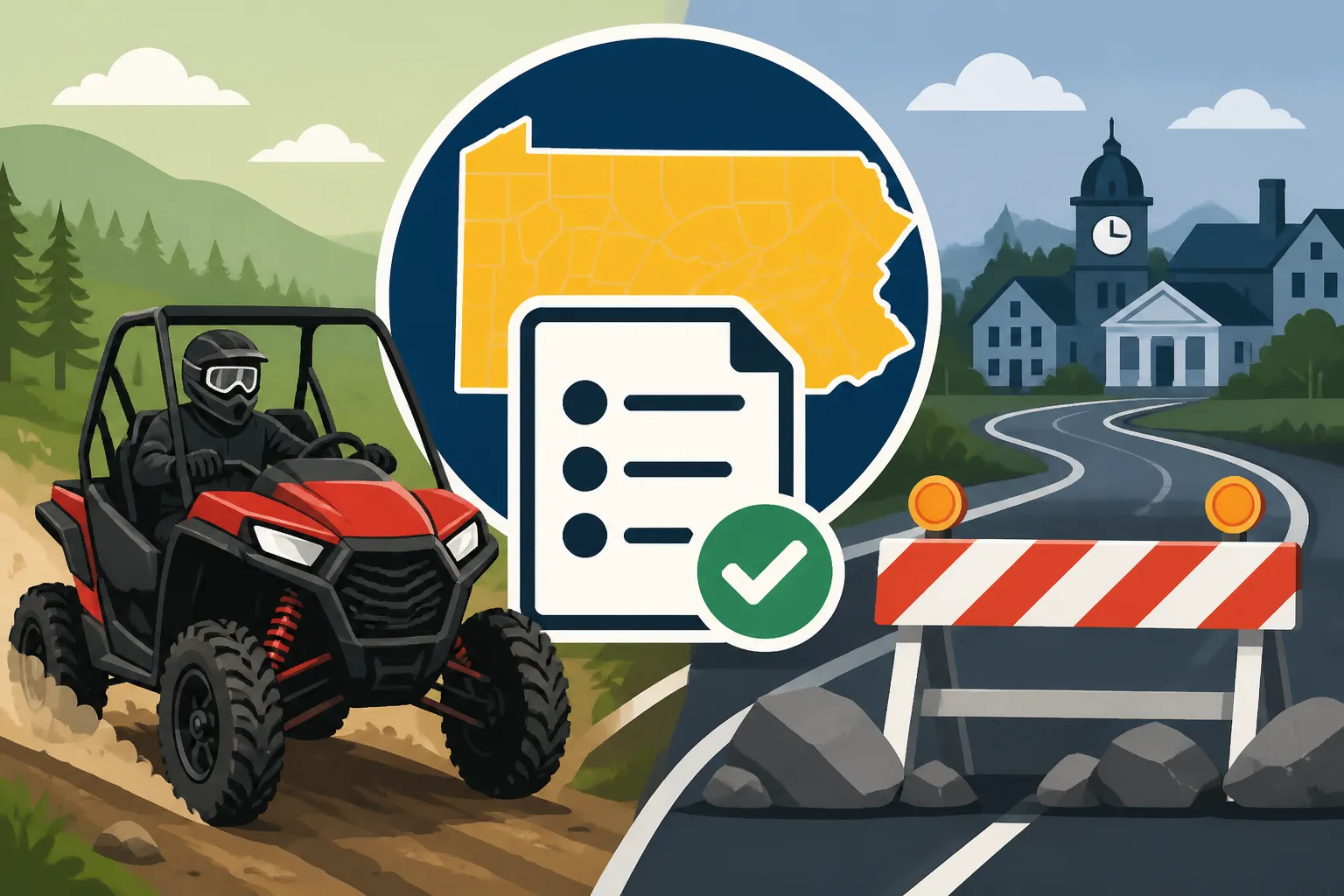
Windber Borough, recognizing the popularity of ATV and UTV riding in their area and the desire of residents and visitors to access trails and services, decided to tackle the problem head-on. Instead of blanket prohibitions and leaving riders to guess, they developed a comprehensive "Mixed Use Program" which specifically designates certain borough streets as open for ATV and UTV travel. The critical part of this program is its transparency: they actively publish which roads are closed to these machines.
Why an "Opt-Out" List Works Better
Most municipalities operate on an "opt-in" model for ATV road access – meaning all roads are closed unless specifically posted open. Windber flipped this script. By making the default assumption that roads are open for their mixed-use program (after obtaining the necessary permit), and then providing a clear list of exceptions (the closed roads), they significantly reduce ambiguity. This approach acknowledges that residents own and use ATVs, and rather than fighting against it, they're channeling it responsibly. It shifts the burden of knowledge from "figure out what's allowed" to "here are the few places you can't go." This is particularly helpful for local residents who just want to ride [Riding to a Trailhead on a Township Road] or [Riding Into Town on a Pennsylvania ATV].
Minimizing Confusion and Maximizing Compliance
When you publish a list of closed roads, you empower riders with definitive information. There's no room for misinterpretation or the excuse of "I didn't know." Riders can consult the official list, plan their routes accordingly, and ride with confidence, knowing they are within the borough's regulations. This transparency fosters a sense of trust and encourages compliance. If riders know exactly where they can and cannot go, they are far more likely to adhere to the rules, which in turn leads to a safer environment for everyone – riders, pedestrians, and other motorists. It's a simple, yet incredibly effective, communication strategy that other communities could learn from.
The Benefits of Transparency for Riders and the Community
The decision by Windber Borough to publish its closed roads isn't just about making life easier for ATV riders; it offers significant benefits for the entire community, from local businesses to law enforcement. It's a testament to how clear communication can transform potential conflicts into constructive coexistence.
Boosting Local Economy and Tourism
When riders know they can legally access certain areas, it opens up economic opportunities. Riders often need fuel, food, lodging, and supplies. If they can ride their UTV into Windber Borough to grab lunch or pick up some gear, they're more likely to spend money in local businesses. This attracts tourism, encouraging riders from outside the area to visit and experience the trails and the community. By providing clear guidance, Windber makes itself an attractive destination for ATV and UTV enthusiasts, directly injecting revenue into the local economy. Businesses that cater to off-roaders, whether it's a small diner or a parts shop, directly benefit from this clarity.
Enhancing Safety for All Road Users
You might think more ATVs on roads would mean less safety, but the opposite can be true when done correctly. By designating specific routes and clearly marking off-limits areas, Windber Borough guides ATV traffic to the safest possible corridors. This helps prevent riders from venturing onto dangerous or heavily trafficked roads where they don't belong. When riders know the rules and have a clear path, they are less likely to ride erratically or in areas not intended for off-road vehicles. This focused approach means less unpredictable behavior, making roads safer for drivers, pedestrians, and the riders themselves. It also allows local law enforcement to focus their efforts on enforcing rules in known problem areas rather than chasing down confused riders on every street. For specific safety gear, riders might look to companies like SuperATV for enhanced lighting or mirrors that improve visibility in mixed-use environments.
Reducing Enforcement Headaches
For law enforcement, dealing with ambiguous road rules is a constant challenge. Officers have to interpret state laws, local ordinances, and often confront riders who genuinely didn't know they were in violation. By providing a clear, published list of closed roads, Windber Borough simplifies enforcement. There's no room for argument or confusion. An officer can easily refer to the official list, and a rider has no excuse for being on a closed road. This streamlines the enforcement process, reduces disputes, and allows officers to focus on more serious infractions, leading to more efficient policing and better community relations. It also helps manage expectations, as riders know what to expect when riding in town.
What Riders Need to Know About Windber's Mixed Use Program
So, if you're planning a trip to Windber Borough with your ATV or UTV, you need to understand the specifics of their Mixed Use Program. It's not a free-for-all, but a structured system designed to integrate off-road vehicles into the borough's road network in a controlled and safe manner.
Obtaining a Borough Permit
The first and most crucial step is to obtain a specific permit from Windber Borough. This isn't your DCNR registration, nor is it a state trail permit; it's a separate local requirement. This permit signifies that you understand and agree to abide by the borough's unique rules. It's a way for the borough to manage the volume of riders and ensure accountability. Always check the borough's official website or municipal office for the most current application process, fees, and requirements for their mixed-use riding program. Think of it as your passport to navigate their local roads legally. This is separate from [Pennsylvania's Northcentral Regional Trail Permit] or [Pennsylvania's Allegheny National Forest Permit].
Understanding the Rules of the Road
Even with a permit, riding an ATV or UTV on Windber's designated roads comes with a set of responsibilities and rules, just like any other vehicle. These typically include:
- Speed Limits: You'll be expected to adhere to all posted speed limits, which are often lower on borough streets than on highways.
- Signage: Obey all traffic signs, stop signs, and signals.
- Lighting: Ensure your machine has appropriate lighting, especially if riding near dusk or at night. [Pennsylvania Lighting Rules for Road Use] and [Pennsylvania Rules for Night Riding] are important to review. Products from SuperATV can provide robust lighting solutions for enhanced visibility.
- Insurance: [Pennsylvania Mandatory Insurance Off Your Own Land] is a state requirement, and Windber will expect proof of valid insurance.
- Helmets: [Pennsylvania Helmet Law for ATV Riders] generally applies.
- Age Restrictions: Be aware of [Pennsylvania Minimum Age to Ride a Road] within the borough.
- Passenger Rules: If you have a passenger, ensure you comply with [Pennsylvania Rules for a Passenger on a Quad].
- Road Etiquette: Always yield to pedestrians and bicycles, and be courteous to other motorists. Remember, you are sharing the road.
Failure to follow these rules, even with a permit, can result in fines or revocation of your borough permit. The goal is coexistence, not exclusive access.
The Importance of the "Closed Roads" List
Always, and I mean always, consult Windber's published list of closed roads before you ride. This list is your definitive guide to where you cannot go. It's not enough to assume; you must know. The list might be available on the borough's website, at the municipal building, or even posted in public areas. Keep a copy with you, perhaps on your phone, so you can refer to it if you're unsure. Sticking strictly to the open roads and avoiding the closed ones is the bedrock of their program and your responsibility as a rider. Ignoring this list not only puts you at risk of a citation but also jeopardizes the future of the mixed-use program for everyone. This list helps riders understand [Windber Borough's Published Closed Roads].
| Feature | Typical PA Township/Borough (Informal) | Windber Borough (Formal Mixed Use Program) |
|---|---|---|
| Default Road Status | All roads closed unless posted open | Specific roads open, some specifically closed |
| Information Source | Local inquiry, guesswork, no official list | Publicly published "Closed Roads" list |
| Permit Required | No specific local permit | Specific Windber Borough permit required |
| Rider Confidence | Low, constant uncertainty | High, clear guidance on permitted routes |
| Economic Impact | Limited for ATV-related businesses | Positive, encourages rider spending |
| Enforcement Clarity | Often ambiguous, difficult | Clear, straightforward for officers |
| Community Relations | Potential for conflict | Fosters coexistence and responsibility |
Comparing Windber's Model to Other Pennsylvania Communities
Windber Borough's approach is quite progressive compared to many other municipalities in Pennsylvania. While some areas are exploring similar mixed-use concepts, Windber has been a leader in implementing and clearly communicating such a program. Understanding these differences can highlight why Windber's transparency is so valuable.
State-Level Restrictions vs. Local Initiatives
At the state level, the general rule remains: ATVs and UTVs are not street legal. PennDOT does not register these vehicles for highway use, and the DCNR's registration is for off-road use only. However, Pennsylvania law does allow for local municipalities to pass ordinances that can open certain local roads to ATVs and UTVs, usually under very specific conditions. This is the legal loophole that Windber Borough, and a few others, have wisely leveraged. But even with these local ordinances, state regulations like helmet laws and insurance requirements still apply. Many other boroughs simply choose to maintain the default state-level prohibition, leading to the "everything is closed" scenario. This makes [Why PennDOT Does Not Register Pennsylvania ATVs] a critical read for understanding the broader context.
The "Silent Closed" Approach Elsewhere
In many towns, there is no official list of open or closed roads for ATVs. The default assumption is that all roads are closed, and if you're caught riding one, you're in violation. This "silent closed" approach can be incredibly frustrating. Riders often try to gauge legality by observing others, which can be misleading, or by simply hoping they won't get caught. This lack of transparency leads to an adversarial relationship between riders and local authorities, and it certainly doesn't help local businesses that could benefit from responsible ATV tourism. When communities take this passive stance, they miss out on the opportunity to manage riding constructively and safely.
Why More Communities Don't Follow Suit
You might wonder why more townships and boroughs don't adopt Windber's transparent, mixed-use model. There are several reasons. Often, it's a fear of increased traffic, noise complaints, or safety concerns from residents who aren't riders. Local governments might also lack the resources or political will to research, draft, and implement such an ordinance, which often involves public hearings and careful consideration. There can also be insurance liability concerns. However, as Windber demonstrates, with careful planning, clear communication, and robust enforcement, a mixed-use program can be implemented successfully, benefiting both the riding community and the general public. It's a prime example of how local government can effectively respond to the needs and interests of its constituents while maintaining order and safety. You can also explore [Asking a Township to Open a Road] for more context on how these decisions are made.
By proactively publishing its closed roads, Windber Borough not only provides much-needed clarity for ATV and UTV riders but also sets a strong example for how communities can responsibly integrate off-highway vehicles into their local infrastructure. It validates the desire of riders to enjoy their sport and encourages them to do so safely and legally, turning potential problems into opportunities for economic growth and harmonious coexistence.
Disclaimer
This article is for general informational purposes only and does not constitute professional advice. Laws, prices and regulations vary by location and change over time. Consult a qualified professional for guidance on your specific situation.