Registering an ATV Bought From a Pennsylvania Dealer
Buying a new ATV is incredibly exciting – you’re dreaming of those first rides on the trails, feeling the wind, and exploring the beautiful Pennsylvania outdoors. But then reality sets in: the paperwork. It’s easy to get overwhelmed thinking about titles, registrations, and all the administrative hoops. Thankfully, when you purchase your ATV from a licensed dealer here in Pennsylvania, they often take a huge load off your shoulders by handling much of that process for you. This guide will walk you through exactly what to expect, what your dealer will do, and what remaining steps you'll need to take to get your new machine legally ready for adventure.
The Convenience of Buying from a Pennsylvania Dealer
Let's be honest, navigating vehicle registration in any state can feel like deciphering a secret code. There are forms, fees, and specific timelines that can quickly become confusing. This is especially true for ATVs, which don't follow the same rules as cars and trucks with PennDOT. That's where a reputable Pennsylvania ATV dealer truly shines, taking much of the administrative burden out of your hands.
Why a Dealer Makes Things Easier
Think of your dealer as your personal guide through the DCNR (Department of Conservation and Natural Resources) registration process. They’re dealing with these forms and procedures day in and day out, so they know the drill. Instead of you having to track down the correct DCNR forms, figure out the current fees, and mail everything in, the dealer centralizes much of that for you. This means fewer trips to the post office for you, less stress about filling out paperwork incorrectly, and ultimately, a faster path to getting your ATV out on the dirt. They act as an intermediary, ensuring all the necessary steps for [Titling an ATV in Pennsylvania] and getting that all-important plate are followed correctly.
Understanding the 45-Day Dealer Sticker
One of the most immediate benefits you'll experience when buying from a dealer is the "45-day dealer sticker." This little piece of temporary validation allows you to ride your new ATV legally while DCNR processes your official registration and title. It’s a fantastic perk that means you don't have to wait weeks or even months for the physical plate and registration card to arrive before you can enjoy your machine. Your dealer will affix this sticker to your ATV, and it serves as proof that your permanent registration is in progress. This temporary measure is crucial because it bridges the gap, allowing you to hit the trails without fearing a citation for being unregistered. It's truly a welcome relief for excited new owners. For more details on this, check out [The Forty-Five Day Dealer Sticker in Pennsylvania].
The Cost Components Beyond the ATV Price
When you buy an ATV from a dealer, the price tag isn't the only figure you'll see. There are several other costs that get rolled into the final transaction, many of which are part of the titling and registration process. These typically include the Pennsylvania sales tax, the DCNR title fee, and the DCNR registration fee. Dealers might also charge a "documentary fee" or "doc fee" for their service in handling the paperwork. While the sales tax is mandated by the state, and the DCNR fees are fixed, the dealer's own fees can sometimes be subject to negotiation. It's always wise to ask for a full breakdown of all charges before you sign on the dotted line, so you understand exactly what you're paying for beyond the ATV itself. Having a clear understanding helps avoid any surprises.
What Your Dealer Handles for You
This is where the dealer truly earns their keep. Their expertise and direct access to the DCNR system mean that a significant portion of the administrative work falls on their shoulders, not yours. They’re set up to do this efficiently, ensuring accuracy and compliance with state regulations for [Pennsylvania's DCNR Snowmobile and ATV Section].
Titling Your New ATV
The title is the legal document that proves ownership of your ATV. Just like with a car, it's a critical piece of paper you'll need if you ever plan to sell your machine in the future. When you buy from a dealer, they are responsible for submitting the necessary paperwork to DCNR to get the title issued in your name. They collect your information, fill out the required forms like [What Pennsylvania Asks on Form DCNR-43], and submit them along with the state-mandated title fee. This process ensures that the ATV is officially transferred from the dealer's inventory to your ownership on DCNR's records, bypassing the need for you to navigate this complex step alone.
Processing Your Pennsylvania ATV Registration
Beyond the title, your dealer also handles the actual registration of your ATV with DCNR. This involves submitting another set of forms and the two-year registration fee. They ensure that your machine is properly entered into the state's ATV registration system, which is what allows you to legally operate it on approved trails and private land (with permission) in Pennsylvania. The registration process is what gets you that coveted DCNR registration plate and the wallet card, signaling that your machine meets all state requirements for operation. Understanding [Pennsylvania ATV Registration Cost] is a good idea to budget for this, even though your dealer will likely collect it as part of the total purchase.
Collecting Sales Tax and Other Fees
Pennsylvania has a 6 percent sales tax that applies to ATV purchases, and your dealer is legally required to collect this on behalf of the state. They will calculate the sales tax based on the purchase price of your ATV and include it in your final bill. This ensures that the tax is paid upfront, and you don't have to worry about tracking it down and submitting it yourself. Beyond sales tax, they'll also collect the DCNR title and registration fees. Essentially, the dealer acts as a one-stop shop for all the initial financial obligations related to your ATV, streamlining the entire payment process for you. For more on this, you might find [Pennsylvania's 6 Percent Sales Tax on a Quad] helpful.
Here's a quick look at who handles what when buying from a Pennsylvania dealer:
| Task | Handled by Dealer | Handled by Rider |
|---|---|---|
| Issuing the 45-day temporary sticker | Yes | No |
| Completing DCNR Title Application | Yes | No |
| Submitting DCNR Registration Forms | Yes | No |
| Collecting Pennsylvania Sales Tax | Yes | No |
| Remitting DCNR Fees (Title/Reg) | Yes | No |
| Providing a Bill of Sale | Yes (for their records and yours) | Yes (for your own record keeping, if desired) |
| Applying for an ATV Safety Certificate | No (Rider's responsibility, especially for youth) | Yes |
| Purchasing ATV Insurance | No | Yes |
| Mounting Plate and Sticker | No | Yes |
| Carrying Wallet Card | No | Yes |
Your Responsibilities in the Registration Process
While your dealer handles a lot of the heavy lifting, you still have some crucial roles to play to ensure a smooth registration process. Your involvement primarily revolves around providing accurate information and understanding the documentation you receive.
Providing Necessary Information and Identification
When you’re at the dealership, they'll ask for personal information to complete the title and registration forms. This typically includes your full legal name, current address, and perhaps a driver’s license or other form of identification. It’s absolutely vital that you provide accurate and up-to-date information. Any discrepancies or errors could delay your registration or even cause issues down the road. Double-check everything before you sign, just as you would with any other important legal document. Making sure your name is spelled correctly and your address matches your other official documents will prevent headaches later on.
The Importance of a Bill of Sale (Even with a Dealer)
Even though you’re buying from a dealer and they're handling much of the paperwork, always make sure you receive a detailed bill of sale for your records. This document officially outlines the transaction, including the ATV's make, model, VIN, sale price, and any included accessories. It serves as your personal proof of purchase and can be invaluable for insurance purposes, future resale, or if there's ever a dispute. While the dealer will have their own internal forms, having your own clean, clear bill of sale is smart. For those who might want to create a supplementary personal record, or prepare for a future private sale, resources like LawDepot offer customizable bill of sale templates that can be incredibly useful for documenting the transfer of ownership. It's a foundational document that protects both buyer and seller. [Pennsylvania ATV Bill of Sale Requirements] are worth reviewing for peace of mind.
Verifying Your VIN
The Vehicle Identification Number (VIN) is your ATV's unique identifier. It's like its fingerprint. Before you leave the dealership, take a moment to physically verify that the VIN on the ATV matches the VIN listed on your bill of sale and any temporary registration paperwork provided. This small step can prevent major headaches. An incorrect VIN on your title or registration could lead to legal issues, making it difficult to prove ownership or even register the machine properly later. Dealers are usually meticulous about this, but a quick check on your part is a simple safety measure that puts your mind at ease. Ensuring [VIN Proof for a Pennsylvania Registration] is accurate is a critical step for every owner.
Getting Ready to Ride: What Happens Next
After you’ve left the dealership with your shiny new ATV and that handy 45-day sticker, there’s still a short waiting period. DCNR needs time to process everything your dealer submitted. But once that’s done, you'll receive your official documents and will need to take a couple of final steps to be fully trail-ready.
Receiving Your Plate and Wallet Card
Eventually, typically within a few weeks to a month or two after your purchase (depending on DCNR processing times), you'll receive your official Pennsylvania ATV registration plate and a wallet-sized registration card in the mail. The plate is a physical, metal plate with your unique registration number, similar to a license plate but for your off-road machine. The wallet card is a smaller, durable card that lists your ATV's details and registration information. This card is crucial to carry with you whenever you're riding, as it serves as immediate proof of your legal registration if a DCNR ranger or law enforcement officer ever asks to see it. It's recommended to keep it in a waterproof holder to protect it from the elements. This wallet card is explicitly detailed in [Why Both Pennsylvania Registrations Include a Wallet Card].
Mounting Your New Plate and Sticker
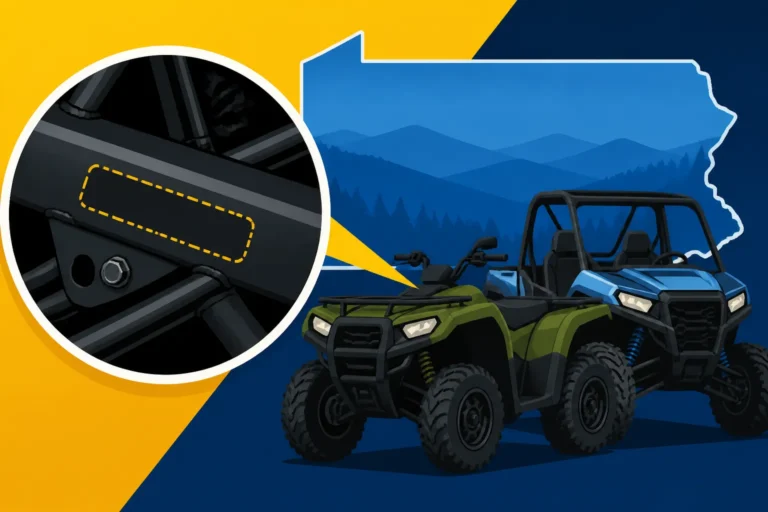
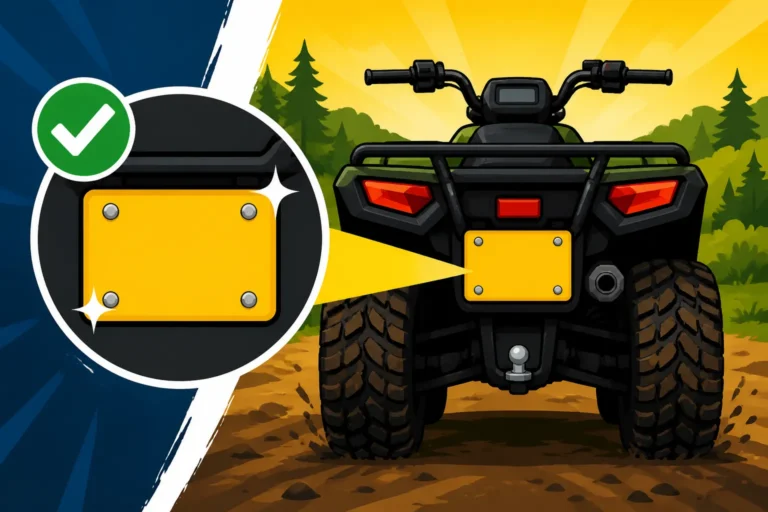
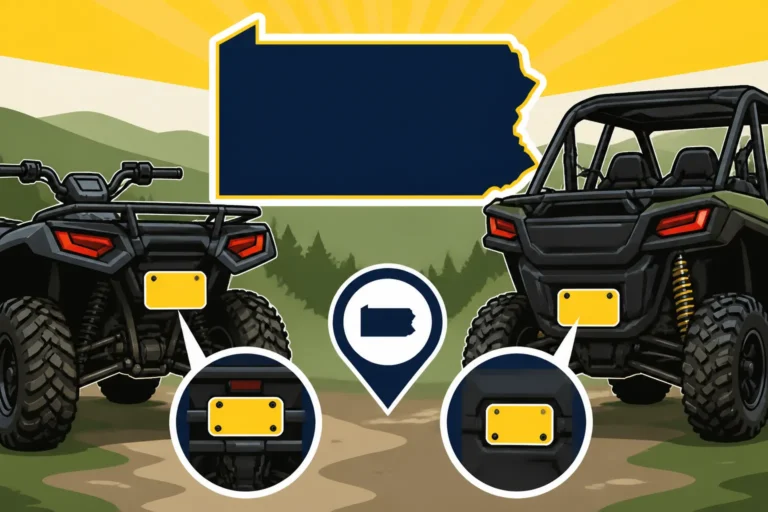
Once your official plate arrives, it's time to get it onto your ATV. Pennsylvania has specific requirements for where the plate must be mounted. Generally, it needs to be clearly visible from the rear of the machine, securely fastened to prevent it from falling off, and positioned so that mud and debris don't easily obscure it. Along with your plate, you'll also receive a smaller registration sticker. This sticker typically needs to be applied to the top right corner of your new plate. The sticker indicates the expiration date of your registration, making it easy for officials to see if your registration is current at a glance. Proper mounting ensures you comply with state regulations and avoid potential fines. For guidance, refer to [Pennsylvania ATV Plates and Where They Mount] and [Where the Sticker Goes on the Plate].
Considering Insurance Before Your First Ride
While your dealer handles the registration, they typically do not arrange for insurance coverage. In Pennsylvania, if you plan to ride your ATV anywhere other than on your own private property, you are required to carry liability insurance. This is a critical step that many new riders overlook in their excitement. Before you even think about hitting a state forest trail or an organized riding park, make sure you have the appropriate coverage. Shop around, get quotes, and ensure your policy meets state requirements. It's not just about compliance; it's about protecting yourself and your assets in case of an accident. Carrying proof of insurance is just as important as carrying your registration card, and it can save you from significant financial risk. LawDepot, while primarily known for legal forms, offers articles and resources that explain different types of insurance coverage, which can be a helpful starting point in understanding what kind of protection you might need for your new ATV. Ensure you have [Pennsylvania ATV Registration and Insurance Proof] before your wheels hit the dirt.
Disclaimer
This article is for general informational purposes only and does not constitute professional advice. Laws, prices and regulations vary by location and change over time. Consult a qualified professional for guidance on your specific situation.