Reading a Pennsylvania Plate Number
It’s an exciting day when your new (or new-to-you) ATV or UTV finally arrives with its shiny new Pennsylvania registration plate! You’ve been through the paperwork, maybe even navigated the DCNR portal, and now you have the physical proof. But then you look at it – a series of letters and numbers, a little sticker, and you might find yourself scratching your head, wondering what it all means and if you’re reading it right. This guide is here to unravel the mystery of your Pennsylvania ATV plate number, ensuring you understand every detail, from the sequencing to the all-important expiration sticker, so you’re always trail-ready and compliant.
Decoding the Pennsylvania ATV Plate Format
When you first get your Pennsylvania ATV or UTV registration plate, it can look a little different from the standard car plates you're used to seeing. This isn't just a random piece of metal; it's a carefully designed identifier that tells officials a lot about your machine and its registration status. Understanding its layout is the first step to being a truly informed rider.
The Basic Alpha-Numeric Sequence
Most Pennsylvania ATV plates follow a distinct alpha-numeric sequence, typically featuring a pattern like two letters, followed by three numbers, and then two more letters (e.g., AB123CD). This specific format allows the Pennsylvania Department of Conservation and Natural Resources (DCNR) to issue a vast number of unique identifiers without running out of combinations. It’s designed purely for identification within the ATV and UTV registration system, separate from the vehicle registration system managed by PennDOT.
Unlike a passenger car plate which might have a county or special designation, your ATV plate is solely focused on providing a unique string of characters for your specific machine. When a DCNR ranger or law enforcement official asks for your plate number, they are looking for this exact sequence. Being able to quickly and accurately state it helps them verify your registration efficiently, especially if they're checking it against their records right there on the trail, say at a busy trailhead like Whiskey Springs or the AOAA. This also ensures that if for some reason the sticker isn't perfectly clear, the plate number itself provides a strong primary identifier.
It’s important to remember that this alpha-numeric code is tied directly to your specific ATV or UTV. If you ever need to inquire about your registration, report a lost plate, or complete any DCNR paperwork, this number will be one of the first pieces of information they ask for. Having it memorized, or at least easily accessible, is a small but significant detail that can save you time and hassle. You'll find that this unique code is consistent across all Pennsylvania ATV plates, whether you have a standard quad or a large side-by-side, creating a unified system for all off-highway vehicles.
Understanding the Plate Materials and Durability
Pennsylvania ATV plates are generally made from a durable, yet lightweight, material like aluminum or a specialized plastic. This isn't just a cost-saving measure; it's a practical choice given the harsh environments ATVs and UTVs operate in. Imagine navigating the challenging terrain of the Bloody Skillet trails, where mud, flying rocks, low-hanging branches, and even water crossings are common. A flimsy plate simply wouldn't last.
The material used is designed to withstand impacts, resist corrosion from moisture and mud, and maintain its structural integrity under vibration. While no plate is completely indestructible against every trail hazard, the robustness of the DCNR-issued plate is a testament to the understanding of the extreme conditions off-road vehicles face. Riders often reinforce their plates or choose specific mounting locations to further protect them, but the base material offers a good starting point for durability. Proper mounting, as discussed in [Mounting a Plate Away From the Tires], can greatly extend its life.
Beyond physical durability, the plates often feature a reflective coating. This reflective quality is not just for aesthetics; it's a crucial safety feature, especially if you ever find yourself riding near dusk or in low-light conditions on a designated joint-use road. While most trail riding happens during daylight, having a plate that can catch and reflect light makes your machine more visible to others, whether they are fellow riders, DCNR personnel, or even other vehicles if you're briefly on an approved connector road. This reflective property ensures that even if your tail lights get obscured by mud, your plate still offers a chance for visibility from behind.
The DCNR Logo and State Identification
One of the most distinctive features you’ll notice on your Pennsylvania ATV plate is the prominent "DCNR" logo or text. This isn't just a branding element; it's a critical identifier. DCNR stands for the Department of Conservation and Natural Resources, and their presence on the plate clearly indicates the authority responsible for regulating and registering off-highway vehicles in the Commonwealth. It instantly sets your ATV plate apart from those issued by the Pennsylvania Department of Transportation (PennDOT), which handles passenger vehicles.
This distinction is fundamental to understanding the regulatory landscape for ATVs in Pennsylvania. Unlike cars, which are primarily regulated for road use, ATVs are governed by laws focused on recreational riding, trail access, and environmental stewardship, all falling under the DCNR's purview. The DCNR logo serves as a constant reminder that your machine is part of a specific system designed to manage off-road recreation while conserving natural resources. It signifies that your registration fees contribute to trail maintenance, safety programs, and the overall management of Pennsylvania's vast state forest and park lands.
For riders who might be new to Pennsylvania or coming from states with different registration systems, the DCNR logo on the plate can sometimes cause initial confusion. However, it quickly becomes a familiar sight and a clear indicator of legal compliance for off-highway vehicle use in the state. When you see that logo, you know you're dealing with the correct authority for your ATV needs, from registration to trail permits. This clear demarcation helps avoid mix-ups and ensures that all inquiries and enforcement actions are directed to the appropriate state agency, as highlighted in [Why DCNR Registers Pennsylvania ATVs].
The Critical Role of the Registration Sticker
While the alpha-numeric sequence provides a unique identifier for your ATV, the registration sticker affixed to the plate is arguably the most crucial element for proving current and valid registration. It's the visual proof that your fees are paid, your machine is recognized by the state, and you're legally permitted to ride. Without a current sticker, your plate, no matter how clean, could lead to questions from authorities.
Location and Placement of the Sticker
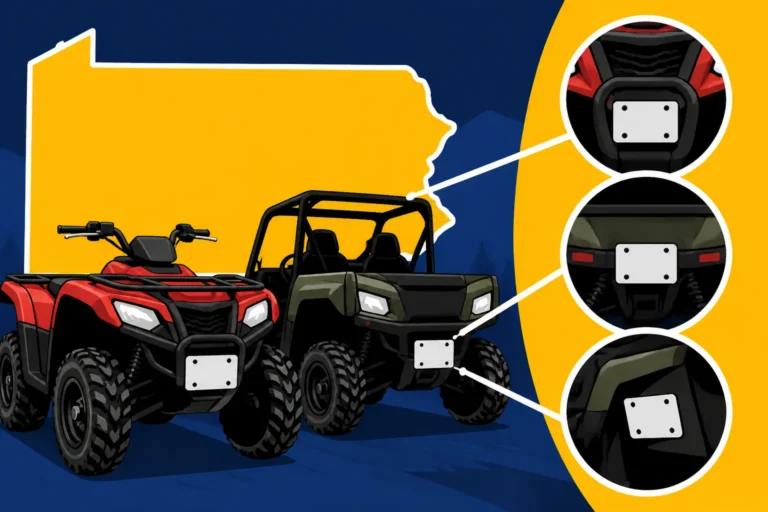
The DCNR registration sticker is generally placed in a specific corner of your ATV plate, often the upper right or left. While the exact corner might vary slightly over time or with different production runs, its presence and legibility are paramount. This placement is chosen for quick visual verification by DCNR rangers, game wardens, or local law enforcement who might be performing routine checks at staging areas, trailheads, or along designated shared-use roads. It's designed to be easily spotted, even from a short distance.
This sticker isn't merely decorative; it's your immediate, visible proof of current registration. Think of it as a temporary tag that constantly updates. If you've just received your new plate, the sticker will be crisp and clean. Over time, riding through mud, dust, and rain will naturally wear on it, which is why keeping your plate clean and visible is so important. A sticker that's peeling, faded, or completely obscured by dirt could be seen as an attempt to hide an expired registration, even if it's unintentional.
When a DCNR officer is doing a compliance check, for example, at a popular spot like the entrance to the Potter County Trail, they don't always have time to run every plate number through a database immediately. The sticker allows for a quick visual confirmation of validity. They'll look for its presence and the printed date, which leads us to the next critical point. Always be mindful of [Where the Sticker Goes on the Plate] to ensure it remains unobstructed.
Deciphering the Expiration Date
The most important information conveyed by your registration sticker is the expiration date. Pennsylvania ATV registrations are valid for a two-year period, and the sticker clearly displays the month and year your current registration cycle ends. For instance, if your sticker reads "06/27," it means your registration is valid until the end of June 2027. This two-year cycle is a key aspect of Pennsylvania's ATV registration system, making it convenient for riders by reducing the frequency of renewals.
Before heading out for a ride, especially a longer trip to a state forest trail system, it's a good habit to quickly glance at your sticker and confirm it's current. There’s nothing quite like the sinking feeling of pulling up to a trailhead, full of excitement, only to realize your sticker expired last month. This oversight, even if unintentional, can lead to fines for riding an unregistered machine. Many riders mark their calendars or set digital reminders based on this two-year cycle to ensure they never miss a renewal deadline.
If you find that your sticker is nearing its expiration, it's time to initiate the renewal process through DCNR, often online via their portal. Proactive renewal ensures you receive your new sticker well before the old one expires, preventing any disruption to your riding plans. Understanding the expiration date on your sticker is essential for legal riding and peace of mind on the trails. Details on this can be found in [Pennsylvania's Two-Year ATV Registration] and [Renewing a Pennsylvania ATV Registration], and it's always best to be compliant to avoid issues like [Riding With an Expired Sticker].
Sticker Colors and Their Significance
You might notice that DCNR registration stickers change in design or color from year to year. While there isn't a strict, universally published code for "blue means this year, red means that year" that riders need to memorize, the changing designs do serve a practical purpose for DCNR. By altering the appearance periodically, it makes it easier for officers to quickly identify if a sticker is genuinely current or if an older, expired sticker might be attempting to pass as valid.
The key takeaway for riders, however, isn't necessarily the color itself, but the date printed on the sticker. While a particular color might become associated with a specific two-year cycle, the month and year are the absolute definitive indicators of validity. For example, if you see a sticker that is bright yellow, but the date clearly reads "12/23," it’s expired, regardless of its vibrant hue. Conversely, a faded sticker from the current cycle is still valid if the date is within the appropriate range.
The changing sticker designs also help to prevent fraudulent reproductions, as DCNR can quickly disseminate information about the current sticker's appearance to its enforcement personnel. So, while you might observe different colored stickers on various machines on the trail, always default to reading the printed expiration date for confirmation. This applies equally to both General Registration stickers, which show a specific expiration, and the distinctive "Free Limited Registration" stickers, which typically indicate they do not expire, as detailed in [The Sticker Pennsylvania Adds to General Registration].
Beyond the Plate – What Else to Know
While your physical ATV plate and its sticker are critical visual identifiers, they are just one part of your complete registration package. There are other important aspects of proving your machine's legality and ensuring you're fully compliant with Pennsylvania regulations. Being aware of these additional elements can save you headaches and help you navigate various situations with confidence.
The Wallet Card – Your Other Proof of Registration
Beyond the physical plate on your machine, every Pennsylvania ATV registration includes a wallet card. This small, laminated card is essentially a portable summary of your registration details, designed to be carried with you whenever you ride. It typically includes key information such as your name, address, the ATV's Vehicle Identification Number (VIN), and, most importantly, the registration number and its expiration date. Think of it as your ATV's driver's license, but for the machine itself.
The wallet card serves as a vital backup and sometimes even the primary proof of registration, especially if for some reason your physical plate becomes obscured by mud, is damaged, or falls off on a particularly rough section of trail. When a DCNR officer performs a compliance check, they will often ask to see both your plate and your wallet card. This dual verification helps confirm that the machine you are operating matches the registered owner and details.
It's absolutely crucial to carry this card (or a clear, legible photocopy) with you on every ride. Stashing it in a waterproof baggie in your riding jacket, a glove box, or a sealed compartment on your ATV is a smart practice. Losing it, or not having it when requested, can lead to delays and potentially further inquiries from law enforcement. The wallet card is also invaluable for confirming details if you're involved in an incident or simply need to reference your registration information quickly. This importance is underlined in [Why Both Pennsylvania Registrations Include a Wallet Card].
Keeping Your Plate Readable and Visible
It might seem obvious, but one of the most common issues riders face, and one that can lead to a citation, is having an unreadable or obscured license plate. Pennsylvania law requires that your ATV plate be clearly visible and legible from the rear of the machine at all times when riding on public lands or designated trails. This is not just a suggestion; it's a legal mandate that ensures your machine can be identified by DCNR officials, law enforcement, or even fellow riders if there's an emergency.
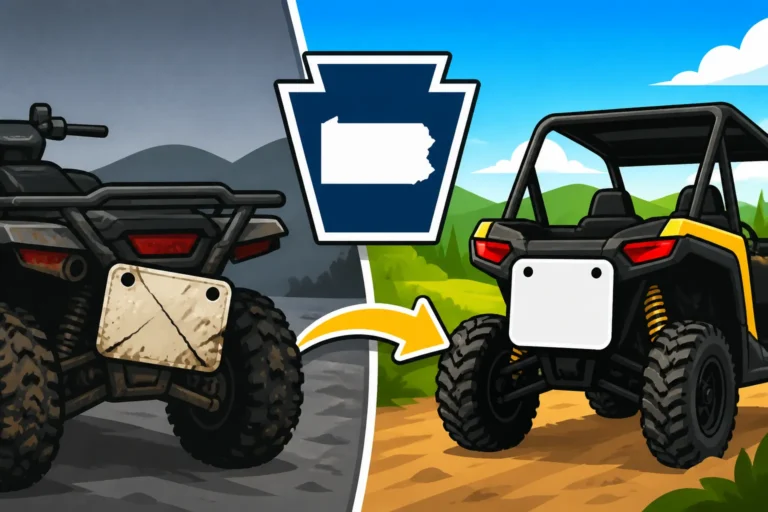
Riding through the famed mud holes of the AOAA or tackling dusty stretches in Bald Eagle State Forest will inevitably lead to a dirty machine, and your plate is often the first thing to get coated. It’s a good habit to periodically check your plate during a ride, especially after particularly messy sections. A quick wipe with a damp cloth or even a gloved hand can often clear enough debris to make the numbers and sticker visible again. Ignoring a mud-caked plate can quickly turn a fun day into a frustrating interaction with a ranger.
Beyond mud, consider how your gear, such as a large fender bag, a cooler, or even a passenger, might obstruct the plate. Make sure any accessories are mounted in a way that leaves the plate completely exposed. The DCNR issues guidelines on proper plate mounting to ensure maximum visibility and minimize damage, which typically involves mounting it high enough to avoid tire spray but low enough to be easily seen. Ensuring your plate is always clean and visible is a simple yet effective way to stay compliant and avoid unnecessary fines, as detailed in [Keeping Your ATV Plate Readable From Behind].
Verifying a Plate Number (for Private Sales)
When you're looking to purchase a used ATV from a private seller, the plate number can be an incredibly useful tool for verifying the machine's history and legitimate registration status. Unfortunately, not all private sellers are completely transparent, and some may unknowingly (or knowingly) present issues with a machine's paperwork. Before you hand over any money, doing your due diligence, which includes checking the plate and associated documentation, is paramount.
You can often use the plate number (along with the VIN) to call the DCNR's Snowmobile and ATV Section. They can provide general information about the machine's current registration status, confirming if it's indeed registered and active. While they won't share personal details of the current owner, they can often confirm that the machine is on file and if there are any flags. This step, combined with demanding to see the current wallet card and title, provides strong assurance that you're dealing with a legitimate seller and a properly documented machine.
Alongside verifying registration, preparing a solid bill of sale is crucial for private transactions. Services like LawDepot offer customizable bill of sale templates that can help you document all the specifics of the purchase, including the plate number, VIN, purchase price, and any agreed-upon conditions. Using a professional template from LawDepot ensures that you have a legally sound record of the transaction, which is vital for proving ownership when you go to register the machine in your name. This proactive approach helps prevent potential headaches down the road, ensuring a smooth transfer of ownership as discussed in [Registering After a Private Sale in Pennsylvania] and [Pennsylvania ATV Bill of Sale Requirements].
Common Plate Questions and Troubleshooting
Even with the best intentions, things can go wrong with your ATV plate. Whether it's a simple case of it falling off on a rocky trail or questions about different plate types, knowing how to troubleshoot these common issues is part of being a prepared rider in Pennsylvania. Having this knowledge at your fingertips can save you a lot of stress and keep you riding legally.
Lost, Stolen, or Damaged Plates
It’s an unfortunate reality that ATV plates can get lost or damaged. Maybe you hit a particularly gnarly section of the East Kettle trails, and a branch snagged your plate, or perhaps the vibrations on a long ride caused the mounting bolts to loosen, and it simply fell off. Discovering your plate is missing or unreadable after a ride can be incredibly frustrating, but thankfully, DCNR has a clear process for replacement.
If your plate is lost, stolen, or damaged beyond recognition, you'll need to contact the DCNR's Snowmobile and ATV Section promptly. They will guide you through the process of applying for a replacement plate. This usually involves completing a specific form and paying a small fee. It's important not to ride your ATV on public lands or designated trails without a valid, visible plate, as this can lead to fines for an unregistered machine, even if you’ve already paid your registration fees.
While you're waiting for your replacement plate, you may receive a temporary document or a copy of your application that can serve as interim proof of your efforts to replace it. However, the best practice is to avoid riding until the new plate arrives, or at least only ride on private property where registration might not be required. Be prepared for a short waiting period while DCNR processes your request and mails out your new plate. You can find more specific details on this in [Replacing a Lost Pennsylvania ATV Plate] and information regarding the associated costs in [Pennsylvania ATV Plate Replacement Cost].
Differences Between General and Limited Registration Plates
Pennsylvania offers two primary types of ATV registration: General and Limited. While the physical plate itself, with its alpha-numeric sequence and DCNR branding, looks identical for both, the crucial distinction lies in the accompanying sticker and the wallet card. It’s not the plate’s appearance that differentiates them, but the purpose of the registration.
General Registration is what most riders get. It comes with a numbered, two-year expiration sticker and a wallet card indicating its validity. This registration allows you to ride on DCNR-managed trails, designated joint-use roads, and private property with permission. It signifies that your machine is authorized for broad recreational use across the state's extensive network of riding opportunities. This is the registration needed for exploring places like the Sproul State Forest trails or the Rock Run Recreation Area. The fees collected from General Registrations go directly into maintaining and expanding these public riding areas.
Limited Registration, on the other hand, is specifically designed for ATVs that will only be operated on the owner’s private land. This registration comes with a distinctive "Free Limited Registration" sticker, which typically does not have an expiration date, and a wallet card that clearly states "Limited Registration – Not Valid on DCNR Trails." The key here is "private land only." If you intend to ride anywhere other than property you own, a Limited Registration will not suffice. This free option is ideal for those who primarily use their ATV for chores on their farm or simply for riding around their own property. You can explore the nuances of these options further in [Pennsylvania's Limited Registration for Your Own Land] versus [Pennsylvania's General Registration for Everywhere Else], and understand the specifics of [The Plate Pennsylvania Gives Limited Registrants].
Transferring a Plate to a New Owner (or New Machine)
When you sell an ATV in Pennsylvania, it's important to understand that the registration plate generally stays with the machine, not the owner. Unlike some states where car plates are personal and transfer between vehicles, your DCNR-issued ATV plate is tied directly to that specific vehicle's VIN. So, when you sell your quad to a new owner, the plate physically remains mounted on the ATV.
However, the registration itself needs to be transferred or re-registered by the new owner. The new owner will then apply for a new registration in their name with DCNR, which will result in them receiving a new wallet card and a new two-year expiration sticker to place over the old one on the existing plate. This ensures that the DCNR records accurately reflect the current owner and that the machine remains legally registered. It’s a clean break from your ownership to theirs, even if the physical plate stays put.
For both buyers and sellers, having clear documentation of the sale is paramount. This is where a formal Bill of Sale becomes incredibly valuable. Using a template from a service like LawDepot can streamline this process, providing a comprehensive document that records the transaction details, including the VIN, plate number, sale price, and signatures of both parties. This not only protects both buyer and seller but also provides the necessary proof of ownership for the new owner to easily complete their registration with DCNR. Understanding this transfer process is key to a smooth transaction, as outlined in [Selling an ATV and Transferring in Pennsylvania] and [Transferring a Pennsylvania ATV Registration].
| Feature | General Registration Plate | Limited Registration Plate |
|---|---|---|
| Physical Plate | Standard DCNR-issued aluminum/plastic plate | Standard DCNR-issued aluminum/plastic plate |
| Plate Number Format | Alpha-numeric sequence (e.g., AB123CD) | Alpha-numeric sequence (e.g., AB123CD) |
| DCNR Logo | Present | Present |
| Sticker Type | Expiration sticker showing month/year (valid for two years) | Free, non-expiring sticker (often a specific design/color) |
| Wallet Card | Issued, shows expiration date | Issued, indicates "Limited Registration" and no expiration |
| Primary Purpose | Riding on DCNR trails, approved roads, private land (with permission) | Riding exclusively on the owner's private land |
| Fee Structure | State-mandated fee for two years | Free |
| Enforcement | Checked for current expiration date | Checked for "Limited Registration" designation and proper usage |
| Transfer to New Owner | Plate stays with machine; new owner re-registers and gets new sticker | Plate stays with machine; new owner re-registers and gets new sticker |
Disclaimer
This article is for general informational purposes only and does not constitute professional advice. Laws, prices and regulations vary by location and change over time. Consult a qualified professional for guidance on your specific situation.