Riding With an Expired Sticker
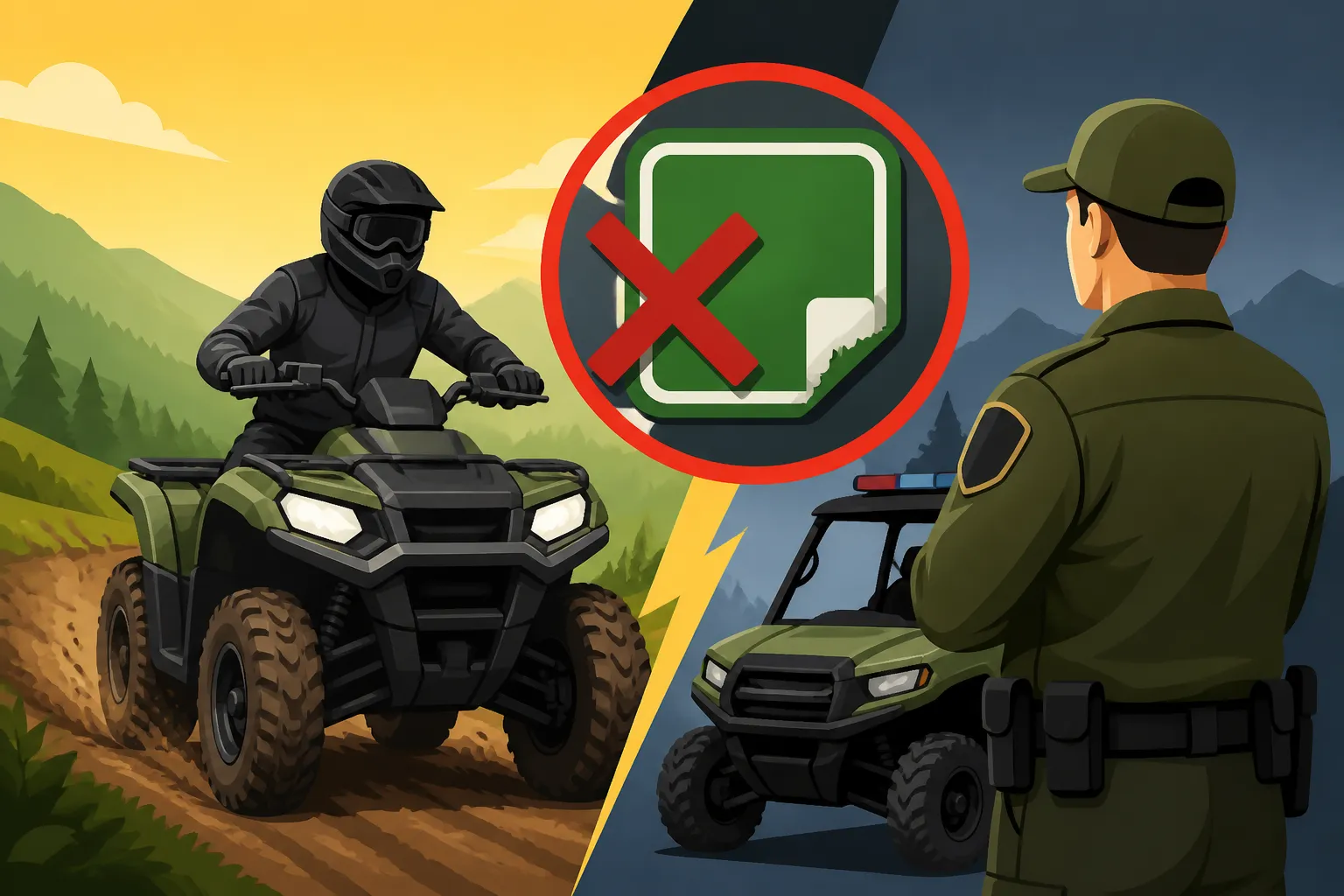
You’ve meticulously prepped your quad for a perfect day on the trails: oil checked, tires aired, fuel tank full, and gear packed. You’re dreaming of mud puddles and scenic overlooks. But as you pull into the trailhead parking lot, or worse, get flagged down by a DCNR ranger, your heart sinks. You glance at the plate on the back of your machine, and there it is: that little sticker, faded and curling at the edges, clearly past its prime. Riding an ATV in Pennsylvania with an expired registration sticker isn't just a minor oversight; it's a direct path to hefty fines, potential impoundment, and a major headache, spoiling what should have been a great day out. This guide will walk you through exactly what happens when your sticker is expired, why it matters so much, and what steps you can take to avoid this common but costly mistake.
The Immediate Consequences of an Expired Sticker
It’s easy to think of an expired sticker as a small thing, something you’ll get around to eventually. Maybe you simply forgot amidst life's chaos, or perhaps you thought you had a bit more time. Unfortunately, the state of Pennsylvania doesn't see it that way. When a DCNR ranger or other law enforcement officer spots that expired sticker, the clock starts ticking on a series of consequences that can quickly turn your fun day into a financial and legal nightmare.
Automatic Fines and Penalties
Let's cut right to the chase: riding an unregistered or improperly registered ATV in Pennsylvania comes with an automatic penalty. The state is very clear on this, and the standard fine for operating an unregistered ATV is a significant sum, often around $300. This isn't a "slap on the wrist" amount; it's a real hit to your wallet, especially for something that could have been avoided with a simple renewal.
Beyond the initial fine, there might be additional court costs and fees tacked on, further increasing the burden. Imagine getting hit with a $300 fine plus court costs, all because a $20 biennial registration wasn't renewed. It’s a bitter pill to swallow, and it’s a situation that many riders in Pennsylvania find themselves in every year. The DCNR takes ATV registration seriously because it helps fund trail maintenance and safety initiatives, so they enforce these rules rigorously.
Potential for Impoundment or Further Legal Issues
While a fine is certainly bad enough, the situation can escalate significantly. In some cases, if you're found operating an ATV with an expired registration, the machine itself might be impounded. That means your ATV could be towed away from the trailhead, leaving you stranded and facing additional impoundment and storage fees on top of the initial fine. Getting your machine back from impound can be a lengthy and frustrating process, often requiring proof of current registration and payment of all outstanding fees.
Beyond impoundment, repeated offenses or particularly egregious situations could lead to more severe legal repercussions. While rare for a first offense, it's not impossible to face citations that go beyond just the registration issue, especially if there are other violations involved, such as operating in a restricted area. It's crucial to understand that an expired sticker isn't just a bureaucratic inconvenience; it's a violation that can stop your riding day dead in its tracks and create a lingering headache.
Impact on Insurance and Liability
Here’s another critical point that many riders overlook: an expired registration can severely impact your insurance coverage and personal liability. Most ATV insurance policies have clauses that require the machine to be legally operated and registered. If you have an accident while riding with an expired sticker, your insurance provider could deny your claim.
Imagine a scenario where you've invested in a great ATV, dutifully paid your insurance premiums, but forget to renew your sticker. Then, a minor mishap leads to significant damage to your machine or, worse, injuries to yourself or others. If your insurance company finds out your registration was expired, they might argue that you were operating the vehicle illegally and refuse to cover the damages or medical costs. This could leave you personally responsible for thousands of dollars in repairs, medical bills, or even legal fees if another party is involved. This is a terrifying prospect and highlights why keeping your registration current is not just about avoiding a fine, but about protecting yourself financially. [Pennsylvania ATV Insurance Requirement] is not something to take lightly.
Understanding Pennsylvania's ATV Registration System
To truly grasp the importance of a current sticker, it helps to understand the foundation of Pennsylvania's ATV registration system. It’s not just a revenue generator; it's a framework designed to ensure responsible riding, fund critical resources, and manage the growing popularity of ATV recreation in the state. The [Pennsylvania's DCNR Snowmobile and ATV Section] is the primary agency responsible for this oversight.
Why Registration is Mandatory
In Pennsylvania, if you want to ride your ATV anywhere other than on your own private property, it absolutely needs to be registered with the Department of Conservation and Natural Resources (DCNR). This isn't just a suggestion; it's the law. The registration fees collected by the DCNR are earmarked specifically for the benefit of ATV and snowmobile programs throughout the state.
These funds go towards maintaining and expanding the network of designated trails, printing maps, conducting safety programs, and supporting enforcement efforts. Without these funds, the trails we all love to ride would quickly fall into disrepair, and new riding opportunities would cease to exist. So, when you pay your registration fee, you're not just getting a sticker; you're contributing directly to the future of ATV riding in Pennsylvania. [What Pennsylvania ATV Fees Pay For] is a breakdown of where that money goes.
General vs. Limited Registration: A Quick Review
Pennsylvania offers two main types of ATV registration, and understanding the difference is key to knowing where you can legally ride. Both require a current sticker, but their purpose is quite distinct:
- General Registration: This is what most riders will opt for. A General Registration allows you to operate your ATV on approved state forest trails, state park lands, municipal trails, and other areas specifically designated for ATV use. It's the "everywhere else" option that opens up the vast majority of public riding opportunities. This registration comes with a plate and a sticker. [Pennsylvania's General Registration for Everywhere Else] goes into more detail.
- Limited Registration: This option is for ATVs that are only operated on the owner's private property or private property for which the owner has written permission. While it might seem counterintuitive to register a machine just for private land, it's a smart move. A Limited Registration provides official identification for your machine, which can be useful for insurance or in the event of theft. It also serves as proof of ownership that can be helpful down the line. It's important to remember that a Limited Registration does not permit you to ride on state trails or any public lands. [Pennsylvania's Limited Registration for Your Own Land] explains this in depth.
Regardless of which registration type you hold, both are valid for two years from the date of issuance and require a renewed sticker to remain current.
The Role of the DCNR in ATV Registration
The Pennsylvania Department of Conservation and Natural Resources (DCNR) is the governing body for ATV registration and titling in the state. Unlike cars and trucks, which go through PennDOT, your ATV paperwork is handled by the DCNR. They are responsible for processing applications, issuing titles and registrations, and ensuring compliance with state regulations.
The DCNR also plays a crucial role in managing the state's ATV trail system, making them both the enforcers and the facilitators of responsible riding. Their rangers are out on the trails, checking registrations, promoting safety, and ensuring that riders adhere to the rules. They are the ones who will issue citations for expired stickers, so understanding their authority and the system they manage is paramount for every ATV owner.
How to Avoid Riding with an Expired Sticker
Nobody wants to ride with an expired sticker, yet it happens all the time. Life gets busy, important dates slip your mind, and suddenly you're facing those hefty fines. The good news is that avoiding this common pitfall is relatively simple with a little proactive planning.
Setting Up Reminders for Renewal
The easiest way to avoid an expired sticker is to ensure you never forget the renewal date. Since Pennsylvania ATV registrations are valid for two years, it can be easy to lose track. When you receive your new registration or renew an existing one, immediately make a note of the expiration date in multiple places.
- Calendar Alerts: Set up recurring digital calendar alerts (Google Calendar, Outlook, smartphone reminders) for a month or two before the expiration date. This gives you ample time to gather your documents and complete the renewal process without a last-minute rush.
- Physical Reminders: If you prefer tangible reminders, write the expiration date on a physical calendar, stick a note to your fridge, or even add it to a list of annual tasks.
- Email Reminders: The DCNR does a pretty good job of sending out renewal notices, but don't rely solely on those. Sometimes they can get lost in the mail or filtered into spam folders. Use them as a helpful supplement, not your only reminder system. [Renewing a Pennsylvania ATV Registration] has more details on this process.
Checking Your Sticker Regularly
Even with reminders, it's a good habit to periodically check the physical sticker on your ATV's plate. Stickers can get damaged, fade, or even fall off over time due to weather, mud, or vibrations from riding. A faded or missing sticker can be just as problematic as an expired one, as it might make it impossible for an officer to verify your registration status quickly.
Make it part of your pre-ride routine, along with checking fluids and tire pressure, to glance at your registration plate and sticker. Is it legible? Is it securely attached? Does the date look current? This quick check takes mere seconds but can save you a world of trouble. This is especially true if your machine is typically stored for long periods, as you might forget about the registration in the off-season.
Knowing Your Expiration Date
The most fundamental step is simply knowing your exact expiration date. Your registration wallet card (which you should always carry when riding, along with proof of insurance) clearly states the month and year your registration expires. The sticker on your plate will also show the year.
Make a mental note, or even better, write down the month and year somewhere accessible. If you own multiple ATVs, keep a list of each machine's VIN and its corresponding expiration date. This ensures you're never guessing. Many DCNR regional offices can also assist you with looking up your registration information if you're unsure. You can even check your registration status online via the [Using the Snowmobile and ATV Portal]. Being informed is your best defense against an unintentional violation.
What to Do If Your Sticker Has Expired
Okay, so despite your best intentions, you’ve discovered your ATV registration sticker is expired. Panic is a natural first reaction, but it’s important to stay calm and take immediate, decisive action. The goal is to get your machine legally registered as quickly as possible and avoid any further issues.
Immediate Steps to Take
The very first and most crucial step is this: Do not ride your ATV with an expired sticker. Even if you’re just going “down the road a little bit” or “just to the next trailhead,” you are taking a significant risk. The moment you realize your sticker is expired, park the machine and do not operate it until the registration is renewed. This is non-negotiable if you want to avoid fines and potential impoundment.
Next, gather all your necessary documents. This typically includes:
- Proof of ownership: This means your ATV title. If you don't have a physical title, you'll need alternative proof of ownership, though this can complicate things. [Titling an ATV in Pennsylvania] covers this.
- Previous registration information: If you have an old registration card or plate number, have it handy.
- Personal identification: Your driver's license or other valid ID.
- Payment for renewal fees: Know the [Pennsylvania ATV Registration Cost] upfront.
If you’re unsure about what specific documents are needed, especially if your situation is complex (e.g., you've moved, or the title is in someone else's name), it's a good idea to contact the DCNR directly.
The Renewal Process: Online, Mail, or In-Person
Pennsylvania makes it relatively easy to renew your ATV registration, offering several convenient methods:
- Online Renewal: This is often the quickest and most preferred method for many riders. The DCNR's Snowmobile and ATV Portal allows you to renew your registration right from your computer or smartphone. You’ll need your current registration number and payment information. This method typically updates your status almost immediately, and you’ll receive a temporary printable registration document to carry until your new sticker and card arrive in the mail. This is an ideal solution for those who realize their sticker is expired and need to ride soon. [Registering Online at Pennsylvania's DCNR Portal] will guide you through this.
- Mail-In Renewal: If you've received a renewal notice in the mail, you can often simply fill it out, include your payment, and mail it back to the DCNR. This method is reliable but takes longer due to postal delivery and processing times. If you choose this option, plan well in advance of your expiration date to avoid a lapse.
- In-Person Renewal: While less common for renewals, you can visit certain DCNR offices or authorized agents to process your registration in person. This can be beneficial if you have questions or need immediate assistance. However, always call ahead to confirm hours and whether they handle renewals directly.
The fee for a two-year ATV registration is a standard rate across the state. Remember, this fee directly supports the trails you ride, so it's money well spent.
Dealing with a Lapse in Registration
If your registration has been expired for a while, don't despair. Pennsylvania's DCNR generally doesn't impose additional late fees for expired registrations. You simply renew it as if it were still current, paying the standard two-year fee. However, the critical distinction is that during the period of lapse, your machine was technically unregistered, meaning you were not legally permitted to ride it on public land.
This means if you were caught riding during the lapsed period, any fines or penalties assessed would still apply. Renewing your registration after the fact doesn't retroactively absolve you of past violations. The best approach is to always prioritize renewal before your sticker expires.
In some situations, you might need specific legal documentation or advice, especially if you're dealing with a private sale where registration was overlooked, or if an old machine needs a new title. Resources like LawDepot can be helpful for creating general legal forms, such as a bill of sale or affidavit of ownership, which might sometimes be needed when clarifying ownership details or preparing for a new registration after a long lapse. While they don't directly handle DCNR forms, they can assist with the underlying documents that support your claim of ownership. However, for DCNR specific forms, always use the official DCNR-issued paperwork. If you bought a machine privately and the registration is expired, you'll need to go through the [Registering After a Private Sale in Pennsylvania] process, which often involves getting a new title first.
Ultimately, riding with an expired sticker is a risk that’s simply not worth taking. The potential fines, legal hassles, and impact on your insurance far outweigh the minor inconvenience of a timely renewal. Stay vigilant, set those reminders, and keep your ATV legally registered so you can hit the trails with peace of mind.
Disclaimer
This article is for general informational purposes only and does not constitute professional advice. Laws, prices and regulations vary by location and change over time. Consult a qualified professional for guidance on your specific situation.