Pennsylvania’s Joint-Use Roads
It’s a scenario many of us have faced: you’re out enjoying a fantastic day on the trails, maybe at Whiskey Springs or exploring the Anthracite Outdoor Adventure Area, and you realize you need to get from one section to another, or perhaps just grab a bite to eat in the nearest town. The most direct route involves a stretch of public road, and suddenly, that exhilarating freedom turns into a knot of anxiety. Can you ride your ATV or UTV on it? Pennsylvania’s rules are notoriously tricky, and understanding "joint-use roads" is absolutely essential to avoid hefty fines and ensure your safety. This guide is here to untangle the confusion, helping you navigate these specific roadways legally and with confidence, turning potential stress into seamless transitions.
Understanding Pennsylvania's Approach to ATV Road Use
Pennsylvania has a very distinct philosophy when it comes to ATVs and UTVs on public roads, and it’s often a source of confusion and frustration for riders, especially those who might be visiting from states with different regulations. It's easy to look at your shiny new side-by-side, complete with turn signals and a horn, and think it should be perfectly fine on a paved road. But in the Keystone State, things are rarely that simple.
The General Rule: No Street Legal ATVs
Let's cut right to the chase: in Pennsylvania, you cannot "street legal" an ATV or UTV in the way you might a car or motorcycle. This means there's no specific pathway to title and register your off-road machine with PennDOT for general highway use. The state views ATVs and UTVs primarily as off-road vehicles. They are designed, manufactured, and regulated for recreational riding on designated trails, private property, or specific access routes, not for commuting to work or running errands on main thoroughfares. This strict stance is often rooted in safety concerns, given the inherent differences in handling, braking, and crash protection between an ATV and a traditional street-legal vehicle.
This reality can be a bitter pill to swallow, particularly for riders who've invested in making their machines more road-ready with accessories like mirrors, turn signals, and enhanced lighting. The idea that a machine seemingly equipped for the road still can't legally be there can feel like a contradiction. However, Pennsylvania's regulatory framework makes a clear distinction: unless specifically exempted or designated, public roads are off-limits for ATVs and UTVs. This foundational understanding is crucial because it frames all other discussions about road use.
The frustration often stems from seeing other states or even local municipalities with different, more permissive rules. You might hear stories from friends in Ohio or West Virginia where certain ATV models can indeed be licensed for street use, or where county roads are widely open to off-road vehicles. This disparity can lead to riders feeling penalized or limited by Pennsylvania's stricter interpretation. It's a common sentiment among the ATV and UTV community here, and it highlights why it's so important to be crystal clear on what is allowed, rather than assuming what should be.
What Is a Joint-Use Road?
So, if "street legal" isn't an option, what about these "joint-use roads" we keep hearing about? This is where Pennsylvania offers a specific, limited exception to the general "no ATVs on roads" rule. A joint-use road is essentially a segment of public road that has been specifically designated by a local municipality (like a township or borough) or, in some cases, by the Department of Conservation and Natural Resources (DCNR) to be shared by both conventional highway vehicles and registered ATVs/UTVs. Think of it as a bridge, not a highway.
The primary purpose of a joint-use road is almost always functional: to connect two segments of a designated ATV trail system, to provide access from a staging area or campground to a trailhead, or to allow riders to reach services like fuel, food, or lodging from a nearby trail. These are not open invitations for joyriding through town or for extended travel. They are very specific arteries within a larger trail network, carefully chosen and explicitly marked. Pennsylvania's Joint-Use Roads are meant to enhance the riding experience by reducing dead ends and increasing accessibility, without compromising the safety and integrity of the broader road system.
It’s vital to distinguish joint-use roads from simply crossing a road or riding on private land. Crossing a road involves a very specific maneuver, typically at a 90-degree angle, from one side of a road to the other, without traveling on the road itself. Riding on private land, of course, requires explicit landowner permission and is governed by those private agreements, not public road laws. A joint-use road, however, means you are actively operating your ATV or UTV on a public road, alongside cars and trucks, for a specified distance and under specific conditions. Understanding this difference is the key to staying legal and safe.
Identifying a Joint-Use Road in Pennsylvania
One of the biggest challenges for riders is knowing exactly where these special joint-use roads are located. Unlike a dedicated ATV trail, which is often clearly marked from start to finish, joint-use roads exist within the regular public road network, and their designation isn't always immediately obvious to the uninitiated. This section will help you understand how to spot them and how they come to be.
The All-Important Green Sign
When you're out riding in Pennsylvania, the absolute clearest indicator that you're on a legitimate joint-use road is a specific, official green sign. These signs are unmistakable if you know what you're looking for, and they are your golden ticket for legal road access. Typically, these signs will be green with white lettering, similar to other official informational signs you'd see along roads. They're usually posted at the beginning and end of the designated joint-use segment, as well as at key intersections along the way.
These signs are much more than just a marker; they're a set of instructions. They will explicitly state that the road is open to ATVs (and often UTVs), sometimes specifying hours of operation (e.g., "Sunrise to Sunset" or "Daylight Hours Only"), and they might even include a specific speed limit for off-road vehicles, which can differ from the posted speed limit for cars. Critically, the sign might also list the types of vehicles allowed and any other specific local rules, such as helmet requirements or age restrictions. You might also see other signage, like caution signs for shared use, but the green designation sign is the one you must look for. If you don't see one, assume the road is closed to your machine. [The Green Sign on a Pennsylvania Township Road] is not just a suggestion; it's the law.
Relying on anything less than this explicit signage is a gamble you don't want to take. Don't go by word-of-mouth, what you saw another rider doing, or what you think seems reasonable. Law enforcement officers, whether local police, State Police, or DCNR rangers, are going to be looking for that official designation. If it's not there, you're riding illegally, and the consequences can be severe. It's a prime example of how crucial it is to pay attention to your surroundings and to official postings, ensuring your ride remains enjoyable and citation-free.
How a Road Becomes Designated Joint-Use
Understanding that green sign is one thing, but how does a road get that designation in the first place? It’s not an arbitrary decision; rather, it’s a formal process that involves local government and community input. In Pennsylvania, the power to designate a road for joint-use primarily rests with the local municipality—usually a township or a borough. These local governments have the authority to pass ordinances that specifically open certain roads to ATV/UTV traffic.
The process often begins with a request from local ATV clubs, concerned residents, or businesses who see the benefit of connecting trails or providing access. The local governing body, such as the Board of Supervisors or Borough Council, will then consider the proposal. This typically involves public meetings, studies on traffic impact, safety concerns, and potential economic benefits from increased tourism. The decision-making process can be lengthy and complex, as it balances the interests of off-road enthusiasts with the concerns of other residents regarding noise, safety, and road wear. [Asking a Township to Open a Road] is a community effort, and it requires persistent advocacy.
Once an ordinance is passed, the municipality is responsible for properly signing the designated roads according to state guidelines. This local control means that rules can vary significantly from one township or borough to another. What’s allowed in Windber Borough, with its specific mixed-use program, might be entirely different from a neighboring township that has chosen to keep all its roads closed to ATVs. This patchwork of regulations underscores the need for riders to research their specific riding areas thoroughly and not make assumptions based on experiences in other parts of the state.
Rules and Regulations for Riding Joint-Use Roads
Riding a joint-use road in Pennsylvania isn't just about spotting a green sign; it's about adhering to a very specific set of rules and regulations that govern how you operate your machine on these shared pathways. Ignoring these guidelines can not only lead to fines but also put you and others at serious risk.
Registration and Insurance Requirements
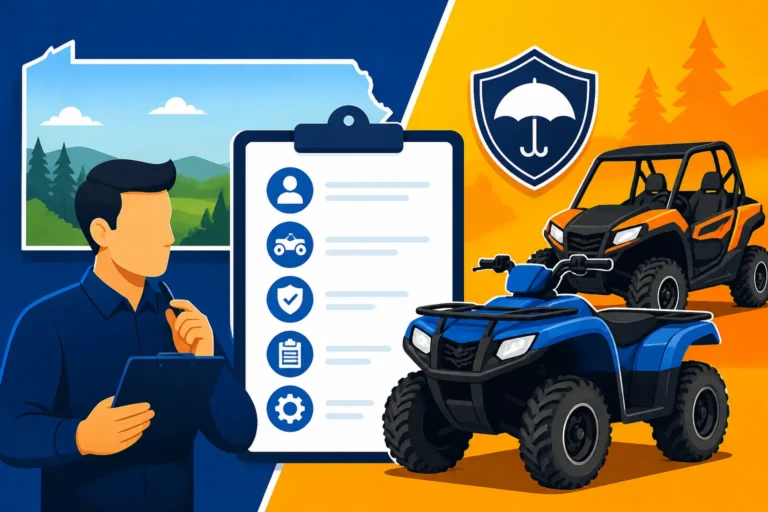
Before you even think about putting a tire on a joint-use road, your ATV or UTV must be properly registered with the Pennsylvania DCNR. This isn't optional; it's a fundamental requirement for operating on any public land or designated public access route in the state. Pennsylvania offers two main types of registration: Limited and General. For joint-use roads, which are open to the public, you'll typically need a General Registration. This registration is valid for two years and includes a DCNR-issued plate and a registration sticker. [Pennsylvania's Two-Year ATV Registration] provides the legal authority for your machine to be on public access points like joint-use roads.
Beyond registration, carrying adequate insurance is also mandatory when operating on any public land, including these designated joint-use roads. While the state doesn't set a minimum coverage amount for ATVs, it's absolutely crucial to have liability insurance. This protects you in case you are involved in an accident and cause injury or property damage to another party. Without insurance, the financial consequences of an incident on a joint-use road could be devastating. Many ATV insurance policies are specifically designed for off-road use and will cover you on designated trails and joint-use roads. [Pennsylvania ATV Insurance Requirement] is a serious aspect of responsible riding.
When riding, you are required to carry proof of both your DCNR registration (the wallet card is perfect for this) and your insurance coverage. Law enforcement officers, whether DCNR rangers or local police, can and do perform checks at trailheads, on trails, and along joint-use roads. Not having these documents, or having expired ones, can result in significant fines. It's not just about avoiding a ticket; it's about being a responsible rider and ensuring you're prepared for any eventuality when you're sharing the road with other vehicles.
Operator Age and Helmet Laws
Pennsylvania has very clear rules regarding who can operate an ATV or UTV, especially on public roads. For any ATV or UTV operation on a joint-use road, the operator must be at least 16 years old. This isn't a guideline; it's a hard and fast rule. [Pennsylvania's Minimum Age of Sixteen on Roads] reflects the state's recognition that operating these machines on shared public roads requires a higher level of maturity, judgment, and awareness than riding on a private, closed course. Supervising a younger rider on a designated trail is one thing, but allowing someone under 16 to operate on a joint-use road is a direct violation of state law.
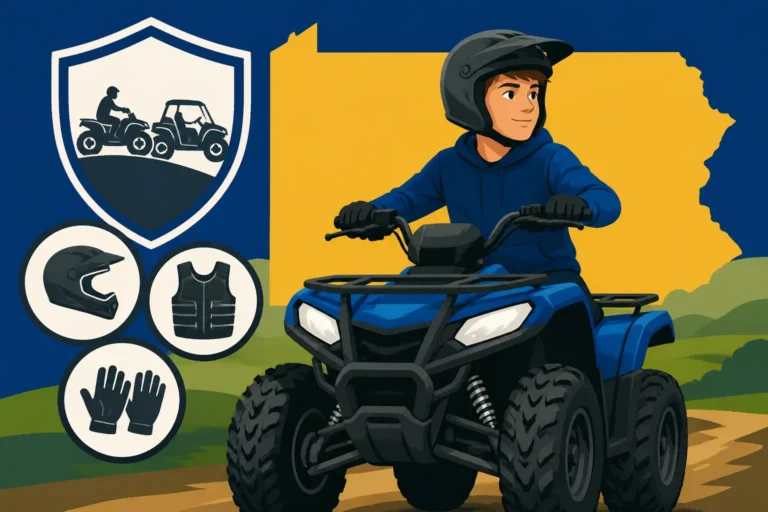
Furthermore, helmet use is mandatory for all ATV and UTV riders and passengers in Pennsylvania, regardless of age, when operating on public lands or joint-use roads. There are very few exceptions, and none generally apply to recreational use on joint-use roads. This means that if you're riding with a passenger, both of you must have properly fitted and DOT-approved helmets. This rule is in place for your safety, as helmets dramatically reduce the risk of head injuries in the event of a crash or rollover. [Pennsylvania Helmets for Operator and Passenger] is a non-negotiable safety measure.
While there is a specific agricultural exception to the helmet rule for farming operations, this exception does not extend to recreational use on joint-use roads. If you're riding your farm quad on a designated joint-use road to access another field, and it's solely for agricultural purposes, that might apply. However, if you're using that same machine to connect to a state trail, even for a short distance, the helmet rule is back in full effect. Always err on the side of caution and wear a helmet. It's a small inconvenience that can prevent a life-altering injury.
Lighting and Equipment Standards
When you're operating an ATV or UTV on a joint-use road, you're sharing that space with cars, trucks, and other conventional vehicles. This means your machine needs to be visible and predictable, just like any other vehicle on the road. Pennsylvania law mandates specific lighting and equipment standards for ATVs and UTVs used on public roads, which includes joint-use segments.
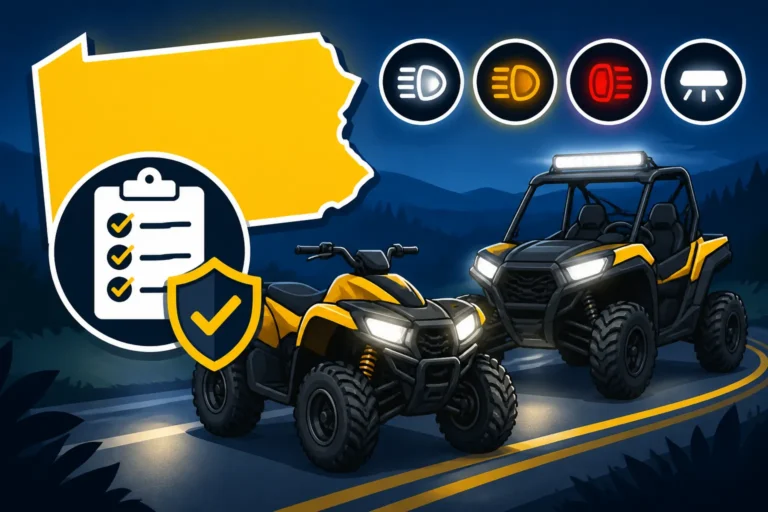
First and foremost, your machine must have at least one functional headlight and one functional taillight. These lights are essential for being seen by other motorists, especially during dawn, dusk, or in inclement weather. If the joint-use road ordinance specifies certain operating hours, ensure your lights are adequate for those times. Additionally, a working brake light is critical to signal your deceleration to traffic behind you. Reflectors are also highly recommended, and often required, to increase your visibility from all angles. Brands like SuperATV offer a range of aftermarket LED lights and reflector kits that can significantly boost your machine's visibility, making you safer on these shared roads.
Beyond lighting, your ATV or UTV must also meet certain noise and emissions standards. This includes having a properly functioning muffler system and a U.S. Forest Service approved spark arrester. These requirements are in place to minimize noise pollution in communities and prevent wildfires, especially when riding through wooded areas adjacent to roads. An excessively loud exhaust can draw unwanted attention from residents and law enforcement, and can lead to citations. [Pennsylvania Muffler Requirements for ATVs] are not just about trail etiquette; they're about being a good neighbor on shared infrastructure. Ensuring all your equipment is in proper working order before you hit a joint-use road is not just about compliance; it's about responsible and safe operation.
Navigating Joint-Use Roads Safely and Legally
Riding on a joint-use road is fundamentally different from riding on a dedicated off-road trail. While the thrill of the ride remains, the context shifts dramatically. You are now sharing space with a diverse array of road users, and adhering to strict traffic laws and safety protocols becomes paramount.
Sharing the Road with Other Vehicles
The most crucial rule for riding on a joint-use road is to remember that you are operating a motor vehicle on a public roadway. This means you must follow all applicable traffic laws, just like a car or truck. This includes observing posted speed limits (which might be lower for ATVs/UTVs on the green signs), obeying stop signs and traffic signals, using turn signals (if your machine has them, and if not, using clear hand signals), and always yielding the right-of-way when required. You must stay to the right side of the road and pass only when it's safe and legal to do so.
Think of it this way: your ATV or UTV, while capable off-road, is much smaller and less visible than a typical passenger vehicle. Drivers of cars and trucks may not expect to see an off-road machine on these roads, even if they are designated joint-use. Therefore, you need to be extra vigilant and defensive in your riding. Anticipate potential hazards, avoid sudden movements, and always assume that other drivers may not see you. It’s also wise to maintain a safe following distance from vehicles ahead and be mindful of your machine's braking capabilities on pavement, which can differ from dirt or gravel. Respecting other road users and demonstrating responsible behavior helps to build positive community relations, which is vital for the continued designation of these roads.
The vulnerability of ATVs and UTVs in a collision with a larger vehicle cannot be overstated. Unlike a car with airbags and crumple zones, your machine offers minimal protection. This reality underscores the need for constant awareness and adherence to traffic laws. It’s not just about avoiding a ticket; it’s about ensuring your personal safety. Investing in highly visible riding gear, wearing a bright helmet, and even adding flag whips can further enhance your presence on these shared roads, helping you stand out to other drivers.
Crossing State Routes and Divided Highways
While joint-use roads allow you to ride on specific local roadways, they do not grant you permission to ride on state routes, state highways, or divided highways for any distance. Pennsylvania law is very clear on this distinction. You cannot travel along a state route to get to another joint-use road or trail segment. These are high-speed, high-traffic corridors that are explicitly off-limits for ATVs and UTVs.
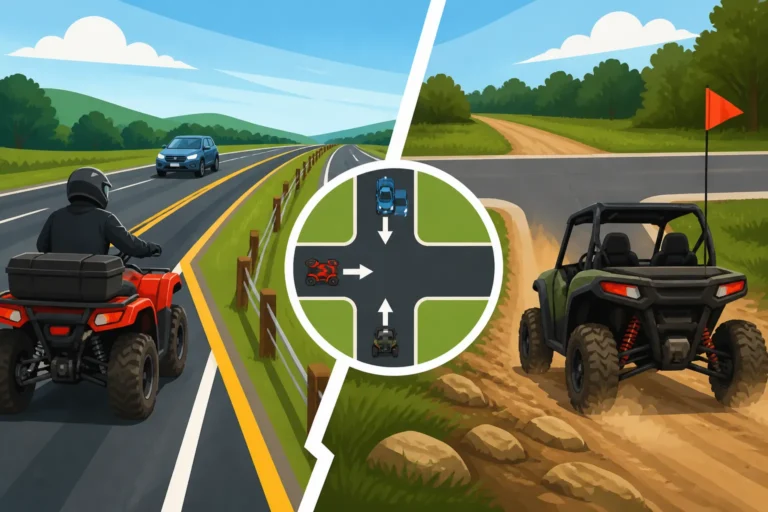
However, there are specific rules for crossing these major roadways. If a joint-use road requires you to intersect with a state route or a divided highway, you must do so in a very particular manner. The law typically dictates that you must come to a complete stop, yield to all oncoming traffic, and then cross the road at a 90-degree angle to the flow of traffic. [Crossing a Highway on an ATV in Pennsylvania] is a maneuver, not a period of travel. This means you should enter the roadway, cross directly to the other side, and exit the roadway as quickly and safely as possible, without making any turns or traveling parallel to the highway.
Planning your route to minimize these crossings is always the safest approach. If you must cross, choose locations with good visibility in both directions, minimal traffic, and clear sight lines. It’s often beneficial to ride with a buddy who can help spot traffic, especially on busy state routes. Never attempt to cross if traffic is heavy or if you feel rushed or unsafe. The risk simply isn't worth it. This specific rule highlights the very limited nature of ATV and UTV access to Pennsylvania's public road network, emphasizing that designated joint-use roads are the exception, not the rule.
Permitted Times and Seasonal Restrictions
Joint-use roads, much like some state forest trails, can come with their own set of specific operating conditions, and these are often tied to time of day or even the season. It’s not uncommon for a green sign designating a joint-use road to also specify "Daylight Hours Only" or "Sunrise to Sunset." This means that riding at night, even with proper lighting, is prohibited on these particular segments. These restrictions are often put in place by local municipalities to address noise concerns from residents or to enhance safety during periods of reduced visibility.
Beyond daily hours, some joint-use roads might also be subject to seasonal closures, although this is less common than on dedicated state trails. For example, a township might close a certain road to ATV use during spring "mud season" to prevent damage to the road surface during thaw, or during specific hunting seasons to avoid conflicts with hunters. While these seasonal closures are more prevalent on forest trails, it's always wise to check local ordinances or DCNR advisories if you plan to ride a joint-use road that passes through sensitive areas.
The key takeaway here is that the designation of a joint-use road is not a blank check to ride whenever you please. Always read the signage carefully and check with local township offices or DCNR resources if you have any doubts. Ignoring these time or seasonal restrictions can lead to citations, just like any other violation. Responsible riders are always informed riders, and that means understanding all the nuances of when and how you can access these crucial road links.
Common Misconceptions and Legal Pitfalls
Even with clear signs and regulations, the world of ATV and UTV road use in Pennsylvania is ripe with misunderstandings. Many riders, with the best intentions, can unwittingly fall into legal traps by making assumptions or misinterpreting the rules. Let's clear up some of these common pitfalls.
The "Connector Route" Fallacy
One of the most dangerous assumptions riders make is the "connector route" fallacy. This is the belief that if two designated ATV trails or riding areas are relatively close to each other, then any public road connecting them must automatically be open for ATV travel. This simply isn't true in Pennsylvania. Just because a road could logically connect two trail systems doesn't mean it has been designated as a joint-use road.
The green sign is the non-negotiable proof. Without it, that seemingly convenient shortcut across a township road or even a minor state road is completely illegal. Riders often feel a strong temptation to "just quickly hop over" to the next trail section, thinking the risk is minimal for such a short distance. However, this is precisely where many citations are issued. Law enforcement knows these common illegal connector routes, and they often patrol them specifically. [Pennsylvania Fines for Riding Illegally] can quickly turn a quick hop into a costly mistake.
This fallacy often leads to riders feeling frustrated or unfairly targeted. They might argue that the road is quiet, or that their machine is perfectly capable. But the law doesn't care about capability or traffic volume; it cares about designation. To stay legal and safe, always plan your route using official maps and DCNR resources, identifying precisely where the designated joint-use sections are. Never rely on the assumption that a road is open simply because it would be convenient for connecting your ride.
Distinguishing Joint-Use from Private Roads/Easements
Another common area of confusion lies in differentiating officially designated joint-use roads from private roads, driveways, or utility easements. A joint-use road is, by definition, a public road that has been formally opened to ATVs and UTVs. It has been through a governmental process and is explicitly marked with the green signs we discussed.
Private roads, on the other hand, are owned and maintained by private individuals or entities. This could be a long driveway to a hunting camp, a road within a private club's property, or access roads for timber companies. Riding on these requires explicit, verifiable permission from the landowner. A casual wave from a property owner or an assumption that "everyone rides here" is not sufficient to avoid a trespass charge. Likewise, utility easements (like power lines or gas pipelines) often run across private land and are not public roads. While some landowners might permit riding on easements crossing their property, the easement itself does not grant public access.
The critical distinction is the public designation. If a road isn't marked with the official green joint-use sign, and it's not a designated state forest or municipal trail, then you should treat it as either a regular public road (where ATVs are generally prohibited) or private property (where permission is required). The green sign truly is your definitive indicator for legal public road access. Without it, you are either breaking public road laws or trespassing on private land, both of which carry significant penalties.
UTVs and Their Specific Road Use Considerations
While many of the rules for joint-use roads apply equally to both ATVs and UTVs, side-by-sides often face some specific considerations, especially regarding width restrictions. UTVs are inherently wider than most traditional ATVs, and while this isn't usually an issue on wider joint-use roads, it can become a concern on narrower paths or when interacting with certain trail systems.
For example, while a joint-use road might accommodate a UTV, some state forest trails in Pennsylvania have a strict 64-inch width limit. This means that a UTV exceeding this width, even if it legally accessed a joint-use road to get to the trailhead, might be turned away from the trail itself. [Pennsylvania Rules for a UTV on a Road] are important to know, but so are the trail rules. Riders need to be acutely aware of their machine's dimensions and verify compatibility with both the roads they plan to use and the trails they intend to access.
Many UTV owners invest in accessories to make their machines more versatile, such as full windshields, roofs, and even street-legal kits from companies like SuperATV that include turn signals, horns, and side mirrors. While these accessories definitely enhance safety and visibility on a joint-use road, it's crucial to remember that adding them doesn't magically make your UTV street-legal for general road use in Pennsylvania. These upgrades are fantastic for improving your experience on designated joint-use roads, making you more visible and compliant with traffic signaling, but they don't change the underlying regulatory status of your machine. Always check the specific ordinances for the roads you plan to ride and the regulations for the trails you want to connect to.
Planning Your Ride with Joint-Use Roads in Mind
Successfully integrating joint-use roads into your ATV or UTV adventures requires more than just spotting a sign. It demands careful planning, research, and an understanding of the available resources. Approaching your ride with a well-thought-out strategy can transform a confusing experience into a smooth and enjoyable one.
Utilizing Maps and DCNR Resources
The absolute best way to plan a ride that incorporates joint-use roads is to consult official maps and resources provided by the Pennsylvania DCNR and local municipalities. The DCNR website is an invaluable hub of information, offering maps of state forest trails that often highlight adjacent or connecting joint-use roads. These maps are designed to show you not only the trails themselves but also the designated access points and the links that make a more expansive ride possible. [Pennsylvania's DCNR Snowmobile and ATV Section] is where you'll find the most up-to-date information.
Beyond state resources, always check with the specific township or borough where you intend to ride. Many municipalities that have designated joint-use roads will publish their ordinances and often provide local maps showing these routes on their official websites. This local information is crucial because it can detail specific nuances, such as weight limits, unique operating hours, or other restrictions that might not be broadly covered by state-level guidance. Don't be afraid to make a phone call to the township office if the online information isn't clear; a few minutes on the phone can save you a significant fine.
The importance of pre-ride planning cannot be overstated. Before you even load your machine onto the trailer, sit down with maps, scour websites, and identify your entire route, including every segment of joint-use road. Mark these sections clearly. This proactive approach ensures that you're riding legally, safely, and without the anxiety of wondering if you're on a permissible route. It's about knowing before you go, so your focus can remain on the enjoyment of the ride rather than potential legal troubles.
Case Studies: Successful Joint-Use Areas
Pennsylvania does have shining examples of how joint-use road programs can work effectively, proving that a balance between off-road recreation and public road safety is achievable. These areas often serve as models for other communities looking to open up connector routes.
One excellent example is Windber Borough in Cambria County. [Windber Borough's Mixed Use Program] is well-known for its proactive approach to integrating ATV/UTV use into its local infrastructure. Windber has a designated list of roads within the borough that are open to ATVs and UTVs, specifically to provide access to nearby trail systems like Rock Run Recreation Area and to allow riders to access local businesses. They publish clear maps and rules, making it straightforward for riders to understand where they can and cannot go. This kind of transparent, well-managed program demonstrates that with clear communication and consistent signage, off-road vehicles can coexist safely with other traffic, bringing economic benefits to the community.
Similar connector routes exist within and around Pennsylvania's state forests, linking different sections of DCNR-managed trails. For instance, specific township roads might be designated joint-use to connect riders from a remote staging area to the entrance of a forest trail system, or to bridge a gap between two distinct trail loops. These routes are carefully selected to minimize impact on residential areas and to maximize convenience for riders. The success of these areas lies in the collaborative effort between state agencies, local governments, and the riding community, proving that when all parties work together, well-managed access is possible.
Enhancing Your Machine for Road Sections
While your ATV or UTV is built for rugged off-road conditions, riding even short stretches on joint-use roads means adapting your machine for safer interaction with conventional traffic. Several enhancements can significantly improve your visibility, compliance, and overall safety on these shared pathways.
First, focus on visibility. Even if your machine comes with basic headlights and taillights, consider upgrading to brighter LED versions. These consume less power and offer superior illumination, both for you to see the road and for other drivers to see you. Adding auxiliary lights, especially forward-facing ones for approaching intersections, can also be beneficial. Beyond active lighting, ensure your machine has sufficient reflectors on all sides. Installing a set of side mirrors, if your machine doesn't already have them, is highly recommended. Mirrors, like those available from SuperATV, provide crucial rearward visibility, allowing you to monitor traffic approaching from behind and make safer lane positioning decisions.
Second, consider equipment that aids in communication with other drivers. A horn kit is a simple yet effective addition for alerting pedestrians or other vehicles to your presence. While hand signals are always an option, integrated turn signals (if permitted by local ordinance) make your intentions much clearer, especially in traffic. Third, while your knobby off-road tires are perfect for mud and rocks, they can handle differently on pavement. Be aware that knobby tires will wear faster and provide less grip on hard surfaces compared to street tires, so adjust your speed and braking accordingly. Maintaining proper tire pressure is also important for road sections. These enhancements are not about making your ATV "street legal," but rather about making it safer and more responsible for the specific, limited use on Pennsylvania's joint-use roads.
Consequences of Non-Compliance and Enforcement
Riding on a joint-use road without adhering to all the rules and regulations isn't just a minor oversight; it carries significant legal and financial consequences. Pennsylvania takes illegal ATV and UTV road use seriously, and enforcement efforts are robust across the state.
Fines and Penalties for Illegal Road Use
The penalties for operating an ATV or UTV illegally on a public road in Pennsylvania are steep and designed to deter non-compliance. One of the most common and immediate consequences is the automatic $300 fine for riding an unregistered or uninsured machine on public land, which includes joint-use roads. This is not a maximum; it's a minimum, and it can quickly escalate if other violations are present. [Pennsylvania Fines for an Unregistered ATV] is a serious penalty.
Beyond the base fine for registration or insurance, you can face additional citations for a host of other violations. This includes not wearing a helmet, allowing an underage operator to ride, exceeding speed limits, failing to obey traffic signs, or operating outside of permitted hours. Each of these can add to the total cost, making a single illegal ride a very expensive mistake. The cost of prosecution is also often added on top of the fine, further increasing the financial burden. This means a simple lapse in judgment can easily turn into hundreds, or even thousands, of dollars in fines and court fees.
It's also important to understand that these fines are often non-negotiable at the point of citation. While you always have the right to appeal in court, the burden of proof will be on you to demonstrate that you were operating legally. For many riders, the sheer cost and hassle of dealing with a citation far outweigh any perceived convenience of illegally riding a closed road. The penalties are intentionally severe to ensure compliance and maintain safety on shared public pathways.
Enforcement by Local and State Authorities
Pennsylvania has a multi-layered approach to enforcing ATV and UTV laws, meaning you could encounter various law enforcement agencies during your ride. This diverse enforcement presence means that illegal activity on joint-use roads is likely to be caught.
Local police departments and borough or township officers are highly active in enforcing local ordinances, including those pertaining to joint-use roads within their jurisdiction. They are often the first responders to complaints from residents about illegal ATV activity and are well-versed in the specific rules for their area. State Police also play a role, especially on roads connecting different municipalities or areas where local police presence might be less frequent. They have jurisdiction over all public roads and are trained to identify ATV and UTV violations.
Perhaps the most common and dedicated enforcement body you'll encounter in riding areas is the Pennsylvania DCNR rangers. These officers are specifically trained in ATV and snowmobile regulations and frequently patrol state forest lands, designated trails, and the joint-use roads that connect them. They conduct checks at trailheads, along trails, and at strategic points on joint-use roads. [What a Ranger Checks at a Trailhead] typically includes your registration, proof of insurance, and helmet compliance. Their presence is a reminder that these regulations are actively enforced, not just theoretical rules. Knowing that multiple agencies are on patrol should reinforce the importance of riding legally and responsibly at all times.
Markdown Table: Road Crossing vs. Joint-Use Riding
To help clarify the specific rules, here's a quick comparison of what's generally allowed when merely crossing a road versus actively riding on a designated joint-use road.
| Feature | Road Crossing (General Rule) | Joint-Use Road (Designated) |
|---|---|---|
| Purpose | Move from one side of a non-ATV road to the other. | Travel on a specified public road segment to connect trails or access services. |
| Travel ON Road | Not permitted to travel along the road. Must cross at 90-degree angle. | Permitted to travel along the road for the designated segment. |
| Designation | No special designation needed, but must follow strict crossing rules. | Requires explicit, official green signage indicating ATV/UTV access. |
| Operator Age | Min. 16 years old for public road crossing. | Min. 16 years old. |
| Helmet Required | Yes. | Yes, for operator and passenger. |
| Registration Required | Yes (DCNR). | Yes (DCNR General Registration). |
| Insurance Required | Yes (liability). | Yes (liability). |
| Traffic Laws | Yield to all traffic. | Must obey all traffic laws (speed limits, stop signs, signals, etc.). |
| Visibility/Equipment | Should have working lights, visible during day for safety. | Must have working headlights, taillights, brake lights, reflectors. |
| Speed Limit | Cross as quickly and safely as possible. | Must obey posted road speed limits, and any ATV/UTV specific limits. |
| Common Location | Any public road intersection where permitted. | Township or borough roads, state forest access roads. |
| Primary Risk | Collision during crossing due to limited visibility or misjudgment. | Collision with other vehicles due to shared use, compliance fines. |
This table illustrates the fundamental differences. A crossing is a quick, one-time maneuver, while joint-use riding is active travel on a road segment, requiring full adherence to road traffic laws.
Disclaimer
This article is for general informational purposes only and does not constitute professional advice. Laws, prices and regulations vary by location and change over time. Consult a qualified professional for guidance on your specific situation.