Riding to a Trailhead on a Township Road
We've all been there: that moment of pure anticipation, loading up the quad or side-by-side, the sun just coming up, and all you can think about is hitting those trails. But then reality sets in, and you're faced with the age-old question in Pennsylvania: how do I even get to the trailhead? Trailering is a hassle, a cost, and often just inconvenient, especially if the local riding spot is just a few miles down a quiet township road. This guide is here to shed some light on the often-confusing world of riding your ATV or UTV on Pennsylvania township roads, specifically when your goal is simply to reach a designated trail.
The Frustration of Trailhead Access: Why Roads Are So Appealing
Let's be honest, the idea of just hopping on your machine and cruising a short distance to the trail is incredibly appealing. It taps into that core desire for freedom and simplicity that drew us to off-road riding in the first place. But Pennsylvania's laws can feel like a tangled web, often crushing that simple dream before you even leave your driveway.
The Dream: Riding From Your Garage to the Trails
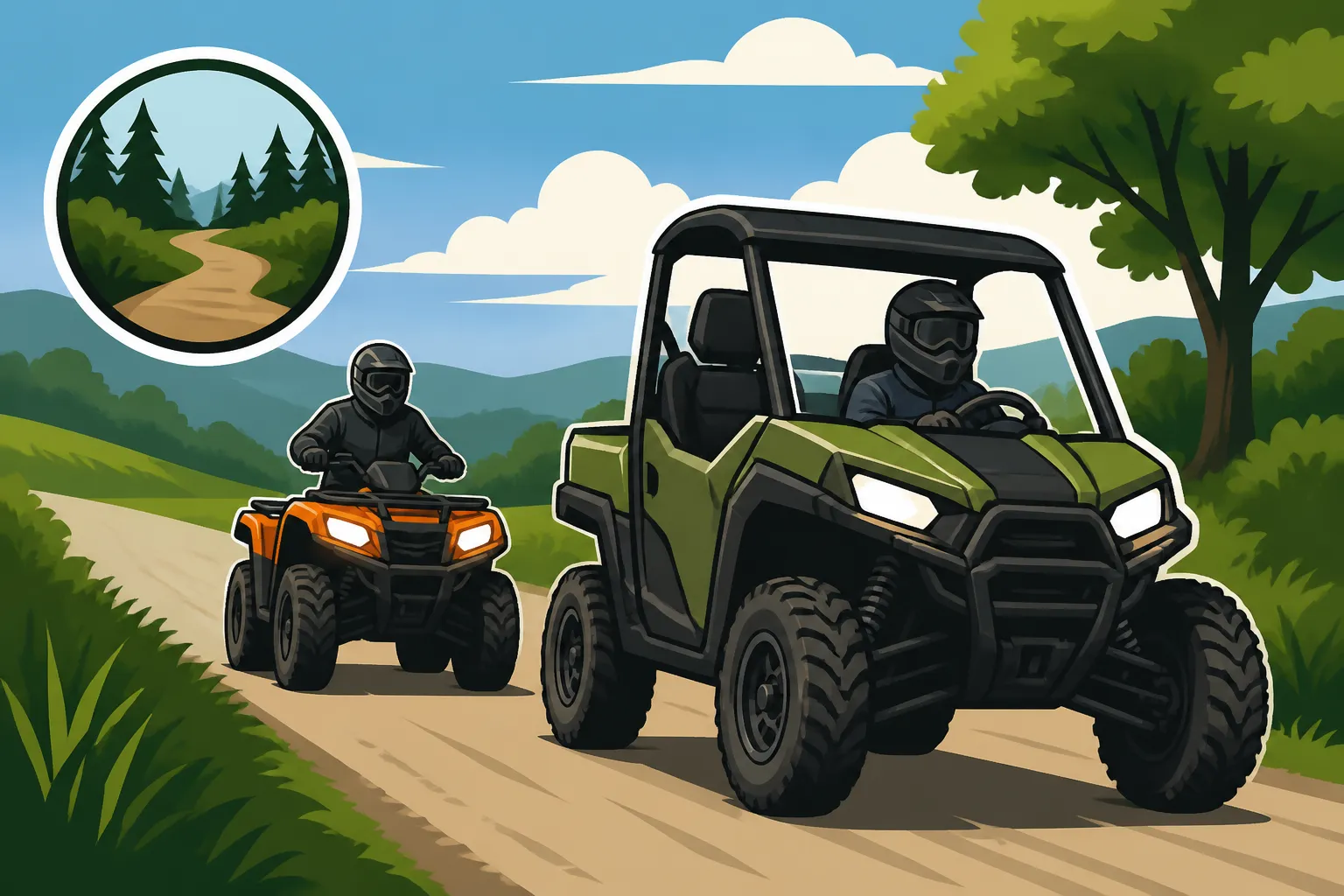
Imagine this: you've got your gear on, your machine is warmed up, and instead of wrestling with tie-downs, ramps, and a trailer that's seen better days, you could just fire up the engine and go. Think about the money you'd save on truck fuel and trailer maintenance. Picture the time saved not having to load and unload, especially after a long, muddy day on the trails. It's the ultimate convenience, a seamless transition from your home base to the wilderness, turning your whole property into a launchpad for adventure. This vision is what drives many riders to wonder about the legality of short road stints, making those local township roads look like the most direct, stress-free route to fun.
For many, the closest official ATV trail system might be just a few miles away, connected by a quiet back road. It feels logical, almost intuitive, that you should be able to use that stretch of asphalt or gravel to get where you're going. Eliminating the need for a tow vehicle and trailer not only cuts down on expenses but also makes spontaneous rides much more feasible. Instead of planning a full logistical operation, you could just decide on a sunny afternoon to go for a quick spin, making the sport far more accessible and enjoyable for casual riders and serious enthusiasts alike.
The Reality: Pennsylvania's Strict Road Rules
Then, you hit the brick wall of reality. Pennsylvania, like many states, has a very strict stance on ATVs and UTVs on public roads. The general rule is simple: they're not allowed. This often comes as a shock and a major source of frustration for riders who are just trying to get to a legal riding area. It leads to confusion, especially when you see conflicting information or observe others seemingly flouting the rules without consequence. The disappointment can be palpable, turning what should be an exciting journey into a stressful navigation of legalities.
While the dream of riding from your garage to the trails is strong, the reality is that unless a specific road has been explicitly designated for ATV use by local ordinance, it's illegal to ride your off-highway vehicle on it. This means those quiet township roads that seem so perfect for a short hop are, more often than not, off-limits. This distinction is crucial, and misunderstanding it can lead to hefty fines and a ruined riding day. It's not just about common sense or perceived safety; it's about the law, which is designed to keep these powerful off-road machines off shared roadways where they weren't designed to operate. For a quick overview, it’s worth understanding [Street Legal ATVs in Pennsylvania: The Short Answer], which clarifies the state's baseline position.
Understanding Pennsylvania's Legal Framework for ATV Road Use
Navigating the rules for ATVs and UTVs in Pennsylvania can feel like a maze, especially when you're trying to figure out where you can and cannot ride on public roads. It's critical to understand the foundational principles before you even think about putting tires on the asphalt.
The Baseline: ATVs Are Generally Not Street Legal
At its core, Pennsylvania law classifies ATVs and UTVs as Off-Highway Vehicles (OHVs). This means they are specifically designed for off-road use, not for public roads, streets, or highways. Unlike cars or motorcycles, they don't meet the Department of Transportation's (DOT) safety standards for on-road vehicles. They lack specific equipment like turn signals, DOT-approved tires, and windshields in many cases, which are standard for street-legal machines. This fundamental distinction is why they typically aren't issued traditional vehicle titles and registrations for road use by the Department of Motor Vehicles.
It’s important to remember that the Pennsylvania Department of Conservation and Natural Resources (DCNR) handles ATV registration, not the Department of Transportation (PennDOT). This is a key difference. DCNR's registration system is designed for identifying machines for off-road trail use, helping fund trail maintenance, and ensuring compliance with off-road regulations. It's not about making your machine street-legal. If you've ever wondered [Why PennDOT Does Not Register Pennsylvania ATVs], this distinction between DCNR and PennDOT is the core reason. Your DCNR registration plate and wallet card allow you to legally ride on designated state-owned trails and private land (with permission), but they don't grant permission for public road use.
Township Roads: Where Local Control Comes Into Play
Here's where the waters get a little murkier, but also where the possibilities for road access exist. While the state generally prohibits ATVs on roads, it grants townships and other local municipalities the authority to open specific roads within their jurisdiction to ATV and UTV use. This is a crucial detail because it means the rules can vary significantly from one township to the next, sometimes even between neighboring communities. These are often referred to as "joint-use" roads or "designated" roads.
When a township decides to open a road for ATV use, they must do so through a formal ordinance. This isn't just a casual decision; it's a legal process that often involves public hearings, community input, and a vote by the township supervisors. Once an ordinance is passed, the township is typically required to post signs clearly indicating that the road is open to ATVs. These are often green signs, so if you're looking for where you can legally ride, keep an eye out for [The Green Sign on a Pennsylvania Township Road]. Without such a sign or a confirmed ordinance, you should assume the road is closed. For a broader view of what the state considers open, you can also look into [Pennsylvania's Designated ATV Roads]. It's a patchwork system, but understanding local control is your first step to legal road use.
Navigating Designated Township Roads to Reach a Trailhead
So, you’ve heard whispers of a township road that might actually be open to ATVs. This is where a little bit of detective work and a lot of understanding of the rules come in handy. It’s not enough to just hope for the best; you need to be certain you’re on the right side of the law.
Identifying Legally Open Roads: It's Not Always Obvious
Finding a legally open township road in Pennsylvania can feel like searching for a needle in a haystack. Unlike state forest trails, which are clearly mapped and signed by DCNR, designated township roads aren't always broadly publicized. Your best bet for identifying these roads starts at the local level. Check the website of the specific township you're interested in, or even better, call their municipal office. Ask directly if they have any ordinances opening roads to ATV or UTV traffic and, if so, which specific roads are included. Sometimes, local ATV clubs are an invaluable resource, as they often work with townships to establish these routes and will know the details.
It's absolutely critical to remember that if a road is not explicitly posted with an official sign indicating ATV use, or if you cannot confirm an ordinance, you must assume it is closed to off-highway vehicles. Simply seeing tire tracks from other riders or noticing a local's quad on the road doesn't make it legal for you. Law enforcement agencies, including local police and DCNR rangers, regularly patrol and enforce these rules, and ignorance is rarely accepted as an excuse. For further clarity on how to tell, always remember the guidance on [Roads Posted Open Versus Roads That Are Not]. This is your responsibility as a rider to know before you go.
Rules and Requirements for Riding on Designated Roads
Even if you find a designated township road, you can't just throw caution to the wind. There are specific rules and requirements that riders must adhere to, which often go beyond what's expected on an off-road trail. These rules are put in place for safety and to ensure peaceful coexistence with other road users.
First and foremost, your ATV or UTV must be properly registered with the Pennsylvania DCNR. For public road use and access to state-managed trails, you'll need what's called a [Pennsylvania's General Registration for Everywhere Else]. This isn't the free limited registration; it's the full paid registration that indicates your machine is approved for public land use. Along with registration, you are legally required to carry proof of liability [Pennsylvania ATV Insurance Requirement]. This isn't just a suggestion; it's mandatory whenever you operate your machine off your own private property, especially on public roads.
Next, let's talk about safety gear. Helmets are not optional. Pennsylvania law mandates that all ATV operators and passengers wear a helmet. This is true whether you're on a trail or a designated road. Make sure your helmet meets safety standards; an old, cracked helmet isn't going to cut it. For details, always refer to [Pennsylvania Helmet Law for ATV Riders]. Additionally, there are age restrictions. An operator must be at least 16 years old to ride on a designated public road. This is a firm rule designed to protect younger riders and other motorists. To be absolutely clear on this, consult [Pennsylvania Minimum Age to Ride a Road].
Finally, your machine itself needs to meet certain standards for road use, even on designated township roads. This includes proper lighting – headlights, taillights, and brake lights – especially if you anticipate riding during dawn, dusk, or nighttime hours. Even during the day, visibility is key. Some riders add aftermarket accessories like turn signals or mirrors from companies like SuperATV to enhance safety and visibility, although these might not be strictly required by law for designated township roads, they certainly make sense in mixed traffic. Your muffler must be in good working order and conform to noise standards; excessively loud exhausts are not permitted. While not directly a "road rule," having a spark arrester is generally required for all ATVs and UTVs operating in Pennsylvania. For more on lighting, see [Pennsylvania Lighting Rules for Road Use], and for mufflers, check [Pennsylvania Muffler Requirements for ATVs].
Here’s a quick comparison of general requirements:
| Feature/Requirement | Designated Township Road Use | Off-Road Trail Use (General) |
|---|---|---|
| DCNR Registration | Required (General Registration) | Required (Limited or General) |
| ATV Insurance | Required (Liability) | Required (Liability) |
| Helmet | Required for all operators/passengers | Required for all operators/passengers |
| Operator Age | 16 years old minimum | 8 years old minimum (with restrictions) |
| Lighting | Headlight, Taillight, Brake Light (functional) | Headlight, Taillight (functional) |
| Muffler | Must meet noise standards, spark arrester | Must meet noise standards, spark arrester |
| Road Signs | Road must be officially posted open | Trailheads clearly marked |
| Speed Limit | Usually posted road limit | Generally lower, often unposted trail speeds |
| Vehicle Width | No specific road limit (within reason) | Max 64 inches for many state forest trails |
Remember, these are minimums. Riding responsibly and courteously, even on an open road, is paramount to maintaining good relationships with the community and ensuring these access routes remain available.
Common Pitfalls and Misconceptions About Road Riding
Even with the best intentions, it's easy to fall into common traps or misunderstand key aspects of Pennsylvania's ATV road laws. These misconceptions can quickly turn a fun outing into a costly mistake.
The "Quick Dash Across the Road" Fallacy
One of the most persistent misconceptions among ATV and UTV riders is the idea that a "quick dash" or "short hop" across a public road is acceptable, even if the road isn't explicitly designated for ATV use. The logic often goes: "It's only for a few yards," or "There's no traffic." However, the law in Pennsylvania doesn't differentiate between riding a few feet and riding a few miles. If a road is not officially opened by a municipal ordinance and clearly signed, then operating an ATV or UTV on it is illegal, period.
This includes riding on the shoulder, the ditch, or even pulling out of your driveway and immediately turning onto private property if it involves any travel on a public road. An officer observing this, even for the shortest distance, can issue a citation. The fines for illegal operation can be substantial, often starting at $300 and increasing for repeat offenses, not to mention potential court costs. For details on the penalties, you can review [Pennsylvania Fines for Riding Illegally]. While Pennsylvania does have very specific rules for crossing a highway at a 90-degree angle, stopping, and yielding to traffic, this is a distinct and limited exception, not an open invitation to ride along any public road to reach a trail. Understanding the difference between a controlled crossing and general road use is vital, and you can learn more about proper crossings in [Crossing a Highway on an ATV in Pennsylvania]. Don't let a "quick dash" cost you big.
Game Lands, State Forest Roads, and Private Property
Another area of significant confusion revolves around different types of land and their respective rules for ATV use. Many riders mistakenly believe that if they see a road, especially one that looks rural or unpaved, it must be open to ATVs. This is far from the truth, and failing to understand these distinctions can lead to trespassing charges or fines.
Let's start with State Game Lands. These vast tracts of land are managed by the Pennsylvania Game Commission, primarily for hunting, trapping, and other wildlife-related activities. A crucial point to remember is that ATVs and UTVs are, with very few and specific exceptions (like a disabled access permit), not permitted on State Game Lands roads or trails. Even if a road appears unmaintained or looks like a perfect riding path, it's almost certainly off-limits. To avoid issues, always check [Pennsylvania State Game Lands and ATVs] before considering any ride there.
State Forest roads are a bit more nuanced. Pennsylvania's State Forests are managed by DCNR, the same agency that registers your ATV. Many roads within State Forests are open to licensed highway vehicles (cars, trucks), but very few are designated for ATV use as part of the state's official ATV trail systems. You cannot simply ride your ATV on any State Forest road just because it's in a State Forest. Only the marked, official ATV trails within the State Forest system are open. Using other forest roads requires explicit permission or designation. The rules for these areas can be tricky, so it's always best to consult specific forest district maps and regulations, and understanding [Pennsylvania Rules for Riding a State Forest Road] is key.
Finally, private property is just that: private. You cannot ride an ATV or UTV on private roads or land without explicit permission from the landowner. A handshake might feel sufficient, but for your protection and the landowner's, written permission is always the best practice. Never assume implied consent. Just because a gate is open or there are no "No Trespassing" signs doesn't mean you have permission to ride. The consequences of trespassing can range from fines to having your machine impounded, and it damages the reputation of all riders. It's always best to be clear on [Pennsylvania Landowner Permission Rules]. Respect for all types of land is crucial for the future of riding.
Advocating for More Access and Safe Riding Practices
While the current rules can feel restrictive, it's not a static situation. The landscape of ATV and UTV access is constantly evolving, and responsible riders have a significant role to play in shaping its future. Advocating for more access, coupled with a commitment to safe practices, is the most effective way to see positive change.
How to Approach Your Local Township for More Open Roads
If you live near a trailhead and believe a particular township road would serve as an ideal, safe connector, don't just complain about the lack of access – become an advocate! Local government is often more responsive to citizen input than state agencies. The process for opening a township road to ATV use typically involves proposing the idea to your township supervisors. This isn't a casual conversation; it requires preparation and a well-thought-out plan.
Start by gathering information. Identify the specific road(s) you believe should be opened. Research the feasibility: Is the road heavily trafficked? Are there residents who would be negatively impacted? What are the potential safety concerns, and how can they be mitigated? Prepare a presentation outlining the benefits: increased tourism for local businesses, improved access for residents, and a safer alternative to illegal riding. Emphasize that you and other riders are committed to responsible use, adherence to speed limits, and respect for property owners. Bringing together a group of like-minded, responsible riders will add weight to your proposal. It's a process of education and persuasion, showing that opening a road can be a positive for the community. You can find more specific guidance on [Asking a Township to Open a Road] for tips on how to structure your approach.
The Role of Rider Education and Community Engagement
Beyond direct advocacy for specific roads, the broader image of ATV and UTV riders plays a massive role in whether townships are willing to open their roads. Negative perceptions, often fueled by irresponsible actions of a few, can quickly shut down any possibility of increased access. This is where rider education and community engagement become incredibly important.
Taking an ATV safety course isn't just a requirement for younger riders; it's a valuable practice for everyone. These courses teach safe operating procedures, environmental awareness, and trail etiquette. Having a [Pennsylvania ATV Safety Certificates] demonstrates a commitment to responsible riding, which can be a powerful argument when speaking to local officials. Furthermore, engaging with your community is vital. This means actively joining and participating in local ATV clubs. These clubs often serve as organized voices for riders, working with DCNR and local governments to maintain trails, advocate for new ones, and promote responsible riding.
By consistently demonstrating respect for the environment, private property, and other trail users, the ATV community can build trust and show that they are responsible stewards of the land. This positive engagement helps combat negative stereotypes and fosters an environment where townships are more likely to consider opening roads. Remember, every time you ride responsibly, you're not just enjoying yourself; you're also being an ambassador for the entire ATV and UTV community. The future of access in Pennsylvania depends on all of us doing our part.
Disclaimer
This article is for general informational purposes only and does not constitute professional advice. Laws, prices and regulations vary by location and change over time. Consult a qualified professional for guidance on your specific situation.