Connector Routes Between Pennsylvania Trails
One of the biggest frustrations for ATV and UTV riders in Pennsylvania is when you’re out on a fantastic trail system, and then it just… ends. You can see another trail system just a few miles away, perhaps across a winding country road or through a small town, but getting there seems like a legal maze. This guide is all about untangling that maze, helping you understand how to use legitimate connector routes to link up Pennsylvania’s incredible network of ATV and UTV trails, making your riding adventures longer and more cohesive.
The Need for Connector Routes Between Pennsylvania Trails
Pennsylvania boasts an impressive amount of ATV and UTV trails, from state forest systems like Whiskey Springs and Bloody Skillet to private parks like the Anthracite Outdoor Adventure Area (AOAA) and Rock Run Recreation. But the reality is, these trails aren't always one continuous, unbroken ribbon of dirt. Often, geographical features, private property, or existing infrastructure create gaps that can leave riders feeling stranded at a trailhead, wishing they could just keep going.
Bridging the Gaps in Pennsylvania's Vast Trail Systems
Think about it: you've just spent a fantastic morning on the northern loop of a state forest trail, the air crisp, the mud flying. You pull out your map and realize that a few miles to the south, there's another incredible section of trail or even an entirely different system you've been wanting to explore. Without designated connector routes, your only option is to load your machine back onto a trailer, drive it down the highway, and unload again. That’s a huge buzzkill and a massive waste of precious riding time.
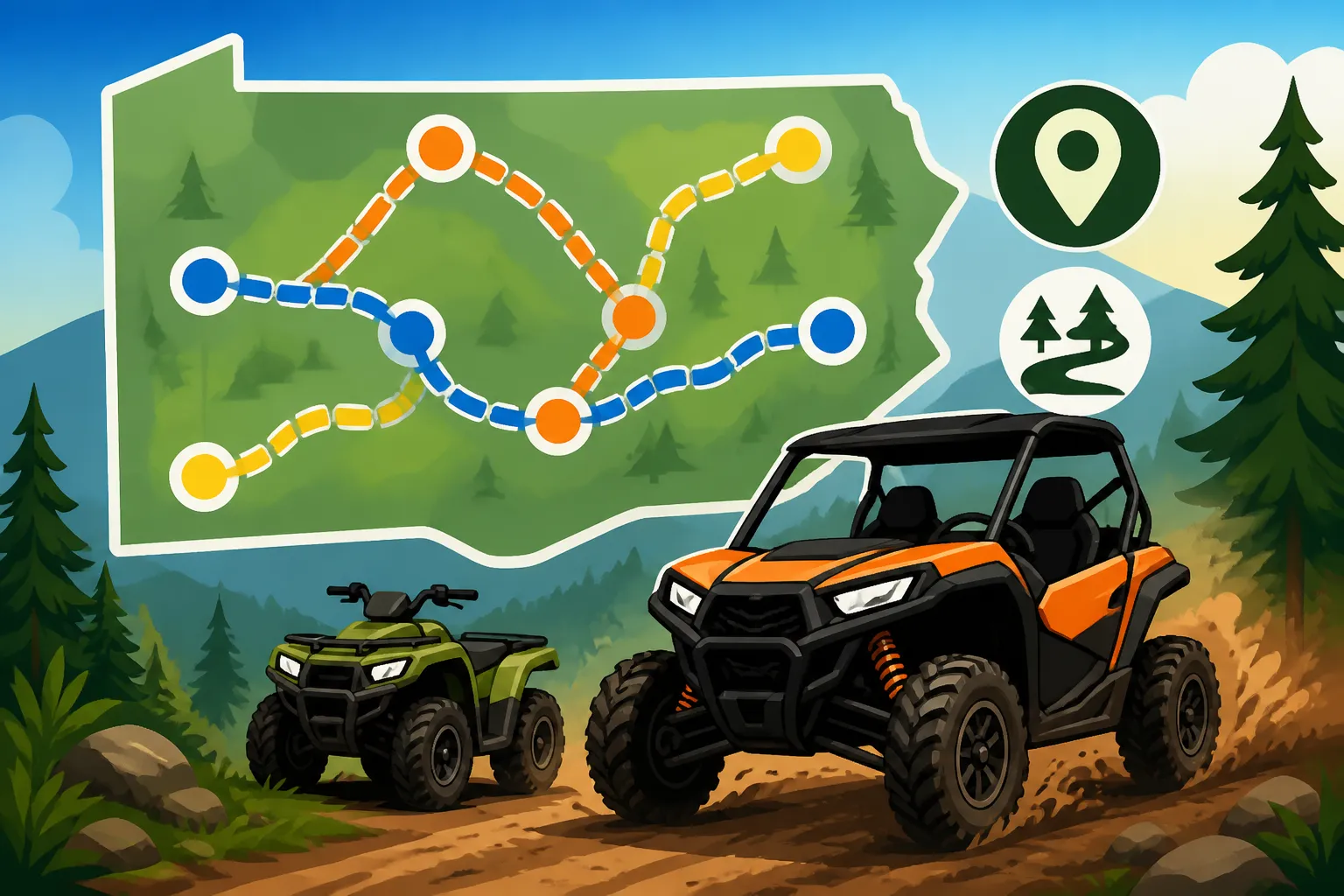
Connector routes are essentially the arteries that link these larger trail systems, allowing for multi-day trips, more diverse riding experiences, and easier access to services like fuel, food, and lodging. They transform what might be several isolated riding opportunities into one expansive adventure. Imagine starting your day in one state forest and ending it in another, all without having to touch a trailer. That's the dream, and connector routes are how we make it a reality here in Pennsylvania. They’re crucial for maximizing the utility and enjoyment of our off-road machines, allowing us to truly explore the breadth of what Pennsylvania has to offer.
The Frustration of Isolated Riding Areas
We’ve all been there. You spend hours meticulously planning a ride, only to discover that the "perfect" route involves a section of road that's ambiguously marked or clearly off-limits. It's incredibly frustrating to see miles of potential trail just out of reach because there's no clear, legal way to get from point A to point B. This isolation can limit how far you can explore, force you to repeat sections of trail, or make it difficult to access amenities when you're deep in the woods.
This isn't just an inconvenience; it can also be a safety concern. If riders can't legally connect trails, some might be tempted to take unofficial, illegal routes across private property or undesignated roads, risking fines, property damage, and souring relations with landowners. The lack of clear, safe connectors can inadvertently push riders toward riskier behaviors. That's why understanding and advocating for legal [Connector Routes Between Pennsylvania Trails] is so important. It enhances the rider experience and promotes responsible land use.
How Pennsylvania Roads Become Connector Routes
It’s not as simple as just deciding a road is now open for ATVs and UTVs. There’s a specific process, often involving local government and the Pennsylvania Department of Conservation and Natural Resources (DCNR), to designate these vital links. This process is designed to ensure safety for all road users, minimize environmental impact, and address local community concerns.
The Role of Local Municipalities and DCNR
In Pennsylvania, the power to open roads for ATV and UTV use primarily rests with local municipalities (townships and boroughs) for their local roads, and with the DCNR for roads within state forests and parks. DCNR plays a crucial role in overseeing the broader framework for ATV and UTV riding, including registration, safety, and trail development. However, when it comes to connecting trails via public roads, local input is paramount.
For a township road to become an official connector, the local township supervisors must pass an ordinance. This is a public process, often involving community meetings where residents can voice their opinions. The DCNR can also work with municipalities to create these links, especially when they connect existing state-managed trails. These discussions are complex, balancing the economic benefits of increased tourism with concerns about noise, dust, and traffic from ATV and UTV riders. It’s a delicate dance, but when it works, it creates invaluable opportunities for riders.
Designating Roads for ATV and UTV Use
Once a municipality decides to designate a road for ATV or UTV use, they typically post clear signage. You’ll often see a specific [What the Green Sign on a Pennsylvania Township Road Means], indicating that the road is officially open to these vehicles. These signs are critical – they tell you exactly where you can and cannot ride. Without these official signs, even if a road looks like a perfect connector, it's considered illegal to ride an ATV or UTV on it.
The designation process often involves considerations like road width, traffic volume, and proximity to residential areas. Sometimes, a road might be designated as a "joint-use road," meaning it’s open to both conventional vehicles and ATVs/UTVs. [Pennsylvania Joint-Use Roads] have specific rules that riders must follow, often including lower speed limits and requirements for lights and turn signals, even during the day. It’s important to remember that these roads are not trails; they are public roadways where you are sharing the space with cars and trucks. Always ride defensively and expect other vehicles.
Types of Roads You Might Encounter as Connectors
Pennsylvania's landscape is diverse, and so are the types of roads that can serve as connectors. Understanding the differences between these road types and their associated regulations is key to a legal and enjoyable ride. It’s not a one-size-fits-all situation, and what’s allowed on one type of road might be strictly forbidden on another.
Township Roads and Borough Streets: The Local Decisions
These are perhaps the most common types of roads you'll encounter when trying to connect trail systems or reach local services. [Township Roads Open to Pennsylvania ATVs] are designated by local township governments. They are often gravel or dirt, winding through rural areas, and can be perfect for linking a state forest trail to a gas station or a nearby riding park. However, their accessibility is entirely at the discretion of the local township. Some townships embrace ATV tourism and create extensive networks, while others may choose to keep their roads closed. It’s vital to check local ordinances before you plan to ride on any township road.
Borough streets, on the other hand, are typically found within more populated towns and are generally much more restrictive. While some progressive boroughs might designate specific streets as [Riding Into Town on a Pennsylvania ATV] connector routes to allow riders to access businesses, these are rare exceptions. When they do exist, they come with stringent rules about speed, noise, and sometimes even a requirement for a local permit. The goal is to balance rider access with the peace and quiet of the community. Always look for clear signage indicating ATV/UTV access; assume a borough street is closed unless explicitly marked open. Navigating these requires diligence, as violations can lead to significant fines.
Joint-Use Roads and State Forest Paths: Shared Access
Beyond local municipal roads, you'll also find connector opportunities within state lands. [Pennsylvania Rules for Riding a State Forest Road] can be complex, as some are open to street-legal vehicles only, some are strictly for administrative use, and others are designated as joint-use roads. These joint-use roads are typically managed by DCNR and are explicitly opened for both conventional vehicle traffic and ATVs/UTVs. They often connect larger trail systems within state forests or allow riders to cross a larger geographical area.
When riding on a joint-use road, you must treat it like any other public road. This means adhering to speed limits, using proper lighting, and being aware of other vehicles. These roads are generally well-maintained but can still have sections that are rugged, especially after heavy rain. DCNR maps are the best resource for identifying these specific routes. Additionally, some state forest paths, distinct from designated trails, may also be opened as connectors, but these will always be clearly marked on official DCNR maps and with physical signage. Never assume a path is open just because it looks like a trail; always verify.
| Road Type | Who Designates/Manages | Common Use as Connector | Key Restrictions/Notes |
|---|---|---|---|
| Township Road | Local Township | Connecting to trailheads, accessing services | Local ordinances, often posted with green signs. |
| Borough Street | Local Borough | Riding into town for fuel/food | Very specific local rules, can be more restrictive. |
| Joint-Use Road | DCNR/Local Partner | Connecting large state forest trail systems | Shared with vehicles, specific state rules apply. |
| State Forest Road | DCNR | Accessing trails within state forests | Often gated, seasonal access, specific DCNR rules. |
Unofficial Paths and the Dangers They Pose
It’s tempting when you see a faint path leading from one trail to another, or a dirt track cutting through the woods that seems to bridge a gap. However, these "unofficial" paths are almost always illegal to ride. They might be old logging roads, utility access routes, or even just deer trails that have been widened by previous trespassers. The dangers of using these paths are numerous and serious.
First and foremost, you could be trespassing on private property. Landowners in Pennsylvania are increasingly fed up with unauthorized riding, and the penalties for trespass can be severe, including significant fines and confiscation of your machine. Beyond that, these paths are often not maintained, meaning you could encounter hidden hazards like washed-out sections, downed trees, or unmarked obstacles. There's no guarantee of safety, and if you get stuck or have an accident, emergency services might have difficulty reaching you. Stick to clearly marked and designated routes. Taking a shortcut through an unmarked area isn't worth the risk to your wallet, your machine, or your safety.
Planning Your Ride: Identifying Legal Connector Routes
Planning is paramount when it comes to successfully using connector routes. You can’t just head out hoping to stumble upon a legal link. It requires research, reliable information, and often, a little bit of local knowledge to truly unlock the potential of Pennsylvania’s trail systems.
DCNR Maps and Online Resources
The Pennsylvania DCNR is your primary source for official, up-to-date information on ATV and UTV trails and their permitted connector routes. They provide detailed maps, often available for free online or at state forest district offices, that clearly mark designated trails and any associated legal road connectors. These maps are invaluable, showing not just the trails themselves but also staging areas, parking, and sometimes even local points of interest. Make it a habit to check the DCNR website before every ride, as trail conditions and road designations can change due to weather, logging operations, or new local ordinances.
Beyond DCNR, many local ATV and UTV clubs maintain their own websites, forums, and social media groups where riders share real-time updates and local insights. These communities can be goldmines of information about newly opened connector routes, temporary closures, or even the best spots for fuel and food along a designated path. Tools like Google Maps can also be helpful for visualizing the terrain and identifying potential connecting roads, but always cross-reference with official DCNR or municipal information to confirm legality. Never rely solely on a GPS app, as it won't tell you if a road is designated for ATV use.
Leveraging Local Knowledge and Rider Communities
While official maps are crucial, there's no substitute for local knowledge. If you're planning to ride an area for the first time, reaching out to local riding clubs or even talking to folks at a nearby gas station or diner can provide invaluable insights. They might know about a specific township road that's recently opened or a particular stretch that becomes impassable after heavy rain. Communities like [Riding Through Coal Township] or [Riding From Westport to Kettle Creek] often have local groups that are highly knowledgeable about every turn and designation.
Many ATV and UTV forums and Facebook groups dedicated to Pennsylvania riding are active places where riders share GPX files, photos, and personal experiences. This kind of crowd-sourced information can complement official maps, giving you a more complete picture of what to expect. Just be discerning – always verify information that seems too good to be true, and prioritize safety and legality. This collective wisdom can help you discover hidden gems and avoid potential pitfalls, making your connector route adventures smoother and more enjoyable. When planning, consider a heavier-duty tire from a brand like SuperATV that can handle the varied terrain from rocky trails to paved connectors, giving you peace of mind no matter the surface.
Rules of the Road When Riding Connector Routes
Riding an ATV or UTV on a designated connector route means you are no longer strictly on a trail. You are on a public road, sharing space with cars, trucks, and potentially pedestrians or cyclists. This shift in environment brings a whole new set of rules and safety considerations that every rider must respect. Ignoring these rules can lead to serious consequences, including fines, accidents, and even the closure of valuable connector routes for everyone.
Key Regulations for Operating an ATV/UTV on Public Roads
When you're [Crossing a Highway on an ATV in Pennsylvania] or riding a joint-use road, you must adhere to state traffic laws that apply to all vehicles, as well as specific ATV/UTV regulations. This typically includes a valid [Pennsylvania ATV Registration] with a clearly visible plate. For general registration, you'll have a plate that needs to be mounted in a specific way, often with a sticker. Your machine must also be equipped with functioning headlights, taillights, and brake lights. Some connectors might even require turn signals, so it's wise to have them, or at least be prepared to use hand signals.
Age restrictions are also critical. [Pennsylvania Minimum Age to Ride a Road] designated for ATV use is typically 16 years old, even if you’re younger than that on a closed trail. You also need to carry proof of [Pennsylvania ATV Insurance Requirement], as liability insurance is mandatory for riding off your own private property, which includes any public road. Furthermore, wearing a helmet is generally required for all riders and passengers on ATVs and UTVs in Pennsylvania, especially when on public roads. These rules are in place for your safety and the safety of others.
Safety Considerations and Gear on Pavement
Riding an ATV or UTV on pavement is a very different experience than riding on dirt or gravel. The handling characteristics change dramatically, and you lose much of the traction you're used to. This means you need to adjust your riding style: slow down, increase your following distance, and be extra cautious when turning or braking. Pavement can be slippery, especially when wet, and a sharp turn on a hard surface can easily lead to a rollover.
Beyond adjusting your riding, your gear becomes even more critical. Always wear a DOT-approved [Pennsylvania Helmet Law for ATV Riders], eye protection, gloves, long pants, and sturdy boots. Brightly colored clothing, or even a safety vest, can significantly increase your visibility to other motorists, which is crucial on roads where you’re sharing space with much larger, faster vehicles. Consider adding extra reflective decals to your machine or even investing in a louder horn to make your presence known. It's about being seen, being heard, and riding with an abundance of caution, particularly in areas like [Riding to a Trailhead on a Township Road] where traffic might increase. For machines that regularly cross varied terrain, having robust tires and perhaps a suspension lift kit from SuperATV can improve ground clearance and stability on uneven sections, even on designated connectors.
Overcoming Challenges and Maximizing Your Connector Route Experience
Even with the best planning, riding connector routes can present challenges. Weather can change, roads can close, and local sentiments can shift. Staying informed and riding responsibly are key to ensuring these invaluable links remain open and accessible for all riders.
Keeping Up-to-Date on Closures and Changes
One of the biggest frustrations for riders is arriving at a planned connector route only to find it closed due to logging operations, bridge repair, or seasonal restrictions. These closures can be temporary or long-term, and they highlight the importance of checking official sources right before your ride. DCNR's website often posts alerts for state forest roads, and many townships will have notices on their municipal websites or physical signs posted at road entrances.
Beyond official channels, local rider groups are often the first to know about unexpected closures or changes in regulations. Participating in these online communities can provide real-time updates and alternative route suggestions. A connector route that was open last month might be closed this month due to an emergency or a scheduled event. Always confirm the current status of any roads you plan to use, as [Riding With an Expired Sticker] or on a closed route can result in hefty [Pennsylvania ATV Registration Fines].
Respecting Locals and Preserving Access
The continued availability of connector routes heavily relies on the goodwill of local residents and municipalities. Noise, dust, and irresponsible riding are the quickest ways to erode that goodwill and lead to road closures. When riding through residential areas, even on designated connectors, be hyper-aware of your speed, noise levels, and exhaust emissions. Slow down, keep the RPMs low, and avoid any aggressive riding behavior that could be perceived negatively.
It’s about being a good neighbor. Wave to residents, acknowledge pedestrians, and be mindful of farm equipment or children playing. Support local businesses along your route – stop for gas, grab a meal, or buy supplies. This economic contribution helps show the community the positive impact of ATV and UTV tourism. If riders are respectful and contribute positively to the local economy, municipalities are much more likely to maintain and even expand connector route access. Brands like SuperATV, with their focus on durable and often quieter components, can help riders maintain a low profile and minimize impact, which is a small but meaningful step toward preserving access for everyone.
Disclaimer
This article is for general informational purposes only and does not constitute professional advice. Laws, prices and regulations vary by location and change over time. Consult a qualified professional for guidance on your specific situation.