Pennsylvania Helmet Exception for Farming
It’s a scenario many Pennsylvania farmers know well: you’re zipping across your own land on an ATV or UTV, maybe checking fences, moving feed, or heading to the back forty for a quick repair. The last thing you want to do is stop, grab your helmet, and strap it on just to drive a couple hundred yards. You've been working this land for years, you know every rut and rock, and it feels like an unnecessary hassle. This guide is here to help clear up the confusion around Pennsylvania's ATV helmet laws, specifically focusing on the agricultural exception, so you can understand exactly when you can legally leave the helmet in the barn and when it’s absolutely essential.
Understanding Pennsylvania's General Helmet Law for ATVs
Let's start with the baseline, because it's important to understand the rule before diving into the exception. Generally speaking, riding an ATV or UTV in Pennsylvania means wearing a helmet. This isn't just a suggestion; it's a legal requirement designed to keep riders safe from serious injury.
Who the Law Protects and Why It Exists
The helmet law is there for a very good reason: to protect your head. ATV and UTV riding, even at what seems like low speeds, carries inherent risks. A sudden turn, an unseen dip, or an unexpected obstacle can easily throw a rider from their machine or cause it to roll over. Head injuries are no joke, and a helmet is often the only thing standing between a minor bump and a life-altering trauma. The state wants riders, especially younger ones, to understand these risks and take precautions. This is why you'll often see DCNR rangers checking for helmets at trailheads, as part of enforcing [Pennsylvania Helmet Law for ATV Riders]. It’s about preventing tragic accidents that could easily be avoided.
The Standard Helmet Requirement in Detail
So, when does Pennsylvania generally require a helmet for ATV or UTV operation? Anytime you're riding on public lands, designated state trails, or any property that isn't your own private land where you have explicit permission. This includes all of Pennsylvania's vast state forest and game lands that are open to ATV use, as well as privately owned parks like the Anthracite Outdoor Adventure Area or Rock Run Recreation. The requirement isn't just for fast, aggressive riding; it applies even if you're just cruising slowly. The only true exception to this general rule for recreational riders is when you're on your own private property, like your backyard, and even then, many experienced riders still choose to wear one for their own safety. The moment you pull off your private lane and onto a public road or designated trail, that helmet needs to be on and properly fastened.
The Specifics of the Farm Use Helmet Exception
Now, let's talk about the exception that many farmers in Pennsylvania rely on. The state understands that ATVs and UTVs are often invaluable tools for agricultural operations, and the nature of farm work can make constant helmet use impractical or even obstructive in certain situations.
Defining "Agricultural Use" in Pennsylvania
This is the crucial part: the helmet exception isn't just for anyone who happens to live on a property with a few acres. It specifically applies to individuals who are operating an ATV or UTV solely for agricultural purposes. What does "agricultural purposes" really mean in the eyes of Pennsylvania law? Think about activities directly related to farming, such as:
- Crop Management: Tilling small plots, planting, spraying, or harvesting.
- Livestock Operations: Herding animals, checking on cattle, sheep, or other farm animals, transporting feed or water to pastures.
- Maintenance and Repair: Hauling tools, fencing materials, or small equipment for property upkeep, mending fences, or fixing farm machinery.
- Inspecting Fields: Driving through fields to check crop health or irrigation systems.
It’s about the intent and activity. If you’re genuinely using the machine as part of your farm's operation, then you likely fall under this exception. This distinction is critical because if you're taking a leisurely ride through your fields after all the chores are done, just for fun, that might not strictly qualify as "agricultural use" under the letter of the law, even if you’re still on your own property. It’s important to understand this nuance, especially if you ever need to explain your actions to a DCNR officer or local law enforcement. For this reason, many dedicated farm machines are registered under [Pennsylvania ATV Registration for a Farm Quad], which helps solidify their primary purpose.
When the Exception Applies and Its Limits
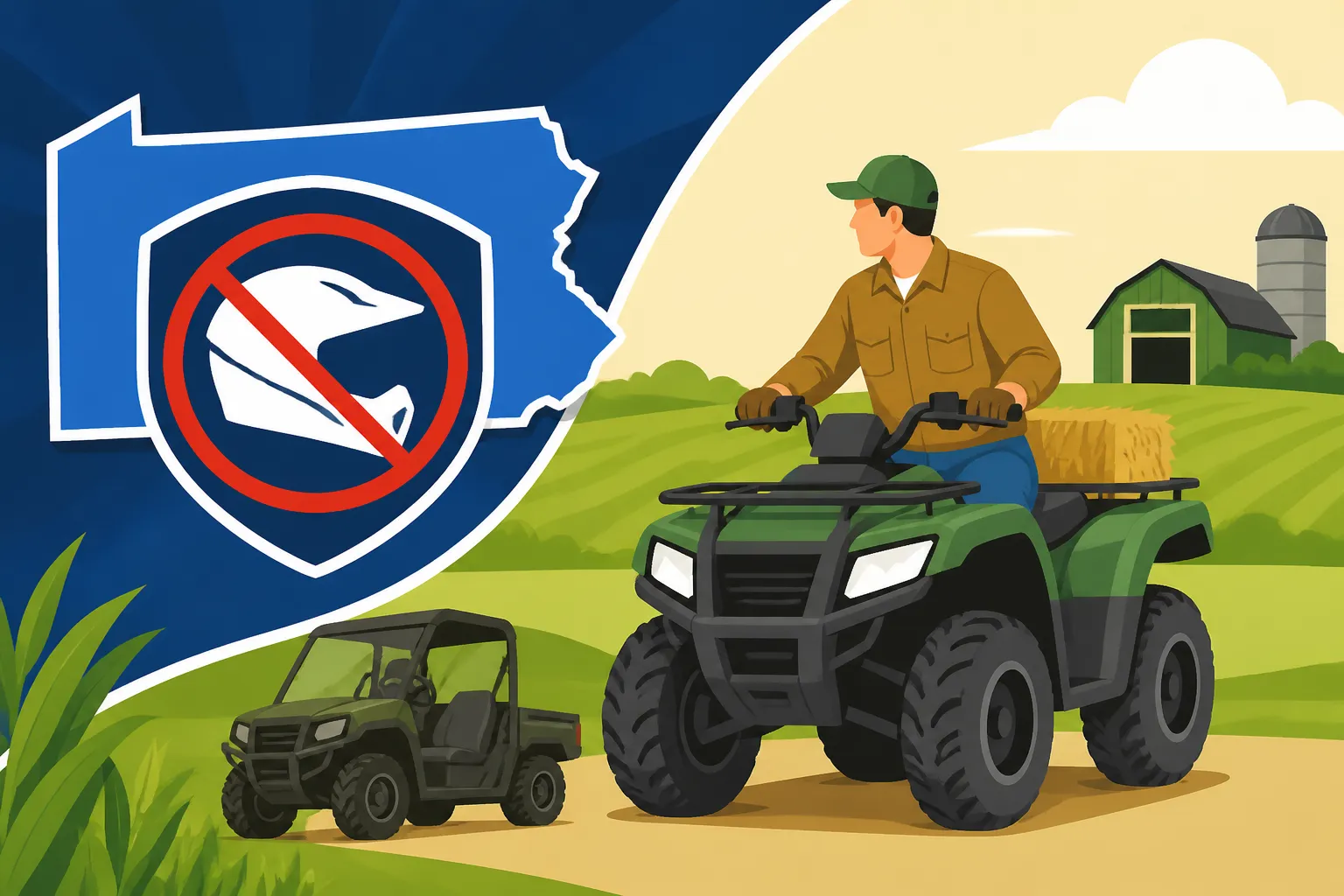
The [Pennsylvania's Agricultural Exception to the Helmet Rule] is a specific carve-out, and it comes with very clear boundaries. You can operate an ATV or UTV without a helmet only when you are actively engaged in bona fide agricultural work on land used for farming. This might include moving between different sections of your farm, even if those sections are separated by a small dirt track or private lane.
However, the moment you transition from your private farm property onto a public road, a designated ATV trail, or any other public land, the exception generally ceases to apply. Even if you're just crossing a short section of township road to get from one field to another, the expectation is that you revert to the standard helmet requirement. It's a bit of a gray area for those very brief public road crossings, but the safest and most legally sound approach is to assume the general rule (helmet on!) applies the instant your wheels touch public asphalt or gravel, regardless of how short the distance. The exception is designed for the farm environment, not for general travel, even if that travel is farm-related. This is an important distinction, as riding off-farm without a helmet could lead to [Pennsylvania Fines for Riding Illegally].
Navigating Farm Operations Beyond Your Own Land
While the helmet exception is great for day-to-day farm tasks, things get a bit more complicated when your farming needs take you beyond the immediate boundaries of your private land.
Crossing Public Roads for Farm Business
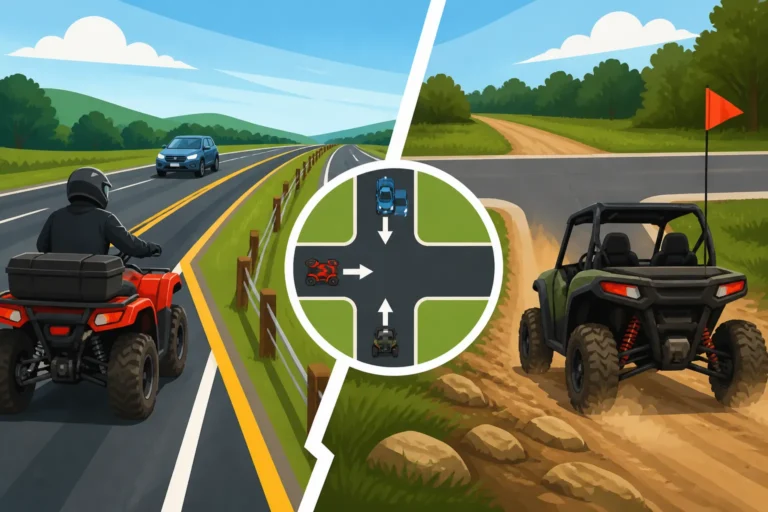
Many farms aren't just one contiguous block of land. Often, fields are separated by township roads, or you might need to access a different part of your property by briefly using a public thoroughfare. Pennsylvania law does allow for ATVs and UTVs to cross certain public roads, even state routes, for agricultural purposes, but it comes with strict rules. When [Crossing a Highway on an ATV in Pennsylvania], you must stop, yield to all traffic, and cross at a 90-degree angle to the road. This isn't permission to ride down the road, but merely to get from one side to the other.
During these crossings, does the helmet exception still hold? The law is primarily designed for operation on the farm itself. While the purpose of the crossing is agricultural, you are technically on a public thoroughfare. To be absolutely safe and avoid potential citations, it is highly recommended to wear a helmet during any public road crossing, even for very short distances, even if you are operating for agricultural purposes. While an argument could be made that the spirit of the [Pennsylvania's Agricultural Exception to the Helmet Rule] still applies, enforcement might lean towards the general public road rule. It’s always better to be safe than sorry when it comes to potential fines and, more importantly, personal safety on roads shared with vehicular traffic. This also applies when navigating [Pennsylvania Rules for Riding a Township Road] if it's not a designated ATV route.
Necessary Gear for Farm Use (Even Without a Helmet)
Just because you might not be legally required to wear a helmet on your farm doesn't mean you should forgo other essential safety gear. Farm work often involves heavy machinery, unpredictable environments, and long hours, all of which increase risk.
Consider these safety items, regardless of helmet use:
- Eye Protection: Goggles or safety glasses are non-negotiable. Dust, flying debris from tires, branches, or even insects can cause serious eye injury and impair your vision, leading to accidents.
- Sturdy Footwear: Work boots with good ankle support are crucial. They protect your feet from impacts, provide grip, and can prevent sprains or breaks if you have to quickly dismount.
- Long Pants and Sleeves: While it might be hot, long sleeves and pants offer protection from scrapes, sunburn, and insect bites.
- Gloves: Protect your hands from blisters, cuts, and vibrations.
- Roll-Over Protective Structures (ROPS) and Seatbelts for UTVs: If you're using a UTV, always ensure the ROPS is intact and always wear your seatbelt. This is your primary protection in a rollover incident, which is always a risk when traversing uneven farm terrain, especially with heavy loads. Brands like SuperATV offer a range of durable UTV accessories, from heavy-duty axles to skid plates, that can enhance both the utility and safety of your machine for demanding farm tasks. Investing in a robust windshield from SuperATV, for instance, can also provide better protection from debris than just goggles alone.
Practical Advice for Pennsylvania Farmers and ATV/UTV Use
Navigating the rules for farm use can feel like a maze, but a little preparation and common sense go a long way in keeping you safe and compliant.
Documentation and Proving Farm Use
Imagine this scenario: you're driving your UTV from the barn to a distant pasture, helmet-free, and you cross a short public access road. A local township officer or a DCNR ranger pulls you over. How do you prove you're legitimately engaged in agricultural use and not just taking a shortcut without proper gear?
- Be Prepared to Explain: Clearly and calmly articulate the specific agricultural task you are performing. "I'm heading to the north field to check on the cows" is much better than "Just moving some stuff."
- Proof of Farm Operation: While not strictly required to carry on your person, having access to documents like farm registration, property deeds, or even business cards can support your claim if questions arise.
- Machine Registration: As mentioned earlier, if your machine is primarily used for agriculture, ensuring it's appropriately registered (even with a [Pennsylvania's Limited Registration for Your Own Land] or [Pennsylvania's Free Limited Registration] if applicable to your specific machine and usage) helps reinforce its purpose. Remember, registration is still required for most ATVs, even for farm use, and you can find out about the associated [Pennsylvania ATV Registration Cost] through DCNR.
Safety Best Practices on the Farm
Even with the helmet exception, safety should always be paramount. Farm environments have their own unique hazards, and an ATV or UTV can amplify them if not operated carefully.
Here are some best practices to integrate into your daily farm operations:
- Machine Maintenance: Regularly check your ATV or UTV for proper tire pressure, brake function, fluid levels, and overall mechanical soundness. A breakdown in the middle of a remote field can be more than just inconvenient.
- Avoid Overloading: Resist the temptation to carry more than your machine is designed for. Overloading drastically impacts stability, braking, and steering, increasing the risk of rollovers, especially on uneven terrain. This is where quality aftermarket accessories, like heavy-duty cargo racks or utility beds from a brand like SuperATV, can be incredibly beneficial, ensuring your machine can handle the demands of farm work safely.
- Operator Training: Ensure everyone who operates the ATV or UTV on your farm, including family members or hired hands, is properly trained. This means understanding the machine's capabilities, the farm's specific terrain, and all safety protocols. Consider taking a [Pennsylvania ATV Safety Certificates] course.
- Terrain Awareness: Be constantly aware of changing terrain, especially after rain or during planting/harvesting seasons. Mud, loose soil, hidden rocks, and uneven furrows can all pose a significant risk.
- Visibility: Especially if you're crossing or briefly using public roads, consider adding flags or additional reflective tape to your machine to make it more visible to other traffic.
When in Doubt, Wear It
The agricultural helmet exception in Pennsylvania is a practical allowance for farmers. However, it's a narrow exception, and the consequences of misinterpreting it can be severe, ranging from a citation to a serious head injury.
If there is any doubt in your mind about whether the exception applies to your specific situation – whether you're transitioning off your core farmland, interacting with public access points, or just taking a quick break from chores – err on the side of caution. Put the helmet on. The minor inconvenience of strapping on a helmet for a few minutes is infinitely preferable to the potential medical costs, recovery time, or even permanent disability that can result from a head injury. Insurance policies, such as those covered by [Pennsylvania ATV Insurance Requirement], may also have clauses related to helmet use and liability, making it even more important to be compliant. Your safety, and the safety of anyone riding with you (remember [Pennsylvania Rules for a Passenger on a Quad]), is always the top priority.
Disclaimer
This article is for general informational purposes only and does not constitute professional advice. Laws, prices and regulations vary by location and change over time. Consult a qualified professional for guidance on your specific situation.