Pennsylvania Rules for Riding After Dark
There's nothing quite like the peace and quiet of riding your ATV or UTV as the sun dips below the Pennsylvania tree line, but many riders often wonder about the specific rules and regulations governing off-road vehicle use after dark. The truth is, navigating night riding in Pennsylvania can feel like a maze, with different rules applying to various types of land. This guide will shine a light on what you need to know to ride legally and safely after sunset in the Keystone State.
The Reality of Night Riding on Public Lands in Pennsylvania
For many riders, the idea of hitting the trails under a blanket of stars is incredibly appealing. However, Pennsylvania's public lands, particularly its State Forests and Game Lands, have very strict limitations on when and where you can operate ATVs and UTVs, and night riding is generally off-limits. This can be a real disappointment when you're out on a long ride and the daylight starts to fade quicker than you expected.
The main reason for these restrictions is safety – both for riders and for other users of the forest, including hikers, hunters, and campers. Reduced visibility significantly increases the risk of accidents, and it makes it harder for emergency services to respond effectively if something goes wrong. Plus, there are concerns about noise and disturbance to wildlife, especially in the quiet hours after sunset.
State Forest and Game Lands: What the Signs Say
When you enter a Pennsylvania State Forest or Game Land, you'll often see clear signage outlining the operating hours. These hours almost universally restrict ATV and UTV riding to daylight hours, typically from dawn to dusk. There aren't special permits or exceptions for general public night riding on these lands. If you're caught riding outside of these designated hours, you could face significant fines, and your machine could even be impounded. It's a tough lesson to learn, and one that's easily avoided by being aware of the rules. Always check the specific DCNR (Department of Conservation and Natural Resources) or Pennsylvania Game Commission regulations for the area you plan to ride, as seasonal changes or specific trail closures can also impact access. Remember, simply having your lights on doesn't make it legal to ride in areas where night riding is prohibited. [Pennsylvania Rules for Riding a State Forest Road] can offer more insights into general forest rules.
Private Parks and Designated Trails: Your Best Bet
If night riding is a big part of your ATV or UTV experience, your best bet in Pennsylvania will almost always be private riding parks or specifically designated trails that explicitly allow it. Places like the Anthracite Outdoor Adventure Area (AOAA) or Rock Run Recreation Area are designed with various riding experiences in mind, and they often have specific operating hours that might extend into the evening, especially during warmer months or for special events. These parks typically have well-maintained trails, emergency services on standby, and clear guidelines for night operations, including specific lighting requirements.
When planning a trip to a private park, always check their website or call ahead to confirm their night riding policies, hours of operation, and any additional fees or equipment requirements. They might have specific rules about minimum lighting intensity, the use of light bars, or even group riding requirements after dark. These venues understand the appeal of night riding and often cater to it, providing a much safer and legal environment than attempting to ride public trails after hours.
Specific Lighting Requirements for ATVs and UTVs
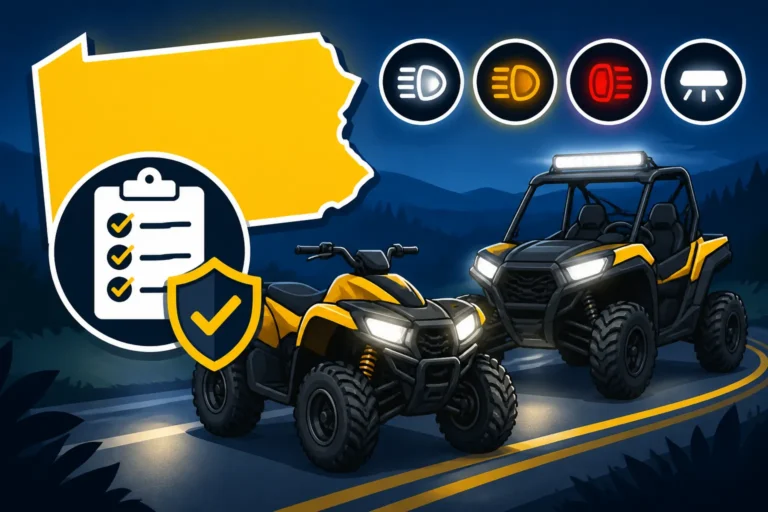
Whether you're permitted to ride after dark or just caught out longer than expected, having the correct and functional lighting on your ATV or UTV is not just a good idea for safety – it's often a legal requirement. Pennsylvania law specifies certain lighting standards that apply whenever visibility is low, which includes nighttime, but also foggy or rainy conditions. Ignoring these requirements can lead to dangerous situations and, again, potential fines. Aftermarket lights from companies like SuperATV can significantly enhance your visibility and ensure you meet or exceed requirements.
Headlights: Seeing and Being Seen
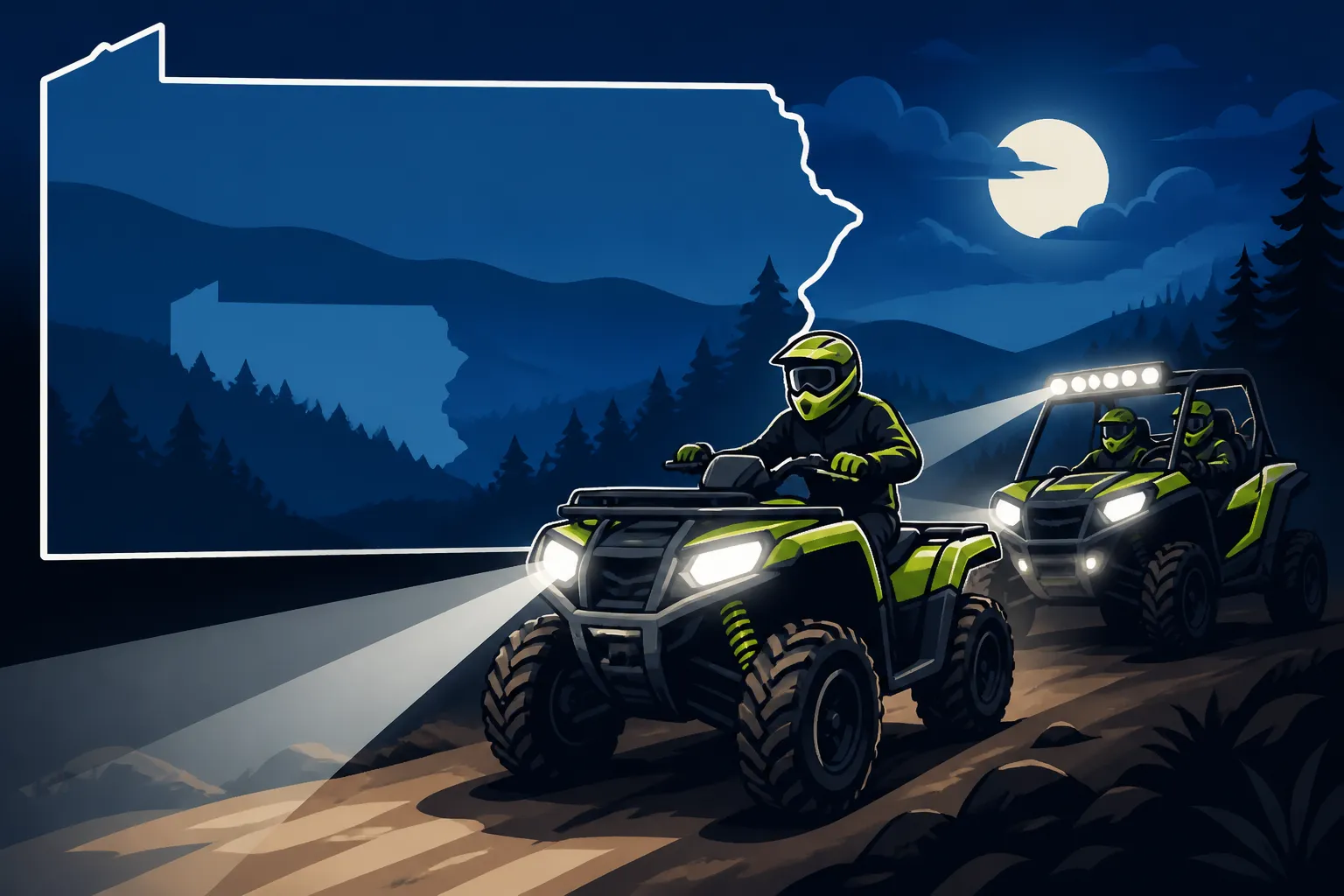
Pennsylvania law requires ATVs and UTVs to be equipped with at least one headlight that emits a white light visible from a distance of at least 500 feet to the front. Many machines come standard with headlights, but their effectiveness can vary. For night riding, especially on challenging terrain, you'll want lights that do more than just meet the minimum; you'll want to see clearly. Consider upgrading your factory headlights to brighter LED units or adding auxiliary forward-facing lights. These can drastically improve your ability to spot obstacles, navigate turns, and react to changing trail conditions. Always ensure your headlights are properly aimed so they illuminate the path without blinding oncoming riders (if applicable in designated areas). [Pennsylvania Lighting Rules for Night Riding] covers these specifics.
Taillights and Brake Lights: Crucial for Safety
Equally as important as seeing where you're going is being seen by others, especially those following you. Pennsylvania law dictates that ATVs and UTVs must have at least one red taillight visible from at least 500 feet to the rear. Additionally, a red brake light is required, which should illuminate when the brakes are applied. These lights are absolutely critical for preventing rear-end collisions, particularly when riding in groups or on trails that might allow two-way traffic.
Always check your taillights and brake lights before heading out, especially for an evening ride. Mud, water, or debris can easily obscure or damage these components. It's also a good practice to ensure they are bright enough to cut through dust or fog, which can be common conditions for off-road riding. Some riders opt for brighter LED taillights or additional rear-facing lights to maximize their visibility.
Reflectors and Auxiliary Lighting: Enhancing Visibility
Beyond the standard headlights, taillights, and brake lights, Pennsylvania law also requires ATVs and UTVs to have reflectors. Specifically, at least one red reflector must be mounted on the rear, and amber reflectors should be visible from both sides. These passive safety devices help make your machine visible even if its powered lights fail or are momentarily obstructed.
Many riders, especially those serious about night riding, go a step further by adding auxiliary lighting. This can include light bars mounted to the front for a wide, powerful beam, cube lights for specific spot illumination, or even rock lights that illuminate the ground directly around your tires for technical terrain. Companies like SuperATV offer a huge range of robust and waterproof auxiliary lighting options that can turn night into day on the trail. While these aren't always legally required for basic operation, they are highly recommended for enhancing safety and visibility during night riding. Just be mindful of local park rules regarding the intensity and aiming of light bars, as some venues may have restrictions. [Pennsylvania Rules for Night Riding] is a good resource here.
Here's a quick overview of essential ATV/UTV lighting requirements:
| Light Type | Color | Visibility Distance | Location | Function | Legal Requirement | Recommended for Night Riding |
|---|---|---|---|---|---|---|
| Headlight(s) | White | 500 ft (front) | Front | Illuminates path, makes machine visible | Yes | Yes, high-output LED upgrade |
| Taillight(s) | Red | 500 ft (rear) | Rear | Makes machine visible from behind | Yes | Yes, brighter LED |
| Brake Light(s) | Red | N/A | Rear | Illuminates when brakes applied | Yes | Yes, highly visible |
| Rear Reflector(s) | Red | N/A | Rear | Passive visibility | Yes | Yes |
| Side Reflector(s) | Amber | N/A | Sides | Passive visibility | Yes | Yes |
| Auxiliary Light Bar | White | N/A | Front | Enhanced broad illumination | No | Highly Recommended |
| Rock Lights | White | N/A | Undercarriage | Illuminates ground for technical terrain | No | Recommended for technical riding |
Riding After Dark on Designated Joint-Use Roads and Private Property
While state-managed trails are largely off-limits for night riding, there are specific scenarios where operating an ATV or UTV after dark is permissible in Pennsylvania. These primarily involve designated joint-use roads or private property with explicit permission. Understanding these distinctions is key to avoiding trouble. Remember that even when it's legal, extreme caution and appropriate safety gear, like a well-fitting helmet and eye protection, are always paramount. [Pennsylvania Rules for Riding a Township Road] can provide context for understanding local road rules.
Joint-Use Roads: The Green Sign Rule
Some township and borough roads in Pennsylvania are designated as "joint-use" roads, meaning they can be legally shared by ATVs/UTVs and conventional vehicles. These roads are typically identified by distinctive green signs. If you encounter a joint-use road, the specific rules for using it at night will generally mirror those for any motor vehicle. This means your ATV or UTV must have all the legally required lighting for road use: a working headlight, taillight, and brake light system, as well as proper reflectors. You'll also need to follow all traffic laws, including speed limits, stop signs, and signals.
However, even on these designated roads, it's crucial to exercise extreme caution after dark. ATVs and UTVs are smaller and less visible than cars and trucks, making them harder to spot for other drivers, especially on unlit rural roads. Driving defensively, maintaining a keen awareness of your surroundings, and ensuring your lighting is fully operational and bright are non-negotiable. Always remember that while you might be legally allowed on these roads, you are sharing them with much larger, faster vehicles. If you're riding a UTV, [Pennsylvania Rules for a UTV on a Road] might offer additional insights into road-specific regulations.
Private Land: Landowner Permission is Key
Riding on private property is often the most flexible option for ATV and UTV enthusiasts, including those who wish to ride after dark. When you have explicit permission from the landowner, the specific operating hours are generally at their discretion, not the state's. This means if you own land, or a friend or family member grants you permission, you can typically ride after sunset. [Pennsylvania Rules for Riding Private Land] explains the importance of getting clear permission.
Even on private land, however, having appropriate lighting is still vital for your own safety and the safety of anyone else present. The same principles of visibility apply – you need to see where you're going and others need to see you. Moreover, common courtesy and respect for neighbors are important. Operating loud machines late at night can be disruptive, so consider sound levels and whether your activities might disturb nearby residents. If you're using aftermarket accessories like powerful light bars from SuperATV, remember that these can cast a very wide beam, and being mindful of how they might impact neighbors or even wildlife is a good practice, even on your own property.
Enhanced Visibility Gear: Your Personal Responsibility
Beyond your machine's lighting, taking personal steps to enhance your visibility when riding after dark is a smart move. Wearing reflective clothing or gear can make you much more noticeable to others, especially on joint-use roads where you're sharing space with cars. Reflective vests, helmets with reflective decals, or even reflective strips on your jacket can make a significant difference in how quickly other drivers or riders spot you.
Always ensure your helmet is properly fitted and provides clear visibility, and that your goggles or face shield are clean and fog-free. Consider a clear or yellow-tinted visor for night riding, as dark tints will severely impair your vision. Carrying a powerful flashlight or headlamp can also be incredibly useful, not just for riding but for checking your machine, reading a map, or in case of an unexpected stop or breakdown in the dark. Being prepared with both properly lit equipment and personal visibility gear means you're taking full responsibility for your safety when the sun goes down.
Disclaimer
This article is for general informational purposes only and does not constitute professional advice. Laws, prices and regulations vary by location and change over time. Consult a qualified professional for guidance on your specific situation.