Which Roads Open to a Rider at 16
Navigating the rules for riding an ATV on public roads in Pennsylvania can feel like trying to solve a complicated puzzle, especially when you're a young rider eager to explore or a parent trying to understand the legalities. It's frustrating to hear snippets of information without a clear picture, leaving you wondering if your 16-year-old can actually ride that road to the trailhead or not. This guide is here to clear up the confusion, specifically detailing which roads a 16-year-old can legally access in Pennsylvania and what responsibilities come with that privilege.
The Complex Landscape of ATV Road Use in Pennsylvania
Let's be real: Pennsylvania isn't exactly a free-for-all when it comes to riding ATVs on public roads. In fact, it's quite the opposite. Most roads are off-limits, and understanding the exceptions is key. It's easy to get this wrong, and the consequences can be costly, both in terms of fines and potential accidents.
Why Most Roads Are Off-Limits to ATVs
The foundational rule in Pennsylvania is that ATVs are not considered street-legal vehicles. This isn't just some arbitrary decision; it stems from how vehicles are classified and registered in the state. Unlike cars or motorcycles, ATVs don't meet the safety and equipment standards required for highway use. PennDOT, the state's Department of Transportation, doesn't register ATVs for street use, which immediately tells you a lot about the default stance. It's a significant point of frustration for many riders who just want a convenient way to get from their property to a nearby trail system.
Think about it this way: your ATV is built for rough terrain, mud, and climbing, not for sharing lanes with passenger cars, tractor-trailers, and school buses. The lack of proper turn signals, mirrors, horn, and even the speed difference makes them inherently unsuitable for most public roads. The legal framework reflects this, which is why you won't find a path to full street legality for your quad here. This means that [Why Pennsylvania Will Not Plate a Quad] is a critical piece of information for any rider. Attempting to ride your ATV on undesignated public roads can lead to serious trouble, including hefty [Pennsylvania Fines for Riding Illegally].
The "Designated" Difference: Where Exceptions Lie
So, if most roads are off-limits, where can you ride? This is where the concept of "designated" roads comes into play. While the state generally prohibits ATV use on public roads, it empowers local municipalities – townships and boroughs – to designate specific roads within their jurisdiction as open for ATV use. This is a critical distinction, as it means not all roads are created equal. It's not a blanket rule across the state; it's a patchwork of local ordinances.
These designated roads are typically chosen to connect trails, provide access to specific recreational areas, or offer a convenient route between properties where ATVs are stored and legal riding areas. It's a local decision, and townships go through a formal process, often involving public input and careful consideration of safety and traffic flow, before opening a road. So, while you might see a "quad crossing" sign in one township, that doesn't mean the adjacent township has the same rules. Knowing where to look for these special designations, and understanding that they are few and far between, is vital for responsible riding. For a comprehensive overview, checking out [Pennsylvania's Designated ATV Roads] is a good first step.
Age and Road Access: What 16 Means in PA
The question of age is paramount when discussing ATV access, especially on roads. For a 16-year-old, the rules shift slightly compared to younger riders, granting a bit more independence but still under strict conditions. This isn't about being fully independent on any road, but rather about being permitted on those very specific, locally designated routes.
The Sixteen-Year-Old Road Rule for Designated Routes
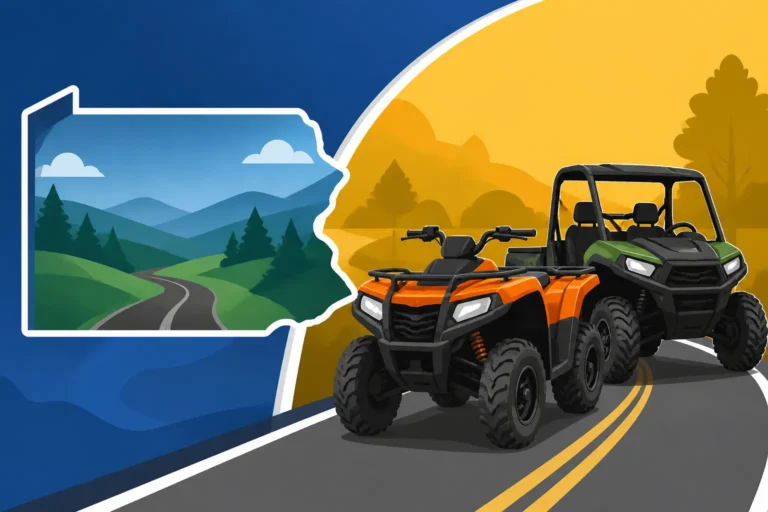
Here's the crucial detail: in Pennsylvania, if you are 16 years of age or older, you are permitted to operate an ATV on a designated street or highway. This is a specific provision within the state's ATV laws that acknowledges a certain level of maturity and responsibility that comes with being 16. However, it's not a free pass. This permission is only for those roads that have been officially designated as open to ATVs by the local municipality. You cannot simply decide to take your quad down Main Street or across a state route just because you're 16.
This rule is a recognition that by 16, a rider is old enough to potentially hold a driver's license for a car, indicating a higher level of road awareness and understanding of traffic laws. It allows a responsible 16-year-old to access connector roads or small stretches of approved public roadways independently, without requiring a supervising adult to be on the same ATV or even directly beside them. This makes it a significant milestone for young riders in Pennsylvania. Understanding [Pennsylvania's Sixteen-Year-Old Road Rule] is fundamental for any rider in this age bracket.
When Supervision Isn't Required for a 16-Year-Old
One of the key differences for a 16-year-old on designated roads, compared to younger riders on trails or even when crossing certain roads, is the absence of a mandatory supervision requirement. For riders aged 8 to 15, strict supervision rules apply when operating an ATV, especially on state-managed trails, typically requiring an adult 18 or older to be present and within sight. However, once a rider hits 16, on those designated local roads, the state's statutes generally do not mandate that a supervising adult be accompanying them.
This doesn't mean a 16-year-old can ride carelessly. They are still bound by all traffic laws applicable to motor vehicles on that designated road, as well as specific ATV regulations. This includes helmet laws, insurance requirements, and strict adherence to speed limits. The intent is to allow reasonable access for responsible, older teenage riders on approved routes, recognizing their increased capacity for independent decision-making. While the state allows it, parents should always make their own judgments about their child's readiness for unsupervised riding, even on designated roads. If you're comparing it to younger riders, you might want to look into [Pennsylvania Rules for a Fifteen-Year-Old Rider] to see the distinct differences in legal requirements.
Comparing Age Rules for Trail vs. Road Access
It's helpful to distinguish between age requirements for riding on trails and those for accessing designated roads, as they are not always the same and often cause confusion. On state forest ATV trails, for instance, a child must be at least 8 years old to operate an ATV, with strict engine displacement limits (70cc or less for ages 8-9) and mandatory supervision for all riders under 16. A safety certificate is also required for anyone under 16 riding on public lands. These rules are designed with off-road safety in mind, focusing on controlled environments.
When it comes to designated public roads, the minimum age to operate an ATV independently jumps to 16. This higher age threshold for road use reflects the increased risks and complexities of sharing thoroughfares with other vehicles. While a 15-year-old might be a seasoned trail rider, they are still legally restricted from operating an ATV on those limited designated roads. This distinction is crucial for parents and young riders to understand, as misinterpreting it could lead to citations. It's not just about skill; it's about legal age minimums tied to specific types of riding environments. For the general minimum age, refer to [Pennsylvania Minimum Age to Ride an ATV], but remember that road rules have their own specific age.
Identifying Open Roads and Rider Responsibilities
Okay, so a 16-year-old can ride designated roads. But how do you actually find these elusive routes, and what does that mean for their responsibilities? It's not enough to know the age limit; you also need to know the practicalities of where and how to ride legally and safely.
Spotting the Green Signs and Checking Local Ordinances
The absolute best way to identify roads that are open to ATVs in Pennsylvania is to look for specific signage. Local municipalities that have designated roads for ATV use are required to post clear signs indicating that ATVs are permitted. These signs are typically green and will explicitly state "ATV Use Permitted" or similar language. If you don't see one of these signs, assume the road is closed to ATVs. This is not a "ride until told otherwise" situation; it's a "look for explicit permission" scenario. [The Green Sign on a Pennsylvania Township Road] is your visual cue.
Beyond the signs, the most reliable method is to check with the local township or borough office directly. Many municipalities that permit ATV use on certain roads will have their ordinances publicly available, often on their website. Some, like Windber Borough, even publish lists of closed roads, which by deduction, tells you what's open. Don't rely on word-of-mouth or what you think might be open. Taking the time to verify with the local authorities can save a lot of headaches, fines, and potential dangers. It's always better to be certain than to guess when it comes to riding legally.
Rules of the Road for Young Riders
Even on designated roads, a 16-year-old rider is not exempt from crucial safety and legal requirements. In fact, due to the increased risk of road riding, these rules become even more vital. First and foremost, a helmet is absolutely mandatory for all ATV operators and passengers in Pennsylvania, regardless of age, when riding off their own private property. This isn't just a recommendation; it's the law, and it's enforced for good reason. A good, DOT-approved helmet can be a lifesaver. [Pennsylvania Helmet Law for ATV Riders] details this requirement.
Secondly, proof of liability insurance is required whenever an ATV is operated off the owner's private property. This means if a 16-year-old is riding on a designated public road, they must carry proof of insurance. This insurance protects against damages or injuries that could be caused to others. Without it, the financial consequences of an accident can be devastating. Beyond these, standard traffic laws apply: stopping at stop signs, obeying speed limits, yielding to other vehicles, and riding on the far right side of the road. Having proper lighting – headlights, taillights, and brake lights – is also essential, especially for dusk or dawn riding, and perhaps adding accessories like turn signals or mirrors from a brand like SuperATV can enhance visibility and safety, even if not strictly mandated by state law for all designated roads. Understanding [Pennsylvania ATV Insurance Requirement] is critical for legal operation.
Local Nuances and Resources for Road Riding
Pennsylvania's decentralized approach to ATV road designation means that rules can vary significantly from one municipality to another. What's allowed in Windber Borough might be strictly prohibited just a few miles away in an adjacent township. This patchwork can be frustrating, but it's the reality of riding in the state. Some municipalities, like Windber, have proactive programs for mixed-use roads, even requiring permits or publishing clear maps. For a local example, you can check out [Windber Borough's Mixed Use Program].
It's up to the rider (and their parents) to research the specific rules of any township or borough where they intend to ride on designated roads. This might involve looking up township codes online, making a phone call, or even visiting the municipal building. There's no statewide list of every designated road, so local inquiry is your best friend. Also, consider equipping your ATV with appropriate accessories for road use. While a full street-legal conversion isn't possible, adding mirrors, louder horns, or even a winch from companies like SuperATV can improve safety and utility when traversing connector routes or challenging terrain to reach trails. Staying informed and equipped is crucial for a safe and legal ride.
What a 16-Year-Old Cannot Do on PA Roads
While 16 brings a new level of freedom on designated roads, it's absolutely vital to understand the persistent restrictions. Misconceptions here can lead to serious legal and safety issues. The "designated road" exception is very narrow, and the vast majority of Pennsylvania's road network remains off-limits.
State Routes and Undesignated Township Roads Remain Off-Limits
Even for a 16-year-old, the vast majority of roads in Pennsylvania are still completely off-limits to ATVs. This includes all state routes (those numbered routes like Route 322 or Route 80), federal highways, and any township or borough road that has not been specifically designated and signed as open for ATV use. You cannot simply cross a state highway at any point you choose; there are specific rules for [Crossing a Highway on an ATV in Pennsylvania] that often involve a 90-degree crossing at an intersection after coming to a complete stop and yielding to traffic.
The fact that a road looks quiet or seems deserted doesn't make it legal for ATV use. This is a common mistake that riders of all ages make. Unless you see that specific green "ATV Use Permitted" sign, or have confirmed through local ordinances that the road is open, you cannot ride your ATV there. This restriction protects both ATV riders from the dangers of high-speed vehicle traffic and other motorists from unexpected encounters with off-road machines. Always assume a road is closed unless you have explicit, documented permission to ride it.
No Conversion Path for "Street Legal" ATVs
It's a common dream for many ATV owners to make their machine "street legal" so they can ride it anywhere. Unfortunately, in Pennsylvania, this dream remains largely unfulfilled. There is effectively [Why There Is No Conversion Path in Pennsylvania] for ATVs to become fully street-legal like motorcycles or cars. Adding turn signals, a horn, and mirrors, or even changing out your aggressive tires, does not change the fundamental classification of your ATV in the eyes of PennDOT.
This means that even a 16-year-old, no matter how well-equipped their SuperATV-accessorized quad might be, cannot expect to ride it on typical urban or suburban streets. The designated road allowance is a very specific, limited exception to the general prohibition, not a pathway to universal street legality. This distinction is critical for managing expectations and preventing serious legal violations. Attempting to pass an ATV off as a street-legal vehicle will almost certainly lead to fines and potentially impoundment.
The Importance of Knowing Before You Go
Ultimately, the responsibility for knowing where a 16-year-old can legally ride an ATV on a public road in Pennsylvania rests squarely with the rider and their guardians. Ignorance of the law is never an excuse, and enforcement officers are unlikely to be lenient, especially when public safety is concerned. Riding where prohibited can lead to significant penalties, starting with fines that can quickly add up. [Riding Unregistered Brings an Automatic $300 Fine] in Pennsylvania, and riding an unregistered or unpermitted ATV on a closed road will certainly compound your problems.
Before heading out, especially if you're exploring a new area, always consult local township or borough websites, look for official signage, and confirm the legality of your route. Planning your ride, knowing your route, and understanding all local ordinances are not just good practices; they are essential for staying safe and legal. Don't risk a fun day turning into a costly, stressful encounter with law enforcement. Be a responsible rider, do your homework, and enjoy the limited, but valuable, road access that Pennsylvania allows.
| Rule Aspect | General State Trails (Ages 8-15) | Designated Local Roads (Age 16+) | Undesignated Public Roads (Any Age) |
|---|---|---|---|
| Minimum Age | 8 (with engine restrictions) | 16 | Prohibited |
| Safety Certificate Required | Yes (for under 16) | Yes (if under 16, though 16+ often take voluntary courses for knowledge) | Prohibited |
| Supervision Required | Yes (for under 16) | No (for 16+, on designated roads only) | Prohibited |
| Helmet Required | Yes | Yes | Prohibited |
| Insurance Required | Yes (liability) | Yes (liability) | Prohibited |
| Legal Status | Allowed on DCNR-managed trails | Allowed only on locally designated roads | Strictly Prohibited |
| Signage | Trailhead signs, DCNR maps | Green "ATV Use Permitted" signs | No signage, assume closed |
| Typical Purpose | Recreation, off-road exploration | Connector routes, local access | Not for ATV use |
| Enforcement | DCNR Rangers, local police | Local police, State Police | Local police, State Police |
Disclaimer
This article is for general informational purposes only and does not constitute professional advice. Laws, prices and regulations vary by location and change over time. Consult a qualified professional for guidance on your specific situation.