Insurance a Club Requires
Riding ATVs and UTVs in Pennsylvania is an incredible experience, offering hundreds of miles of diverse trails and scenic routes. However, many riders quickly learn that simply registering their machine with DCNR and carrying basic state-mandated insurance isn't always enough, especially if they plan to join an ATV club or participate in organized events. The confusion around what kind of insurance a club actually requires can be a real headache, leaving riders wondering if their current policy makes the cut. This guide will clarify why Pennsylvania ATV clubs have specific insurance demands and what you need to know to ride confidently with your chosen group.
Why Pennsylvania ATV Clubs Insist on Specific Coverage
Joining an ATV club in Pennsylvania opens up a world of organized rides, trail maintenance days, and social events, but it also comes with responsibilities, not least of which is ensuring adequate insurance coverage. Clubs aren't just being difficult; they have very real reasons for setting these requirements. It boils down to safeguarding their operations and maintaining their relationships with those who allow them to ride.
Protecting the Organization and Its Events
ATV clubs in Pennsylvania, whether large regional organizations or smaller, local groups, often take on significant liabilities simply by existing and operating. They organize rides, sometimes manage sections of trails, and frequently host social gatherings or fundraising events. Each of these activities carries inherent risks. If an accident were to occur during a club-sponsored ride, or on a trail maintained by the club, the organization itself could be held liable. Without proper insurance, a single serious incident, such as a major injury or significant property damage, could lead to costly lawsuits that could bankrupt a club, especially those run by volunteers and membership dues.
Imagine a club that hosts its annual fall foliage poker run. Participants are excitedly navigating marked trails, enjoying the crisp autumn air. Suddenly, one rider, perhaps distracted by the stunning scenery, misjudges a turn on a steep descent and crashes hard, sustaining a broken leg and a concussion. While the rider might have their own medical insurance, if they or their family believe the club's trail marking was unclear, or a known hazard (like a washed-out section) wasn't properly addressed or warned against, they might pursue legal action against the club. This is precisely where club-specific insurance requirements come into play, providing a crucial layer of protection for the organization, its board members, and its volunteers from potential financial ruin.
Satisfying Landowner and Lease Demands
One of the biggest reasons ATV clubs in Pennsylvania have strict insurance rules is due to the nature of land access. A significant portion of the trails and riding areas used by clubs are not owned outright by the club itself. Instead, they are often leased from private landowners, timber companies, state or municipal entities, or even private land trusts. These landowners, understandably, are acutely aware of the risks involved in allowing off-road vehicles on their property.
To mitigate their own exposure to liability, these landowners almost universally require the ATV club to carry substantial liability insurance. Furthermore, they often demand to be named as "additional insureds" on the club's policy. This means that if an incident occurs on their land, the landowner also receives protection under the club's insurance. Without meeting these stringent insurance demands, a club simply cannot secure or maintain access to these vital riding areas. This is a non-negotiable aspect of responsible club operation and a cornerstone of maintaining good relationships with those who provide the land we all love to ride. Consider the "Green Ridge Riders" club, which proudly maintains a network of trails across a large tract leased from a local logging company. The logging company, savvy about potential risks, mandates that the club carry a minimum of $1 million in general liability coverage, explicitly naming the logging company on the policy. If the Green Ridge Riders couldn't meet this, their lease agreement would be terminated, and a huge chunk of their riding territory would be lost. You can learn more about securing these agreements in [Club Trails on Leased Ground].
Key Insurance Coverages Clubs Look For in Pennsylvania
When you're looking to join an ATV club, don't assume your everyday car insurance policy, or even a basic ATV policy, will automatically satisfy their requirements. Clubs often scrutinize specific types of coverage to ensure comprehensive protection for all involved. Understanding these key areas will help you choose or adjust your policy accordingly.
Robust Liability Coverage for Third-Party Protection
This is, without a doubt, the most critical type of insurance that clubs will require. Liability coverage is designed to protect you financially if you are found legally responsible for causing bodily injury to another person or damage to someone else's property while operating your ATV or UTV. When riding in a group or on shared trails, the potential for accidents involving other riders, bystanders, or private property is always present. Clubs want to ensure that if you cause such an incident, your insurance can cover the costs.
While Pennsylvania does have an [Pennsylvania ATV Insurance Requirement] for riding off your own land, the DCNR does not specify minimum coverage amounts. This means clubs are free to set their own, often higher, standards. Many clubs will look for minimums like $100,000 for bodily injury per person, $300,000 for bodily injury per accident, and $50,000 for property damage. However, it's not uncommon for clubs, especially those with extensive leased lands or high-traffic events, to push for even higher limits, sometimes up to a $500,000 or $1 million combined single limit. This higher coverage helps protect not only the injured party but also significantly reduces the risk for the club if they are inadvertently drawn into a lawsuit, perhaps accused of negligence alongside you. Imagine you're riding with your club, and your UTV, perhaps equipped with some robust SuperATV protection for the trails, veers slightly, colliding with another club member's quad. The collision causes significant damage to their machine and minor injuries to the other rider. Your liability coverage would be the primary payer for their medical bills and the repairs to their ATV, keeping both you and the club out of a potentially devastating financial situation. For more details on what the state requires, see [Pennsylvania ATV Insurance Minimum Coverage].
Understanding Medical Payments and Personal Injury Protection (PIP)
While liability insurance is all about protecting the other person from your actions, medical payments (MedPay) or Personal Injury Protection (PIP) coverage on your own policy is about protecting you. These coverages can help pay for your own medical expenses if you're injured in an ATV accident, regardless of who was at fault. While not always explicitly required by clubs, many will strongly recommend that their members carry some form of this coverage. This recommendation stems from a realistic understanding of the high costs associated with emergency medical care, ambulance rides, hospital stays, and rehabilitation following an accident.
Even if you're an incredibly cautious rider, accidents can happen where no one else is to blame, or where the other party is uninsured. In such a scenario, your own health insurance would kick in, but MedPay or PIP can provide a valuable supplement, often covering deductibles or co-pays, or even acting as primary coverage for immediate, accident-related expenses. For example, you're riding a challenging section of trail on a solo reconnaissance mission for your club. You hit an unexpected rut and are thrown from your machine, breaking your collarbone. Even though no one else was involved, your medical payments coverage can help with your emergency room visit and physical therapy costs, easing the financial burden on you. This is a crucial aspect to consider when you are [Finding an Insurance Policy That Covers Off-Road Use].
Proof of Insurance: Your Wallet Card is Your Ticket
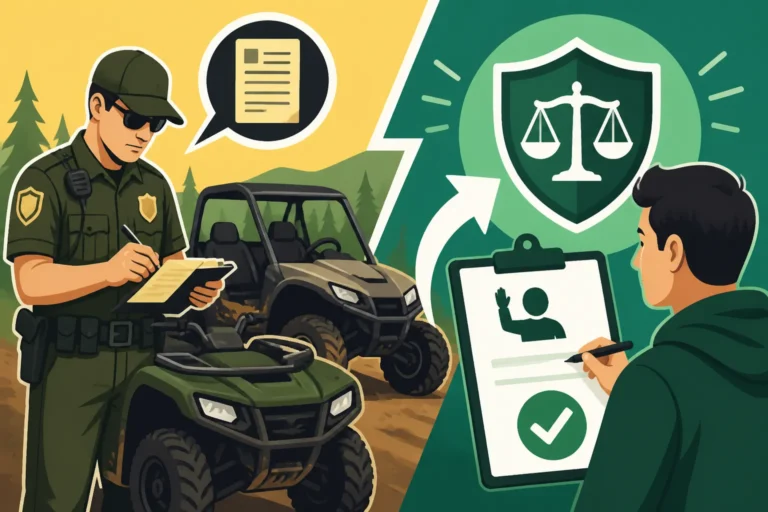
Having the right insurance is only half the battle; you also need to be able to prove it when asked. Pennsylvania ATV clubs will almost always require you to show proof of current, valid insurance at various times. This might be when you initially join the club, when you renew your annual membership, or specifically before participating in certain organized rides, events, or trail work days. The most common and accepted forms of proof are an insurance ID card issued by your provider or a copy of your policy's declarations page.
It's absolutely critical to always carry this proof with you whenever you're riding, especially on club-managed trails or during events. A small, waterproof pouch carried with your DCNR registration card and other essentials is a smart choice. Club officials, ride leaders, or even trail wardens from partner organizations (like the DCNR) might ask to see it. If you can't produce valid proof of insurance that meets the club's specific requirements, you could be denied participation, even if you've traveled a long distance to attend an event. Imagine arriving at the staging area for a charity ride hosted by the "Pennsylvania Trail Blazers" club. Before you can even unload your quad from your trailer, a friendly but firm volunteer asks to see your club membership card and your proof of ATV insurance. If you can't produce it, you might find yourself sitting on the sidelines, regardless of how far you drove to get there. For more tips, check out [Carrying Proof of Insurance in Pennsylvania].
What to Consider When Insuring Your ATV for Club Riding in PA
Choosing the right ATV insurance policy when you're a club member in Pennsylvania can feel a bit like navigating a maze. It’s not just about finding the cheapest option, but the one that truly covers your specific riding habits and meets your club's expectations. Proactive investigation and clear communication are your best allies here.
Reviewing Your Policy's Specifics and Exclusions
It's a mistake to assume that all ATV insurance policies are created equal, or that your existing policy automatically covers everything you do with your club. Insurance policies are contracts, and they come with specific terms, conditions, and, crucially, exclusions. Some common exclusions might include competitive riding, racing, or even just riding on private land that isn't your own (unless you have specific permission or the club has an agreement). If your club participates in organized events like poker runs, rallies, or informal competitions, you must clarify if your policy covers these activities. What one insurer considers a "fun group ride," another might categorize as a "competitive event" that falls under an exclusion.
Furthermore, modifications to your machine can impact your coverage. Performance enhancements, lift kits, larger tires, or significant accessories from reputable brands like SuperATV might require specific disclosures to your insurer. Some policies may not cover aftermarket parts unless they are explicitly added as an endorsement. For instance, your club decides to host an informal "King of the Hill" challenge on a closed course. You've invested in a robust SuperATV winch and heavy-duty axles to tackle extreme terrain. If your policy has a racing or competitive event exclusion, and you're involved in an accident during this event, your claim could be denied entirely. Always be transparent with your insurer about how you use your machine and any significant modifications you’ve made. To ensure you're asking the right questions, read [What an Insurer Asks About Your Quad].
Communicating with Your Club and Your Insurer
The most effective strategy for ensuring you have adequate insurance for club riding is direct and clear communication, both with your club and your insurance provider. Before you even submit your club membership application or participate in your first group ride, reach out to the club's leadership or membership coordinator. Ask them specifically about their insurance requirements. Get the details in writing if possible – including minimum liability limits, whether medical payments are recommended, and how they prefer proof of insurance to be presented.
Once you have this information, contact your insurance agent. Don't just tell them you "need ATV insurance." Explain precisely how and where you'll be riding, emphasizing your club membership and any specific events or types of terrain you'll encounter. Share the club's stated requirements directly with your agent. They can then review your current policy, identify any gaps, and recommend necessary endorsements or additional coverages to ensure you're fully compliant. This proactive approach prevents unpleasant surprises down the road. For instance, you're thinking about joining the "Allegheny Off-Road Enthusiasts." You call their membership coordinator, who tells you they require $250,000/$500,000 liability and strongly recommend medical payments coverage. You then call your insurance agent, share this information, and confirm your existing policy meets or exceeds these requirements, or you adjust it accordingly. This due diligence is also important for [Organized Rides and Insurance] and understanding what [Insurance the State Requires].
The Cost-Benefit of Adequate Club-Compliant Coverage
It's natural to want to save money wherever you can, and insurance premiums are often seen as an area to trim costs. However, when it comes to ATV insurance for club riding in Pennsylvania, viewing adequate coverage as an investment rather than an expense is crucial. While adding higher liability limits or supplementary coverages like MedPay might result in a slightly higher annual premium, the potential financial repercussions of an uncovered or underinsured incident far outweigh that marginal cost. Imagine facing a lawsuit for significant bodily injury or property damage, with legal fees, settlements, or medical bills that could easily run into tens or even hundreds of thousands of dollars. The peace of mind that comes with knowing you're properly protected, and that you're meeting your club's requirements, is invaluable.
Many ATV clubs in Pennsylvania also have established relationships with specific insurance providers or can recommend agents who specialize in powersports and off-road vehicles. These insurers often understand the unique needs of ATV enthusiasts and clubs, offering policies that are better tailored to your activities. Asking your club for recommendations can be a great starting point for finding comprehensive and compliant coverage. For example, you find a policy that meets your club's requirements for an extra $5 a month. That's a small price compared to facing a $50,000 lawsuit for property damage if your ATV accidentally damages a landowner's fence during a club cleanup day. It's not just about being a responsible rider; it's about being a responsible club member. When considering what [What an ATV Costs to Own in Pennsylvania] annually, insurance is a critical, unavoidable line item.
Navigating Specific Situations and Avoiding Fines
Riding with an ATV club in Pennsylvania means adhering to a set of rules that often go beyond basic state mandates. Understanding these nuances, especially concerning insurance, can prevent headaches, fines, and even losing your club membership or trail access.
Understanding When State vs. Club Rules Apply
A common misconception among Pennsylvania riders is that if they meet the state's basic liability insurance requirement for riding off their own private property, they're covered for every situation. While the state's mandate for "proof of financial responsibility" is indeed a baseline for legally operating on public lands like state forest trails, it often doesn't specify minimum dollar amounts, leaving a crucial gap. Clubs, on the other hand, frequently impose their own, more stringent insurance requirements, especially when operating on leased lands or hosting organized events.
Always remember: if a club has higher insurance requirements than the state minimum, the club's rules take precedence for their specific activities and properties. You must meet the more stringent of the two. Failing to do so can put you, other riders, and the club at significant risk. Consider this: You have the minimum state-mandated liability insurance, which satisfies DCNR requirements for riding on a state forest trail. You're completely fine there. But when you attend a private club's event on their leased land, their rules explicitly state a requirement for $500,000 in liability, which your basic state-compliant policy doesn't cover. In this scenario, you could be turned away from the event, or even face internal club penalties for non-compliance with their rules. This distinction is vital to avoid [Pennsylvania Fines for No ATV Insurance] that can apply in certain contexts.
Special Considerations for Rental or Borrowed Machines
The allure of trying out a friend's upgraded UTV or renting a powerful machine for a weekend club event is understandable. However, if you plan to ride a machine that isn't registered and insured in your name, the insurance situation becomes significantly more complex, and you must clarify it before you hit the trails with your club. Your personal ATV insurance policy typically covers your machine, and while some policies might offer limited "non-owned vehicle" coverage, it's rarely sufficient for club-level requirements.
If you're borrowing a machine, confirm with the owner that their policy extends to you as an operator, and that it meets your club's specific liability minimums. Get it in writing if possible. For rentals, examine the rental agreement carefully. Many rental outfits offer their own insurance waivers or supplemental policies, but these might only cover damage to the rental machine itself, not your liability to others. The club will still expect the machine being ridden, regardless of its owner, to be adequately insured for their events and trails. Imagine you borrow a friend's new side-by-side, which he recently upgraded with some cool SuperATV accessories. He assures you "it's insured." However, his policy might only cover him as the primary operator, or have different liability limits than what your club requires. When the club asks for proof, you discover there's a gap, potentially putting both you and the club at risk. Always confirm directly with the insurance holder or rental agency. This is especially important for [Renting a Machine as a Visitor].
Consequences of Non-Compliance: Club Penalties and Trail Access
Ignoring or failing to meet your ATV club's insurance requirements can have a range of consequences, from minor inconveniences to significant financial and membership repercussions. At the very least, you might be denied participation in a club ride, event, or trail maintenance day. This can be incredibly frustrating if you've driven hours to a trailhead only to be turned away. More seriously, repeated non-compliance or a significant incident while uninsured could lead to the suspension or even outright revocation of your club membership. Clubs have a responsibility to their members, their landowners, and their own organization to maintain a safe and compliant environment.
Beyond club-specific penalties, there's the looming specter of personal financial liability. If an accident occurs and your insurance falls short of the club's requirements, or if you're entirely uninsured when you should have been, you could face immense personal financial responsibility for medical bills, property damage, and legal fees. Furthermore, the club itself could face increased scrutiny, reputational damage, or even legal action for allowing an uninsured rider to participate in their activities. This is why adherence to club rules, particularly around insurance, is paramount. Consider the "Susquehanna Mud Slingers" club, which has a strict "no insurance, no ride" policy. You show up for a trail maintenance day without valid proof. Even though it's not a competitive event, the club still enforces its rule, and you're asked to leave. It's not just about liability on the trail; it's about adherence to club rules and maintaining their vital agreements with landowners, as discussed in [What a Club Membership Opens Private Trails] and for [Pennsylvania Rules for a Club Poker Run].
Here's a quick comparison of what the state generally requires versus what many Pennsylvania clubs will look for:
| Coverage Type | Pennsylvania State Requirement (Off-Own Land) | Typical Club Recommendation/Requirement | What it Primarily Covers |
|---|---|---|---|
| Bodily Injury | Yes (no minimums specified by DCNR) | $100,000 / $300,000 or higher | Injuries you cause to other people |
| Property Damage | Yes (no minimums specified by DCNR) | $50,000 or higher | Damage you cause to someone else's property |
| Medical Payments | Not state-mandated | Highly Recommended | Your own medical expenses for injuries, regardless of fault |
| Uninsured/Underinsured | Not state-mandated | Recommended | Your costs if hit by a rider with no or insufficient insurance |
| Comprehensive | Not state-mandated | Recommended | Damage to your ATV from non-collision events (theft, fire, vandalism) |
| Collision | Not state-mandated | Recommended | Damage to your ATV from a collision with another vehicle or object |
Disclaimer
This article is for general informational purposes only and does not constitute professional advice. Laws, prices and regulations vary by location and change over time. Consult a qualified professional for guidance on your specific situation.