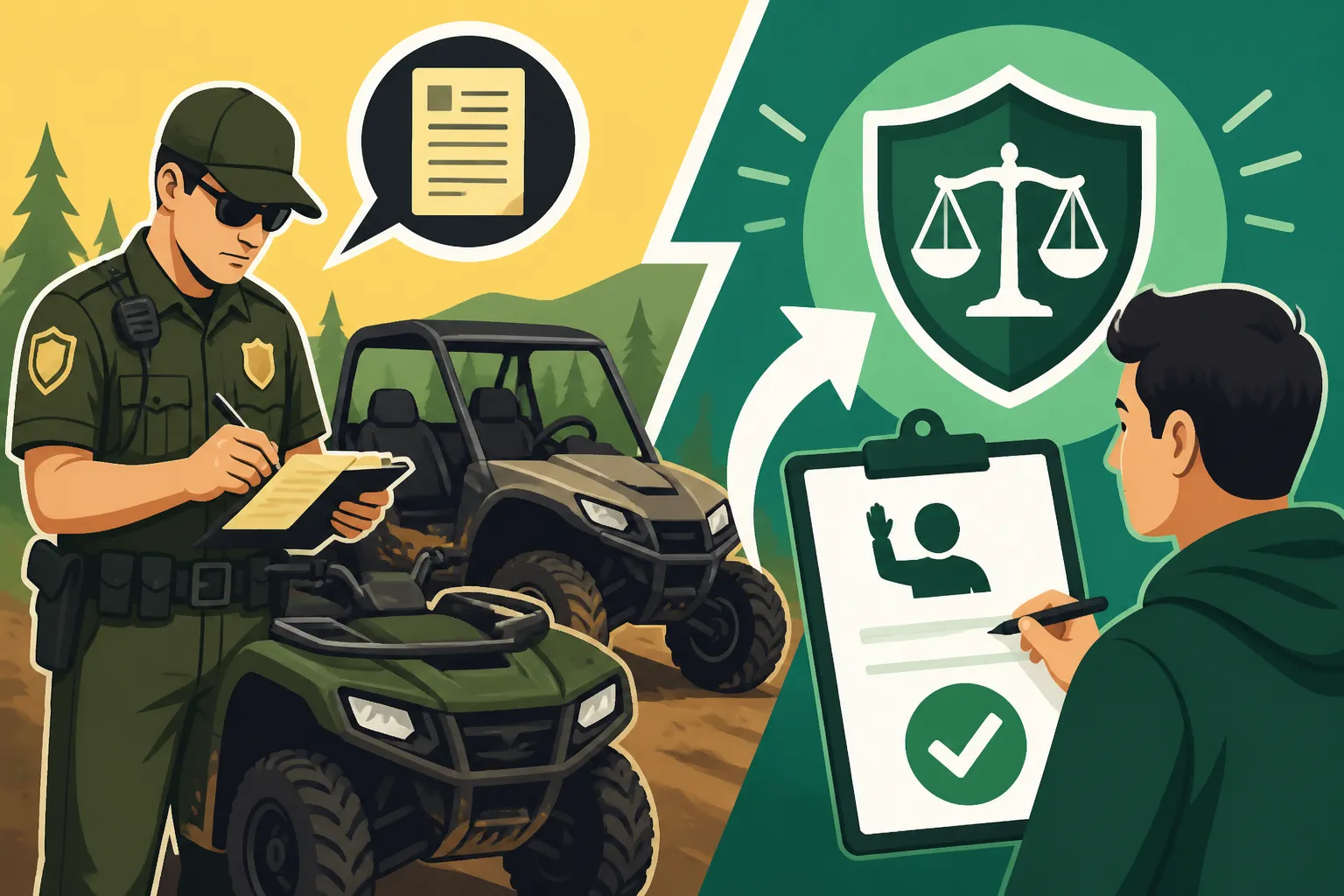
Appealing a DCNR Citation
It’s a moment no ATV or UTV rider wants to experience: a DCNR ranger hands you a citation while you’re out enjoying the trails of Pennsylvania. The heart sinks, confusion sets in, and you might even feel a surge of frustration, wondering if it's truly fair or if there's anything you can do. This guide is here to help you understand the Pennsylvania DCNR citation process, evaluate your options, and walk you through the steps of appealing a DCNR ticket, should you choose to fight it.
The Initial Shock: Understanding Your DCNR Citation
Getting pulled over or approached by a DCNR ranger and issued a citation can be jarring, especially when you thought you were doing everything right. It's easy to feel singled out, confused about the specific rule you might have broken, or simply overwhelmed by the thought of a fine or other penalties. Understanding what this piece of paper actually means is the first step in deciding how to proceed.
What Exactly Is a DCNR Citation?
In Pennsylvania, the Department of Conservation and Natural Resources (DCNR) is responsible for managing state parks and forests, which includes overseeing ATV and snowmobile recreation. When a DCNR ranger issues a citation, it's essentially a formal charge alleging a violation of the Pennsylvania Vehicle Code (specifically Chapter 77 for ATVs and snowmobiles) or DCNR's own regulations. Unlike a simple warning, a citation carries legal weight and typically comes with a fine, potential court costs, and in some cases, other consequences. It’s not just a suggestion; it’s an order to address an alleged infraction.
This isn't like a parking ticket you just toss in the glove box. A DCNR citation requires a response, either by paying the fine, if you admit guilt, or by formally contesting it. Failing to respond can lead to more serious problems, including escalating fines, suspension of your riding privileges, or even a warrant for your arrest in extreme cases. That initial piece of paper might feel like a minor inconvenience, but it's a legal document that demands your attention and a timely decision.
Common Violations That Lead to a Ticket
Riders can receive DCNR citations for a wide range of infractions, some more common than others. Often, these relate directly to safety, environmental protection, or the proper use of state-managed lands. One of the most frequent reasons is [Riding Unregistered Brings an Automatic $300 Fine]. If your ATV or UTV isn't properly registered with the DCNR, or if you're riding with [Riding With an Expired Sticker], you're likely to get a citation. This is a big one, as rangers frequently check for current registration stickers and plates at trailheads and during patrols.
Another common issue is where you choose to ride. [Riding on Game Lands and What Happens] can often lead to a citation, as most State Game Lands are off-limits to ATVs, except for specific administrative purposes or designated access routes for disabled hunters. Similarly, [Riding a Closed Trail] is a quick way to earn a ticket. Trail closures might be seasonal (e.g., during mud season), due to maintenance, or for wildlife protection, and ignoring those posted signs is a clear violation. Other infractions can include not having the required safety equipment, speeding, riding recklessly, or operating an ATV while impaired. DCNR rangers are trained to spot these things, and they're out there to enforce the rules that keep everyone safe and preserve the trails for future use.
The Immediate Aftermath of Being Cited
The moment you receive a DCNR citation, a mix of emotions can flood in. There's the initial shock, perhaps a sense of unfairness, and then the practical questions start to surface. How much is this going to cost? What do I do next? It's easy to feel flustered, but it's crucial to stay calm and collect your thoughts. The ranger will typically explain the violation, but in the heat of the moment, it can be hard to absorb all the details.
It's vital to read the citation carefully as soon as you can. It will state the specific violation, the date and location, and usually the instructions for how to respond. Often, it will provide a deadline for payment or for requesting a hearing. Missing this deadline can lead to additional penalties, so don't let the citation sit on your counter indefinitely. Even if you feel the citation was unjust, avoid arguing with the ranger at the scene, as this rarely helps and can sometimes escalate the situation. Instead, focus on gathering any immediate details or observations that might be relevant to an appeal, such as where you were, what you were doing, and who else was present. Take a few deep breaths and prepare to tackle the issue methodically.
To Fight or Not to Fight: Deciding on an Appeal
Once the initial sting of the citation wears off, you're faced with a decision: do you pay the fine and put it behind you, or do you stand your ground and appeal? This isn't always an easy choice, as appealing involves time, effort, and potentially additional costs. It’s important to objectively assess your situation and weigh the pros and cons before committing to either path.
Scrutinizing the Details: Your Citation as Evidence
Before you decide to appeal, treat your citation like a puzzle to be solved. Every detail on that piece of paper matters. First, verify the accuracy of all the information: your name, address, the make and model of your ATV, and especially the date, time, and specific location of the alleged incident. Errors, though rare, can sometimes be grounds for dismissal, though this is not something to rely on heavily. More importantly, identify the specific section of the Pennsylvania Vehicle Code or DCNR regulation cited. Knowing the exact rule you're accused of breaking is paramount.
Next, consider the ranger's narrative, if one is provided. Does it align with your memory of events? Were there any witnesses, or physical evidence (like trail markers, a gate, or even tire tracks) that could support or refute the citation? Think back to [What a Ranger Checks at a Trailhead] – were you actually compliant with those checks? For instance, if you were cited for an unregistered machine, but you know you had a current registration card and plate, that's a strong point in your favor. If you were cited for riding in a closed area, but the signs were obscured or missing, that could be part of your defense. The more precisely you understand the accusation, the better you can formulate a response.
Building Your Defense: What You'll Need
If after scrutinizing the citation, you believe you have a legitimate case, it's time to start building your defense. This involves gathering evidence, identifying witnesses, and understanding the legal implications. Your evidence might include:
- Documentation: Your valid ATV registration, proof of insurance ([Carrying Proof of Insurance in Pennsylvania]), your DCNR trail permit (if applicable), or your ATV safety certificate ([Pennsylvania ATV Safety Certificate Requirements]). Always keep these handy in a waterproof holder, as recommended in [Keeping Paperwork Dry on a Wet Trail].
- Photographs: Pictures of the location, especially if you believe signage was unclear, trails were improperly marked, or conditions were unusual. Photos of your machine (e.g., showing a clearly mounted plate or compliant equipment like a spark arrester as required by [Pennsylvania Muffler Requirements for ATVs]) can be powerful.
- Witness Statements: If you were riding with others, their testimony can be crucial. Get their contact information and a brief written statement of what they observed.
- Personal Notes: Write down everything you remember about the incident as soon as possible. Details can fade quickly, so immediate recall is best.
Understanding what constitutes a strong defense is key. A simple "I didn't know" or "everyone else was doing it" rarely holds up in court. You'll need to demonstrate that you were compliant, that the citation was issued in error, or that there were mitigating circumstances that legally excuse your actions. This might mean proving that you were indeed registered when cited for [Being Cited for No Registration], or that you had all the required permits, despite the ranger's assertion otherwise.
Weighing the Costs and Benefits of an Appeal
Deciding whether to appeal isn't just about whether you can win; it's also about whether it's worth the effort. An appeal involves your time, potential legal fees (if you hire an attorney), court costs, and the stress of a formal hearing. If the fine is relatively small, say for a minor equipment violation, it might be more practical to simply pay it and move on. However, for more substantial fines, like the automatic $300 for an unregistered machine or penalties for [Pennsylvania Fines for Riding Illegally], an appeal might be more compelling.
Consider the potential outcomes. If you win, the citation is dismissed, and you pay nothing (aside from any legal fees you incurred). If you lose, you'll still have to pay the original fine, plus potentially additional court costs, which can add to the [Cost of Prosecution on Top of a Fine]. There might also be points against your ATV registration, although DCNR violations typically don't affect your highway driving record. Think about the principle of the matter, too. If you truly believe you were wrongly accused and have a strong case, fighting for it can be satisfying, regardless of the financial cost. If, however, your defense is weak or based on a technicality that might not sway a judge, it might be better to accept the consequences and focus on preventing future issues.
Your Day in Court: The Pennsylvania DCNR Appeal Process
If you've decided to appeal, understanding the process is critical. This isn't quite like a major criminal trial, but it is a formal legal proceeding where you'll need to present your case clearly and respectfully. Being prepared and knowing what to expect can significantly reduce stress and improve your chances of a favorable outcome.
Starting the Appeal: Initial Steps and Deadlines
The first and most crucial step is to formally notify the DCNR or the local Magisterial District Judge's office that you intend to contest the citation. Your citation will have clear instructions on how to do this, including specific deadlines. Generally, you'll have a certain number of days (often around 10-30 days) from the date the citation was issued to either pay the fine or request a hearing. Do not miss this deadline! Missing it can result in a default judgment against you, meaning you lose your right to appeal and are automatically found guilty, often incurring higher penalties.
You'll typically send a letter or fill out a form indicating your plea of "not guilty" and requesting a hearing. Keep a copy of everything you send, and if mailing, consider using certified mail with a return receipt so you have proof of delivery. Once your request is received, the court will schedule a hearing date and send you a notice. This notice will tell you when and where to appear. During this time, continue gathering your evidence and preparing your case, but make sure you meet the initial notification requirements first and foremost.
Preparing for Your Hearing
Preparation is key to any successful appeal. Once you have your hearing date, you should dedicate time to organizing all your evidence. This means physical documents, photographs, and detailed notes. If you have witnesses, ensure they are available and willing to testify on your behalf. It's a good idea to meet with them beforehand to review what they saw and how they might present it. Practice explaining your side of the story clearly and concisely, focusing on the facts.
You might also consider visiting the courthouse beforehand, if possible, to familiarize yourself with the layout and courtroom procedures. This can help reduce anxiety on the day of your hearing. While it's not always necessary for a minor DCNR citation, you have the right to seek legal counsel. An attorney experienced in traffic or administrative law can offer invaluable advice, help you prepare your case, and even represent you in court. For some, the peace of mind and expertise an attorney brings is well worth the investment, especially if the consequences of the citation are significant or if the case is complex. Even if you don't hire a lawyer, spending some time researching the relevant laws and court procedures can empower you. Products from companies like SuperATV, known for compliance accessories, aren't directly part of your appeal, but if the citation was for, say, insufficient lighting, being able to say you had compliant aftermarket lights could be a part of your defense.
What to Expect During the Hearing
On the day of your hearing, arrive early and dress neatly – this shows respect for the court. The hearing itself will typically be held before a Magisterial District Judge in Pennsylvania. These hearings are usually less formal than trials in higher courts, but they are still serious legal proceedings.
The process generally unfolds as follows:
- Opening: The judge will call your case, and you'll confirm your name.
- Prosecution's Case: The DCNR ranger who issued the citation will present their side of the story, explaining what they observed and why they issued the ticket. They may show any evidence they collected.
- Your Opportunity to Cross-Examine: You'll have the chance to ask the ranger questions about their testimony. Focus on clarifying facts or highlighting inconsistencies.
- Your Defense: This is your turn to present your side. You'll explain what happened from your perspective, present your evidence (documents, photos), and call any witnesses you have. Speak clearly, stick to the facts, and avoid emotional outbursts.
- DCNR's Opportunity to Cross-Examine: The ranger (or prosecutor, if one is present) may then ask you or your witnesses questions.
- Closing Arguments: Both sides may have a brief opportunity to summarize their case.
- Decision: The judge will listen to all the evidence and testimony and then render a decision. They might do so immediately or take some time to review before issuing a decision later.
The outcome could be a dismissal of the citation, a finding of not guilty, a finding of guilty (meaning you pay the fine and costs), or sometimes, a reduction in the charge or fine. If you are found guilty and disagree with the decision, you typically have the right to appeal to the Court of Common Pleas, but this is a more involved legal process with higher stakes. Remember, if your machine was upgraded with compliant parts from a company like SuperATV that are relevant to the citation (e.g., DOT-approved mirrors or lights), be sure to mention and demonstrate that.
Riding Smart: Avoiding Future DCNR Citations
The best way to deal with a DCNR citation is to never get one in the first place! While accidents happen and misunderstandings occur, a proactive approach to safe and legal riding can significantly reduce your chances of being ticketed. It's about respecting the land, the rules, and other riders.
Master the Rules of the Trail
Ignorance of the law is rarely a valid defense. As a Pennsylvania ATV/UTV rider, it’s your responsibility to know the rules. This includes understanding state-specific regulations like [Pennsylvania's Sixteen-Year-Old Road Rule] if you're ever considering riding on designated roads. Always ensure your machine is properly registered and that your registration is current. Remember, you might face [Pennsylvania Fines for an Unregistered ATV] if you skip this step. Familiarize yourself with DCNR regulations for the specific state forests or parks you plan to visit. Trail systems often have unique rules regarding hours of operation, width restrictions (e.g., [Pennsylvania's Class II Trail Width Limit]), and open/closed dates, like [Pennsylvania's Summer Season Dates] and [Pennsylvania's Winter Season Dates].
Pay close attention to signage at trailheads and along the trails themselves. Trail closures are posted for a reason – often safety or environmental protection – and riding on closed trails is a common cause of citations. Check the DCNR website for trail maps and current conditions before you head out. Many experienced riders also find it beneficial to periodically review the Pennsylvania Vehicle Code, Chapter 77, and relevant DCNR publications to stay up-to-date. Joining a local ATV club can also be a fantastic way to learn from seasoned riders and stay informed about changes in regulations or trail conditions.
Equip Your Machine for Compliance
Beyond simply knowing the rules, your ATV or UTV needs to be equipped to meet them. This means ensuring all required safety equipment is in place and functioning correctly. For example, if you're riding after dark or crossing a designated road, proper lighting is essential. Upgrading your stock lighting with brighter, more durable options from a company like SuperATV can not only enhance your visibility for safety but also help prevent citations for inadequate illumination. Similarly, ensuring your muffler has a spark arrester, as specified in [Pennsylvania Muffler Requirements for ATVs], is a must for fire prevention and avoiding noise-related tickets.
Other items to check include:
- Brakes: Ensure they are in good working order.
- Tires: Good tread is important for control and traction.
- Mirrors: If you plan on riding any designated shared-use roads, mirrors are often required. SuperATV offers a range of durable mirrors that can be a great asset for compliance and safety.
- Helmets: Always wear an approved helmet, especially if you're under 18, as mandated by [Pennsylvania Helmet Law for ATV Riders]. Many riders choose to wear helmets regardless of age for safety.
- Eye Protection: Essential for protecting your eyes from dust, debris, and branches.
Regular maintenance isn't just about performance; it's about compliance and safety. A well-maintained machine is less likely to break down, get stuck, or draw unwanted attention from rangers due to mechanical issues or excessive noise.
Practice Responsible Riding Habits
Finally, responsible riding habits are your best defense against citations. This means more than just following the letter of the law; it means embodying the spirit of responsible outdoor recreation. Stay on designated trails, respect private property boundaries, and be mindful of your speed and riding style, especially when others are nearby. Reckless driving or excessive noise can quickly lead to citations and alienate other trail users.
Always carry your required documentation – registration, insurance proof, and safety certificate – and make sure it’s protected from the elements, as covered in [Keeping Paperwork Dry on a Wet Trail]. If you encounter DCNR rangers, be polite and cooperative. They are there to ensure everyone's safety and the preservation of our natural resources. A positive attitude, even if you’re approached, can go a long way. Think about the impact your riding has on the environment and other users. Keeping trails clean, staying off sensitive natural areas, and riding within your skill level contribute to a positive experience for everyone, including the DCNR rangers who patrol these areas. By consistently riding smart, you not only protect yourself from fines and hassle but also contribute to the long-term enjoyment of Pennsylvania's incredible ATV and UTV trails.
Disclaimer
This article is for general informational purposes only and does not constitute professional advice. Laws, prices and regulations vary by location and change over time. Consult a qualified professional for guidance on your specific situation.