Crossing SR 120 at Westport
It can be incredibly frustrating when you're out enjoying the fantastic ATV trails Pennsylvania has to offer, only to find a busy state route like SR 120 standing between you and the next section of your ride, or perhaps a much-needed stop for gas and a bite to eat. You're trying to follow the rules, but the sheer volume of traffic and the complex regulations for crossing can feel overwhelming. This guide is here to walk you through exactly what you need to know about legally and safely crossing SR 120 near Westport, and similar state highways in Pennsylvania, to help you bridge those gaps in your off-road adventures without running afoul of the law or putting yourself at risk.
Understanding the Challenge: Crossing State Routes in Pennsylvania
Let's be real: Pennsylvania isn't exactly known for being ATV-friendly on its public roads. Unlike some other states where you might see ATVs cruising down secondary roads, our state has very strict rules. This isn't just about making things difficult; it's genuinely about public safety given the significant differences in how ATVs handle compared to cars and trucks. The challenge isn't just knowing the rules; it's understanding why they exist and how to navigate them in real-world scenarios, especially when a critical connection point like SR 120 at Westport comes into play.
The Strict Reality of ATV Road Use in Pennsylvania
The default rule in Pennsylvania is quite clear: ATVs are generally not permitted to be ridden on state roads. This means you can't just hop on SR 120 and ride it for a mile or two to get to a different trail. Our machines are designed for off-road environments, and even the most skilled rider and capable machine can be at a disadvantage on pavement with high-speed traffic. The state's Department of Conservation and Natural Resources (DCNR) and local law enforcement are very serious about this, and for good reason. Imagine a logging truck coming around a bend on a winding state route and suddenly encountering an ATV – it's a recipe for disaster.
This strict stance means that while you might be able to find [Pennsylvania's Designated ATV Roads] in some townships, those are almost exclusively on local, low-traffic roads. State routes, managed by PennDOT, are a whole different beast. Their primary purpose is high-speed vehicle travel, and ATVs simply don't fit that mold safely. So, when we talk about crossing a state route, we're not talking about riding on it, but a specific, limited maneuver to get from one side to the other.
Why Crossing State Routes is Not Like Riding a Township Road
You might be used to the idea of [Riding to a Trailhead on a Township Road] if your local municipality has opened some of its lower-traffic routes to ATVs. The rules for those are often more flexible, perhaps allowing short distances of travel to connect to trails, or even providing access to local businesses. You might see signs explicitly stating that ATVs are permitted, and the speed limits are usually much lower. This creates a sense of familiarity and a belief that all roads might be treated similarly.
However, state routes like SR 120 are a completely different animal. They typically have higher speed limits, much greater traffic volume, and often carry heavy commercial vehicles. The state views these as arteries for the entire transportation network, and anything that could impede that flow or create undue hazard is heavily restricted. The legal framework, primarily found in 17 Pennsylvania Code Chapter 51, makes a clear distinction between riding on authorized roads and the very specific conditions under which an ATV can simply cross a highway. Misunderstanding this difference can lead to hefty fines and, more importantly, dangerous situations.
Specifics of SR 120 at Westport: A Key Connector
When you're out exploring the vast wilderness of northcentral Pennsylvania, you quickly realize that certain roads become vital for connecting the dots of your off-road journey. SR 120, particularly around the small but strategically located community of Westport in Clinton County, is one such artery. For riders looking to link up with different trail systems or access essential services, understanding how to legally and safely navigate this specific crossing is absolutely paramount. It’s not just a random road; it’s a critical junction in many riders' adventures.
The Strategic Importance of SR 120 for Riders
Westport itself sits in a gorgeous, rugged part of the state, often serving as a hub for outdoor enthusiasts. For ATV and UTV riders, SR 120 acts as a lifeline, often running alongside Kettle Creek and connecting riders to some of the region's most popular riding areas. If you've been riding [Riding Whiskey Springs Along Kettle Creek] or are planning a trip to explore the larger Sproul State Forest trails, you'll likely encounter SR 120. It's not uncommon for riders to need to cross this road to get from one side of a trail network to another, or to reach the town itself for amenities like gas, food, or lodging after a long day on the trails.
Without the ability to make these crossings, entire sections of riding could become inaccessible, forcing long detours or cutting rides short. This makes the crossing at Westport, and similar points along SR 120, a point of constant discussion and occasional frustration among the riding community. It's a necessary evil that, when done correctly, keeps our rides flowing and enjoyable, but when done incorrectly, can have serious repercussions. The state knows these crossings happen, which is why there are specific rules, limited as they may be.
Navigating the Intersection or Crossing Point at Westport
When you approach SR 120 near Westport, it's typically a two-lane state highway, often winding and nestled along the terrain. Unlike a major interstate interchange, you might not have clearly marked, multi-lane intersections specifically designed for multiple types of traffic. Instead, you're often looking at a more standard T-intersection where a dirt road or a less-trafficked township road meets the state route. Visibility can be a challenge, especially with the hilly and forested landscape that defines this region. Corners can be blind, and traffic, while not always heavy, can include fast-moving cars and large commercial vehicles like logging trucks or delivery vans.
Your crossing point could be right at the Kettle Creek Inn or a bit further down where a state forest road or private access road intersects. Regardless of the exact spot, you need to treat every crossing as if it were the busiest intersection in a city, even if it looks quiet. The key is to find a point with the best possible sightlines in both directions. This means looking for a straight stretch of SR 120 if possible, rather than attempting to cross on a blind curve where you and oncoming traffic have minimal reaction time. Sometimes, you'll find an actual designated connector, often gravel or dirt, which makes the crossing feel more "official," but the rules of the state highway still apply rigorously.
Pennsylvania's Rules for Crossing Designated Highways
Crossing a state highway in Pennsylvania with your ATV or UTV isn't a casual affair. There are very specific legal requirements you must follow to ensure both your safety and adherence to state law. These aren't suggestions; they are the framework that allows for these limited movements across major roadways. Failing to understand and apply these rules can quickly turn a fun day of riding into a costly, and potentially dangerous, encounter with law enforcement.
The "Ninety Degrees" Rule and Other Legal Must-Dos
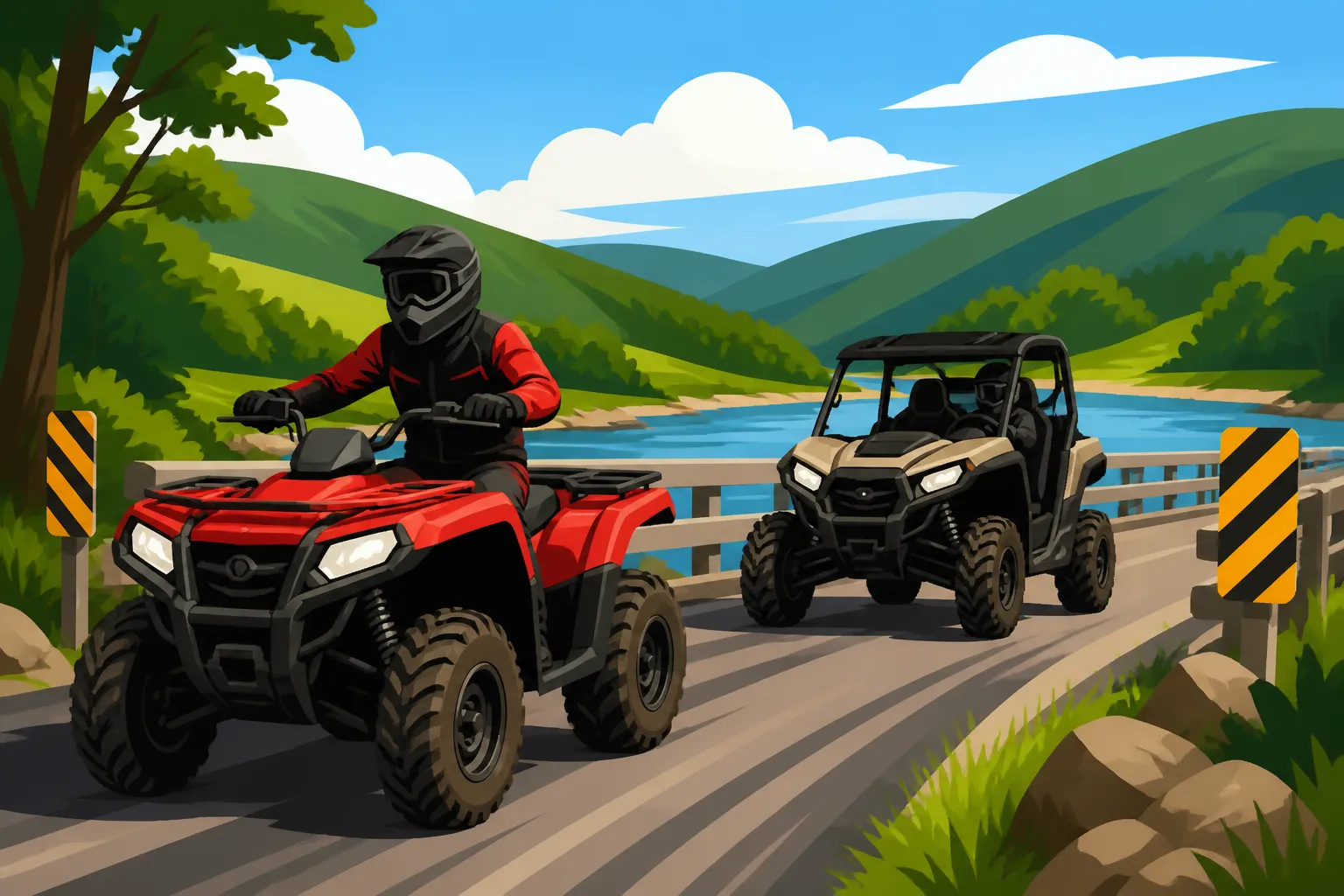
The cornerstone of legal highway crossings for ATVs in Pennsylvania is the "ninety degrees" rule. This means your machine must approach the highway at as close to a 90-degree angle as possible, traverse the paved surface in a direct line, and exit on the other side at another 90-degree angle. The intent here is clear: minimize the time your ATV is actually on the asphalt where it doesn't belong. You are not meant to turn and ride even a few feet down the road before exiting; it's a straight-shot "over and out" maneuver.
Before you even begin to think about crossing, you must [Stopping Before a Pennsylvania Crossing]. This isn't a rolling stop; it's a complete, wheels-stopped, engine-idling halt. From that stopped position, you need to yield to all traffic on the highway. This means waiting until the road is completely clear in both directions, allowing you ample time to cross without impeding any vehicle that is already on the highway. Remember, they have the right of way. Additionally, the operator must be at least [Pennsylvania's Minimum Age of Sixteen on Roads] to operate an ATV on any public road, even for a crossing. While not exclusive to crossings, you're also required to wear a helmet, as per [Pennsylvania Helmets for Operator and Passenger], and carry proof of insurance, a mandate highlighted in [Pennsylvania's Mandatory Insurance Off Your Own Land]. These are non-negotiable safety and legal requirements for riding off your own private property.
What You Cannot Do: Common Violations and Fines
Just as important as knowing what you can do, is knowing what you cannot do. Any deviation from the strict crossing rules constitutes a violation, and the consequences can be significant. You absolutely cannot ride along the highway, even for a very short distance, to reach a more convenient crossing point. This includes riding in the shoulder, on the berm, or trying to match the flow of traffic. The 90-degree rule prohibits any parallel movement. You also cannot make a turn onto the highway and then another immediate turn off it – it must be as straight a line as safely possible.
Another common mistake is trying to cross when visibility is poor, such as during heavy fog, rain, or at night without adequate lighting. While [Pennsylvania Lighting Rules for Road Use] apply generally, even with proper lights, crossing a busy state route after dark drastically increases risk and might be considered reckless, leading to citations. The state's stance is that ATVs are not meant for road travel, and these rules are designed to prevent situations where an ATV might blend into traffic or cause a sudden hazard. Violations can result in [Pennsylvania Fines for Riding Illegally], which can be substantial, often starting with a base fine of $300 plus court costs, and potentially escalating for repeat offenses. Law enforcement officers, especially DCNR rangers, are well-versed in these regulations and will enforce them to the letter, particularly in areas known for ATV activity like the regions around Westport.
Safety First: Best Practices for Crossing Busy Roads
Beyond the letter of the law, there's the spirit of safety. Crossing a busy state route like SR 120 isn't just about avoiding a ticket; it's about avoiding a serious accident. Even if you're perfectly legal in your crossing, the inherent dangers of mixing off-road vehicles with highway traffic demand an elevated level of caution and preparation. Thinking ahead and implementing smart safety practices can make all the difference in ensuring everyone gets home safely.
Preparing Your Machine for Road Sections
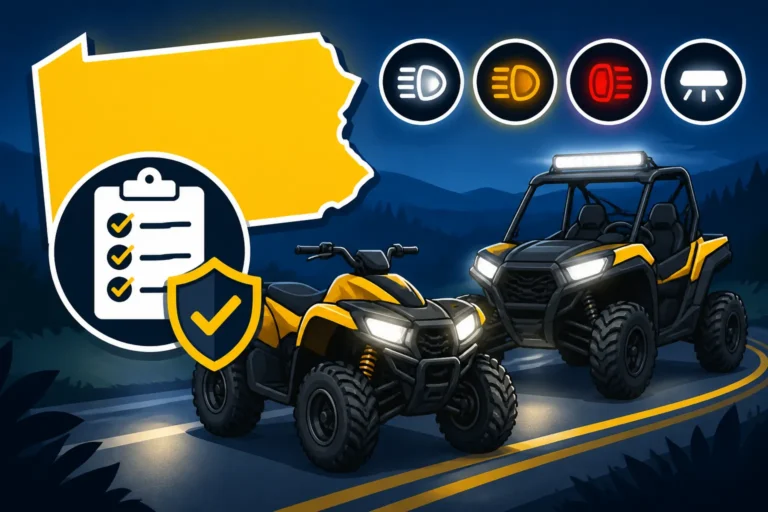
Before you even think about putting a tire on a state route like SR 120, take a moment to eyeball your rig. Are your headlights bright and working? Does your tail light glow like a beacon? We're talking about visibility here, and while stock lights do the job on the trail, a busy highway demands more. Many riders, myself included, will opt for upgraded LED light bars or even additional amber markers from brands like SuperATV to make sure they're seen from a mile away. It’s not just about what the law requires for a quick crossing, it’s about what makes you safer.
Check your brakes thoroughly. A split-second decision to stop might be necessary, and you need to trust your machine will respond immediately. Ensure your tires are in good condition and properly inflated for the terrain, as quickly transitioning from dirt or gravel to pavement can affect handling. If you're riding a UTV, check your mirrors (and consider upgrading to larger or wider-angle mirrors from SuperATV for better rear visibility) and make sure your windshield is clean. Basically, give your machine a quick once-over, focusing on anything that contributes to being seen and being able to stop or react quickly. This brief check could save you from a world of trouble.
Rider Awareness and Group Dynamics
When it comes to the actual crossing, your awareness is your most valuable asset. Approach the crossing point slowly and deliberately. As you come to your complete stop, actively scan the road in both directions, far down the highway. Don't just glance; actively look for traffic, listening for engine noise that might indicate an approaching vehicle. Make eye contact with drivers if possible, to ensure they've seen you. Sometimes, a quick wave or nod can confirm you're visible and waiting.
If you're riding in a group, coordination is absolutely vital. The safest approach is usually for one rider to cross at a time, allowing each individual to focus fully on their own safe passage. The lead rider should make the initial assessment, ensuring the path is clear. Once they've crossed, they can signal to the next rider. Avoid crossing in a staggered line or in a rush, as this can confuse drivers and increase the risk of an incident. Communication, whether through hand signals, helmet communicators, or simply shouting clear instructions, is key. Always be ready to present your [Carrying Proof of Insurance in Pennsylvania] and registration if asked, and make sure your [Replacing a Wallet Card That Went Through the Wash] is something you've considered, as these documents are required. Remember, the goal is a seamless, uneventful crossing, allowing you to quickly get back to enjoying the trails.
Here’s a quick summary of key crossing practices:
| Action | Description | Why It's Important |
|---|---|---|
| Full Stop | Come to a complete, wheels-stopped halt before entering the highway. | Legal requirement; allows full assessment of traffic and conditions. |
| Yield to Traffic | Wait until the highway is completely clear in both directions. | Legal requirement; prevents impeding or surprising oncoming vehicles. |
| 90-Degree Approach | Enter and exit the highway as close to a 90-degree angle as possible. | Minimizes time spent on the pavement; legal requirement. |
| Maximize Visibility | Use working headlights, taillights, and consider aftermarket lighting like SuperATV light bars. | Crucial for being seen by fast-moving highway traffic, especially on winding roads. |
| Scan Far & Wide | Look actively and listen for traffic from a significant distance in both directions. | Allows maximum reaction time for you and approaching drivers. |
| Single File Crossing | If in a group, have one rider cross at a time. | Reduces confusion for drivers; allows individual focus on safety. |
| Proper Gear | Always wear a helmet and other protective riding gear. | Legal requirement; provides essential protection in case of an accident. |
| Carry Documentation | Have your ATV registration and insurance proof readily available. | Legal requirement; avoids further complications during a traffic stop. |
Disclaimer
This article is for general informational purposes only and does not constitute professional advice. Laws, prices and regulations vary by location and change over time. Consult a qualified professional for guidance on your specific situation.