Blaze Orange on a Pennsylvania Fall Ride
A fall ride in Pennsylvania can put you on wooded trails just as hunters are moving through the same region, and brown, green, and black riding gear can disappear against the landscape. This guide explains when blaze orange is a smart visibility choice, how to plan around hunting activity, and what to check before taking an ATV or UTV onto a Pennsylvania trail.
Why blaze orange matters on a Pennsylvania fall ride
Visibility changes quickly in the woods
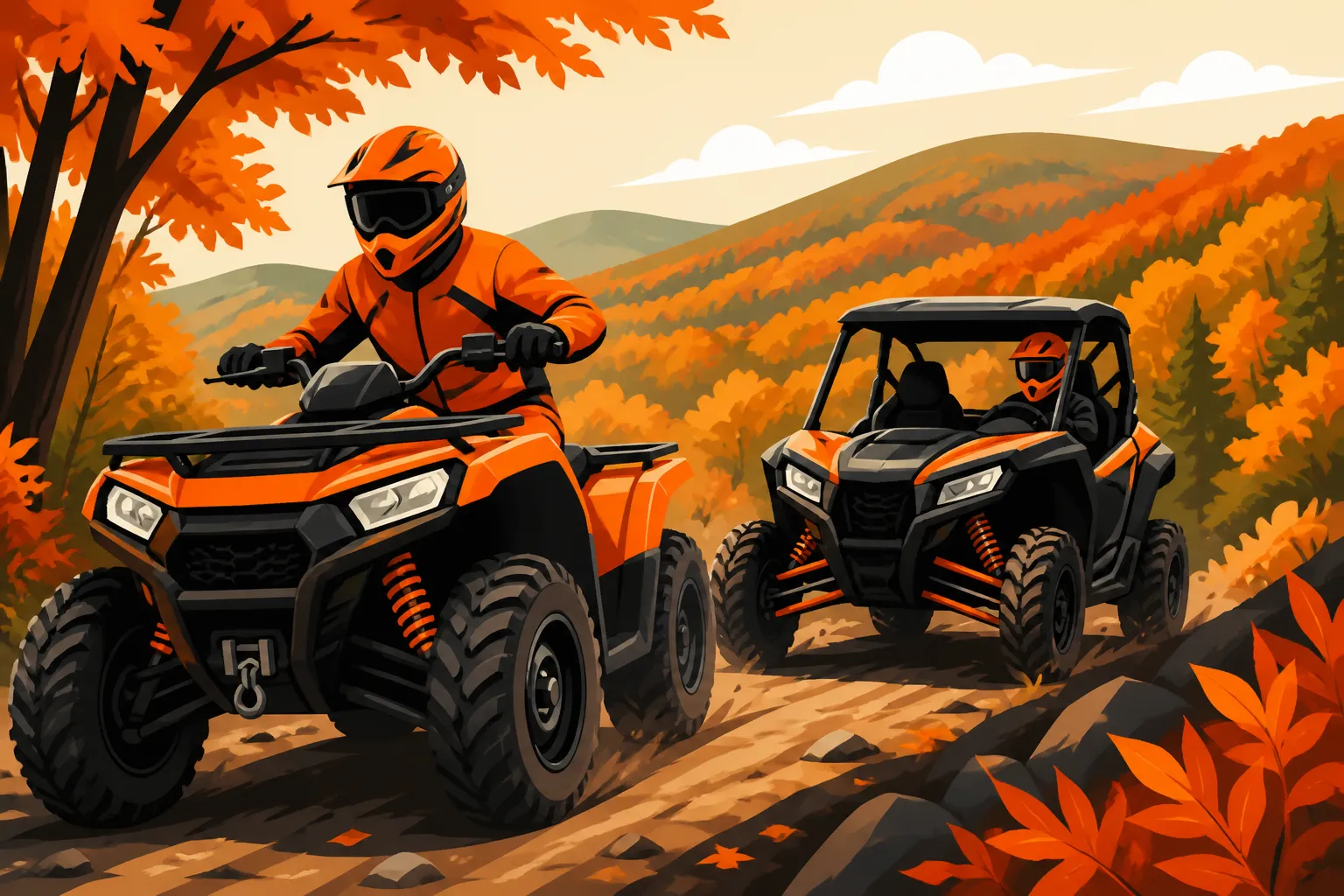
In autumn, a rider can blend into the background without realizing it. Dark riding jackets disappear among tree trunks and shadows, while tan or olive gear can look much like dry leaves and brush. A bright orange vest, jacket, or pack cover gives other trail users a clearer visual cue, especially when the machine is approaching through a wooded corridor.
Visibility matters most where sightlines are short. On a narrow trail, a bend, rise, or stand of trees can hide a rider until the last moment. The same is true near trail intersections and staging areas, where people may be walking between vehicles, trailers, and trail entrances. Wearing orange does not replace slowing down or staying alert, but it can help someone notice you sooner.
Fall light can make the problem worse. A ride that starts in bright afternoon sun may end under a canopy or in low light, when colors become harder to distinguish. If your group is riding near dawn or dusk, add reflective details and use the machine’s required lighting where applicable. Orange is highly visible in daylight, but reflective material helps with visibility in lower-light conditions.
Riders and hunters have different responsibilities
Blaze orange is closely associated with hunting, but a person riding an ATV or UTV is not automatically hunting simply because the ride takes place during a hunting season. Clothing requirements can depend on whether someone is hunting, the type of season, and the applicable Pennsylvania rules. Riders should check current Pennsylvania Game Commission regulations if they are also hunting, carrying out hunting-related activity, or entering an area where special rules apply.
That distinction does not make visibility optional as a practical safety measure. A recreational rider may share a public forest setting with hunters, hikers, loggers, and other trail users. Wearing orange can help those people identify you as a moving trail user rather than confusing you with the forest background. It is a courtesy and a safety choice, not permission to ride somewhere ATVs are prohibited.
Do not assume that a hunting map, trail app, or colored garment determines whether a route is legal. Some public lands restrict motorized travel, and a road or path that appears on a map may not be open to ATVs. Before heading out, review Pennsylvania Rules for Riding a State Forest Road and Pennsylvania Game Lands and Why Quads Are Banned to understand why land designation and route access matter. The bracketed titles are reference topics; use the official land manager’s current information to confirm access.
What to wear for a fall ATV or UTV ride
Choose orange that stays visible while you ride
A blaze-orange vest is a simple option because it can go over protective riding layers and come off when the ride is over. A jacket or sweatshirt in high-visibility orange offers broader coverage, while an orange pack cover can add visibility from behind. The best choice is one you will actually wear for the whole ride—not something buried in a storage box once you reach the trailhead.
Fit matters. Loose fabric can flap, snag, or interfere with riding, so choose a garment that sits securely over your outer layer. Check that it does not block your helmet, restrict your arms, cover controls, or catch on the machine. If you ride a side-by-side, make sure the orange you wear is visible above the seat and behind the cab structure; an orange garment hidden by the vehicle offers little benefit to people approaching from another direction.
A practical fall outfit also accounts for changing weather. Temperatures can shift between a cold morning at the staging area and a warmer afternoon on the trail. Layering lets you adjust without losing visibility: wear orange as an outer layer, or keep a bright vest accessible if you remove a heavier jacket. Keep rain gear in mind too, since a dark waterproof shell can cover the very color meant to make you visible.
Make the whole group easier to spot
It is easy to focus on the driver and forget passengers. In a UTV, riders may sit behind doors or a windshield; on an ATV, a passenger’s clothing may be partly hidden by the operator or machine. Give each person their own visible layer, and check that children’s gear is not covered by a dark coat or backpack.
Group rides need extra care at turns and intersections. If riders become separated, the person behind may not know whether the group has stopped or changed direction. Orange helps with recognition, but a planned regrouping system is more dependable: agree on safe stopping places, keep a reasonable following distance, and make sure everyone knows what to do if they lose sight of the group. The guidance in Pennsylvania Trail Etiquette on Narrow Trails is useful for thinking through shared trail space and passing.
Orange can also help a rider stand out to a friend or family member who is looking for them after a breakdown. Still, clothing color is not a substitute for carrying identification, a charged phone where service is available, or basic supplies. If someone needs help, the group should be able to describe its location using a named trail, nearby access point, or landmark rather than relying on color alone.
| Ride condition | Visibility concern | Practical step |
|---|---|---|
| Dense woods or narrow trail | Dark clothing blends into trunks and shadows | Wear an orange outer layer and reduce speed near bends |
| Group ride | Riders can disappear behind trees or other machines | Give each rider a visible layer and agree on regroup points |
| Low light near dawn or dusk | Bright colors become less effective as light fades | Use appropriate machine lighting and reflective details |
| Wet or cold weather | Rain shells and heavy layers can cover orange clothing | Keep a visible vest or outer layer accessible |
| Trailhead or staging area | People move around parked machines and trailers | Wear orange while walking as well as while riding |
Planning a Pennsylvania ride during hunting season
Confirm the route is open and legal
A marked line on a map is not proof that an ATV or UTV may use it. Pennsylvania has different rules for state forest roads, designated ATV trails, private property, and game lands. Before you leave, check the land manager’s current trail information and any posted signs at the entrance. Seasonal closures, maintenance, weather damage, and hunting activity can all affect the route you intended to ride.
This is particularly important in popular riding areas such as Whiskey Springs and Bloody Skillet. Confirm the trail system’s operating status, permitted vehicle types, and access requirements before towing there. The pages Pennsylvania Trail Closures to Check First and Pennsylvania Trail Conditions Before You Go cover the kinds of checks worth making before a fall outing.
A mapping tool such as onX Offroad can help you plan a route, review terrain, and keep track of where your group is headed. Use it as a planning aid rather than as the final authority on whether a road is open or legal for motorized use. Compare your route with official maps and signs, and do not continue onto a road marked closed simply because it appears in a navigation app. Conditions and access permissions can differ from what a map layer suggests.
Treat shared forest roads as work and recreation areas
Fall forests are not quiet playgrounds. You may encounter hunters walking away from a vehicle, a logging truck using a forest road, maintenance equipment, or another group moving slowly over rough terrain. Leave room for other users, approach blind corners cautiously, and avoid assuming that the person ahead has seen or heard you.
A machine’s engine noise can mask conversation and make it difficult for someone on foot to judge your distance. Slow down when visibility is restricted, and stop if a person or vehicle is approaching in a narrow section where passing would be unsafe. Do not use the horn or sudden acceleration as a substitute for yielding calmly. For more context, see Hunters and Riders Sharing a Forest and Log Trucks on Forest Roads.
Check local restrictions before treating a forest road as a connector between trail areas. Some roads are open to highway vehicles only, while others may have specific seasonal or vehicle limits. The presence of tire tracks is not proof that the route is open to ATVs. If you are uncertain, turn around and confirm the route rather than risking a citation, trespassing, or an unsafe encounter.
Use maps without relying on a phone alone
A digital map can be handy when the trail network is unfamiliar, and onX Offroad may help riders organize waypoints or review a planned route. Download or save what you need before leaving an area with reliable service, and keep a paper map or written route notes as a backup. A phone can lose battery in cold weather, get wet, or be damaged in a fall.
Before the ride, share the plan with someone who is not going. Include the trail system, your intended staging area, expected return window, and the names of the people in your group. If plans change, tell that person when you can. These steps are especially helpful on a longer ride or when traveling through areas with limited cell coverage.
Use onX Offroad alongside official trail information rather than instead of it. Check gates, posted signs, and land-manager notices at the trailhead. If a route appears to continue through private property or onto a restricted area, do not assume a digital line grants permission. Pennsylvania Landowner Permission Rules explains why access and permission are separate from simply being able to locate a track on a map.
A practical pre-ride checklist
Check access, gear, and weather before loading up
A little preparation can prevent a frustrating drive to a closed trailhead. Confirm the riding area is open, that your machine fits the trail’s vehicle limits, and that any required registration or trail permit is in order. A fall ride may also involve hunting-season activity, so review posted restrictions and the official rules for the specific land you plan to enter.
Before loading the machine, check the forecast and daylight window. Cold rain can make a trail uncomfortable and reduce visibility, while an early sunset can leave a group hurrying back to the staging area. Pack suitable layers, water, basic repair items, and a way to contact help. Keep paperwork protected from rain and mud, and make sure every rider knows where the group will stop if conditions deteriorate.
The following checklist keeps the essentials in one place:
- Confirm the route is open for the type of machine you are riding.
- Check current land-manager notices, signs, and local access restrictions.
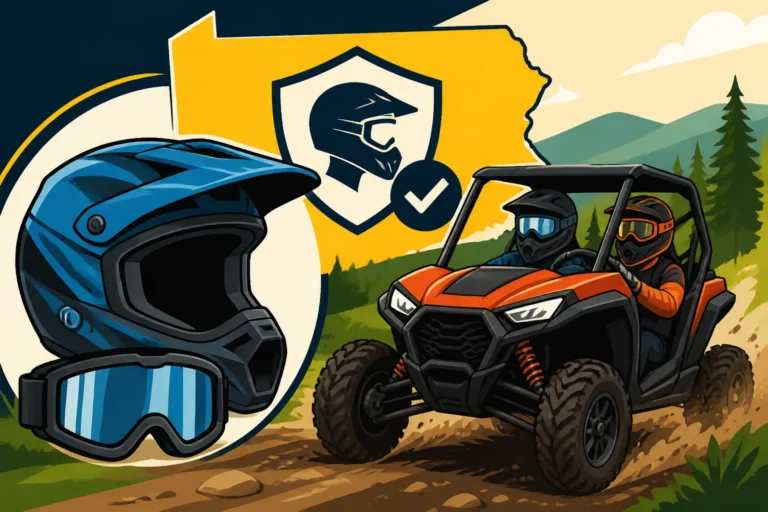
- Wear a visible orange layer that will not snag or interfere with protective gear.
- Make sure passengers and younger riders are visible too.
- Review the weather, daylight, and expected ride duration.
- Share your route and return plan with someone outside the group.
- Carry a backup map or route notes in case your phone is unavailable.
- Agree on safe regrouping points and what to do if riders become separated.
- Ride slowly around blind corners, trail intersections, and people on foot.
- Turn back if a route is closed, unclear, or outside the area you are permitted to ride.
Remember that orange is one part of safe riding
Blaze orange cannot make an illegal route legal, prevent a collision by itself, or guarantee that another person will see you. Its value is straightforward: it helps distinguish a rider from the colors and shadows of the fall woods. Pair it with controlled speed, working lights, protective equipment, and a willingness to yield.
For a family outing, make the visibility check part of the routine before anyone starts the machine. Ask each rider to show their orange layer, confirm helmets and other protective gear are fitted, and review the route in plain language. A child who knows where the group will stop and what to do if separated is better prepared than one who has only been told to “stay close.”
If the trip includes hunting as well as riding, check the rules that apply to the hunting activity separately. Clothing requirements for hunters are not a substitute for ATV access rules, and a recreational ride does not create permission to travel on restricted land. Planning around both issues makes it easier to enjoy the season without putting other people, wildlife, or the trail at unnecessary risk.
Disclaimer
This article is for general informational purposes only and does not constitute professional advice. Laws, prices and regulations vary by location and change over time. Consult a qualified professional for guidance on your specific situation.