Pine Grove Trail in Winter
Winter riding on Pine Grove Trail can be rewarding, but a winter opening does not guarantee the trail is rideable on any particular day. Snow, ice, thawing ground, hunting activity, and temporary closures can all change the plan. This guide explains how to prepare for Pine Grove Trail in Michaux State Forest, check the rules, choose suitable gear, and make a safer ride of it.
Understand Pine Grove Trail’s winter season
A winter season is not an all-weather guarantee
Pine Grove Trail is part of the ATV trail network in Michaux State Forest, in south-central Pennsylvania. It is one of the riding areas often considered alongside Big Flat Trail. Winter can bring a quieter, snow-covered ride, but the conditions may change quickly: a trail that feels firm after a cold night can soften when temperatures rise, and packed snow can become slick ice in shaded sections.
Pennsylvania’s state forest trails generally have designated riding seasons, including a winter window. The exact dates and any temporary closures should be checked before you travel. A seasonal opening does not mean every section is suitable after every snowfall, nor does it override a closure posted by the forest district. For a broader look at the seasonal pattern, see [Pennsylvania's Winter Season Dates] and [Pennsylvania Trails That Reopen for Winter].
The practical rule is simple: confirm that Pine Grove is open, then confirm that conditions make it sensible for your machine and experience. A trail can be legally open but still be a poor choice after freezing rain, a thaw, or a heavy snowfall. If you’re unsure, postpone rather than relying on a previous trip report or a map that may not reflect a closure.
Check trail status before leaving home
Check the official DCNR information for Michaux State Forest and look for any notices affecting ATV access, trail conditions, or nearby roads. If a notice is unclear, contact the forest district before making a long drive. Also check the weather for the riding area itself: conditions around Pine Grove Furnace State Park may differ from what you see at home, and a forecast for a nearby town won’t necessarily describe the woods.
Mapping apps can help you understand the surrounding area and organize a route, but they are not permission to ride. For example, onX Offroad can be useful for viewing mapped routes and planning where you expect to go. Treat it as a planning aid, not as the final word on whether a trail is open or whether a route is legal. Confirm access against current official information and signs on the ground.
Before unloading, pause at the trailhead and look for posted instructions, closure signs, and any change in access. If the sign says the route is closed, don’t ride around it or assume that a snow-covered sign is outdated. Trail restrictions protect riders, the forest, and the trail surface itself.
What winter riding on Pine Grove can feel like
Expect changing traction and visibility
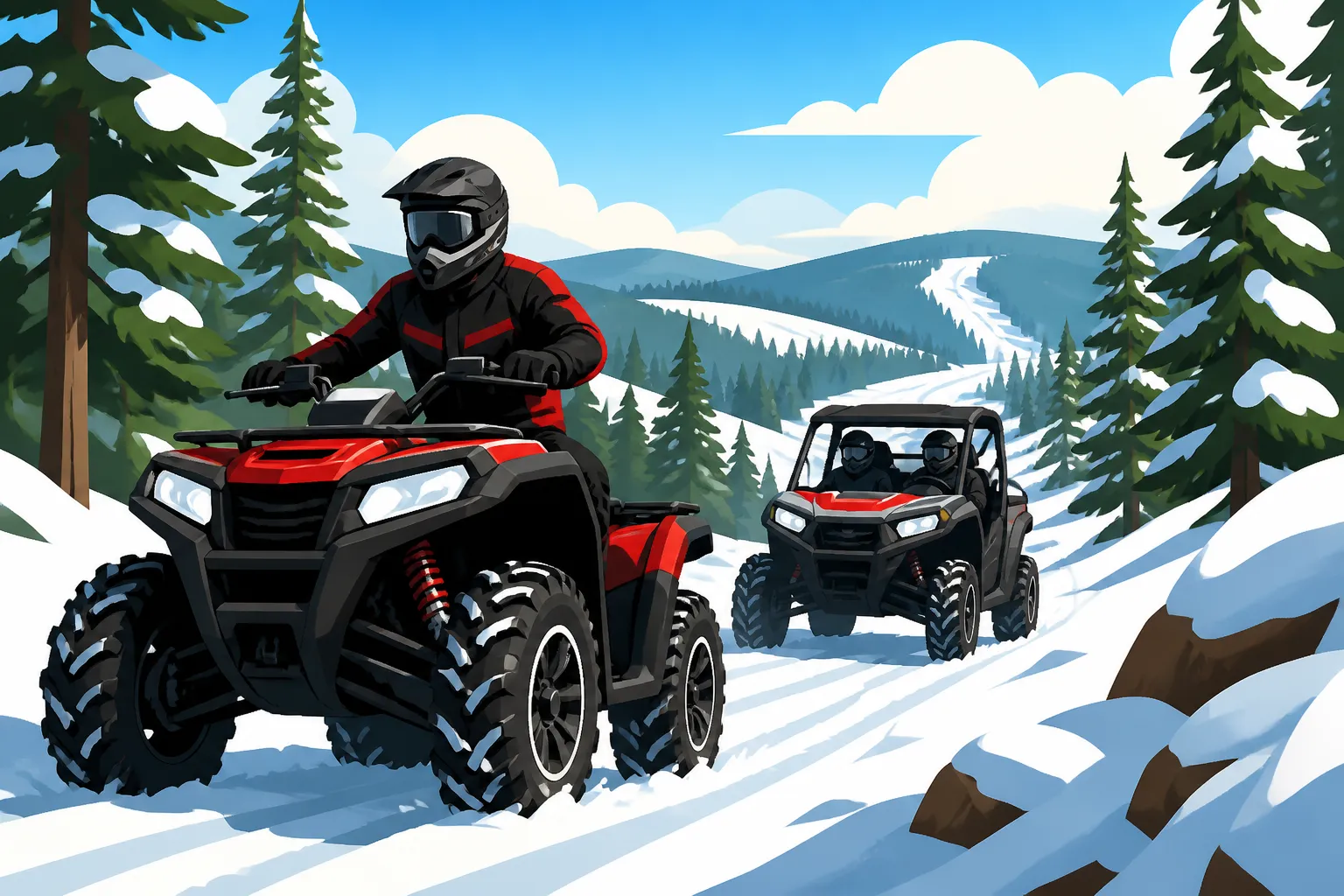
Winter conditions can vary from packed, predictable snow to polished ice and deep slush within the same ride. Shaded bends and low spots may stay frozen while exposed areas soften. A small patch of ice at the bottom of a hill can be harder to manage than a longer, gradual snowy section because it may appear without warning.
Give yourself room to slow down before corners, avoid abrupt steering or braking, and leave extra distance between machines. If you ride with friends, agree on a pace and a regrouping point before you set off. A rider who stops unexpectedly on a narrow trail can be difficult to see around a bend, particularly when branches, snowbanks, or winter haze limit sightlines.
Snow can also make the trail edges difficult to distinguish. Keep to the marked route rather than trying to find a wider line around a slick or muddy spot. Riding off the trail can damage vegetation and the forest floor, and it may put you in a place that is not open to motorized use. [Pennsylvania Trail Etiquette on Narrow Trails] is a useful refresher if you’re riding with a group or sharing a tight route.
Match the machine and route to the conditions
A machine that feels manageable on dry ground can behave differently on packed snow, ice, or frozen ruts. Consider your tire condition, ground clearance, braking response, and the weight and width of your ATV or UTV. Don’t assume that because a machine fits on a road or in a private riding area, it meets the requirements for a particular state forest trail. Check the posted limits before you go; [The 64-Inch Width Limit in Pennsylvania] explains why width matters on designated trails.
A UTV can be comfortable in cold weather, but its size and handling may limit where it can go. Verify the trail’s machine requirements rather than relying on a listing that simply labels a route as an ATV trail. For additional background on riding restrictions for side-by-sides, see [Pennsylvania Rules for a Side-by-Side on a Trail].
If a section looks beyond your ability or the machine’s traction, turn back where it is safe to do so. There’s no shame in ending a ride early. Winter conditions can make a familiar trail feel unfamiliar, and a cautious turnaround is far better than getting stuck in a remote section as daylight fades.
| Winter condition | What it can mean for your ride | Sensible response |
|---|---|---|
| Packed snow | Reduced traction, especially while turning or braking | Slow down early and increase following distance |
| Glare ice | Little warning and limited ability to steer or stop | Avoid aggressive inputs and turn back if control feels uncertain |
| Thawing ground | Soft trail edges and a risk of rutting | Stay on the established route and reconsider riding |
| Fresh snowfall | Hidden ruts, rocks, signs, or trail edges | Ride slowly and don’t assume the snow has made a route safe |
| Falling temperatures | Wet gear, cold hands, and a shorter comfortable ride | Carry appropriate layers and set a turnaround time |
| Poor visibility | Less time to react to other riders or obstacles | Use required lighting and ride at a speed that fits what you can see |
Prepare for the ride and follow the rules
Check registration, permits, and rider requirements
Before you go, make sure your machine’s registration is valid and that you understand what it allows. Pennsylvania registration requirements are not the same thing as permission to ride every trail, and trail access rules can vary by land manager and location. Start with [Pennsylvania ATV Trail Permits Explained] and verify the specific requirements for Pine Grove and Michaux State Forest rather than assuming another trail’s rules apply.
Carry the documents and proof required for your ride, and keep them protected from snow and moisture. A sealed pouch or secure wallet-card holder can help prevent paperwork from getting soaked or damaged. If you’re riding with children, review age and supervision requirements before the trip; winter adds extra risk because cold, reduced daylight, and changing traction leave less room for mistakes.
Registration, trail permission, and safety requirements are separate questions. A machine can be registered and still be on a closed trail, and a trail may have access requirements that are different from those at a nearby recreation area. When in doubt, check the official instructions for the location and keep a copy of relevant information with your riding gear.
Pack for cold, delays, and a possible turnaround
A winter ride can become uncomfortable well before it becomes dangerous. Cold fingers make it harder to use controls, and wet clothing can drain energy quickly. Dress in layers that allow you to adjust as you warm up, and bring gloves and spare dry layers in a waterproof bag. Eye protection matters too: snow, wind, and icy spray can make it difficult to see even at low speeds.
A basic winter kit should account for the possibility that the group stops, takes a wrong turn, or needs to wait for help. Consider bringing water, food, a charged phone, a small first-aid kit, a flashlight, and any tools or recovery equipment appropriate for your machine. Tell someone where you plan to ride and when you expect to be back. Cell service may be limited in forested or hilly areas, so don’t build your entire safety plan around being able to call from anywhere.
Check your machine before loading it. Look over the tires, brakes, lights, battery, fuel level, and any belts or other components that could leave you stranded. Cold can expose a weak battery or an existing maintenance problem at an inconvenient time. If your machine has been sitting since fall, a short inspection and test ride in a safe area can reveal issues before you reach the trailhead.
Plan a practical Pine Grove winter outing
Make a conservative route and timing plan
For a first winter visit, keep the plan modest. Decide in advance how far you want to ride, where you’ll turn around, and what time you’ll head back. Build in time for a slower pace and stops; winter riding can take longer than the same route in dry conditions. If you’re using onX Offroad or another mapping tool, save the route for reference, but compare it with current official trail information and follow posted signs.
Don’t let the distance to the trailhead pressure you into riding when conditions are wrong. If the trail is closed, badly iced over, or becoming soft, the sensible choice may be to make the trip another day. A useful plan includes a fallback: a shorter ride, a different legal riding area, or simply a decision to head home. [Pennsylvania Trail Conditions Before You Go] and [Pennsylvania Trail Closures to Check First] can help you think through that pre-trip check.
When riding with others, agree on simple signals and regrouping habits. Keep the group small enough that everyone can travel at a controlled pace, and make sure no one is left behind after a stop. On a narrow winter trail, riders should avoid bunching up at corners or climbing sections where a stopped machine could block the route.
Leave the trail in good shape
Winter riding depends on responsible use. Stay on the designated trail, avoid cutting across snow-covered ground, and don’t spin tires to force a way through mud or slush. Ruts created during a thaw can hold water and worsen as conditions change. If the surface is soft enough that your tires are digging in, stop and reconsider rather than making repeated passes.
Be courteous to other trail users and give people space. Slow down near trailheads and any area where riders may be loading or unloading. Keep noise under control, use the machine’s required equipment, and carry out anything you bring in. These habits help protect access and make the trail more enjoyable for the next person.
A good Pine Grove winter ride is not measured by how far you push into rough conditions. It’s a ride where you confirm access, choose a route that fits the weather and your ability, keep your group prepared, and turn around before a manageable problem becomes an emergency. Check the forest information again close to departure, watch conditions as you go, and be willing to change the plan.
Disclaimer
This article is for general informational purposes only and does not constitute professional advice. Laws, prices and regulations vary by location and change over time. Consult a qualified professional for guidance on your specific situation.