Crowds on Opening Weekend
Opening weekend can turn a quiet Pennsylvania trailhead into a line of trucks, trailers, and riders waiting to unload. That can mean long parking delays, crowded trail junctions, and a slower ride than you planned. This guide explains why the first weekend gets busy and how to choose a safer, less stressful time and route.
Why Pennsylvania ATV Trails Get Crowded on Opening Weekend
Everyone is trying to ride the same limited window
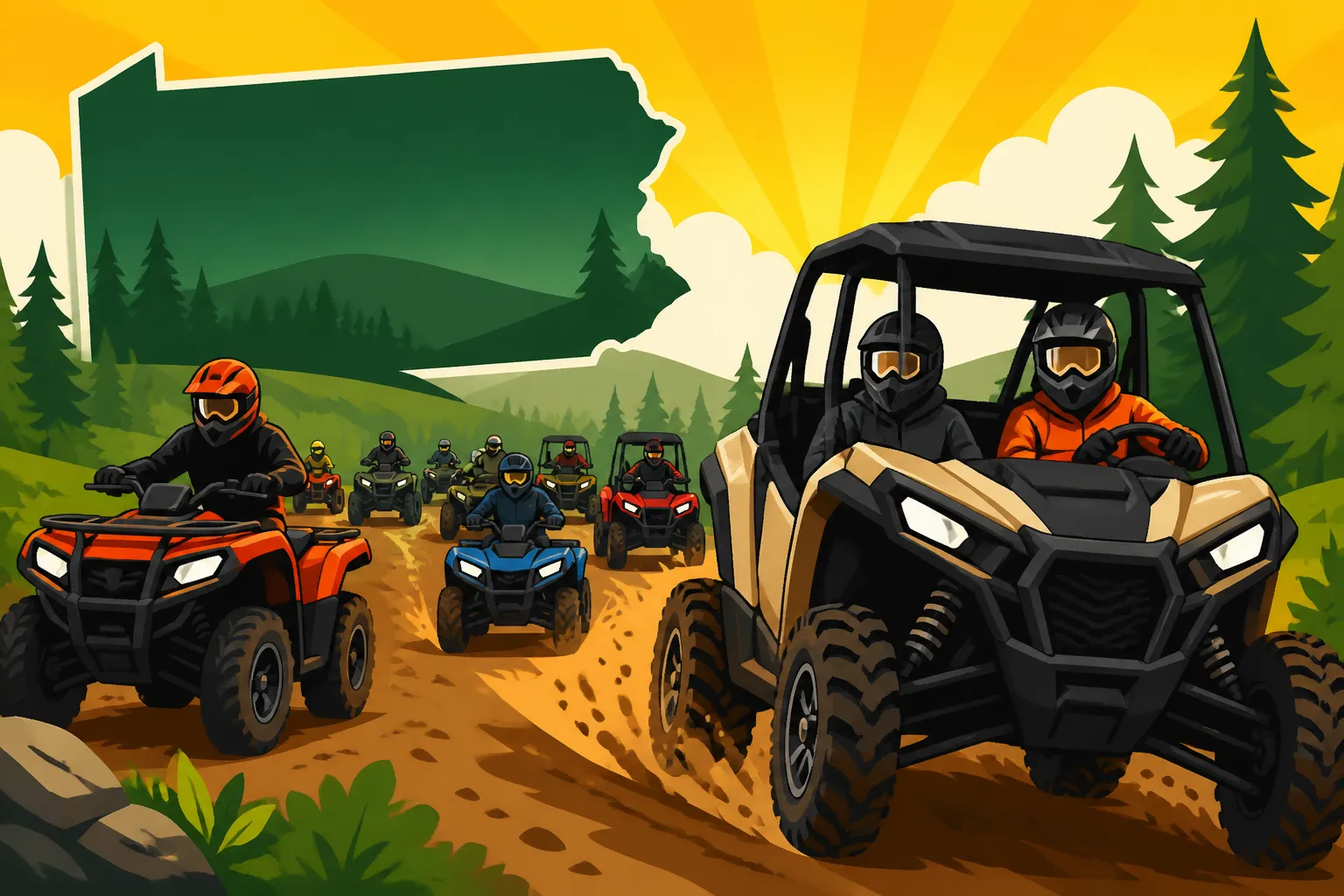
Many riders have spent months waiting for seasonal trails to reopen, so the first available weekend draws people from across the region. The demand is especially noticeable when the opening lines up with a holiday weekend, good weather, or a long stretch of dry conditions. A trail system that feels spacious on an ordinary Saturday can feel very different when riders arrive at once.
The opening rush is not just about how many machines are on the trail. It also affects the staging area, fuel stops, food options, nearby lodging, and the roads leading to the trailhead. A group that arrives midmorning may find that parking is tight, unloading takes longer, and popular routes already have steady two-way traffic.
Pennsylvania riding areas can draw different types of visitors, too. A state forest trail may attract people looking for a longer ride through public land, while a private riding park may bring families, groups, and riders who prefer a managed recreation setting. Before making plans, check the specific system’s opening dates, rules, and access notices. A trail being open in one area does not mean another nearby trail is open too. Pennsylvania’s ATV Trail Season and The Friday Before Memorial Day in Pennsylvania can help you understand why seasonal timing matters.
The trailhead can be the first bottleneck
Crowding often begins before anyone reaches a trail. Small staging areas have limited room for trucks and trailers, and a slow unloading process can back up arriving vehicles. If a lot fills, drivers may be tempted to park along a shoulder or in an unmarked area, but that can block access, create hazards, or violate posted restrictions.
Plan your parking before you leave home. Check where the official staging area is, whether overnight parking is allowed, and whether your trailer will fit comfortably. A large trailer that is manageable in an open lot can be awkward to maneuver when rows are full and other riders are waiting. The guide to Parking a Trailer at a Forest Trailhead covers practical details worth considering, while Pennsylvania Trails With a Staging Lot can help you think about the amenities and access you may want.
It is also smart to arrive with your machine nearly ready to ride. Secure loose gear, check fuel, and make sure your registration and other required items are easy to reach before you pull into a busy lot. If you need to adjust tie-downs, organize a group, or search for paperwork, do it where you are not blocking other vehicles.
How to Plan a Smoother Opening Weekend Ride
Choose your arrival time and route with care
Getting to the trailhead early can help you avoid the biggest arrival wave, but it is not a guarantee of an empty lot. Some riders arrive before the gates or access points open, which can create an early queue rather than solve the problem. Confirm the site’s access hours and parking rules, then aim for a time that lets your group unload without rushing.
You can also reduce pressure on the busiest routes by deciding on a flexible ride plan. Instead of heading straight for the most familiar loop or viewpoint, consider a route that spreads riders out and gives your group a reasonable way back if conditions change. A loop can be more practical than repeatedly traveling the same crowded segment in both directions. For planning ideas, see Riding a Loop Instead of an Out and Back.
A navigation app such as onX Offroad can help you review a route and keep track of your group’s general position, but a digital map should not be treated as permission to ride anywhere it shows a line. Check current official trail maps, signs, gates, and closures. If a route shown in an app conflicts with posted instructions or an official map, follow the official information on the ground.
Have a backup plan before you unload
A backup plan is useful when the primary lot is full, a trail is closed, or your group arrives to find the ride busier than expected. Decide in advance whether you will wait, use another authorized access point, choose a different riding area, or come back another day. Do not improvise by parking on private property or riding a road or trail that is not open to ATVs.
Use current trail notices to check for closures and access changes shortly before leaving. Spring conditions can leave sections soft or damaged, and a route that was passable earlier may be affected by rain. Pennsylvania Trail Closures to Check First and Pennsylvania Trail Conditions Before You Go are useful starting points for building that check into your plan.
If the main route is packed, slowing down and shortening the ride may be safer than trying to pass through congestion. In a group, agree on a meeting point and a communication plan before heading out. Keep a map available even if you use onX Offroad, and make sure everyone knows what to do if the group gets separated or someone has a mechanical problem.
| Opening-weekend problem | Why it happens | Practical response |
|---|---|---|
| Full staging lot | Many riders arrive during the same morning window | Confirm parking rules and have another authorized plan |
| Slow unloading | Trailers, gear, and group preparations take space | Prepare equipment before entering the lot |
| Crowded trail junctions | Riders converge on familiar routes and intersections | Pick a flexible route and give other groups room |
| Muddy or damaged sections | Spring weather and concentrated traffic affect trail surfaces | Check conditions and follow closures or posted limits |
| Group gets separated | Noise, visibility, and traffic make it harder to stay together | Agree on meeting points and carry reliable communication options |
Riding Safely When the Trails Are Busy
Give other riders space and communicate clearly
Crowded trails call for patience, especially on narrow sections where riders cannot safely pass. Keep a manageable following distance so you have room to react if the machine ahead stops, slows, or encounters an obstacle. Avoid tailgating, and do not assume the rider in front has seen you.
At blind corners, narrow bridges, and steep or rocky sections, slow down enough to respond to someone coming the other way. Keep to the trail and follow posted direction signs. If you need to stop, move to a safe place where you do not block the route. A stopped group around a bend can create a sudden hazard for approaching riders.
Good trail etiquette matters even more when everyone is eager to get moving. Let faster riders pass only when there is a safe, suitable place to do so, and avoid riding off the established route to get around a queue. Pennsylvania Trail Etiquette on Narrow Trails is a helpful reminder that sharing the trail well is part of having a good ride, not an obstacle to it.
Make visibility and group readiness part of the plan
Opening weekend often includes riders with different experience levels, machine sizes, and comfort on rough terrain. Keep your group together at a pace that suits the least experienced rider. Before leaving the staging area, check that each person knows the planned route, the expected turnaround point, and what to do if they cannot keep up.
Visibility can be limited by trees, dust, uneven ground, and other machines. Use required equipment, keep lights in working order, and make yourself visible without assuming that other riders can see around a blind corner. If you stop to check a map or adjust gear, move out of the main travel line.
onX Offroad can be useful for reviewing possible routes before the ride and orienting yourself when trails intersect. Still, map details may not reflect temporary closures or conditions that have changed. Carry the official trail information as well, and be prepared to turn around when signs or conditions indicate that a route is not suitable.
Deciding Whether Opening Weekend Is Right for You
Weigh the excitement against the trade-offs
There is a real appeal to riding the first weekend a trail system opens. Riders get back outdoors, reconnect with friends, and enjoy a route they may have missed during the off-season. For some people, the busy atmosphere is part of the event, and a full day of riding is worth the wait and slower pace.
For others, the congestion takes away from the reason they ride. If your group includes young or inexperienced riders, if you are towing a large trailer, or if you prefer a quiet pace, a later weekend may be a better fit. A weekday or a weekend after the opening rush can offer a more relaxed experience, though conditions and access still need to be checked before departure.
Think about what a successful day means to your group. If it means getting a short ride in and enjoying the opening-day energy, plan for delays and keep expectations flexible. If it means covering a long route without frequent stops, a less popular date or riding area may suit you better. Pennsylvania Trails After Heavy Rain is worth reviewing when weather could affect your choice, and Getting to Whiskey Springs From Westport can help you think through travel logistics for a specific destination.
Use a simple go-or-wait checklist
Before setting out, confirm that your intended riding area is open and that your machine fits its rules. Check the official map and notices, verify the staging area and parking arrangements, and make sure your group has a plan for fuel, food, communication, and emergencies. If you are visiting a place you do not know well, identify the route back to your trailer before starting the ride.
Ask yourself whether your group can handle a crowded trail at a patient pace. If someone is uncomfortable with close traffic, difficult terrain, or a lengthy wait, it is better to adjust the plan than to pressure them into riding. You can choose a shorter route, arrive at a different time, or reschedule.
The goal is not to beat every other rider to the trail. It is to have a safe, enjoyable day without adding pressure to an already busy system. Check the rules, respect closures, keep the group together, and leave room for others to enjoy the trails too.
Disclaimer
This article is for general informational purposes only and does not constitute professional advice. Laws, prices and regulations vary by location and change over time. Consult a qualified professional for guidance on your specific situation.