Big Flat Trail in Summer
Summer is a tempting time to ride Big Flat, but a dry-looking trailhead does not guarantee dry, open trails farther into the forest. Afternoon storms, seasonal closures, and changing surface conditions can all affect the day. This guide explains what to plan for at Big Flat in Michaux State Forest, how to prepare your machine and group, and where to check before you unload.
What to expect at Big Flat in summer
The setting and the riding experience
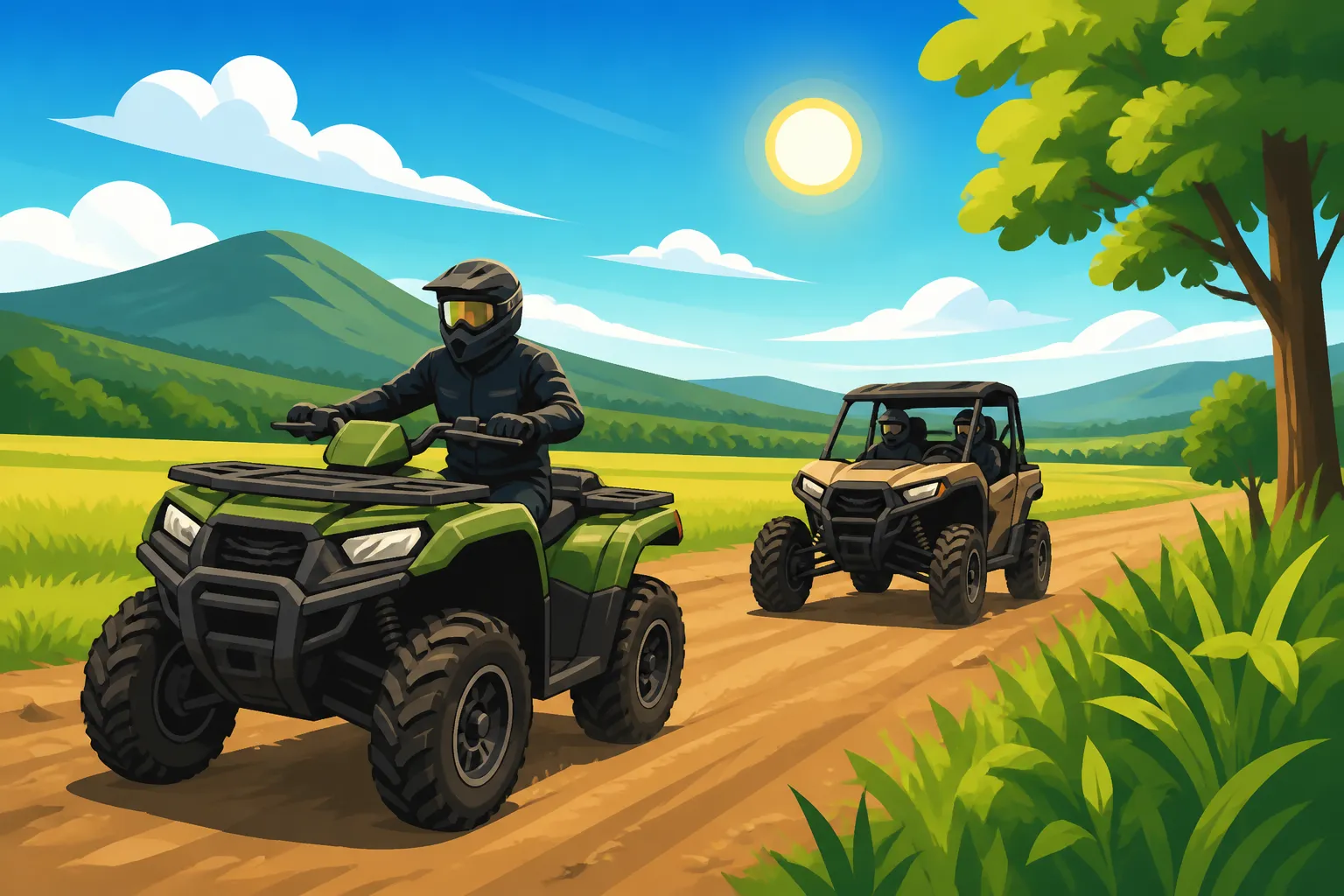
Big Flat is an ATV trail area in Michaux State Forest, in south-central Pennsylvania. The forest’s mix of wooded ridges, shaded sections, and open stretches makes summer riding feel different from riding on a managed park loop. The route can shift between more exposed and more sheltered ground, so heat, humidity, and recent rain may affect the ride even within the same outing.
Rather than planning around a single lap or assuming every section will ride the same, treat Big Flat as a forest trail experience. Pace your group for changing terrain, keep an eye out for posted signs, and expect to adjust your route if a section is closed or conditions are poor. For a broader look at the area, see [Big Flat and Pine Grove in Michaux].
The most enjoyable summer rides tend to leave room for the unexpected. A muddy low spot, a slow-moving group, or a stop to check a map can stretch a short outing into a longer one. Build in time for breaks, and avoid setting a schedule that depends on covering every available section.
Summer conditions can change quickly
Pennsylvania summer weather can turn a comfortable morning into a hot, humid afternoon. Tree cover may offer shade, but it does not eliminate heat or dehydration. Bring more water than you expect to need, take breaks before anyone feels worn out, and pay attention to children and newer riders, who may not speak up when they are tired.
Rain is another reason to keep your plans flexible. A passing storm can leave slick roots, soft ground, puddles, and loose material behind. It can also make a trail vulnerable to damage. If the ground is saturated or you see signs of erosion, slow down, turn around where appropriate, and avoid spinning tires through soft sections. [Pennsylvania Trails After Heavy Rain] offers more context on why waiting for better conditions can be the responsible choice.
Summer riding dates and access rules are not something to guess at from memory or from an old social media post. Check the latest trail information before you travel, especially if your trip falls near a seasonal opening or closing period. The overview in [Pennsylvania's Summer Season Dates] is a useful starting point, but confirm the status of Big Flat itself before leaving home.
Plan your route and prepare to navigate
Check official trail information before you go
Before loading the ATV, look for current information about whether the area is open and whether any sections have restrictions. A trail may be closed for maintenance, weather damage, or another management reason even when the road to the trailhead is accessible. Do not assume that an open gate, a parked vehicle, or an older map means every route is available.
Start with [Pennsylvania Trail Maps From DCNR] and [Pennsylvania Trail Conditions Before You Go]. Compare the information you find with signs at the trailhead and along the route. If posted notices differ from what you expected, follow the local signs and closures. A map is a planning aid, not permission to ride a closed trail.
It also helps to download or save your route information before you arrive. Cell coverage can vary in forested areas, and a phone that worked at home may not load a map at the trailhead. onX Offroad can be useful as a supplementary navigation tool when you save map information ahead of time. Treat it as a backup to official trail notices rather than as confirmation that a route is currently open.
Build a realistic summer ride plan
Decide in advance who is riding, what machines they are bringing, and how long the group wants to be out. A family group with first-time riders may need shorter sections and more stops than a group of experienced riders. If someone is new to trail riding, choose an easy pace and agree that anyone can call for a break without feeling pressured to keep up.
Use a simple planning checklist:
- Confirm that Big Flat is open for your intended riding day.
- Review the permitted routes, posted restrictions, and machine requirements.
- Check the forecast for heat, storms, and recent rainfall.
- Save maps or directions for offline use.
- Set a turnaround time and tell someone who is not riding where you plan to be.
- Agree on a regrouping spot in case riders become separated.
A route app such as onX Offroad may help you keep track of your location, but do not let the screen distract you from the trail. Stop in a safe place before checking a device, and make sure at least one person in the group understands the route without relying solely on a phone.
Get your machine and riding group ready
Registration, trail rules, and machine fit
Confirm that your ATV or UTV meets the rules for the area before you arrive. Pennsylvania registration requirements depend on how and where a machine is used, and state forest trail access can involve rules beyond simply having a plate. Review [Pennsylvania ATV Trails Permits Explained] and the relevant registration guidance before your trip. Do not assume that a permit for one riding area automatically covers another.
Machine dimensions matter, too. State forest trails may have specific limits, and a wide side-by-side that works well on private land may not be allowed on a particular trail. Check [Pennsylvania's Class II Trail Width Limit] and any current Big Flat restrictions before making the drive. If you are unsure, measure the machine as the rules define its width and confirm with the land manager rather than relying on a dealer’s general description.
Before loading, check tires, brakes, lights, steering, fluids, and the condition of belts or chains. Bring basic tools and a tire repair kit suited to your machine. A quick inspection at home is easier than discovering a loose component or low tire after you have driven to the forest.
Gear and group habits for hot weather
Wear a properly fitted helmet and appropriate riding gear even when the weather feels warm. Lightweight layers can help with comfort, but do not trade away protection for cooler clothing. Eye protection is especially helpful when dust, insects, or debris are kicked up by other machines.
Pack water, snacks, a first-aid kit, and a way to communicate if the group gets separated. A fully charged phone is useful, but it should not be your only plan. Consider carrying a portable battery and sharing the day’s route with someone at home. If you are riding with children or inexperienced operators, keep them within sight and set a pace that gives everyone time to react.
On a narrow trail, courteous riding makes a difference. Slow down when approaching other riders, give people room to pass where it is safe, and avoid stopping in a blind corner. Keep noise and dust in mind around other forest users. The guidance in [Pennsylvania Trail Etiquette on Narrow Trails] is worth reviewing with the group before you set out.
| Before you leave | What to confirm | Why it matters |
|---|---|---|
| Trail status | Big Flat is open and the planned sections are available | Closures may change access or require a different route |
| Machine eligibility | Registration, dimensions, and local restrictions | A machine that is suitable elsewhere may not fit area rules |
| Weather | Heat, storms, and recent rainfall | Conditions can affect safety, traction, and trail damage |
| Navigation | Saved maps and a backup plan | Cell service may be unreliable in wooded areas |
| Group readiness | Water, protective gear, tools, and a meeting plan | Small problems are easier to handle when the group is prepared |
Make the ride safer and more enjoyable
Adjust your pace to the trail
Summer can make riders eager to cover ground, especially after a long drive to the trailhead. Resist the urge to rush. Dust may obscure the route, loose surfaces can behave differently after rain, and shaded corners can remain damp while exposed sections are dry. Leave enough following distance that you can see the trail and react to a sudden stop.
If you encounter a difficult section, stop somewhere visible and safe before deciding what to do. Do not crowd the rider ahead or pressure someone into attempting an obstacle they are uncomfortable with. A less experienced rider may need a moment to assess the line, while a UTV group may need extra room to maneuver. [Pennsylvania Trails for Beginners] can help set expectations if you are introducing someone to trail riding.
Be considerate of other forest users and follow posted access rules. Stay on designated routes instead of creating a shortcut around a muddy patch or obstacle. Riding off the marked trail can damage vegetation and soil, and it may put your group somewhere that is not open to motorized use.
Know when to turn around
Turning around is not a failed ride. If a storm is approaching, a rider is overheated, a machine is developing a problem, or the trail is deteriorating, changing plans is often the best decision. Leave extra daylight for loading and the drive home, particularly if your group is unfamiliar with the area.
A practical rule is to reassess at each major stop: Is everyone feeling well? Is the weather still suitable? Are the machines operating normally? Does the group have enough time and daylight to return without hurrying? If the answer to any of those questions is no, shorten the outing.
onX Offroad may help orient you if you need to retrace your route, but keep watching signs and trail conditions on the ground. If you lose confidence about whether a route is open or where it leads, stop and backtrack to a known point instead of continuing in the hope that the route reconnects. For more on finding suitable routes and checking access, explore [Pennsylvania Trails Near State College] and [Pennsylvania Trail Closures to Check First].
Big Flat in summer is best approached as a flexible forest ride, not a guaranteed route with fixed conditions. Confirm access, prepare for heat and rain, use maps as supporting tools, and make decisions that protect both your group and the trail. A little planning can prevent the familiar frustrations of arriving to find a closure, getting caught without enough water, or discovering that your machine is not suited to the route you intended to ride.
Disclaimer
This article is for general informational purposes only and does not constitute professional advice. Laws, prices and regulations vary by location and change over time. Consult a qualified professional for guidance on your specific situation.