Riding the Allegheny Forest in the December Window
A December ride in the Allegheny National Forest can be a quiet way to enjoy its designated ATV trails, but winter access is seasonal and closures can change plans quickly. You’ll need to sort out the forest permit, registration and insurance before leaving home, then check trail status and prepare for cold, short days. Here’s how to plan without confusing a forest permit with the documents required to ride.
Know what the December window allows
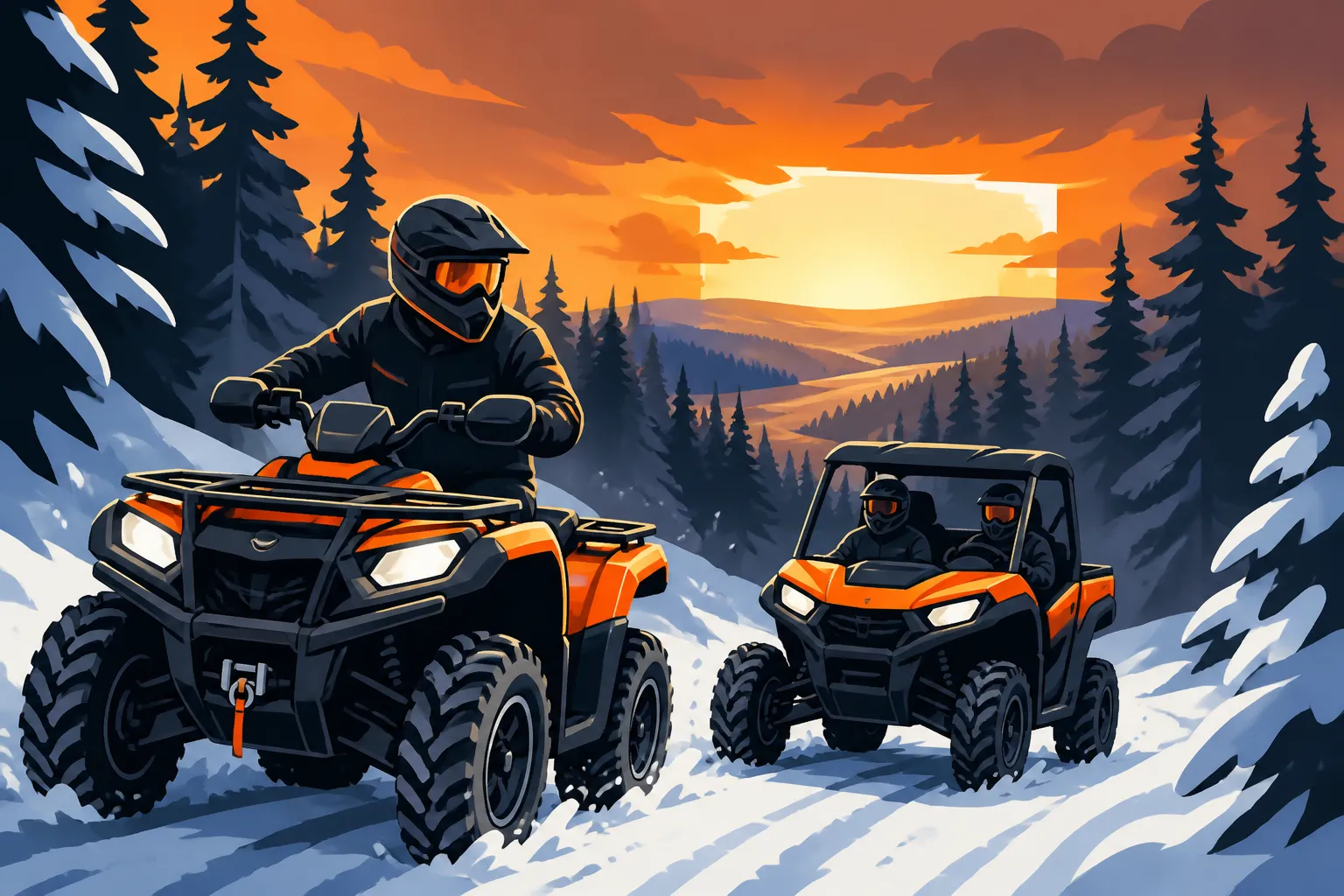
The Allegheny National Forest has a designated winter riding period for certain ATV trails. That period is generally listed as December 20 through April 1, but dates and access are subject to current forest notices, trail conditions and closures. A date falling within the winter window is not, by itself, proof that a particular route is open. Check the current information from the Forest Service before traveling, especially after a storm, thaw or other change in conditions.
The winter window is separate from the regular riding season. It doesn’t mean every forest road, trail or snowmobile route is open to ATVs. Ride only routes specifically designated for ATV use, and follow signs and barriers on the ground. A trail shown on an old map, mentioned in a forum or used by another type of vehicle is not automatically open to your machine.
Winter riding is also different from simply riding a summer route in colder weather. Snow, ice, fallen branches and freeze-thaw conditions can affect traction and visibility. A route that was passable earlier in the season may become difficult or unsuitable, and a closure may be put in place to protect the trail or riders. Don’t assume a snow-covered route is open just because it looks rideable.
Before planning a route, confirm:
- The winter riding dates that apply to your trip.
- Which designated ATV trails are open.
- Whether any temporary closures or restrictions are in effect.
- The machine-width and other vehicle limits for the routes you plan to use.
- Where you can legally unload, park and access the trails.
The forest’s winter access rules and trail availability are worth checking again shortly before departure. If your planned route is closed, choose another route that is officially open rather than trying to bypass a gate or find an informal way around the closure. For broader seasonal context, see Allegheny Forest Winter Riding Window and Pennsylvania Trail Closures to Check First.
Arrange the permit, registration and insurance
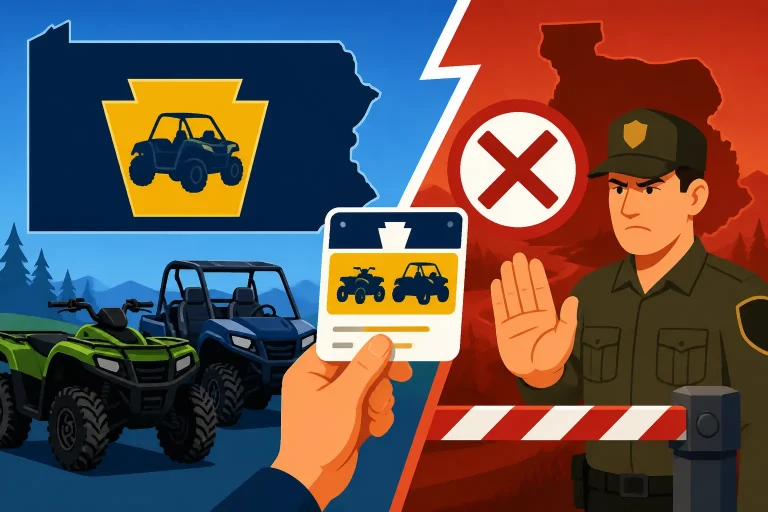
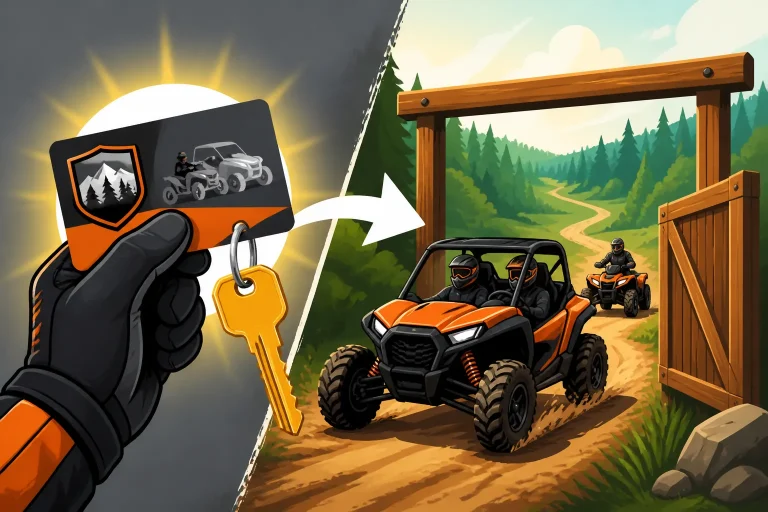
A forest permit and a vehicle registration serve different purposes. The permit gives you access to specified Allegheny National Forest ATV routes under the conditions that apply there. It does not replace the registration and insurance requirements that apply to your machine.
Get the Allegheny Forest permit
Riders using the designated Allegheny National Forest ATV trails need the forest’s own permit. It is separate from Pennsylvania ATV registration and from permits that apply to other trail systems. Review the application requirements and current instructions before applying; you may need to show registration and insurance documentation as part of the process. The permit must be handled as directed by the Forest Service, including any required display or proof while riding.
Permit details and application procedures can change, so use current official information rather than relying on an old form or another rider’s account. The article Pennsylvania’s Allegheny National Forest Permit explains the permit’s role, while What the Allegheny Permit Requires You to Show focuses on the documentation to prepare. Check current requirements before submitting an application.
A permit does not make every route in the forest available. It applies to the permitted system, subject to closures and posted restrictions. Keep proof of the permit accessible during your ride, and follow any instructions about where it must be displayed.
Confirm registration and reciprocity
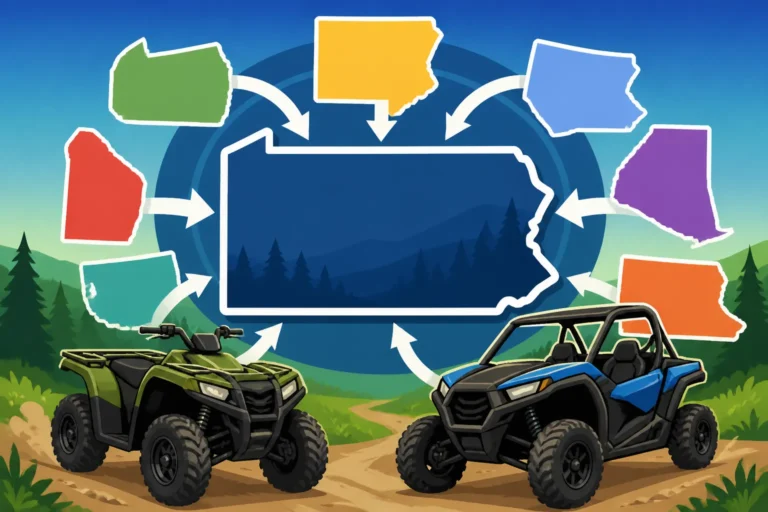
Your ATV also needs valid registration for the trip. Pennsylvania residents should confirm that their machine’s registration is current and appropriate for the riding they plan to do. Visitors should check whether Pennsylvania recognizes their home-state registration for this use and carry proof with them. Reciprocity rules can depend on the states involved and the machine’s status, so don’t assume that an out-of-state plate automatically settles the question.
The Allegheny Forest permit is not a substitute for state registration. Likewise, having a registration does not replace the forest permit. If you’re visiting from another state, Pennsylvania ATV Reciprocity With Other States and Carrying Proof of an Out-of-State Registration can help you identify the separate questions to verify.
Carry the documents required for your situation, and make sure they are readable and available if an official asks to see them. A paper copy kept in a secure, dry place can be useful when a phone battery runs low or there is no signal.
Check insurance requirements
Confirm that your insurance meets the requirements for riding away from your own land and for obtaining the forest permit. Don’t assume that a policy for a different vehicle or a homeowners policy covers ATV use. If you’re unsure, ask your insurer specifically whether the policy covers the machine while it is ridden off-road in the Allegheny National Forest.
Take proof of insurance with you. Keep it protected from moisture, but easy to reach without unpacking everything at a trail stop. What the $35 Allegheny Forest ATV Permit Covers provides more context about the forest permit, but verify current permit conditions and requirements directly before riding.
Prepare the machine and yourself for winter
A machine that runs well in mild weather still needs a winter check. Cold can affect starting, battery performance, tire pressure and the way materials behave. Snow and ice also change how the ATV handles, while wet clothing and wind can make a short ride uncomfortable or unsafe.
Before loading, check the basics: tires, brakes, lights, controls, fuel, fluids and battery condition. Inspect the machine for damage that could worsen on a rough or frozen route. Confirm that any required plate or permit display is secure and readable. Carry the machine’s correct tools and recovery equipment, and know how to use them. A winch, for example, is useful only if it is properly installed and you can anchor it safely.
Dress for the full ride, not just the temperature at the trailhead. Use layers that let you stay warm without restricting movement, along with gloves that allow you to operate the controls. Protect exposed skin from wind and moisture. Bring spare dry gloves or socks in a sealed bag, and plan for the possibility that a stop or minor problem could keep you outside longer than expected.
A practical winter packing list includes:
- A charged phone, with offline maps or route information saved in advance.
- A small first-aid kit and basic repair supplies.
- Water and food that remain usable in cold conditions.
- A flashlight or headlamp, even if you expect to finish before dark.
- A warm extra layer and dry clothing protected from rain or snow.
- Recovery gear appropriate to your machine and experience.
- Registration, insurance and forest-permit proof stored securely.
Before riding, make sure everyone in the group understands the route and the plan if a machine breaks down or someone gets separated. Agree on meeting points and a turnaround time. Cell service may be limited, so don’t treat a phone as the only way to navigate or call for help. Share your route and expected return time with someone who is not riding.
Winter conditions make spacing and speed especially important. Leave room to stop, watch for shaded ice and avoid sudden steering or braking on slick surfaces. Don’t ride beyond your ability or the capability of your machine. If a section looks unsafe, turn around rather than pushing through because the group has already traveled a long way.
Plan your route and make a last-minute status check
Choose a route that fits your experience, the machine and the day’s conditions. The Allegheny National Forest includes different trail areas, and access points, route lengths and riding conditions vary. Riding Marienville on a Forest Permit is useful if Marienville is part of your plan; don’t assume information for one trail area applies to another.
Use an official map or current Forest Service information to distinguish ATV routes from forest roads and trails intended for other uses. Pay attention to posted signs when you arrive. A road may be open to highway vehicles but not ATVs, while a designated ATV trail may have its own limits. Respect gates, seasonal signs and temporary notices even if a map appears to show a route as available.
Before setting out, check trail conditions close to departure. Heavy precipitation, warm spells, freeze-thaw cycles and storm damage can affect both access and surface conditions. If official information is unclear, contact the responsible forest office rather than guessing. The same applies if you’re unsure whether a route accepts your machine’s size or type.
Use this simple pre-ride sequence:
- Confirm the winter dates and current open-trail list through official forest information.
- Verify the permit, registration and insurance requirements for every machine.
- Check the route map, machine limits, unloading location and parking arrangements.
- Inspect the ATV and pack cold-weather clothing, recovery equipment and essentials.
- Tell someone your route and return plan, then check for new notices before unloading.
Be ready to change plans. If a route is closed, conditions deteriorate or the group is not equipped for the ride, the sensible choice may be to shorten the trip or postpone it. Avoid parking where you block a gate, roadway or access point, and take trash and equipment with you when you leave.
The forest is shared with other users and managed for more than ATV riding. Follow posted rules, yield appropriately, keep noise and speed under control, and leave trails and surrounding areas as you found them. Winter riding works best when riders respect closures and avoid damaging routes during poor conditions. For more on the boundary between permitted routes and other forest roads, see Pennsylvania Rules for Riding a National Forest.
Disclaimer
This article is for general informational purposes only and does not constitute professional advice. Laws, prices and regulations vary by location and change over time. Consult a qualified professional for guidance on your specific situation.