How a Club Membership Opens Private Trails
A club membership can open trails that are unavailable to the general public, but it is not a statewide riding pass. In Pennsylvania, access depends on the club’s land agreements, membership rules and permitted routes. Here’s how to confirm what a membership actually allows, what paperwork remains your responsibility, and how to avoid riding beyond the access you were granted.
What club membership actually gives you
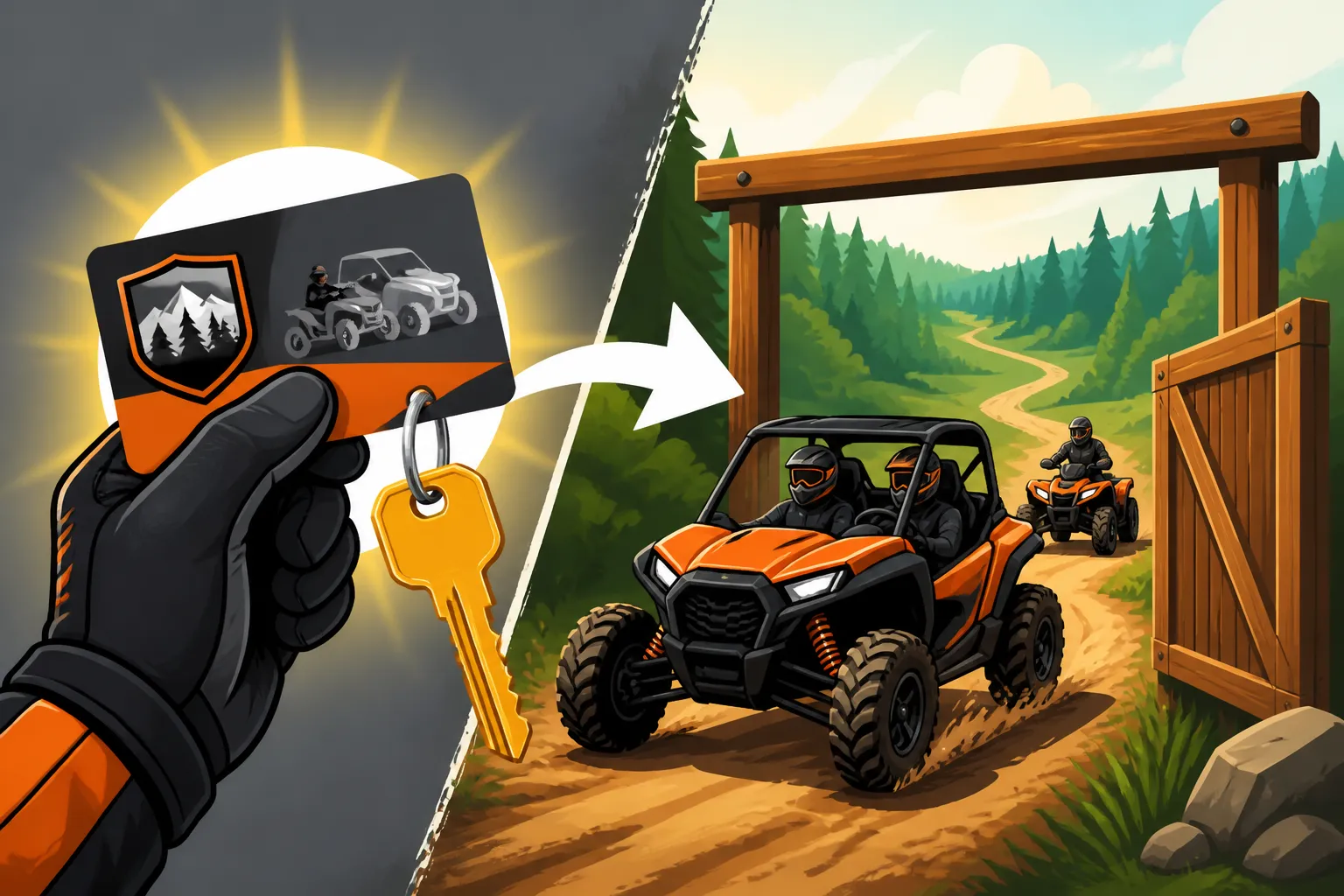
Private ATV and UTV trails are controlled by the people or organizations with authority over the land. A club may own land, lease it, or have permission to use it under an agreement with a landowner. Membership can give you access to that specific network under the terms the club sets. It does not automatically grant access to nearby private property, public trails or every route connected to the club’s system.
Before joining, identify the access you are buying. Ask which trails are included, whether access is limited to members, and whether your membership covers one machine or multiple machines. Some clubs may require a membership for each rider or unit; others may structure access differently. Do not assume that a household, guest or second ATV is covered unless the club confirms it.
| Access type | What it may provide | What it does not automatically provide |
|---|---|---|
| Club membership | Access to specified club trails while your membership is valid and in good standing | Permission to ride on land outside the club’s authorized routes |
| Landowner permission | Access to the property and areas described by the landowner | Permission to ignore posted boundaries, closures or conditions |
| State forest trail permit | Access to designated public trails covered by that permit, subject to its rules | Access to private club land |
| Pennsylvania ATV registration | Registration status for a machine under applicable state rules | Permission to ride a trail or enter property |
The key distinction is between paying for access and meeting the rules for operating your machine. Membership is about permission to use a club’s land. Registration, insurance, safety requirements and any trail-specific rules are separate questions. A club cannot make a trail open to you if its own land agreement does not authorize that access.
Some private routes cross land that a club leases rather than owns. In that situation, the lease or permission agreement determines what the club can offer members. Access may be limited by season, hours, trail condition or the landowner’s instructions. The club may also close a route if permission changes or the property needs protection. For more detail on these arrangements, see Club Trails on Leased Ground and Riding Private Club Land in Pennsylvania.
Check the terms before you join
Membership materials should tell you how access works, but ask direct questions if the terms are vague. A trail map can show the network, while written rules explain who may ride, when access is available and what restrictions apply. Look for both. A map alone may not identify temporary closures, private boundaries or rules for guests.
Confirm these details before paying:
- Which property and routes are included? Ask for a current map or trail description. Check whether the club’s trails connect to roads, public trails or other private parcels, and whether you may ride those connecting sections.
- Who is covered? Find out whether access is tied to a named member, a machine, a household or another arrangement. Ask how the club handles guests, minors and borrowed machines.
- When is riding allowed? Confirm the season, operating hours and any planned closures. Do not rely on an old social media post or a map from a previous season.
- What conditions can suspend access? Clubs may restrict use during wet conditions, maintenance work, hunting periods or other sensitive times. Ask where closures are posted and how members are notified.
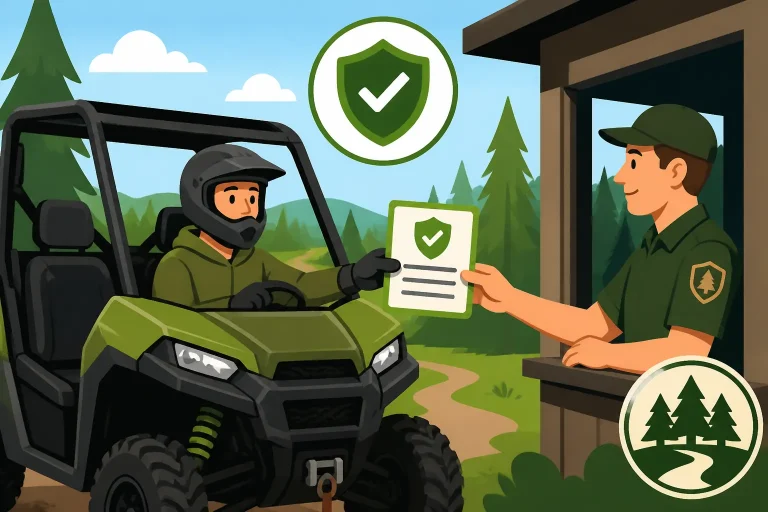
- What must you carry or display? The club may require a membership card, sticker, pass or proof of payment. Ask what a landowner, club steward or enforcement officer expects to see.
- What machine and safety rules apply? Check any limits on machine type, width, passengers, speed, noise or equipment. A route suitable for a narrow ATV may not be appropriate for a wider side-by-side.
- What happens if a rule is broken? Understand the club’s warning, suspension or removal process. Ask whether a member is responsible for a guest’s conduct or damage.
Clubs can set access conditions that are stricter than the minimum rules that apply under state law. For example, a club may limit the machines allowed on a trail, prohibit riding after a certain time or require particular safety practices. Those conditions are part of the access arrangement. Review Pennsylvania Rules for Riding a Club Trail alongside the club’s own current rules.
Do not treat a membership card as a substitute for permission to ride every property shown near a route. A trail may pass close to land the club does not control, and a visible track does not prove that the public or members may use it. Stay on the authorized route, obey signs and barriers, and stop if the route is unclear. The broader rules for private land are covered in Pennsylvania Rules for Riding Private Property and Pennsylvania Landowner Permission Requirements.
Membership is not a state permit or registration
A club’s private access and Pennsylvania’s public-land systems are separate. A membership may be enough for access to the club’s authorized property, but it does not replace any registration, insurance or other legal requirements that apply to your machine and riding situation. Likewise, a state trail permit does not give you access to a private club’s land.
Pennsylvania registration has different categories, and the right one can depend on where and how you ride. Before assuming that club membership changes what registration you need, review Pennsylvania’s Limited and General Registrations and Registering an ATV in Pennsylvania. The club may have useful guidance, but the club’s access rules do not determine your state registration status.
State forest riding is also different from club riding. Public trails may have their own permit requirements, seasonal openings and machine restrictions. A club membership does not cover those requirements. If you plan to combine private club trails with public land, check each trail system separately. Do You Need a Permit for Pennsylvania State Forest Trails? explains the separate public-land question.
Insurance deserves the same careful check. A club may require members to carry insurance or show proof before riding, and the coverage it asks for may be different from what applies to another location or activity. Confirm the club’s requirement in writing, then ask your insurer whether the policy covers off-road riding on private land and the kind of machine you use. Do not assume a standard vehicle policy covers an ATV or UTV on a club trail. See Insurance a Club Requires for the distinction between club rules and state requirements.
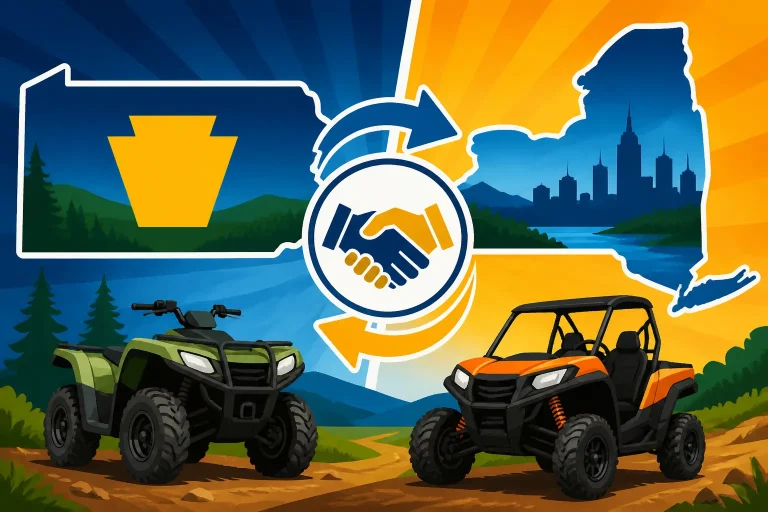
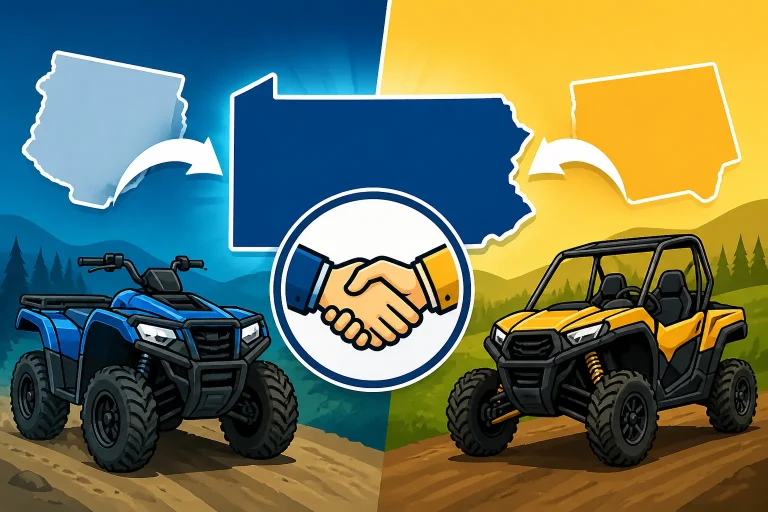
Visitors with machines registered in another state should not assume that club permission settles reciprocity. The club may allow a visiting rider to use its trails, but the rider still needs to check whether the home-state registration is recognized for the Pennsylvania riding involved and carry whatever proof is required. Start with Pennsylvania ATV Reciprocity With Other States and confirm the relevant conditions before traveling.
If the club hosts a poker run, guided ride or other organized event, ask whether the event has additional arrangements or requirements. An ordinary membership does not automatically cover a special event’s route or participants. Event organizers may need to arrange access with each property owner and meet other requirements. See Pennsylvania Permits for an Organized Ride before joining or organizing an event that crosses multiple properties.
Ride in a way that protects access
Private trail access depends on the club maintaining good relationships with landowners and managing wear on the property. A careless ride can affect more than the person who caused the problem: it can lead to a route being closed to all members. Treat signs, closures and boundaries as part of the access agreement, not as optional suggestions.
Before your first ride, check the club’s current notices for closures, trail conditions and any route changes. Keep your membership proof with you, and carry the machine documents or insurance proof you need for the trip. If you are riding with a guest, confirm that guests are allowed and that the guest understands the rules before entering the property.
On the trail, stay on marked routes and avoid widening a path around mud or an obstacle. Going around a wet section can damage vegetation, create a new unauthorized route or cross onto land the club does not control. If a trail is blocked or looks unsafe, turn back or use only a detour the club has specifically approved. Do not create your own bypass.
Respect access boundaries even when a gate is open or another rider has gone through. A gate may be open for maintenance or landowner use, and tracks do not establish permission. Close gates as instructed, do not remove signs or barriers, and avoid disturbing livestock, equipment, crops and other property. Take your trash with you and keep noise within the club’s rules.
Report problems through the club’s stated contact method. A washed-out trail, damaged sign, fallen tree or unclear boundary is worth reporting rather than improvising a route. If you are unsure whether a road or trail is included, stop and ask the club before continuing. The safest assumption is that access ends at the last clearly authorized route.
Membership can be a practical way to ride private trails, especially when a club has arranged dependable access to land that would otherwise be unavailable. The value depends on the actual network, the dates and rules of access, and whether those terms fit your machine and riding plans. Read the current conditions, keep state requirements separate from club permission, and verify any uncertainty with the club before the ride.
Disclaimer
This article is for general informational purposes only and does not constitute professional advice. Laws, prices and regulations vary by location and change over time. Consult a qualified professional for guidance on your specific situation.