Does Pennsylvania Honor an Ohio ATV Registration?
If you’re bringing an ATV from Ohio into Pennsylvania, the key question is whether you need to register it again after crossing the state line. Usually, a nonresident with a valid out-of-state registration does not need a Pennsylvania registration. That does not automatically cover insurance, trail access, or rules for riders, though. Here’s what to check before unloading and riding.
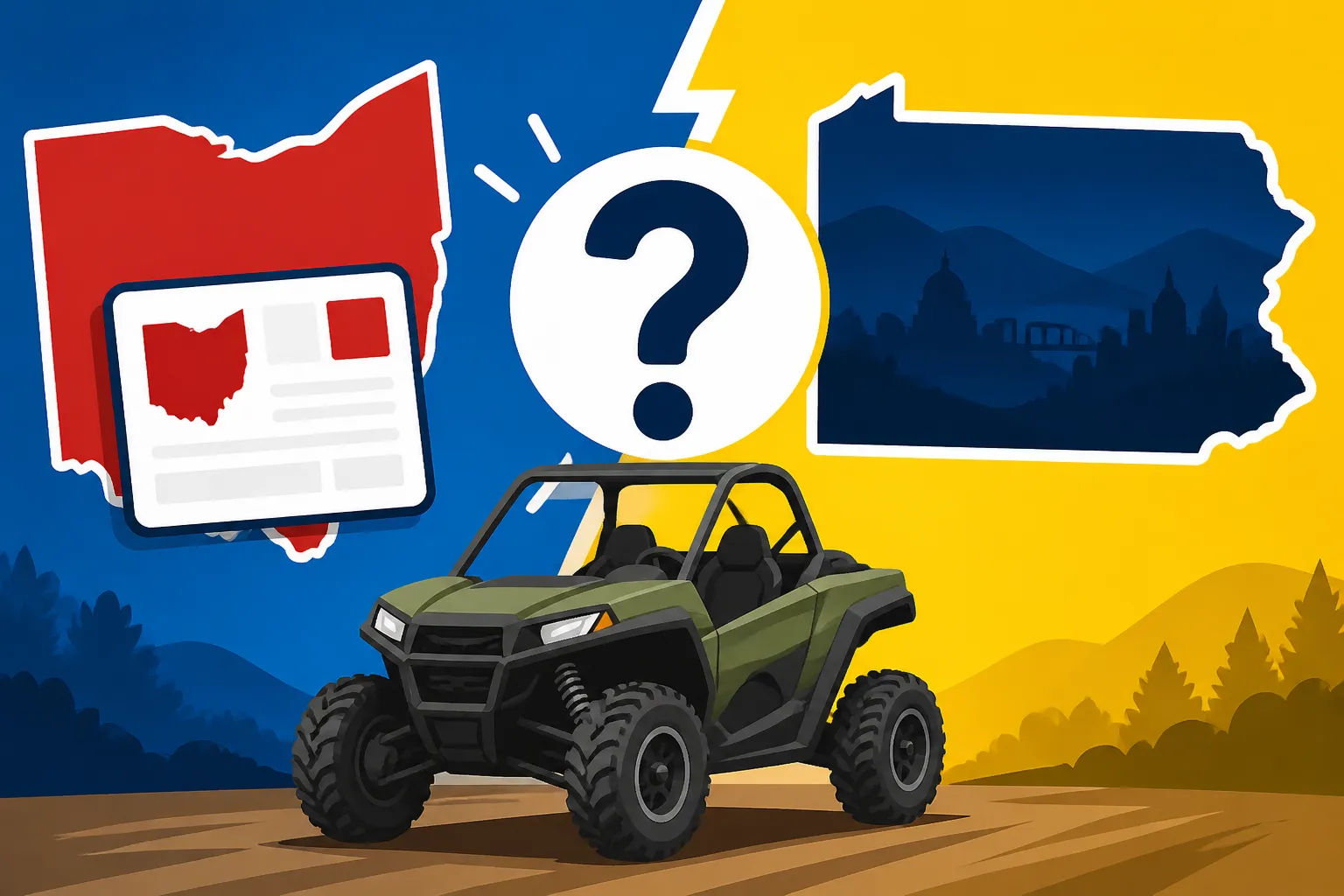
Does Pennsylvania honor an Ohio ATV registration?
For a visitor, generally yes. The Pennsylvania Department of Conservation and Natural Resources (DCNR) says a nonresident ATV with valid out-of-state registration does not need to be registered in Pennsylvania. So if your ATV is properly registered in Ohio and you are visiting Pennsylvania, you generally do not need to obtain a second registration just for the trip.
The important conditions are that you are a nonresident and that your Ohio registration is valid. The exemption is not a blanket rule for every ATV physically located in Pennsylvania. If you live in Pennsylvania, have moved there, or are using an ATV that is registered in someone else’s name, your situation may be different. Don’t assume that an Ohio registration removes every Pennsylvania requirement; confirm your circumstances with DCNR if residency or ownership is unclear.
This answers the registration question, not the question of where you can ride. Pennsylvania registration and trail access are separate matters. A valid Ohio registration does not, by itself, give you permission to use every Pennsylvania trail or public road.
For a broader explanation of how out-of-state registrations are treated, see Pennsylvania ATV Reciprocity With Other States and Pennsylvania Registration for a Machine Registered Elsewhere. If you’re bringing an Ohio-registered ATV for a visit, Riding Pennsylvania With an Out-of-State Plate may also help you sort out what to keep with you.
What “valid registration” means for a trip
Before you travel, check that the Ohio registration is current and that the information on it matches the machine you’re bringing. Carry the registration document or other proof of registration, rather than relying on an expired sticker, an application, or a seller’s paperwork to demonstrate that the ATV is registered.
DCNR’s nonresident exception is specifically for an ATV with valid out-of-state registration. If the registration has expired, the paperwork is missing, or the registration belongs to a previous owner, don’t assume the exception applies. Resolve the issue with the appropriate registration agency before riding.
It also helps to keep a clear record of who owns and operates the machine. If the ATV belongs to someone else, make sure you have permission to use it and can readily identify the owner. These practical steps do not replace registration, but they can make it easier to answer questions if an official checks your paperwork.
What to carry and what Pennsylvania still requires
A valid Ohio registration does not waive Pennsylvania’s other operating requirements. The rules that matter most to an out-of-state visitor are liability insurance, proof of insurance, and the documents you can show if asked.
Liability insurance and proof
According to DCNR, riders must carry liability insurance when operating an ATV on property they do not own or lease. DCNR also says the rider must have proof of liability insurance with them while riding. That requirement applies even when the ATV’s registration is from another state.
DCNR has not established minimum coverage requirements or coverage standards for ATV liability insurance. That does not mean you should assume any policy will cover every ride. Check with your insurer that the policy applies to ATV operation in Pennsylvania and to the kind of property or trail you plan to use. Ask how you can carry proof of coverage in a form you can show while riding.
A registration card and insurance proof serve different purposes. Registration identifies the machine’s registration status; insurance proof shows coverage. Keep both accessible. A small waterproof document holder, including one purchased through Amazon, can help protect paper documents from rain and mud, but make sure the information remains readable and available when you ride.
For a fuller overview of that distinction, see Pennsylvania ATV Registration and Insurance Proof and Carrying Proof of an Out-of-State Registration.
Registration documents are not a trail pass
Keep your Ohio registration proof with you, but don’t treat it as a trail permit. Some riding areas have separate access requirements, and those requirements depend on where you plan to ride. Before setting out, check the rules for the specific trail system, forest, club property, or private riding area.
Pennsylvania has trails and routes with different access rules. DCNR says state forest ATV riding is limited to designated trails; that does not make every forest road, state park, or game land open to ATVs. A route that appears on a map, or a road that is open to other vehicles, is not automatically an authorized ATV route.
If your plan includes a state forest trail system, start with Pennsylvania ATV Trail Permits Explained. For the Northcentral Regional ATV Trail, check Pennsylvania’s Northcentral Regional Trail Permit; for the Allegheny National Forest, see Pennsylvania’s Allegheny National Forest Permit. Those topics address access permits, which are separate from the question of whether Pennsylvania requires you to register your Ohio machine.
Registration, permits, and the situations that can change the answer
The easiest way to avoid a paperwork mix-up is to treat these as separate questions:
| Question | What it covers | What to check |
|---|---|---|
| Does Pennsylvania require another registration? | The ATV’s registration status in Pennsylvania | Whether you are a nonresident and the Ohio registration is valid |
| Do you need insurance? | Liability coverage while riding away from property you own or lease | Whether your policy covers the planned Pennsylvania riding |
| Do you need a trail permit? | Access to a particular trail system or property | The requirements for the exact place you plan to ride |
| Can you ride on a particular road or trail? | Whether that route is open and designated for ATV use | Signs, posted rules, and official route information |
For a nonresident visitor with a valid Ohio registration, DCNR’s rule means Pennsylvania registration is generally not required. That does not settle the other rows in the table. Check them independently, especially if your route crosses different types of land.
If you move to Pennsylvania
The nonresident exception is framed around nonresidents. If you move to Pennsylvania, don’t assume that your previous Ohio registration will continue to meet Pennsylvania requirements indefinitely. Contact DCNR about what applies to your machine and circumstances. Pennsylvania ATV Registration After Moving to the State covers the move-related question.
Likewise, if you are already a Pennsylvania resident but have registered the ATV in Ohio, don’t rely on the visitor exception without checking. The fact that the machine has an out-of-state registration does not, by itself, establish that a Pennsylvania resident qualifies for the nonresident rule. For that situation, see When a Pennsylvania Resident’s Quad Is Plated Elsewhere.
If the Ohio registration is expired or the ATV was just purchased
The exemption depends on valid out-of-state registration. If you recently bought the ATV and the Ohio registration is still in the seller’s name, or if you have not completed registration in Ohio, confirm what paperwork is valid before riding in Pennsylvania. A bill of sale can document a purchase, but it is not the same thing as current registration.
If the machine came from a private seller, review Buying From a Neighbor and Registering It and Pennsylvania ATV Bill of Sale Requirements. If you bought it from a dealer, Registering an ATV Bought From a Pennsylvania Dealer explains a different purchase process. These are Pennsylvania-focused registration topics, so use them to understand the paperwork issues rather than as a substitute for Ohio’s registration requirements.
If you are riding only on private property
Pennsylvania does not require a nonresident with valid out-of-state registration to obtain a Pennsylvania registration, but you still need the landowner’s consent to ride on private property. DCNR says ATVs may be operated on private property with the owner’s consent. If you ride on property you do not own or lease, DCNR also requires liability insurance and proof of insurance while riding.
That distinction matters even when a friend or family member invites you to ride. Permission to use the land does not make it your property, and it does not replace the insurance requirement for riding away from property you own or lease. Confirm the boundaries and any restrictions before you start.
If you want to ride public trails or roads
Before the trip, identify the exact trail or route rather than planning around a general area. DCNR says ATVs on state-owned property may be operated only on clearly marked, designated trails. The rules for a particular trail system can also include a separate permit or seasonal access conditions.
A public road is not automatically an ATV route. DCNR identifies township roads designated for ATV use with a green sign showing a white side-view silhouette of an ATV and rider. Check for signs and local route information rather than assuming a road is open because it connects to a trailhead.
Rider requirements can apply as well. DCNR says riders aged 8 through 15 must complete ATV safety training and carry a certificate when riding away from a parent’s or guardian’s property; children under 8 are not permitted to operate an ATV on state-owned property. Riders should check the rules that apply to the machine, route, and rider before heading out.
A practical pre-ride check for an Ohio visitor
Use this checklist before loading your ATV:
- Confirm residency. The Pennsylvania registration exemption described by DCNR applies to nonresidents with valid out-of-state registration. If you live in Pennsylvania or have recently moved, verify what applies to you.
- Check the Ohio registration. Make sure it is current and that the paperwork corresponds to the ATV you are bringing.
- Carry registration proof. Keep the document accessible while riding. For more on what a visiting rider should carry, see Carrying Registration Proof as a Visitor.
- Verify insurance. DCNR requires liability insurance when riding away from property you own or lease, and you must carry proof of insurance while riding.
- Confirm trail access separately. Contact or check the rules for the specific trail system or private property. Registration does not function as a trail permit.
- Check the route. Make sure trails and roads are designated and open to ATVs. Don’t rely on a map alone where signs or local restrictions determine access.
- Review the rider rules. Confirm any age, training, helmet, and operating requirements that apply to your ride.
If you meet the nonresident and valid-registration conditions, you generally do not need a Pennsylvania ATV registration for an Ohio-registered machine. The safest plan is to carry proof of that registration, have insurance proof ready, and confirm permits and route access before you ride. That way, you can answer the registration question without confusing it with the separate rules that govern insurance and where the ATV may go.
Sources
- Pennsylvania Department of Conservation and Natural Resources — Home Page – Snowmobile/ATV Registration (checked November 3, 2026)
- Pennsylvania Department of Conservation and Natural Resources — Trail Conditions – Snowmobile/ATV Registration (checked November 3, 2026)
Disclaimer
This article is for general informational purposes only and does not constitute professional advice. Laws, prices and regulations vary by location and change over time. Consult a qualified professional for guidance on your specific situation.