Pennsylvania Minimum Age to Ride a Road
It’s a common dream for any ATV or UTV owner in Pennsylvania: the freedom to hop on your machine and run down the road to a gas station, a friend's house, or a trailhead. But Pennsylvania has some pretty strict rules about taking these machines onto public roads, and one of the biggest sticking points is age. Navigating these regulations can feel like a maze, especially when you're trying to figure out if your teenager can legally ride that designated road. This guide will clarify exactly what age you need to be to operate an ATV or UTV on Pennsylvania's approved roads and why these rules are in place.
Pennsylvania's Minimum Age of Sixteen on Roads
If you've ever dreamt of cruising down a public road on your ATV or side-by-side in Pennsylvania, you've likely bumped up against the stark reality that it's generally not allowed. And when it is allowed, such as on specifically designated joint-use or connector roads, there's a strict age requirement that often catches people off guard. The Pennsylvania Department of Conservation and Natural Resources (DCNR), which oversees ATV and snowmobile regulations, is very clear: you must be at least 16 years old to operate an ATV or UTV on any road or highway open to ATV use.
This rule isn't just a suggestion; it's codified in state law and is enforced by local police and DCNR rangers alike. It doesn't matter how experienced a younger rider might be on the trails, or if they've completed a safety course. If they're under 16, public roads are off-limits for operating an ATV or UTV. This can be a huge frustration for families who might have competent younger riders and want to use designated roads for practical purposes, like reaching a trail system or a local business in towns like Windber Borough, which has specific mixed-use programs. But the law is unwavering on this point.
Think about it this way: the state views operating an ATV on a public road, even a designated one, as a more complex and potentially dangerous activity than riding on a dedicated off-road trail. There are cars, trucks, and other road vehicles to contend with, not to mention traffic laws and signage that might be different from what a younger rider is used to. Even if you've kitted out your UTV with a full SuperATV windshield and mirrors, the age requirement remains. It's about protecting the rider and other motorists.
Understanding Designated ATV Roads
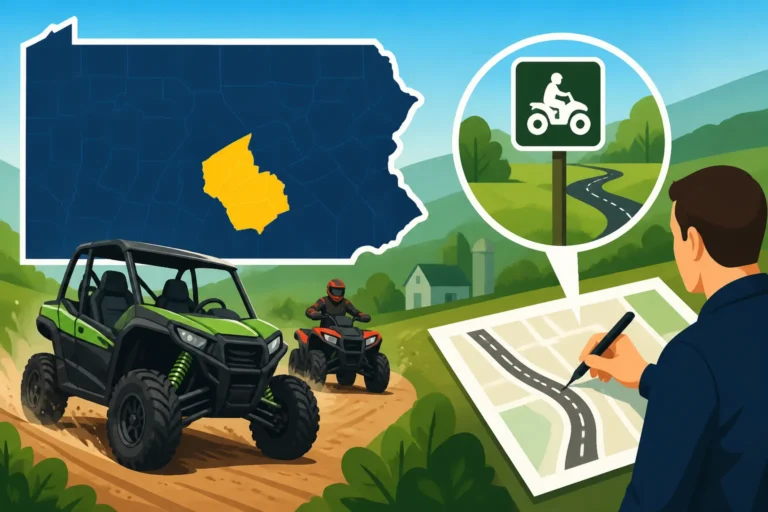
When we talk about designated ATV roads, we're not talking about just any old country road. Pennsylvania does not allow ATVs to be "street legal" in the way cars are. Instead, certain townships and boroughs, in cooperation with DCNR, can open specific, usually low-traffic, roads for ATV and UTV use. These are often connector routes between trail systems or access roads to services in a rural community. You'll typically see clear green signs indicating that the road is open for ATV use.
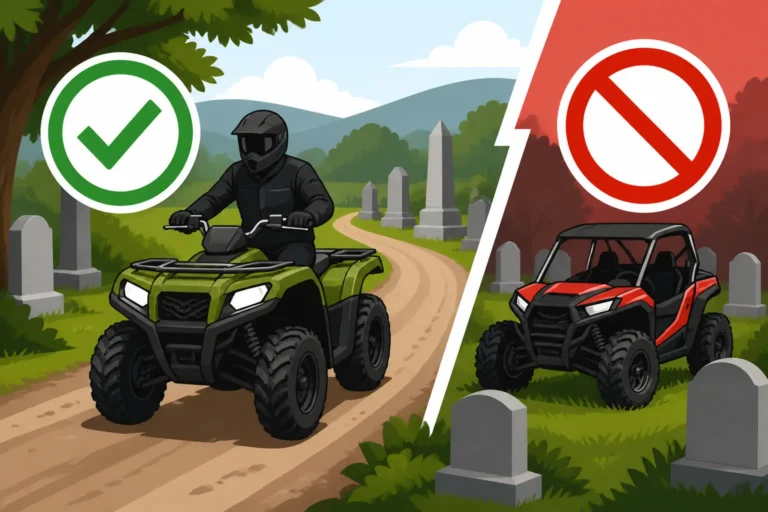
Even on these special roads, the 16-year-old minimum age applies strictly. A 15-year-old rider, no matter their skill level or whether they have a valid [Pennsylvania ATV Safety Certificate Requirements], cannot legally operate their machine on one of these designated routes. This is a critical distinction many riders miss, assuming that if a road is open to ATVs, all registered riders can use it. The age restriction is tied directly to the concept of sharing a public roadway with other vehicles.
This can be particularly challenging for families on riding trips. Imagine you're at a popular riding destination, and there's a designated ATV road connecting two sections of trail or leading to a small general store. If you have a child between 8 and 15 years old who is perfectly capable on the trails, you still cannot let them operate the ATV on that connecting road. You would either need to transport their machine or have a 16-year-old or older licensed operator take the controls. It's a logistical hurdle that requires careful planning.
Why Pennsylvania Limits Road Riding by Age
The reasons behind Pennsylvania's 16-year-old minimum for road riding are rooted in safety, legal classifications, and a desire to minimize risk on shared roadways. Unlike private property or dedicated trail systems where the environment is controlled and predictable for ATV use, public roads introduce a host of variables that demand a higher level of maturity, judgment, and awareness.
One primary factor is the inherent difference between off-road riding and road driving. Road driving requires specific knowledge of traffic laws, the ability to anticipate other drivers' actions, and quick decision-making in complex situations. While an ATV safety course teaches valuable skills, it's generally geared towards off-road environments. The state believes that at 16, individuals have a better grasp of these complexities, partly due to the availability of driver's education and the general expectation of road-readiness at that age.
Furthermore, there's the legal classification of ATVs and UTVs. Despite their ability to carry passengers or haul gear, these machines are generally not considered "street legal" vehicles by the Pennsylvania Department of Transportation (PennDOT). They fall under the purview of DCNR, which governs their off-highway use. When ATVs are permitted on specific roads, it's typically under very narrow exceptions, and these exceptions come with heightened safety requirements, including the age minimum.
Safety Concerns on Shared Roads
The primary driver for the 16-year-old age limit on designated roads is safety. Public roads, even low-traffic ones, are shared spaces. This means ATVs and UTVs are sharing the asphalt with cars, trucks, motorcycles, and sometimes even bicycles and pedestrians. The speed differentials, the need for clear signaling, and the responsibility to adhere to all vehicle code rules become paramount.
Younger riders, while often skilled off-road, may lack the cognitive development and experience to handle the dynamic and often unpredictable nature of road traffic. Their peripheral vision, judgment of speed and distance, and reaction times might not be as developed as an older rider. An accident involving an ATV and a passenger vehicle on a public road can have devastating consequences, given the lack of structural protection on an ATV. Even with protective gear like helmets and sturdy SuperATV grab handles for passengers, the risk profile is significantly higher.
This emphasis on safety is why other rules, such as wearing helmets, are mandatory for all riders and passengers on public roads, regardless of age. The state is trying to mitigate risk wherever possible, and setting a higher age threshold for road operation is a key component of that strategy. It's about protecting not just the ATV rider, but also other road users who might not be expecting an ATV to behave like a car.
Legal Responsibility and Liability
Another crucial aspect is legal responsibility and liability. At 16, individuals are generally closer to the age of legal majority and are expected to bear more personal responsibility for their actions. If a younger rider were involved in an accident on a public road, the legal implications for themselves, their parents or guardians, and even the landowners or local municipalities could be significant.
The state's regulations aim to minimize these risks by ensuring that operators on public roads are of an age where they are presumed to have a better understanding of the law and the consequences of their actions. This also ties into insurance requirements. While DCNR does not mandate specific coverage limits, [Pennsylvania ATV Insurance Requirement] is generally required when operating off your own land, which definitely includes designated public roads. Insurance companies typically factor age and experience into their policies, reflecting the perceived risk.
The fines for riding illegally, such as [Pennsylvania Fines for an Unregistered ATV] or operating underage on a restricted road, can also be substantial. A first offense for riding where prohibited can result in an automatic $300 fine, plus potential court costs. These penalties are designed to deter non-compliance and reinforce the serious nature of these regulations, especially when it comes to age and road use.
What About Crossing Roads or Riding on Private Property?
It's important to differentiate between operating an ATV on a designated road for travel versus briefly crossing a road or riding exclusively on private land. The age rules can vary significantly depending on the specific context, and understanding these nuances is crucial for staying legal and safe.
Crossing a road is often necessary to get from one section of a trail to another, or to access a staging area. Pennsylvania law allows for specific, very limited road crossings. For instance, you can cross a highway at a ninety-degree angle after coming to a complete stop and yielding to traffic. This is a quick, direct maneuver, not sustained travel on the road. The 16-year-old age requirement does not apply to these brief crossings in the same way it does to sustained travel on a designated ATV road. However, basic safety rules and the requirement for an appropriate safety certificate still apply to younger riders during such crossings.
On private property, the rules are generally much more flexible regarding age. If you own land or have explicit permission from a landowner, a younger child can typically ride an ATV under supervision, without needing to meet the state's minimum age requirements for state trails or roads. This is because the owner of the private property sets the rules for their land, assuming they don't violate other specific state laws regarding dangerous activities. However, it's always recommended that any rider, especially a youth, complete a [Pennsylvania ATV Safety Certificate Requirements] to ensure they have fundamental riding skills and knowledge.
Age Rules for Passengers and Trail Riding
While the 16-year-old rule is strict for operating an ATV on a designated public road, the rules for passengers and for operating on trails are different.
For passengers, Pennsylvania law generally requires that they be able to reach the footrests and hold on securely to the handholds. There's no specific minimum age listed for passengers on ATVs, but it's strongly advised to use common sense and ensure the passenger is old enough and mature enough to safely ride as a passenger, especially on rough terrain. UTVs, with their side-by-side seating, roll cages, and seatbelts (perhaps even an aftermarket SuperATV harness bar for added safety), often provide a more secure environment for passengers of varying ages, but again, the operator must be 16 or older to be on a designated public road.
When it comes to riding on state-managed trails (like those in state forests or DCNR-permitted areas), the age requirements for operators are more lenient than for public roads. Generally, riders aged 8 to 15 can operate ATVs on these trails if they hold a valid [Pennsylvania ATV Safety Certificate Requirements] and are under direct supervision. There are also engine size restrictions for younger riders, such as the [Pennsylvania Rules for a Nine-Year-Old Rider] limiting them to machines 70cc and under. Once a rider turns 16, these restrictions generally lift, and they can operate any size ATV on state trails (assuming they still have a safety certificate or pass the online course).
So, while your 10-year-old might be an absolute pro on their 70cc quad at Bloody Skillet or Whiskey Springs, they cannot legally operate that same machine on a short section of designated road connecting two parts of the trail system. This distinction is crucial and often a point of confusion for riders new to Pennsylvania's regulations.
Age-Based Riding Rules at a Glance
To help clarify the various age requirements depending on where and how you're riding in Pennsylvania, here's a quick summary. Remember, these are general guidelines, and it's always best to check the specific regulations for the area you plan to ride, especially when it comes to designated roads or organized events.
| Activity/Location | Minimum Operator Age | Additional Requirements |
|---|---|---|
| Designated Public Roads | 16 years old | Valid registration, helmet, insurance, knowledge of traffic laws |
| State Forest Trails | 8-15 years old | Safety certificate, direct supervision, engine size limits (70cc for 8-9 year olds) |
| State Forest Trails | 16+ years old | Safety certificate (or passed online course), valid registration, helmet, insurance |
| Private Property | No state minimum | Landowner permission, supervision recommended, safety certificate highly advised |
| Crossing a Highway | 8+ years old | Safety certificate (if under 16), stop, yield, 90-degree crossing, helmet, insurance |
| Passenger on ATV | No specific minimum | Must reach footrests, hold handgrips, helmet required |
| Passenger on UTV | No specific minimum | Must be able to sit securely, wear seatbelt, helmet required (unless enclosed & specified) |
This table clearly illustrates the critical divide: public roads, even when designated for ATVs, demand an older, more experienced operator. This aligns with Pennsylvania's overall approach to vehicle operation on its road network, prioritizing safety and a certain level of presumed maturity and legal understanding.
Disclaimer
This article is for general informational purposes only and does not constitute professional advice. Laws, prices and regulations vary by location and change over time. Consult a qualified professional for guidance on your specific situation.