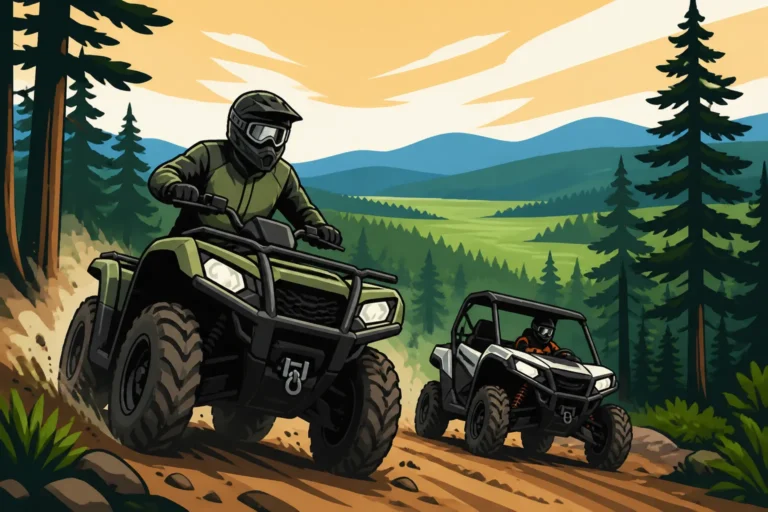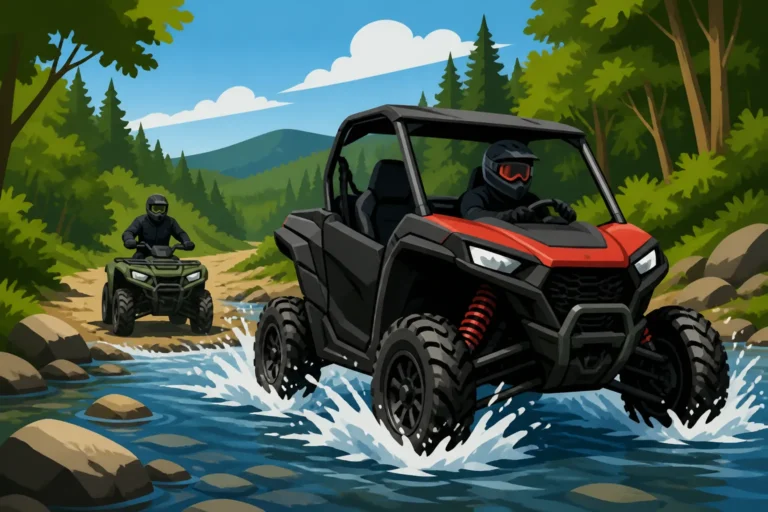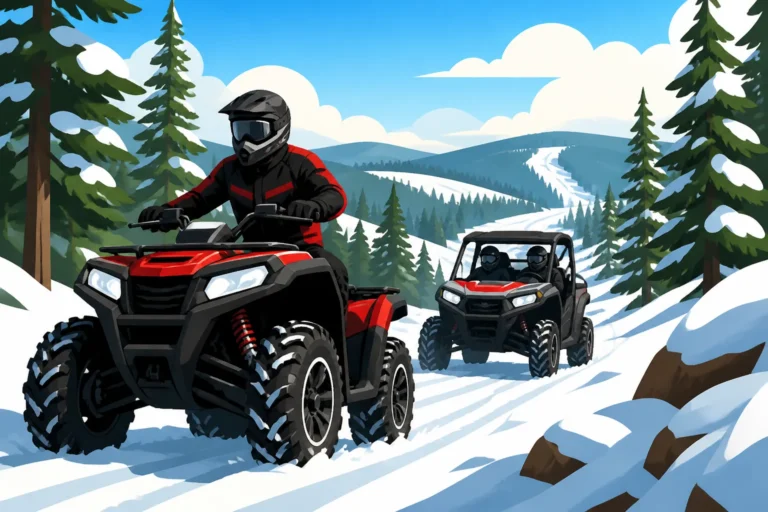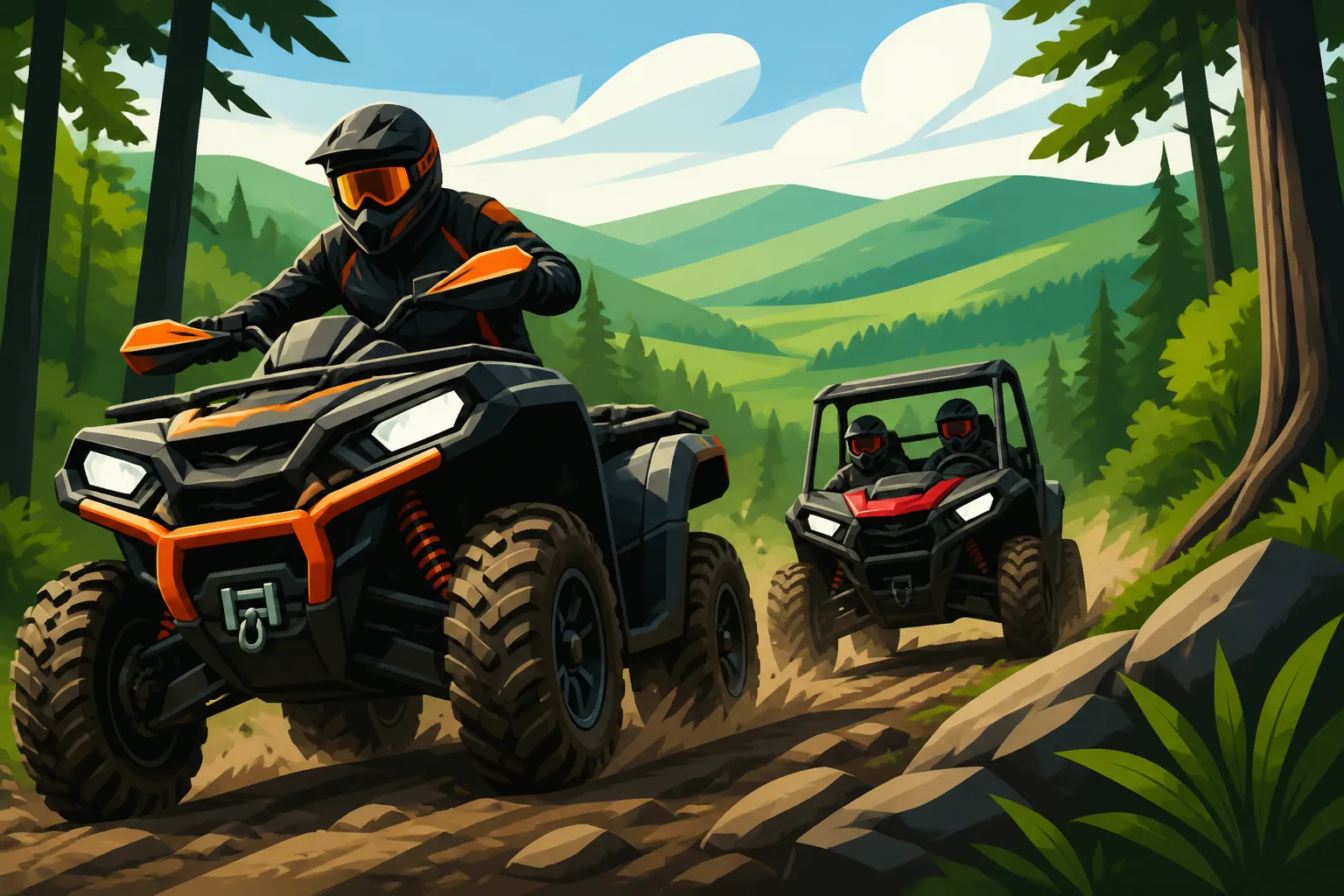
Martin Hill in Buchanan State Forest
Martin Hill can be a rewarding ride, but planning is less straightforward than searching for a trailhead and loading the machines. Seasonal closures, registration rules, changing trail conditions, and limited services nearby can all affect the day. This guide explains how to prepare for Martin Hill in Buchanan State Forest, what to check before leaving, and how to ride responsibly once you arrive.
Getting to know Martin Hill
Where the trail is and what to expect
Martin Hill is an ATV riding area in Buchanan State Forest in Bedford County, Pennsylvania. It is commonly described as a relatively compact trail system, often estimated at about 18 miles, though the distance you can ride may vary with closures, maintenance, and the routes open during your visit. Treat that figure as a planning reference rather than a promise that every mile will be available on a particular day.
The setting is wooded and rural, not a developed off-road park with services around every corner. Expect a ride shaped by forest roads and designated trail sections, with the usual mix of changing surfaces, bends, slopes, and places where you may need to slow down. Conditions can be quite different after rain, during a dry spell, or early in the riding season.
That quieter setting is part of the appeal, but it calls for a little more preparation. Bring the essentials you would want if you had to pause for a mechanical issue, wait out a storm, or take a longer route back to your vehicle. If you are comparing destinations, [Martin Hill in Bedford County] offers a location-specific starting point, while [Pennsylvania ATV Trails With Scenic Overlooks] can help you think about the kind of riding experience you want elsewhere in the state.
Is Martin Hill a good fit for your group?
Martin Hill may suit riders looking for a forest setting and a ride that does not require committing to an enormous trail network. It can also work for a group that wants to spend time outdoors without building a full weekend around a large commercial park. Still, “compact” does not mean effortless: a short network can include sections that feel slow or challenging depending on the terrain, weather, and the experience of the riders.
For a first visit, think about the least experienced person in your group, not just the most confident rider. A route that feels easy to someone who rides every weekend may feel demanding to a newer rider, a younger operator, or someone on a different machine. Agree on a pace before setting off, and make sure everyone understands that stopping to regroup is part of the plan rather than a sign that the day is going badly.
It also helps to distinguish a trail system from a pay-to-ride park. A public forest trail is not necessarily staffed like a recreation facility, and you should not assume there will be an attendant, on-site fuel, food, repair help, or a convenient place to wait out a breakdown. For a broader comparison of public routes and riding facilities, see [Pennsylvania Pay-to-Ride Parks Worth the Drive].
Check rules, registration, and trail access before you go
Confirm what your machine needs
Before riding, check that your ATV or UTV meets the registration requirements that apply to the trip. Pennsylvania distinguishes between registration intended for riding on the owner’s property and registration for riding beyond it. A machine that is registered only for use on its owner’s land may not be eligible for the same riding opportunities as one registered for broader use. Review [Pennsylvania ATV Registration and Trail Access] and [Pennsylvania's Limited and General Registrations] if you are unsure which type you have.
Do not assume that a plate from another state automatically settles every Pennsylvania access question. Rules can depend on the machine’s registration, where you are riding, and whether Pennsylvania recognizes the home-state registration for that purpose. Visitors should check [Pennsylvania ATV Reciprocity With Other States] and carry their registration proof. Pennsylvania residents with an out-of-state plate should check their obligations too, rather than relying on what a friend was allowed to do on a previous trip.
Registration and trail access are related, but they are not identical. A valid registration does not mean every road, forest route, or adjoining property is open to ATVs. Likewise, a trail or forest permit, where required for a particular area, does not replace registration. Before setting out, confirm the requirements for Martin Hill specifically and keep any required documents accessible during the ride.
Check seasonal access and closures
Martin Hill is a seasonal riding destination. The trail calendar, weather, maintenance work, and temporary closures can affect whether a route is open on the date you have in mind. A trail that was open on your last visit may not be open now, and a navigation app may continue to display a line even when access has changed.
Make an official status check part of your trip planning, especially for the first and last weekends of a riding season. Mud, thawing ground, storm damage, and maintenance needs can lead to closures intended to protect trails from lasting damage. For background on how seasonal access works across the state, see [Pennsylvania's ATV Trail Season] and [Pennsylvania Trails Closed in Spring].
A useful rule is to check the official information shortly before leaving, not only when you first book a campsite or invite friends. If the trail status is unclear, contact the relevant forest office or agency rather than interpreting an old map, a social media post, or an app listing as permission to ride. The general trail planning guidance in [Pennsylvania Trail Closures to Check First] is especially useful when your travel plans are difficult to change.
Verify trail dimensions and machine fit
If you ride a UTV or a wider ATV, check dimensions before you load it. Pennsylvania’s designated trail systems can have width restrictions, and the maximum permitted width is not the only practical issue. A machine close to the limit may be harder to maneuver on a narrow, uneven section, especially when meeting another rider or navigating a tight turn.
Do not rely on a model name or a sales description to decide whether your machine fits. Measure the widest point of the actual vehicle, including accessories that extend beyond the body. Mirrors, wheel spacers, aftermarket tires, bumpers, and other modifications can change the total width. Compare your measurement with the current rule for the trail and the machine category.
The statewide width limit is an important starting point, but the specific trail and current access rules matter. Check [The 64-Inch Width Limit in Pennsylvania] and [Pennsylvania Trails for a Wide Machine] before planning a UTV trip. If your machine may be too wide, it is better to confirm before driving to Bedford County than to discover the problem at a trail entrance.
Plan your route and read the map carefully
Use maps as planning tools, not permission
A map is useful for understanding the area, finding likely access points, and giving your group a shared picture of the day. Pennsylvania’s official trail information should be your first reference for designated routes and access rules. [Pennsylvania ATV Trail Maps From DCNR] is a helpful place to begin your research.
Apps such as onX Offroad can make it easier to review a route on a phone, save information for offline use, and keep the group oriented when cell service is unreliable. That is helpful in a wooded, rural area where you may not want to depend on a live connection for every navigation decision. Download or save the information before reaching the trailhead, and make sure at least one other rider knows how to use the map if the person carrying the phone has a problem.
A navigation line is not proof that a route is open to ATVs. Map layers may show roads or tracks that cross private property, have different vehicle rules, or are closed for the season. Use onX Offroad as a planning aid, then compare what it shows with current official information and posted signs on the ground. If the two do not agree, do not treat the app as permission to continue.
Make a realistic ride plan
Before unloading, decide where the group expects to ride, when you will turn back, and where you will regroup if riders become separated. Your plan does not need to be complicated. A few shared landmarks and a clear meeting point can prevent a minor navigation mistake from turning into an anxious search through unfamiliar forest roads.
Build in extra time. A route that looks short on a map can take longer when riders slow down for rough patches, wait for a machine to cool, or stop to help someone adjust gear. Rain can change the surface and the pace; so can a group with mixed experience. If you have a fixed departure time or a long drive home, turn back early enough that a small delay does not create pressure to ride carelessly.
Tell someone who is not joining you where you plan to ride and when you expect to be back. If your route changes substantially, update them when practical. In the group, agree on a simple regrouping routine: wait at safe junctions, keep the machine behind you in view when conditions allow, and do not leave a rider alone with a mechanical problem while everyone else continues.
Do not mistake a road for an open ATV route
Forest roads, public roads, private roads, and designated ATV trails are not interchangeable. A road passing through forestland is not automatically open to ATVs, and a route shown on a map is not enough to determine what vehicles may use it. Follow signs, gates, and posted restrictions, and do not ride around a closure barrier.
This matters particularly when planning an approach to the riding area. A rider may be tempted to connect two legal-looking routes by following a nearby road, driveway, or track. That shortcut could cross private land or enter a road that is not designated for ATV use. Confirm the permitted route from the trail information and signage rather than assuming that proximity means access.
If your plans involve riding on forest roads beyond the designated ATV trail, review [Pennsylvania Rules for Riding a State Forest Road]. For broader context on how trail access works on public land, [Pennsylvania Rules for Riding a National Forest] explains why land ownership and the kind of route both matter.
What the ride may feel like on the ground
Prepare for changing surface conditions
Forest trails can change quickly with weather and use. A surface that is firm in one stretch may be loose, wet, rutted, rocky, or slippery in another. After heavy rain, standing water and soft ground can conceal holes or make a familiar turn behave differently. On dry days, dust can reduce visibility between riders and make it harder to see the next bend.
Adjust your speed to what you can see and stop for. Leave enough room to avoid riding into the dust cloud or rear tires of the person ahead. If visibility drops, increase the gap and wait for it to clear rather than closing in. On a narrow section, be ready to slow down when approaching another group, especially if you cannot see beyond a bend.
A wet trail is not an invitation to spin the tires for fun. Spinning can deepen ruts, damage the trail surface, and make conditions worse for the next rider. If a section looks too soft or is visibly deteriorating, turn around where it is safe and choose an open route. For more practical guidance, see [Pennsylvania Trail Conditions Before You Go] and [Pennsylvania Trails After Heavy Rain].
Ride at a pace that suits the group
A good group ride is not a race. On unfamiliar terrain, ride slowly enough to respond to a sudden rut, a stopped machine, or another group approaching from the opposite direction. Keep a comfortable following distance, use predictable movements, and avoid stopping in a blind corner or where another rider would have little room to react.
If the group includes riders with different experience levels, put a confident, patient rider at the front and an attentive rider at the back. The lead rider can set a pace that works for everyone, while the sweep rider can help notice when the group stretches out. Decide how to handle forks and junctions in advance so that a rider does not turn onto the wrong route while the others continue.
Trail etiquette is not only about being polite; it protects access and reduces the chance of a collision. Yield carefully where appropriate, communicate clearly, and leave room for other users. [Pennsylvania ATV Trail Etiquette on Narrow Trails] covers the habits that make a tighter route more manageable for everyone.
Be considerate of the forest and other visitors
Buchanan State Forest is a shared landscape. You may encounter other trail users, forest workers, land managers, or people visiting for purposes unrelated to ATV riding. Slow down, give others space, and follow any posted instructions. Do not assume a quiet trail means that nobody else is using the area.
Stay on designated routes. Riding around a muddy section or creating a new bypass may damage vegetation and widen the disturbed area. A detour that seems harmless to one group can become a repeated track that is difficult to repair. If a route is blocked or visibly unsafe, turn around and report the issue through the appropriate official channel instead of making a new path.
Pack out everything you bring in, including food wrappers, broken straps, and small repair parts. Keep noise within applicable rules and avoid unnecessary revving near homes, parking areas, or other visitors. Respecting the forest is part of keeping a public riding opportunity available for the next group.
Prepare for the practical parts of the day
Pack for a remote ride
Think beyond helmets and keys. Bring drinking water, food, weather-appropriate layers, a basic first-aid kit, and a phone or navigation device with the route saved for offline use. Add the tools and small repair items that suit your machine, such as a tire repair kit if you know how to use it, spare fuses, and a way to secure loose gear.
A group should also decide who is carrying essential items. If every person assumes someone else has the first-aid kit or the map, the group may discover too late that neither is actually available. A quick check before leaving the parking area can catch a dead phone, a low tire, a missing registration document, or a loose tie-down before it becomes a trail problem.
Services and cell coverage can be limited in rural areas, so plan as though you may need to manage a delay without immediate help. Check fuel before leaving the staging area and avoid assuming you will find a nearby pump when the group is ready to head home. For parking and facility questions, [Pennsylvania Trailheads With Restrooms and Water] is a useful general planning reference, but verify what is available at your chosen access point rather than assuming every trailhead has the same amenities.
Protect paperwork and personal gear
Carry registration and any required access documents in a secure, weather-resistant place. A wallet card tucked loose into a pocket can be difficult to read after a wet ride, and a paper document exposed to mud or rain may be ruined when you need it. Keep a backup record at home or in a vehicle, but do not assume a photograph replaces any document that must be carried.
Secure loose items before setting off. A strap flapping near a wheel or a tool bouncing out of a rack can become a safety hazard or litter. Recheck cargo after the first stop, particularly if the route includes bumps or the machine is carrying extra gear.
For an organized group, it is worth agreeing on a simple check-in routine before the ride. Each rider should know who is carrying the phone, who has the map, and what to do if the group becomes separated. If a machine cannot continue, the group should stop somewhere visible and safe, not on a blind curve or in the middle of a narrow route.
Use a simple pre-ride checklist
A short check before riding can catch problems that are easy to miss when everyone is excited to get moving. Inspect tires, controls, brakes, lights, and the machine’s general condition. Confirm that helmets and protective gear fit properly, that passengers are permitted on the machine and route, and that every rider understands the day’s plan.
| Before leaving home | At the access point | During the ride |
|---|---|---|
| Check current trail status and access rules | Confirm signs and restrictions | Keep a safe following distance |
| Verify registration and required documents | Check tires, controls, and cargo | Slow down for dust, corners, and wet ground |
| Save maps for offline use | Agree on a regrouping plan | Stay on designated routes |
| Pack water, layers, and basic supplies | Confirm fuel and communications | Turn back if conditions are unsafe |
A checklist should support good judgment, not replace it. If the machine has a mechanical issue, if a rider is tired, or if weather makes the route unsafe, changing the plan is a sensible decision. There is no prize for finishing a loop when someone is uncomfortable or the trail is deteriorating.
Make the trip easier from arrival to departure
Allow time for parking and unloading
Arrive with enough time to park legally, unload without rushing, and review the posted information. A hurried start encourages people to miss a sign, forget a document, or pull out before the group has agreed on a route. If the staging area is busy, unload in a way that leaves room for other vehicles and trailers to maneuver.
Do not block gates, access roads, or spaces needed by other visitors. Keep the trailer and tow vehicle where parking is allowed, and avoid leaving valuables visible. If you are unsure whether overnight parking is permitted, ask the responsible agency or consult its current guidance rather than assuming the area is unattended and unrestricted.
Before riding, take a moment to look at the day’s conditions. Is the ground wet? Are there signs of recent maintenance? Are any routes closed? A map planned at home is useful, but the first view of the actual access point can reveal information that changes the plan.
Finish the day safely
Set a return time that gives the group room to load, secure the machines, and leave before fatigue sets in. A long drive home after a full day can be harder than expected, particularly if riders have been concentrating on uneven terrain for hours. Take a break before driving if you feel tired or dehydrated.
Check the machines before loading. Look for loose parts, damaged tires, leaking fluids, or mud packed around areas that need attention. Secure each ATV or UTV with appropriate tie-downs and check that the trailer load is balanced and stable. A final walk-around is a small step that can prevent a stressful roadside stop.
After the ride, make a note of what worked and what you would change next time: the access point, route plan, gear, trail conditions, or timing. If you encountered a closure, confusing sign, or hazard, share that information with the relevant agency. That kind of practical feedback helps other riders plan responsibly without treating an old map or a secondhand report as a guarantee.
Disclaimer
This article is for general informational purposes only and does not constitute professional advice. Laws, prices and regulations vary by location and change over time. Consult a qualified professional for guidance on your specific situation.