Pennsylvania Fines for No ATV Insurance
Let's be honest, for many of us who love hitting the trails in Pennsylvania, thinking about ATV insurance often feels like a chore, or something you might assume you don't really need, especially if you mostly ride on your own land. We tend to focus on the fun stuff – the upgrades, the gear, the next big ride – but neglecting proper insurance can turn a fantastic weekend into a financial nightmare. This guide is here to lay out exactly what Pennsylvania's laws say about ATV insurance, the significant fines you could face for riding without it, and how to make sure you're properly covered so you can enjoy your adventures without the looming threat of hefty penalties.
The Harsh Reality of Uninsured Riding in Pennsylvania
It's a common misconception that if your ATV isn't "street legal" or you primarily ride on private property, you don't need insurance. This couldn't be further from the truth in Pennsylvania, and unfortunately, many riders learn this the hard way. The moment your wheels touch public land, a designated trail, or even cross a public road to get from one private parcel to another, you're subject to the state's insurance laws.
Why Insurance Feels Optional (But Isn't)
You might have heard friends talk about how they've never been asked for insurance, or perhaps you've been riding for years on your own property and never seen the need. This casual approach is understandable; after all, an ATV isn't a car, and its primary purpose isn't usually road travel. However, the Pennsylvania Department of Conservation and Natural Resources (DCNR) views ATVs as powerful recreational vehicles that, when used off private land, carry inherent risks to riders, other people, and property. The law reflects this understanding, aiming to ensure that anyone involved in an accident has some level of financial protection. It's not about stifling your fun, but about creating a safety net for everyone sharing our incredible Pennsylvania landscapes.
The Automatic $300 Fine
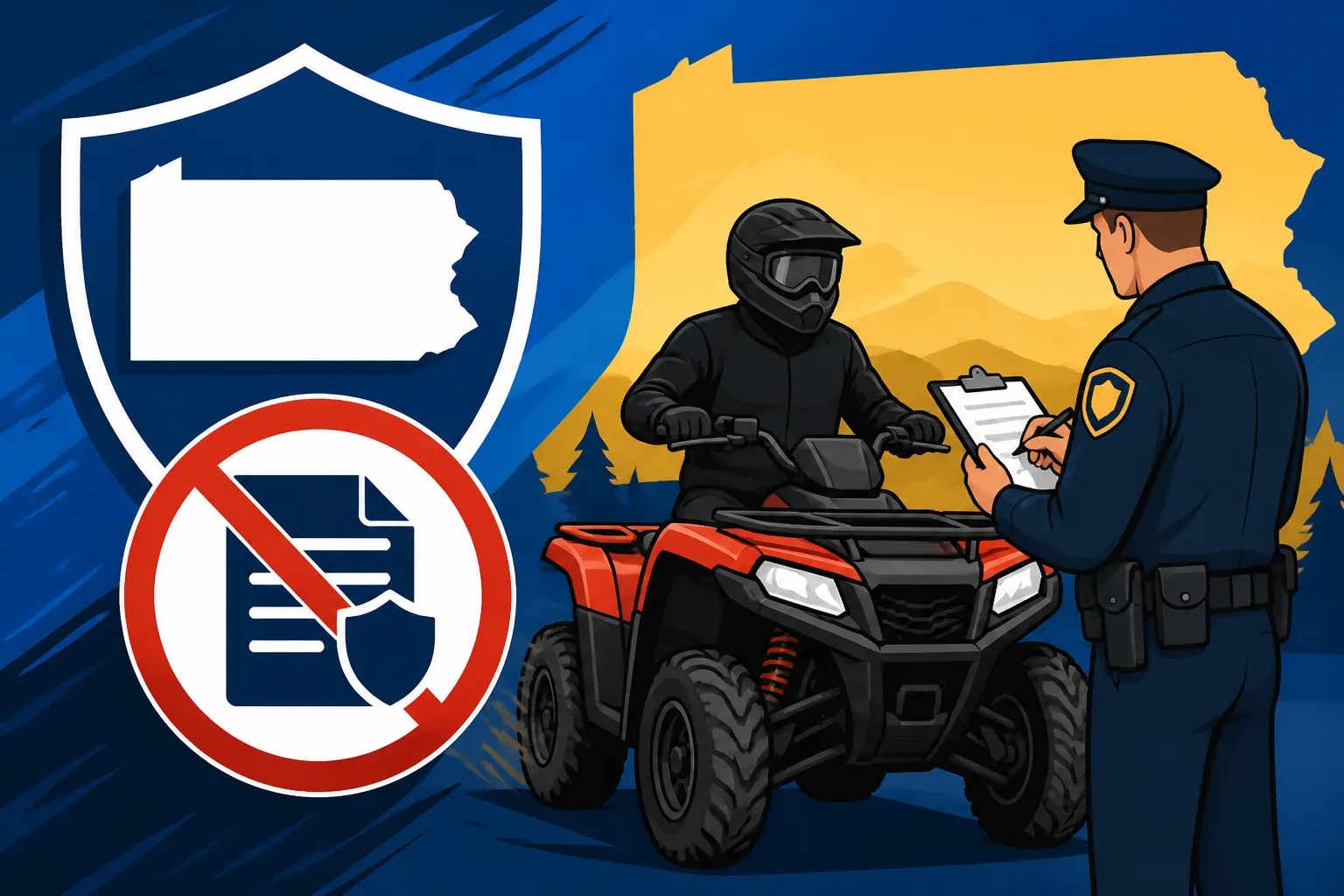
This is where it gets real. If you're stopped by a DCNR ranger, a state trooper, or any other law enforcement officer on a public trail, public land, or a designated [Pennsylvania Designated ATV Road List] and you cannot produce proof of insurance, you're looking at an automatic, non-negotiable fine. [Pennsylvania's Automatic $300 Fine] is a base penalty that hits your wallet hard and fast. It's not a suggestion; it's a mandatory consequence for being caught without the required coverage. Imagine planning a long weekend ride, only to have a significant chunk of your vacation budget instantly disappear because you skipped a relatively inexpensive insurance policy. It's a frustrating situation that's entirely avoidable.
Beyond the Initial Fine: Compounding Consequences
While the $300 fine is the headline, it's really just the tip of the iceberg. The penalties for riding uninsured in Pennsylvania can quickly snowball, leading to an even more significant financial burden and loss of your riding privileges.
Cost of Prosecution and Court Fees
That $300 fine? That's just for the insurance violation itself. When you receive a citation, you're not just paying the fine; you're also likely incurring additional [Cost of Prosecution on Top of a Fine]. This includes court costs, administrative fees, and other surcharges that get tacked onto the initial penalty. These fees can vary by county and jurisdiction but often add another substantial amount to your total bill, sometimes pushing the overall cost closer to $500 or more for a single incident. Suddenly, your decision to save a few dollars on an insurance premium looks like a very expensive gamble. Many riders are shocked by how quickly these ancillary costs accumulate, transforming a simple fine into a truly painful financial hit.
Impoundment and Towing Fees
One of the most immediate and disruptive consequences of an uninsured ATV incident can be the impoundment of your machine. Law enforcement has the authority to tow and store your ATV if you're found operating it illegally without insurance. This means your ride might be cut short, and you'll be left figuring out how to retrieve your prized possession. Towing fees alone can be significant, especially if you're deep in a state forest or far from a local impound lot. Then, you'll face daily storage fees that quickly add up, turning your ATV into a financial drain while it sits. Getting your machine back often requires proving you now have insurance, settling all fines and fees, and arranging for transport. This isn't just an inconvenience; it's a serious headache that can ruin your entire riding season. Even with robust aftermarket parts from a company like SuperATV that help protect your machine on the trail, they can't protect you from the financial drain of impoundment.
Suspension of Riding Privileges
Beyond the immediate financial hit, there can be longer-term consequences that impact your ability to enjoy the sport. Depending on the severity of the incident or if it's a repeat offense, the DCNR may suspend your ATV registration or your privilege to operate an ATV on public lands. This means that even if you eventually get insurance, you might not be legally allowed to ride for a certain period. The thought of having your machine sitting in your garage, fully operational but legally off-limits, is a nightmare for any dedicated rider. Repeated violations can lead to even harsher penalties, emphasizing the importance of understanding and adhering to the [First and Second Offense Fines in Pennsylvania].
Insurance Requirements and Why They Matter
Understanding Pennsylvania's specific requirements for ATV insurance is crucial. It's not always as straightforward as auto insurance, but the basic premise is the same: protect yourself and others from financial fallout in case of an accident.
What Pennsylvania Requires
Here's a critical distinction that often confuses riders: Pennsylvania law requires that you carry liability insurance when operating an ATV off your own private land. However, unlike automobile insurance, where PennDOT specifies minimum dollar amounts for liability coverage (e.g., $15,000 for bodily injury, $5,000 for property damage), the DCNR doesn't set a specific minimum amount for ATV insurance.
This means the law simply states you must have some liability insurance in place. While this might sound vague, it doesn't give you a pass to buy the cheapest, most minimal policy you can find and call it a day. It means you must make a good-faith effort to secure a policy that provides reasonable coverage. Most insurance providers will offer standard liability limits, and choosing a policy with higher limits is almost always a wise decision, protecting you more fully if something goes wrong. [Pennsylvania ATV Insurance Minimum Coverage] effectively means any valid liability coverage.
Protecting Yourself and Others
Beyond the legal mandate, carrying ATV insurance is simply good sense. Accidents happen, even to the most experienced and careful riders. You could hit an unseen obstacle, another rider could collide with you, or you could accidentally damage property. If you're involved in an incident without insurance, you are personally liable for all damages, medical bills, and potential lawsuits. Imagine the medical costs for an injured party, or the repair bill for damage to a trail infrastructure or private property – these can easily run into tens or even hundreds of thousands of dollars.
Your insurance policy, even a basic liability one, acts as a financial shield. It pays for damages and injuries you might cause to others, protecting your personal assets. If you also opt for comprehensive and collision coverage, it can even protect your own machine from damage, theft, or fire. While quality aftermarket parts from companies like SuperATV can enhance your machine's durability and performance, insurance provides the financial security against the truly unexpected that no part can offer. It’s about being responsible not just to the law, but to yourself and your fellow riders.
Proof of Insurance on the Trail
Just having the insurance isn't enough; you need to be able to prove it. When a DCNR ranger or other law enforcement officer checks your registration, they will almost certainly ask for proof of insurance. This is a standard part of [What a Pennsylvania Officer Checks Roadside]. It's your responsibility to carry either a physical insurance card or digital proof (like on your smartphone) that clearly shows your policy is active and covers the ATV you are operating.
Forgetting your proof or not having it readily accessible can lead to delays and potentially a citation, even if you are insured. Think about the conditions you ride in – mud, rain, dust. Keeping a paper card in a waterproof pouch in your wallet or a sealed compartment on your ATV is a smart move. Digital proof is convenient but consider areas with no cell service. Make sure you have a reliable way to present your [Carrying Proof of Insurance in Pennsylvania] at all times when riding off your own private property.
Avoiding the Trap: Getting Proper Coverage
The fines and headaches associated with riding uninsured are entirely avoidable with a little proactive planning. Securing the right ATV insurance policy is usually simpler and more affordable than most riders expect.
Finding the Right Policy
The good news is that obtaining ATV insurance is relatively straightforward. Many major insurance carriers that provide auto and home insurance also offer specialized policies for powersports vehicles, including ATVs and UTVs. Your existing insurance provider is often a great first stop, as they might offer multi-policy discounts. If they don't offer ATV coverage, or you're looking for more specialized options, independent insurance agents who deal with multiple carriers can help you shop around for the best rates and coverage tailored to your needs.
When speaking with an agent, be clear about where and how you ride. Do you stick to designated state trails, ride on private land, or participate in organized events? This information helps them recommend the most appropriate coverage options, from basic liability to comprehensive packages that cover theft, vandalism, and collision. Don't hesitate to ask about [Pennsylvania ATV Insurance Costs] to get a clear picture of typical premiums in your area. You want a policy that not only meets the state's requirement for [Pennsylvania Mandatory Insurance Off Your Own Land] but also gives you peace of mind.
The "Private Land Only" Loophole Myth
Let's dispel this persistent myth once and for all: the "private land only" exemption for ATV insurance in Pennsylvania is very narrow. It truly only applies if your machine never leaves your own property, and that property is typically fenced or clearly demarcated, preventing any accidental venturing onto public access points or shared roads.
The moment you trailer your ATV to a public trailhead, cross a township road to access another section of private land, or simply ride a designated trail in a state forest, you are operating on public land and are required to have insurance. Even a quick jaunt across a small public connector road can expose you to penalties if you're uninsured. It's simply not worth the risk. For most riders who enjoy Pennsylvania's vast network of trails, getting insurance is a non-negotiable part of responsible riding. It’s far better to pay a modest premium than face a $300 fine, additional court costs, and the potential impoundment of your ATV.
Table: Pennsylvania ATV Insurance Violation Penalties
To give you a clearer picture of the financial implications, here's a summary of the penalties you could face for operating an ATV without proper insurance in Pennsylvania:
| Violation Type | Initial Fine | Additional Costs (Estimate) | Potential Consequences |
|---|---|---|---|
| Operating without required insurance | $300 (automatic) | $100 – $300+ (Court/Admin Fees) | Impoundment, towing/storage fees, registration suspension, legal liability for damages |
| Second/Subsequent Offense | Increased fines | Increased court costs | Longer registration suspension, stricter penalties, higher liability exposure |
| Failure to show proof of insurance | Varies by officer | Minimal (if proof is found later) | Delay, potential citation, inconvenience |
| Accident while uninsured | Fines + Full Liability | Medical bills, property damage, lawsuits | Personal financial ruin, severe legal consequences, ongoing debt |
This table illustrates that the initial fine is often just the beginning. The total cost can quickly escalate, making a proper insurance policy an invaluable investment in your riding future.
Disclaimer
This article is for general informational purposes only and does not constitute professional advice. Laws, prices and regulations vary by location and change over time. Consult a qualified professional for guidance on your specific situation.