When a Pennsylvania Trail Permit Stops Being Valid
A Pennsylvania trail permit can look current while the trail you plan to ride is closed, or seem expired when you are confusing it with ATV registration. The key is to check the permit’s own validity period and coverage, then confirm the route is open. Here’s how to tell when a permit stops being valid and what to do before your next ride.
What determines when a Pennsylvania trail permit expires
A trail permit is valid for the term set by the program that issued it. Do not assume its validity period begins on the day you buy it, lasts for a full year from purchase, or matches your ATV registration. Check the permit itself and the current instructions from the issuing agency for the expiration date or permit period.
This distinction matters especially for riders using a regional permit. The Pennsylvania’s Northcentral Regional Trail Permit covers specified trails, not every place in Pennsylvania where an ATV might be allowed. A permit’s expiration and its geographic coverage are separate questions: it can be current but not apply to the trail you’re approaching.
If you do not see a clear expiration date, do not try to work it out from the purchase date alone. Look at the current permit instructions and confirm the term with the issuing office before you ride. Application dates and sales windows tell you when you can apply; they do not necessarily tell you how long the resulting permit remains valid. For application timing, see When Pennsylvania Trail Permits Go On Sale and Pennsylvania Trail Permit Application Deadline.
Keep these separate details in mind:
| What to check | What it tells you | What it does not tell you |
|---|---|---|
| Permit expiration or stated term | Whether the permit is valid for the current date | Whether a particular trail is open |
| Permit type and coverage | Which trail system or land the permit applies to | Whether your machine is registered |
| ATV registration | Whether the machine has the required registration | Whether a separate trail permit is required |
| Trail status | Whether the route is currently open to riding | Whether your permit will remain valid later |
A permit can stop being valid because its term has ended even if the sticker still looks readable and the machine has not been ridden much. Conversely, a permit that is still within its term does not guarantee that every covered trail is open on a particular day. Seasonal closures, temporary closures, maintenance, weather-related conditions, and other restrictions can apply independently of the permit.
For an overview of how permit requirements fit with other riding rules, see Pennsylvania ATV Trail Permits Explained and Pennsylvania ATV Registration and Trail Access. A trail permit and a registration are not interchangeable documents.
Do not use registration expiration as the permit date
Pennsylvania ATV registration and a trail permit serve different purposes. Registration identifies the machine under the applicable registration system. A trail permit gives access only where the permit program requires or allows it, subject to its own terms and trail conditions.
That means checking a registration card or plate sticker alone will not confirm that a trail permit is current. Likewise, a valid trail permit does not replace any registration the machine needs. Check each document separately, especially if you ride a machine registered in another state. Registration reciprocity concerns whether Pennsylvania recognizes an out-of-state registration; it does not automatically establish that a separate trail permit is unnecessary. The details are covered in Pennsylvania ATV Reciprocity With Other States and Carrying Proof of an Out-of-State Registration.
What happens when the permit term ends
Once a permit’s authorized term has ended, treat it as expired. Do not rely on a permit from a prior period because the sticker remains attached, the machine is unchanged, or you still have the purchase receipt. If a permit is required for the trail you intend to ride, arrange a valid permit before going there.
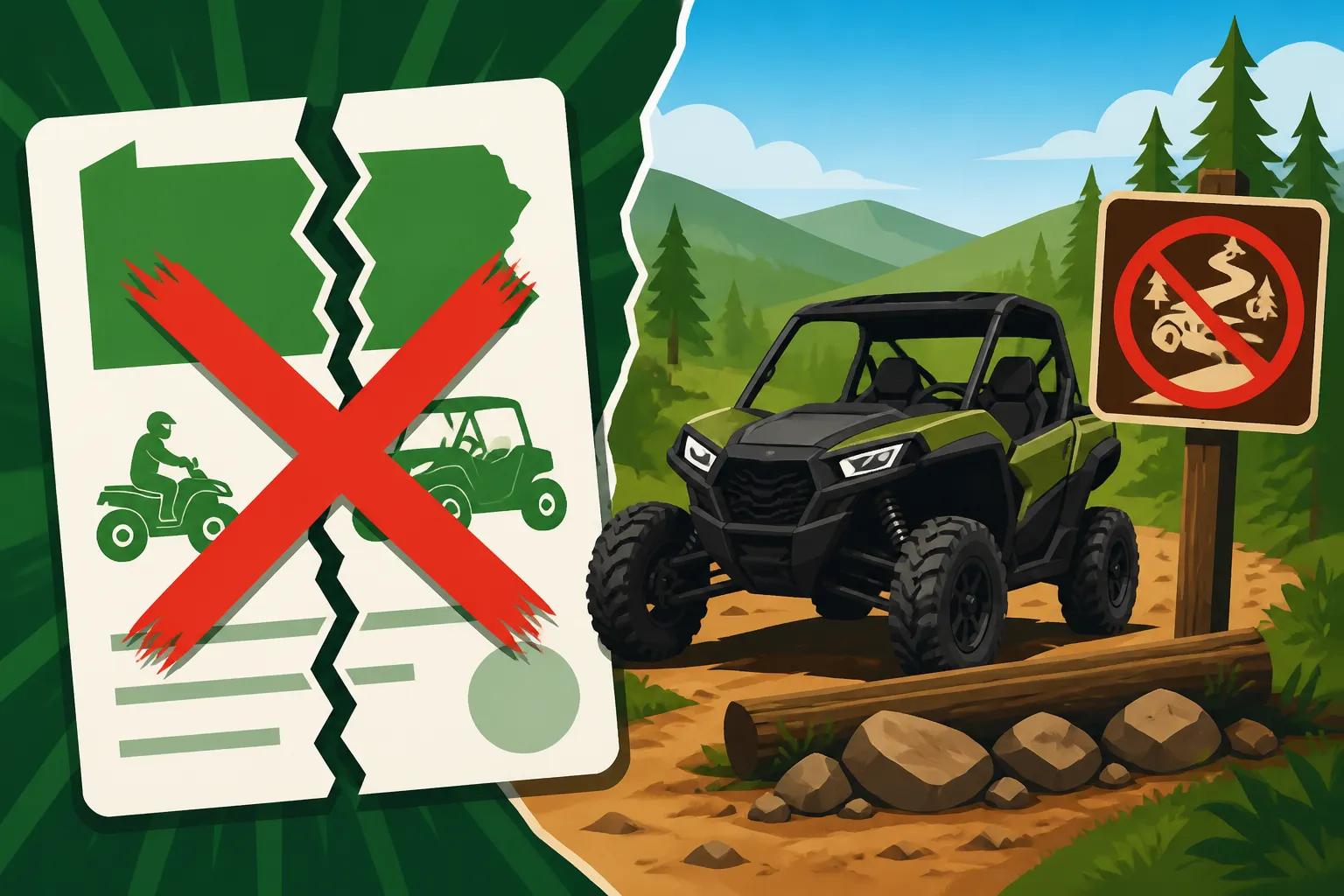
An expired permit is also different from a trail closure. A current permit does not authorize riding on a closed route, and an expired permit does not become acceptable just because a trail is open. Check both issues before leaving home:
- Confirm the permit’s stated term and whether it covers the machine you will ride.
- Confirm that the planned trail is included in the permit program.
- Check current trail notices for closures or restrictions.
- Confirm that the machine has any required registration and that you have its supporting documents.
- If something is unclear, ask the permit issuer or land manager before riding.
A permit’s expiration does not usually mean that you can continue using it until the end of the riding season you had in mind. The controlling term is the one set by the program, not your personal schedule. If the permit instructions give a specific expiration date, plan around that date. If they define a permit period instead, follow that period and verify how it applies to the planned ride.
A permit can also be unsuitable even before it expires. For example, it may cover one trail system but not another, or may be associated with a particular machine. Do not assume that a sticker purchased for one ATV can be moved to a different ATV, or that one permit automatically covers every machine in a group. Check the current rules for the specific permit program and machine.
If you bought a permit but have misplaced it, damaged it, or changed machines, ask the issuing office how to handle it. Do not make a homemade replacement or assume that a receipt is a substitute for a required display. Keep the receipt and any related documents while you resolve the issue, but get confirmation about what is acceptable for riding.
A valid permit does not guarantee trail access
The permit is only one part of the access check. A trail can be closed for a season or temporarily unavailable while a permit remains current. That can happen because of maintenance, unsafe conditions, land-management decisions, or other restrictions. Trail access can also differ by system, landowner, and route.
This is why checking the permit date once at the start of the riding season is not enough. Recheck trail status close to your trip, particularly after heavy rain, during seasonal transitions, or when traveling to a route you have not ridden recently. The state’s general permit information and a trail manager’s current notices may answer different questions: one explains whether your permit applies, while the other tells you whether the trail is open.
Also avoid treating a trail permit as broad permission to ride wherever you see a dirt road. A permit does not grant access to private property or override posted restrictions. For other land and trail rules, see [Pennsylvania Rules for Riding Private Property] and [Pennsylvania Rules for Riding a Closed Trail].
How to check, renew, and keep proof ready
Before a ride, check the permit itself first. Look for the permit year or term, any printed expiration information, and the machine or coverage details shown in the application records. If the date is missing, hard to read, or inconsistent with current instructions, contact the issuing program rather than guessing.
When renewing, make sure the new permit is valid before relying on it for access. Submitting an application or payment does not necessarily mean you may ride while the permit is being processed. Follow the instructions for when a permit becomes effective and how it must be displayed. The Pennsylvania Trail Permit for 2026 information may help with a specific permit period, but use the current program instructions for the permit you are buying.
Keep proof organized, but remember that proof of purchase and the permit itself may not serve the same function. Follow the program’s display rules for any decal or sticker. Carry registration documents and other required proof separately, protected from water and dirt. A waterproof wallet or document holder can help keep paperwork readable; if you shop on Amazon, choose one that protects documents without interfering with a sticker that must be displayed on the machine. For more practical ideas, see Keeping Paperwork Dry on a Wet Trail.
A simple pre-ride checklist can prevent the most common mix-ups:
- Check the permit term. Use the date or period set by the issuing program, not the purchase date or registration expiration.
- Check the permit’s coverage. Confirm that it applies to the trail system and machine you plan to use.
- Check the trail status. A current permit does not reopen a closed trail.
- Check registration separately. A trail permit is not an ATV registration, and registration is not a trail permit.
- Carry required proof. Keep the documents accessible and protected, and follow any display instructions.
- Confirm unusual cases. If the permit is lost, damaged, transferred, or unclear, contact the issuer before riding.
This extra check is especially worthwhile for visitors. Pennsylvania may recognize certain out-of-state ATV registrations under applicable rules, but that does not mean every trail is open without a separate permit. Make sure the permit requirements for your specific destination are clear before you load the machine.
The safest way to interpret an uncertain permit is straightforward: its term determines whether it is current, its conditions determine where and how it applies, and the trail manager’s current status determines whether you can ride that route today. Check all three rather than relying on a sticker’s appearance or an assumption about the riding season.
Disclaimer
This article is for general informational purposes only and does not constitute professional advice. Laws, prices and regulations vary by location and change over time. Consult a qualified professional for guidance on your specific situation.