Pennsylvania Rules for a Nine-Year-Old Rider
A nine-year-old in Pennsylvania can ride only within age-based limits, and the rules change with the machine and where it will be used. The practical starting points are a 70cc maximum for an ATV, required safety training on public land and adult supervision. Here’s how to check the basics before choosing a machine or heading to a trail.
The key rules for a nine-year-old
Pennsylvania’s youth rules make age and engine size important. A nine-year-old falls in the 8–9 age group, which has a 70cc engine-size cap for an ATV. A machine that seems small or looks manageable is not necessarily within the limit: check the engine displacement in the owner’s manual or manufacturer’s specifications, rather than judging by the ATV’s appearance.
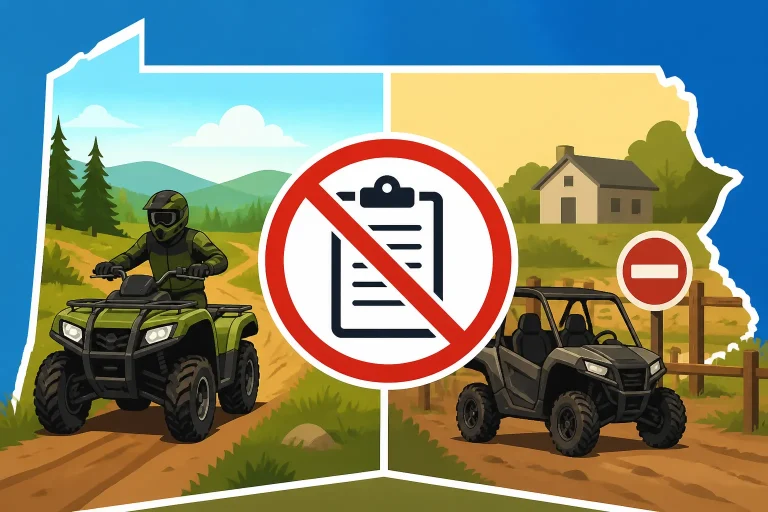
A child’s age does not make every riding location available. Public trails and other public riding areas can have training, supervision, registration and permit requirements. Road use is a separate matter: a nine-year-old cannot ride an ATV on a designated ATV road. For more detail on the broader age rules, see Pennsylvania Rules for Riders Aged 8 to 15 and Pennsylvania Minimum Age to Ride an ATV.
| Where the child rides | What to check for a nine-year-old |
|---|---|
| Public land, including a designated trail | The 70cc ATV limit, required safety certificate and adult-supervision rules |
| Private property | The landowner’s permission and any applicable age and machine requirements; do not assume private land removes every restriction |
| A designated ATV road | A nine-year-old is too young to operate on the road |
| A state forest or other managed trail area | The machine’s registration, any trail permit, seasonal access and the land manager’s rules |
The table is a starting point, not a substitute for checking the rules for the exact place and machine. Pennsylvania’s land managers may set access conditions in addition to the statewide rules. A riding permit, when required, does not replace a safety certificate, and a safety certificate does not grant access to a closed or restricted trail.
For a closer look at the engine-size rule, see A 70cc Cap for the Youngest Riders. If you are choosing equipment, Sizing a Machine to a Young Rider can help separate legal eligibility from what a child can safely control.
Safety training and adult supervision
Children ages 8 to 15 need an ATV safety certificate to ride on public land. A nine-year-old planning to use a public trail should complete the required training before riding there, and the certificate should be available during the ride. Review Pennsylvania ATV Safety Certificate Requirements and Pennsylvania ATV Course for Ages 8 to 15 for the training details.
A course is not just paperwork. It helps young riders understand controls, braking, safe speed, terrain, protective gear and how to respond when something goes wrong. A child may be able to handle a small machine in a flat yard but struggle with a steep grade, loose rock, mud or an unexpected obstacle. Training gives families a chance to discuss those risks before they reach a trail.
Adult supervision is also central to planning a ride with a nine-year-old. On public land, check the accompaniment requirement and make sure the adult who rides with the child can keep them in sight and respond quickly. Supervision is not the same as simply being somewhere nearby: on a narrow, winding trail, a child can quickly get separated from a group.
Pennsylvania’s rules for minors are worth reviewing before setting out, especially if the adult and child plan to ride different machines. See Pennsylvania Supervision Rules for Minors for more on how supervision works. Even when riding on private property, direct adult oversight is sensible; permission from a property owner does not make a young rider’s machine, skills or conditions safe.
A practical pre-ride conversation should cover:
- How the child will stop and signal the adult.
- What to do if the machine stalls or tips.
- Where the adult will ride in relation to the child.
- Which terrain or obstacles are off-limits.
- What to do if the pair becomes separated.
Keep the first rides simple. A wide, familiar area with predictable ground gives a child a chance to practice starting, stopping and turning without the added pressure of traffic, crowds or difficult trail features. Increase the difficulty only when the child can consistently control the machine and follow instructions.
Choosing the machine and preparing to ride
For a nine-year-old, an ATV must fit both the legal engine-size cap and the rider. A machine at or below 70cc is not automatically a good fit: seat height, reach to the controls, weight, throttle response and the child’s experience all matter. The rider should be able to sit securely, reach the controls and stop the ATV without stretching or losing balance.
Do not let a child ride a larger machine because an adult says they will use only part of its power. Engine displacement is the measure to check, and a speed limiter does not change the ATV’s engine size. If the machine’s specifications are unclear, get them from the manufacturer or a qualified dealer before allowing the child to operate it.
An ATV and a side-by-side are not interchangeable for youth riding. Do not assume that a passenger seat, seat belt or enclosed cab makes a UTV an appropriate machine for a nine-year-old to operate. Check the rules that apply to the specific vehicle, and do not treat a UTV’s controls or protective structure as a replacement for age-appropriate equipment, training and supervision.
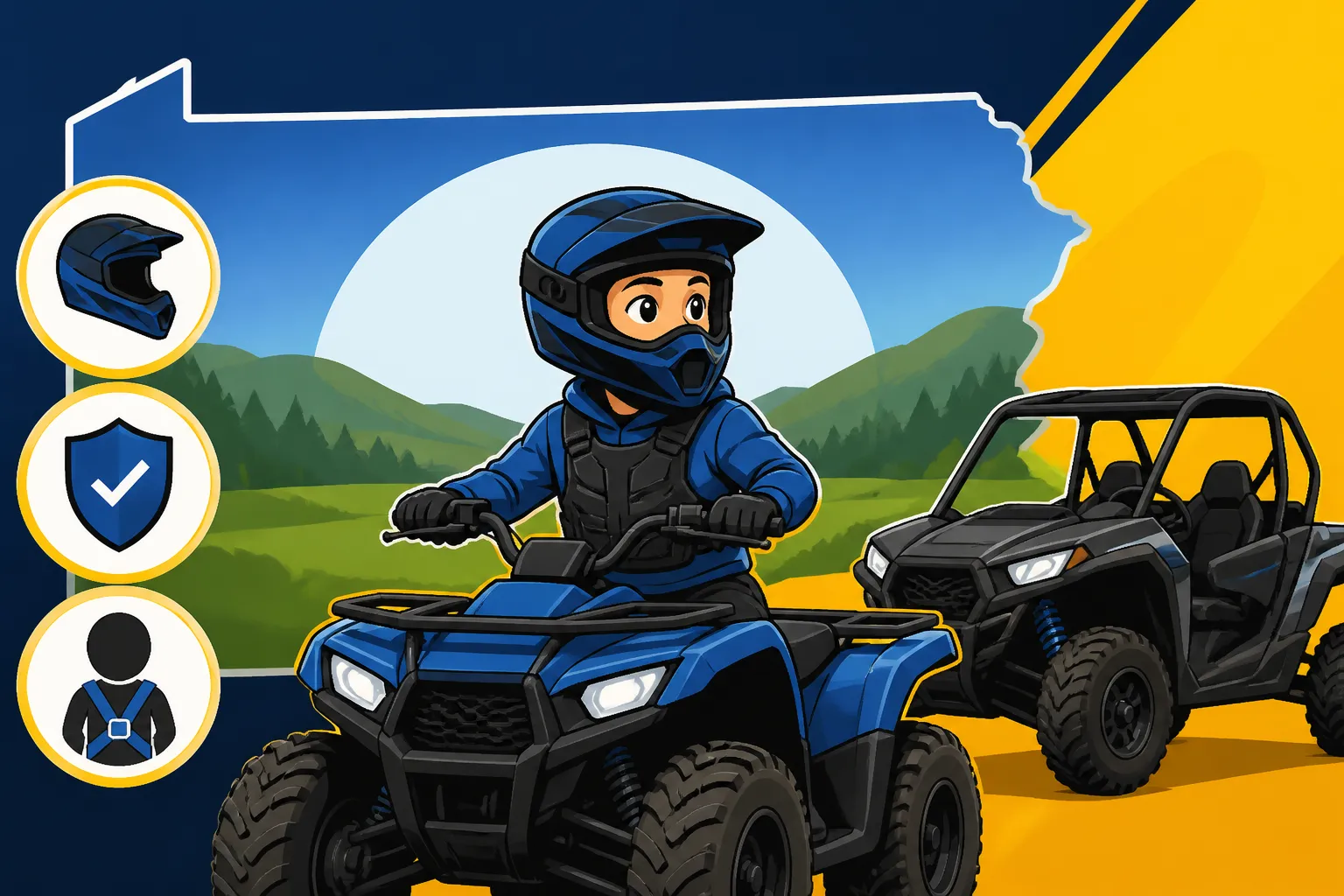
Protective gear is part of machine selection and ride planning, not an optional extra. Choose a properly fitting helmet and eye protection, plus clothing and footwear that cover the rider and suit the conditions. A helmet that shifts, blocks vision or is too large can undermine protection. A young rider also needs gloves and boots that do not interfere with operating the controls.
Before every outing, inspect the machine and confirm that it is suitable for the route. Check the brakes, throttle, tires, controls and protective equipment. Then match the terrain to the child’s current ability. Rocky climbs, deep mud, steep slopes and fast groups are poor places to test whether a child is ready.
For a fuller comparison of machine fit and child capability, see Youth Machine Sizes and Pennsylvania Rules. If the family is deciding between an ATV and a UTV, check the rules for the particular vehicle and trail rather than assuming one set of limits covers both.
Check land access, permits and the route
A child’s eligibility to ride does not mean every trail is open to them or to their machine. First identify who manages the land: a state forest, national forest, private riding area or another landowner can have different access rules. Confirm that the route is open, that the machine meets any width or other restrictions, and that the child’s age is allowed.
Pennsylvania has different permit arrangements for different riding areas. Some trails require a permit, while other access rules depend on the land manager and the specific route. Read Pennsylvania ATV Trail Permits Explained before planning a public-land ride. If you are considering the Northcentral Regional Trail Permit or Allegheny National Forest, check those separate requirements in Pennsylvania’s Northcentral Regional Trail Permit and Pennsylvania’s Allegheny National Forest Permit.
Do not confuse registration with trail access. Registration identifies the machine under the applicable rules; a trail permit, where required, grants access under that permit’s conditions. Neither one authorizes riding on a closed trail, on land without permission or on a road the child is too young to use. For riding on private property, review Pennsylvania Rules for Riding Private Land and get clear permission from the owner.
Before leaving home, confirm:
- The ATV’s engine displacement is within the limit for a nine-year-old.
- The child has the safety certificate required for the planned public-land ride.
- An adult will accompany the child as required and can supervise closely.
- The machine’s registration and any required trail permit are in order.
- The route is open and allows the child’s age and machine.
- The child has properly fitting protective gear and understands the ride plan.
If any detail is uncertain, pause and verify it with the relevant land manager or Pennsylvania’s official ATV information channels. That is especially important when a route crosses between properties or connects to a road. A trail map or a permit alone may not tell you every age restriction or current closure.
The safest plan for a nine-year-old is a properly sized ATV within the 70cc limit, a completed safety course, close adult supervision and a route confirmed for that rider and machine. Treat each of those checks as separate: passing one does not remove the need to meet the others.
Disclaimer
This article is for general informational purposes only and does not constitute professional advice. Laws, prices and regulations vary by location and change over time. Consult a qualified professional for guidance on your specific situation.