Pennsylvania ATV Course for Ages 8 to 15
Pennsylvania families often discover that an ATV safety course is more than a box to check: age, riding location, and the machine itself can affect what a young rider may do. For riders ages 8 to 15, the right course builds practical skills and helps meet state requirements. Here’s how to check eligibility, find training, and understand what a certificate does—and does not—allow.
Who Needs an ATV Course in Pennsylvania
Pennsylvania requires young ATV riders to complete approved safety training in situations covered by state law. The requirement is especially important for riding on public land, including designated trails. Do not assume a child can ride simply because an adult is present, or that a certificate automatically permits riding everywhere. Age, location, and the rules for a particular trail or property all matter.
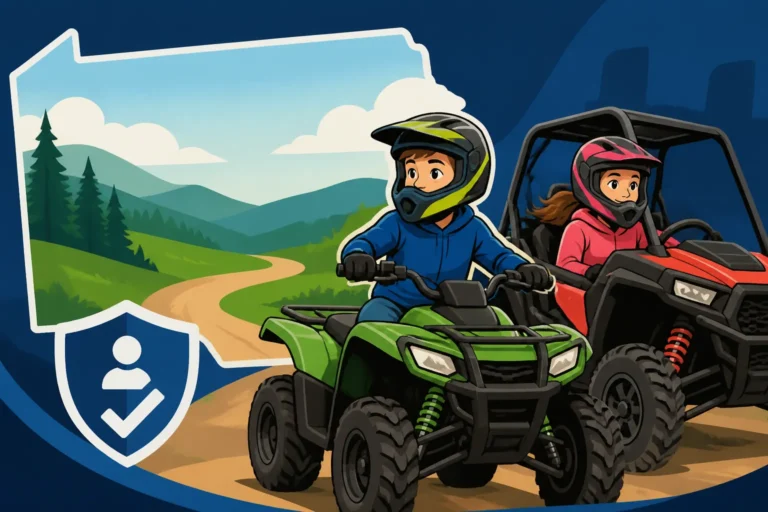
For a rider ages 8 to 15, start by confirming that the course is approved for the relevant age group and will result in the certificate Pennsylvania requires. The state’s youth safety training is aimed at riders who are old enough to operate an ATV in places where riding is allowed. Children under 8 cannot ride on Pennsylvania state land, and a course does not override that restriction. See Why Under Eights Cannot Ride Pennsylvania State Land for more on the age floor.
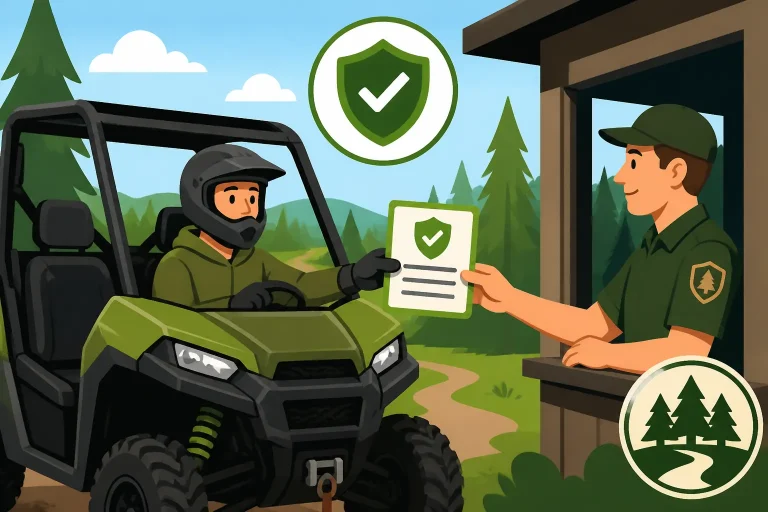
A safety certificate is about training and eligibility; it is not a registration, trail permit, or permission slip for private property. A young rider may still need to meet additional requirements, and the adult responsible for the ride should check them separately. For example, a rider heading onto permitted state forest routes needs to understand the rules for that land and the permit that covers it. The certificate does not replace Pennsylvania’s Northcentral Regional Trail Permit or any other required permit.
| Situation | What to check |
|---|---|
| Rider is ages 8 to 15 | Whether the rider needs an approved safety certificate for the planned riding location |
| Rider is under 8 | Whether the location prohibits riding at that age; state land has an age restriction |
| Riding on public land or a designated trail | Course requirements, registration, permit, machine limits, and trail rules |
| Riding on private property | Landowner permission, safe supervision, machine suitability, and any applicable state requirements |
| Visiting from another state | Whether Pennsylvania accepts the rider’s existing certificate |
Requirements can differ by setting. A trail open to registered ATVs may have additional access conditions, while private property is governed by the owner’s permission as well as applicable state rules. Before planning a ride, review Pennsylvania ATV Safety Certificate Requirements and confirm the current details with the Pennsylvania Department of Conservation and Natural Resources, commonly called DCNR. If the family is riding in a specific forest or park, check that location’s rules too.
The course is also not a substitute for deciding whether a child is ready to ride. A certificate records successful completion of training; it does not guarantee that a rider can safely handle every machine or trail. Parents and guardians should match the ATV’s size and power to the child’s ability, and should make sure the youngster can reach and use the controls correctly. The state’s age-related rules are only a starting point for that decision.
What the Youth Course Covers
An approved ATV safety course teaches more than basic throttle and braking. Training commonly covers how to inspect and start a machine, use riding gear, control speed, turn and stop, and respond to changing trail conditions. Riders also learn how to recognize hazards and understand the responsibilities that come with sharing trails and outdoor spaces.
Expect the course to emphasize practical judgment as well as machine handling. A young rider may need to demonstrate that they understand:
- How to check the ATV before a ride, including controls, tires, and visible damage.
- How to use a helmet and other protective equipment properly.
- Why to keep a safe speed and leave room to stop.
- How to approach uneven ground, loose surfaces, and turns with care.
- How to avoid riding beyond the machine’s or rider’s ability.
- Why it matters to stay on authorized routes and respect signs and closures.
- What to do if the machine has a problem or the rider becomes separated from the group.
The exact syllabus, delivery method, and completion steps can depend on the approved provider. Ask whether the course includes hands-on instruction, a knowledge check, a riding assessment, or a combination. A parent should also ask what identification or information the student needs to bring and how the certificate is issued after successful completion.
Training is useful even when a family mostly rides on private land. A young rider can practice safer habits in a controlled setting before encountering ruts, rocks, other riders, or changing weather. Still, finishing the course does not make a difficult trail appropriate for a beginner. Build experience gradually, keep a responsible adult close enough to supervise, and choose routes that suit the child and machine.
A course also cannot authorize unsafe passenger use. Many youth ATVs are designed for a single operator. Do not carry a passenger unless the machine is designed for one and the rider can safely manage it; a certificate does not change the manufacturer’s design or the applicable rules. Families should also review Pennsylvania Rules for a Child Passenger before taking a child along on a machine.
Finding a Course and Getting the Certificate
For riders ages 8 to 15, look for a course specifically approved for youth. Pennsylvania has training options through instructors and approved programs, but availability and registration procedures can vary. The easiest first step is to use DCNR’s current ATV safety training information or contact a listed instructor to confirm that the class is appropriate for the rider’s age and will satisfy the requirement for the planned use.
A practical enrollment process looks like this:
- Confirm the rider’s age and riding plans. Identify the child’s age and where the family expects to ride. Public land, private property, and a managed trail system can have different rules.
- Find an approved youth course. Check the provider’s age range, course format, location, dates, and completion requirements. Don’t rely on a general online course unless the provider confirms it is approved for this age group.
- Ask what the student must bring. The instructor can explain any required registration details, safety gear, or parent or guardian participation.
- Complete all required training and assessment. Attendance alone may not be enough if the course includes a test or practical evaluation.
- Get and keep the certificate. Make sure the certificate is issued in the student’s name and that the family knows how to replace it if it is lost.
- Check the riding location separately. Confirm registration, permit, insurance, age, machine, and access requirements before loading the ATV.
The age distinction matters when choosing a course. Pennsylvania’s course options for older riders may not be interchangeable with training for children. The reference information for Pennsylvania Online Courses for Riders Sixteen and Over concerns a different age group; a parent should not assume an online option intended for older riders meets a youth requirement. Ask the provider directly whether the course is approved for a rider ages 8 to 15.
If local classes are hard to find, contact a county instructor or the state’s ATV safety program for current availability. Finding a Pennsylvania Youth Safety Instructor offers a related route for locating instruction. Confirm the instructor’s current schedule before making travel plans, and ask whether the student receives a certificate immediately or after a later processing step.
For a rider trained outside Pennsylvania, acceptance is not automatic. The course may be valid in the rider’s home state but not meet Pennsylvania’s specific approval or documentation rules. Before traveling, check Does Pennsylvania Accept an Out-of-State Safety Certificate? and keep the rider’s certificate available during the trip. If the child is also visiting from another state, check registration reciprocity separately; a safety certificate and out-of-state registration address different requirements.
What the Certificate Does Not Cover
Completing the youth course addresses training. It does not register the ATV, provide insurance, create access to a trail, or give permission to ride on land. Those are separate checks, and families should handle them before the day of the ride.
Registration is one separate issue. Pennsylvania distinguishes between registration types, and the choice can depend on where the machine will be used. Review Pennsylvania’s Limited and General Registrations to understand the basic distinction, then verify the machine’s status and required plate or sticker. A youth certificate does not cure an expired registration or make an unregistered machine legal to ride where registration is required.
Permits are another separate issue. Some riding areas require a permit even when the ATV is properly registered and the operator has completed training. Check the specific trail system and land manager rather than assuming one permit works everywhere. The permit requirements for Pennsylvania state forest trails, for example, are not the same thing as an ATV safety certificate.
Insurance and supervision should be checked on their own as well. Pennsylvania has insurance requirements for certain ATV use away from the owner’s land, and a land manager or riding organization may impose additional conditions. See Pennsylvania ATV Insurance Requirement for the insurance issue. A parent should also confirm who must supervise a young rider, how close the adult needs to remain, and whether the location has stricter rules than the general state requirements.
Before each ride, use a short checklist:
- Is the child old enough for this specific location?
- Has the child completed the appropriate approved course, and is proof available?
- Is the machine suitable for the rider and permitted on that trail?
- Are registration and any required permit current?
- Is insurance required, and is proof available?
- Is the route open and appropriate for the child’s experience?
- Does the adult understand the site’s rules, closures, and emergency procedures?
If any answer is unclear, pause and confirm it with DCNR or the land manager. Trail access and rules can change, and a certificate earned earlier does not guarantee that a particular route is open or appropriate today. Checking before departure is easier than discovering a missing requirement at the trailhead.
Disclaimer
This article is for general informational purposes only and does not constitute professional advice. Laws, prices and regulations vary by location and change over time. Consult a qualified professional for guidance on your specific situation.