Pennsylvania Rules for Night Riding
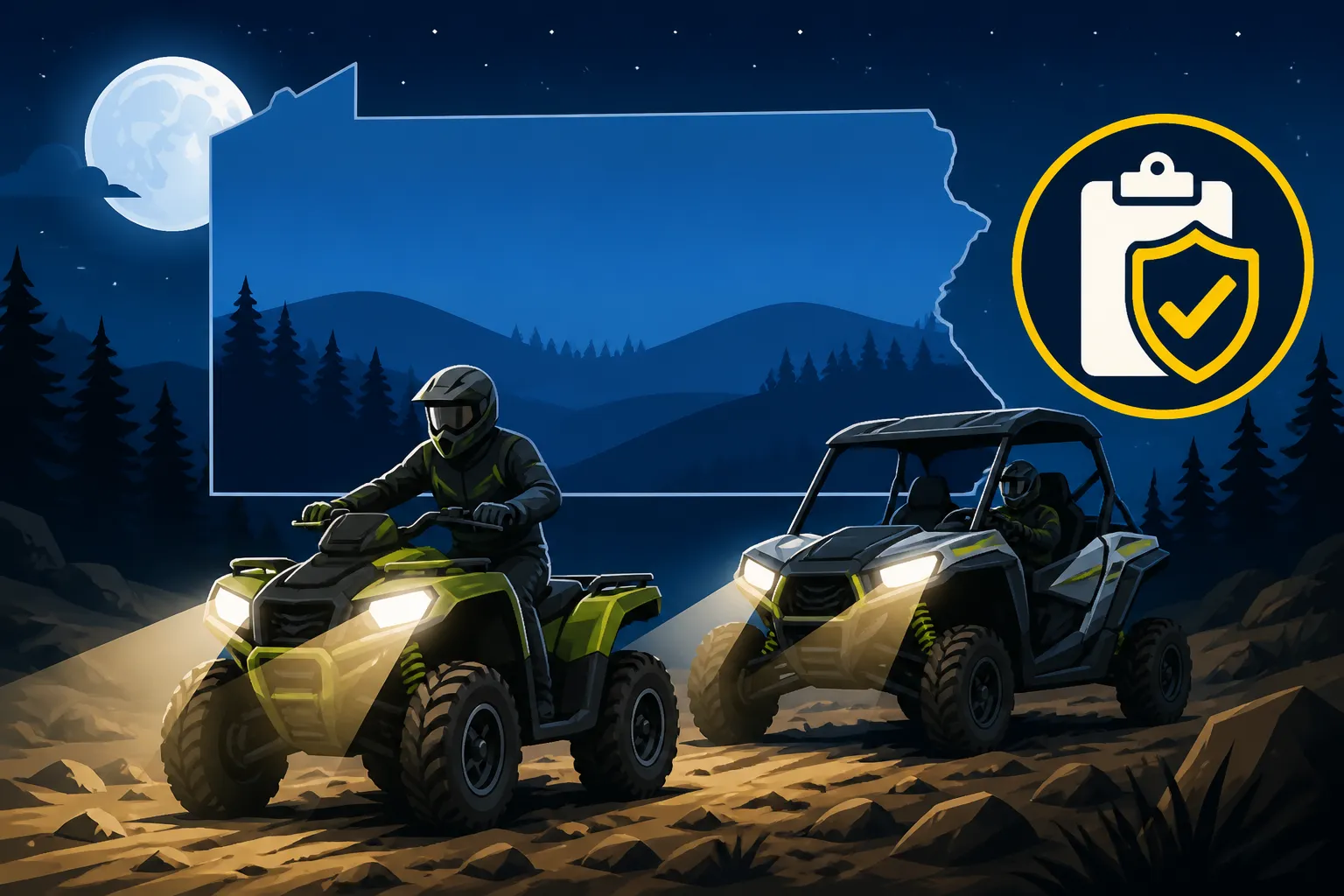
There’s a unique thrill that comes with riding your ATV or UTV after the sun dips below the horizon in Pennsylvania. The trails take on a completely different character under the moon and stars, and the hum of your engine against the quiet of the night is an experience many riders cherish. But the magic of night riding also comes with its own set of responsibilities and, crucially, specific legal requirements that you absolutely must understand to stay safe and avoid fines. This guide is here to walk you through everything you need to know about legally and safely enjoying Pennsylvania's trails and roads once darkness falls.
The Allure and The Reality of Night Riding
For many of us who love the outdoors and the freedom of our ATVs and UTVs, night riding isn't just a practical necessity; it's an adventure in itself. There’s a quiet solitude, a different kind of challenge, and often, an entirely new perspective on familiar trails. However, that freedom comes with a strict set of rules, particularly concerning lighting and where you can actually be after dark.
Why Night Riding Appeals to Pennsylvania Riders
Imagine a crisp autumn evening, the air cool and invigorating, with just the beam of your headlights cutting through the darkness as you navigate a winding trail in Sproul State Forest. Or perhaps it's a summer night, after a long day of work, and you finally have a chance to hit a designated local connector road to your favorite spot. Night riding offers a sense of escape, a way to experience the wilderness when others are tucked in for the night. It can be cooler, less crowded, and simply breathtaking. For some, it’s about extending their riding day, especially during seasons with shorter daylight hours. It’s also often a core part of camping trips and events, where the fun doesn't stop when the sun goes down.
The Legal Framework You Must Know
While the appeal is strong, Pennsylvania law, particularly the DCNR's regulations for ATVs and UTVs, is very clear about what’s expected of you when you ride at night. It’s not just a suggestion; these are specific requirements designed for your safety and the safety of others. Ignoring them can lead to significant penalties, including hefty fines and the frustration of having your ride cut short by a DCNR ranger or local law enforcement. It's not enough to just have lights; they must meet specific criteria, be properly mounted, and be operational. The terrain itself also dictates different rules – what's permissible on a state forest trail might not be on a designated joint-use road. Understanding this framework upfront will save you a lot of headaches later on.
Pennsylvania's Core Lighting Requirements for ATVs and UTVs
When you're out there, whether it's on a state forest trail or a joint-use township road, your lights are your most critical piece of safety equipment. They allow you to see where you're going and, just as importantly, allow others to see you. Pennsylvania has specific requirements that apply to all ATVs and UTVs operating after dark.
Headlights and Taillights
The law in Pennsylvania is quite explicit: any ATV or UTV operated between sunset and sunrise, or during periods of reduced visibility (like fog or heavy rain), must be equipped with working headlights and taillights. Your headlight needs to be powerful enough to illuminate objects at a certain distance, typically ensuring you can see at least 100 feet ahead. This isn’t just for spotting obstacles; it's about giving you enough reaction time. Imagine coming around a blind turn on a dark trail and suddenly seeing a fallen tree or another rider stopped. Adequate lighting is paramount.
Your taillight is equally important. It must be visible from a certain distance to the rear, usually 500 feet, to alert anyone following you to your presence. This is especially crucial on connector roads or sections where you might encounter other vehicles. Many factory-installed lights meet these basic requirements, but it's always a good idea to check their functionality regularly. Mud, water, and vibrations can take a toll on wiring and bulbs, so a quick pre-ride check before heading out after dark is always a smart move.
Reflectors and Visibility
Beyond active lighting, passive reflectors also play a vital role in ensuring your machine is visible from all angles. Pennsylvania law generally requires your ATV or UTV to have red reflectors on the rear and amber reflectors on the sides. These catch the light from other vehicles' headlights, providing an extra layer of visibility even if your active lights temporarily fail. Think about how a deer's eyes reflect headlights; these reflectors serve a similar purpose for your machine. They're particularly helpful if you have to stop on the side of a road or trail where your taillight might be obscured. While they might seem minor, they are a mandatory component for safe night operation. Don't skip inspecting them or replacing them if they're damaged or missing.
Auxiliary Lighting and Modifications
Many riders choose to add auxiliary lighting to their ATVs and UTVs, and for good reason. Stock headlights, while meeting the minimum legal standard, sometimes don't provide the spread or intensity needed for aggressive night riding or navigating particularly challenging terrain. Light bars, additional pod lights, and ditch lights can dramatically improve your visibility and situational awareness. However, there are considerations when adding these. While legal for off-road use, you must be mindful of how and when you use them.
For instance, if you're riding on a designated joint-use road, you usually need to turn off any auxiliary lights that are not street-legal or could blind oncoming traffic. High-intensity light bars, while fantastic on a dark trail, can be dangerous and illegal on public roads. Always ensure your additional lighting is wired separately and can be easily switched off when transitioning from trail to road. Companies like SuperATV offer a wide range of robust aftermarket lighting solutions, from powerful LED light bars to focused spot and flood pods, designed to enhance your night riding experience safely. Just remember to use them responsibly and understand the local regulations regarding their use, especially on roads.
Designated Trails vs. Roads After Dark
One of the biggest distinctions you need to grasp in Pennsylvania is that the rules for night riding can differ significantly depending on whether you're on a designated state forest trail system or a joint-use road that allows ATV/UTV traffic. Confusing the two can lead to citations, or worse, dangerous situations.
State Forest Trail Night Riding
Pennsylvania's DCNR-managed ATV trails, like those in Sproul State Forest, Whiskey Springs, or Bloody Skillet, often have specific operating hours. While many are open during daylight hours, riding after dark might be restricted or require specific conditions. You always need to check the specific trail system's regulations before planning a night ride. These rules are usually posted at trailheads and available on the DCNR website. Even if night riding is permitted, the standard lighting requirements for headlights, taillights, and reflectors still apply rigorously.
Furthermore, state forest trails can be challenging enough during the day, with unexpected obstacles, wildlife, and varying terrain. At night, these challenges are amplified. Even with excellent lighting, your depth perception is reduced, and shadows can play tricks on your eyes. Always exercise extreme caution, reduce your speed, and never ride beyond your visible range. Be aware that DCNR rangers patrol these areas, and they will enforce compliance with all regulations, including operating hours and lighting. Understanding [Pennsylvania Rules for Night Riding] is critical here. If a trail closes at dusk, then riding after dark, even with perfect lights, is a violation.
Designated Road Night Riding Rules
Pennsylvania has a limited number of designated joint-use roads where ATVs and UTVs are permitted to operate. These are typically township roads, and they usually require all vehicles, including ATVs and UTVs, to adhere to rules similar to those for other motor vehicles. This is where your machine’s lighting needs to be particularly compliant. Beyond the basic headlight and taillight, you must ensure your lights are aimed correctly, not blinding oncoming traffic, and that your machine is equipped with other necessary safety features for road use, such as a horn and mirrors.
When riding on these roads after dark, you are sharing the space with cars, trucks, and other vehicles. This means visibility is not just about you seeing; it's about being seen by others. Reflectors on the sides and rear become even more vital. Any auxiliary lighting, like light bars, must be switched off to avoid dazzling other drivers. Violating these rules on a public road can result in fines and points that may impact your regular driving record, in addition to typical ATV citations. Always consult [Pennsylvania's Designated ATV Roads] list and understand the specific local ordinances for any township road you plan to ride after dark.
Private Property After Dark
Riding on your own private property, or on private land with express permission from the landowner, offers a different set of considerations. While state regulations regarding lighting typically don't apply in the same way, safety and courtesy still dictate that you use proper lighting. It’s always best practice to equip your machine with headlights, taillights, and reflectors, even if you’re only riding on your own land. This protects you, any passengers, and anyone else who might be on the property.
If you have neighbors, be mindful of noise and light pollution. While you might be excited to test out new high-powered lights, ensure you’re not shining them directly into someone’s home. Remember, even on private land, common sense and a commitment to safety should always be your guide. And if you ever plan to transition from private land to a designated public trail or road, even for a short distance, you must immediately comply with all state and local lighting and registration requirements.
Additional Safety Considerations for Night Riders
Beyond the legal requirements, there are numerous practical safety considerations that every night rider in Pennsylvania should take seriously. The challenges of riding in darkness extend beyond just seeing and being seen; they involve preparedness, awareness, and responsible riding practices.
Reduced Visibility and Speed Adjustments
The most obvious challenge of night riding is reduced visibility. Even with the best lighting, your peripheral vision is significantly diminished, and shadows can obscure obstacles that would be clear as day. This dramatically affects your ability to react to sudden changes in terrain, wildlife crossing your path, or unexpected hazards like deep puddles or rocky sections. To mitigate this, adjusting your speed is paramount. You should always ride at a speed that allows you to stop safely within the illuminated area of your headlights. This often means going much slower than you would during the day.
Think about a section of [Bloody Skillet] you know well in daylight. At night, that familiar rut or rock garden becomes a potential trap if you’re not giving yourself ample time to see and react. Wildlife, especially deer, are far more active at dawn, dusk, and throughout the night, posing a significant collision risk. A slower pace gives you precious extra seconds to spot and avoid them.
Preparing Your Machine and Yourself
Before you even think about heading out after dark, thorough preparation is essential.
- Machine Inspection: Beyond checking your lights, inspect your tires for damage, ensure your brakes are in perfect working order, and top off your fuel. A breakdown in the dark is far more serious than one in daylight. Consider a spare tire or a tire repair kit, especially for UTVs.
- Navigation: While you might know the trails by heart, a GPS or detailed map is invaluable at night. Familiar landmarks disappear in the dark, and it's surprisingly easy to get disoriented. Always carry [Pennsylvania Trail Maps From DCNR] if you're on a state system.
- Gear: Wear appropriate riding gear, including a helmet, eye protection, gloves, and sturdy boots. For night riding, consider reflective elements on your clothing or helmet to further enhance your visibility if you need to dismount or if your machine loses power. A headlamp or flashlight is also a crucial addition for any minor repairs or quick checks.
- Emergency Kit: Pack a first-aid kit, a fully charged cell phone (though service can be spotty in many rural PA areas), tools, extra water, and some snacks. A small fire starter or emergency blanket could also be life-saving in colder months.
Riding in a Group at Night
If you're planning a night ride, going with a group is always a safer option than riding alone. There’s safety in numbers, as multiple sets of eyes can spot hazards, and if someone has a mechanical issue or an accident, there’s immediate assistance.
- Buddy System: Ensure everyone in the group knows the route and understands the plan. Establish a lead rider and a sweep rider, and agree on hand signals or communication methods, as verbal communication can be difficult with helmets and engine noise.
- Maintain Distance: Ride far enough apart to avoid dust (or mud splash) from the rider in front, which can severely reduce visibility, but close enough that you don't lose sight of each other. A good rule of thumb is to stay within sight of the taillight of the machine ahead of you.
- Communication: If anyone needs to stop, they should signal clearly, and the entire group should stop together. No one gets left behind in the dark.
- Be Prepared for Anything: Even with a group, the general preparedness rules for your machine and personal gear still apply to every rider. A group is only as prepared as its least prepared member.
Consequences of Non-Compliance
Ignoring Pennsylvania's ATV and UTV rules for night riding isn't just a minor oversight; it can lead to serious consequences, ranging from frustrating fines to potentially dangerous situations for yourself and others. The DCNR and local law enforcement are not shy about enforcing these regulations, and ignorance of the law is never an excuse.
Penalties for Lighting Violations
One of the most common reasons riders are stopped and cited during night operations is for improper or missing lighting. If your headlights aren't working, your taillight is out, or you're missing required reflectors, you're immediately in violation. The fines for these types of infractions can be significant. Imagine being halfway through an evening ride, only to have a ranger pull you over and issue a citation for a broken taillight you didn't even know was out. Not only do you face a fine, but your ride is likely over, as you'll be instructed to transport your machine rather than continue operating it in an unsafe condition. This kind of situation can turn an enjoyable outing into a costly and frustrating experience. It emphasizes why a thorough pre-ride check of all lights is so crucial.
Fines for Unlawful Night Riding
Beyond specific lighting failures, simply riding on a trail or road where night operation isn't permitted can lead to even steeper penalties. If a state forest trail has a strict "daylight hours only" policy, and you're caught riding on it after dark, you're looking at a citation for unlawful operation. These fines, which are often categorized under [Pennsylvania Fines for Riding Illegally], can start at hundreds of dollars and increase for repeat offenses. In some cases, depending on the severity and location, you could also face additional charges like trespassing if you've entered private land unknowingly or ignored posted restrictions.
Law enforcement officers, whether DCNR rangers, State Police, or local police, are equipped and trained to identify ATV and UTV violations. They conduct patrols, especially during peak riding seasons, and they prioritize safety. Being cited not only impacts your wallet but can also create a negative impression of ATV riders in general, potentially affecting future access to trails and roads.
Trail Closures and Enforcement
Consistent violations by a few riders can, unfortunately, lead to stricter regulations or even temporary or permanent trail closures for everyone. DCNR makes decisions about trail access and operating hours based on safety, environmental impact, and rider compliance. If an area sees a high incidence of night riding violations or associated accidents, the response might be to implement more restrictive hours or increase enforcement presence.
Consider the time and resources that go into creating and maintaining designated riding areas. When riders disregard rules, it undermines these efforts and puts the future of accessible riding at risk. Adhering to night riding rules, therefore, isn't just about avoiding a personal fine; it's about being a responsible member of the riding community and helping to preserve access for all. Always check [Pennsylvania Trail Closures to Check First] before you head out, and understand that these apply to night riding too.
Staying Safe and Legal When the Sun Goes Down
Riding your ATV or UTV at night in Pennsylvania can be an incredibly rewarding experience, offering a new perspective on the trails and a deeper connection with the quiet wilderness. However, this enjoyment is inextricably linked to understanding and strictly adhering to the state's regulations, particularly concerning lighting and approved riding areas.
The Importance of a Pre-Ride Checklist
Before every night ride, make it a habit to perform a comprehensive pre-ride check. This goes beyond just kickstarting your engine.
- Check All Lights: Headlights (high and low beam, if applicable), taillights, brake lights, and any auxiliary lighting. Ensure they are clean, functioning, and properly aimed. If you've invested in a quality light bar from a brand like SuperATV, make sure it's mounted securely and that all connections are solid.
- Inspect Reflectors: Verify that all required red and amber reflectors are present, clean, and intact.
- Fuel and Fluids: Top off your fuel tank. Check engine oil, coolant, and brake fluid levels.
- Tires: Check tire pressure and inspect for any cuts or punctures.
- Brakes: Ensure both front and rear brakes are working effectively.
- Safety Gear: Confirm you have your helmet, eye protection, and appropriate clothing.
- Emergency Kit: Double-check your first-aid kit, flashlight/headlamp, navigation tools, and communication devices.
Understanding Where You Can Ride
Pennsylvania is specific about where ATVs and UTVs are permitted, and these rules are often even stricter after dark.
- DCNR State Forest Trails: Always verify the operating hours for the specific trail system you intend to ride. Many close at dusk, but some may permit night riding under certain conditions or for special events. Refer to the DCNR's official information or [Pennsylvania Trail Conditions Before You Go].
- Designated Joint-Use Roads: These are primarily township roads that have been explicitly opened for ATV/UTV use. You must follow all vehicle codes applicable to roads, including strict lighting requirements for visibility to other traffic. Ensure you know the specific roads and rules, as they vary by township.
- Private Property: With explicit landowner permission, you can ride on private land. While state lighting laws might not apply, using proper lighting is still a crucial safety measure.
The Value of Education and Awareness
Finally, continuous education and awareness are your best tools for safe and legal night riding. Stay informed about changes in regulations, new trail openings, or updated operating hours. Take an ATV safety course, even if you’re an experienced rider; these courses often cover specific challenges and best practices for various riding conditions, including night operation. [Pennsylvania ATV Safety Certificate Requirements] are mandatory for younger riders, but beneficial for all.
By taking the time to prepare, understand the laws, and ride responsibly, you can enjoy the unique and unforgettable experience of night riding in the beautiful landscapes of Pennsylvania, keeping yourself and others safe in the process.
| Requirement / Location | State Forest Trails (if open) | Designated Joint-Use Roads | Private Property (best practice) |
|---|---|---|---|
| Headlight | Required, illuminates 100 ft | Required, illuminates 100 ft | Recommended |
| Taillight | Required, visible 500 ft | Required, visible 500 ft | Recommended |
| Rear Reflectors | Required (red) | Required (red) | Recommended |
| Side Reflectors | Required (amber) | Required (amber) | Recommended |
| Auxiliary Lights | Permitted (use responsibly) | Must be off if not street-legal | Permitted (use courteously) |
| Operating Hours | Check specific trail rules | Sunset to Sunrise rules apply | At discretion of landowner |
| Speed Adjustment | Highly Recommended | Essential, follow posted limits | Recommended |
| Group Riding | Highly Recommended | Recommended | Recommended |
Disclaimer
This article is for general informational purposes only and does not constitute professional advice. Laws, prices and regulations vary by location and change over time. Consult a qualified professional for guidance on your specific situation.