Carrying Registration Proof as a Visitor
Bringing an ATV into Pennsylvania can raise a simple but important question: does your home-state registration count, and what should you have with you if someone asks? A nonresident with valid out-of-state registration generally does not need Pennsylvania registration, but registration is only one part of a ride. Keep your proof accessible, carry insurance evidence, and check whether your destination requires a separate trail permit.
Does a visitor need Pennsylvania ATV registration?
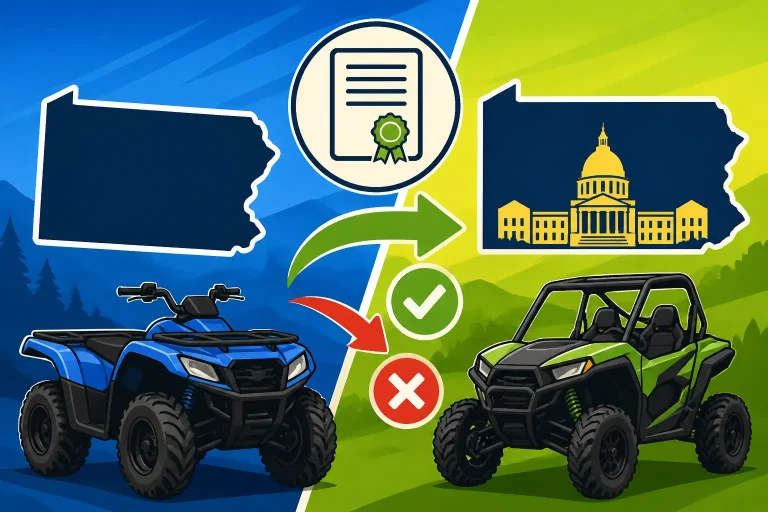
According to the Pennsylvania Department of Conservation and Natural Resources, a nonresident ATV with valid out-of-state registration does not need Pennsylvania registration. The key condition is that the home-state registration is valid. If it has expired, or the machine was never registered where it is based, do not assume the exemption applies.
This differs from the general rule for Pennsylvania machines. According to the Pennsylvania Department of Conservation and Natural Resources, ATVs in Pennsylvania must be registered and titled with DCNR, apart from machines used solely for business or agricultural purposes. The nonresident exemption is specifically for an ATV with valid out-of-state registration; it is not a blanket exemption for every visitor’s machine.
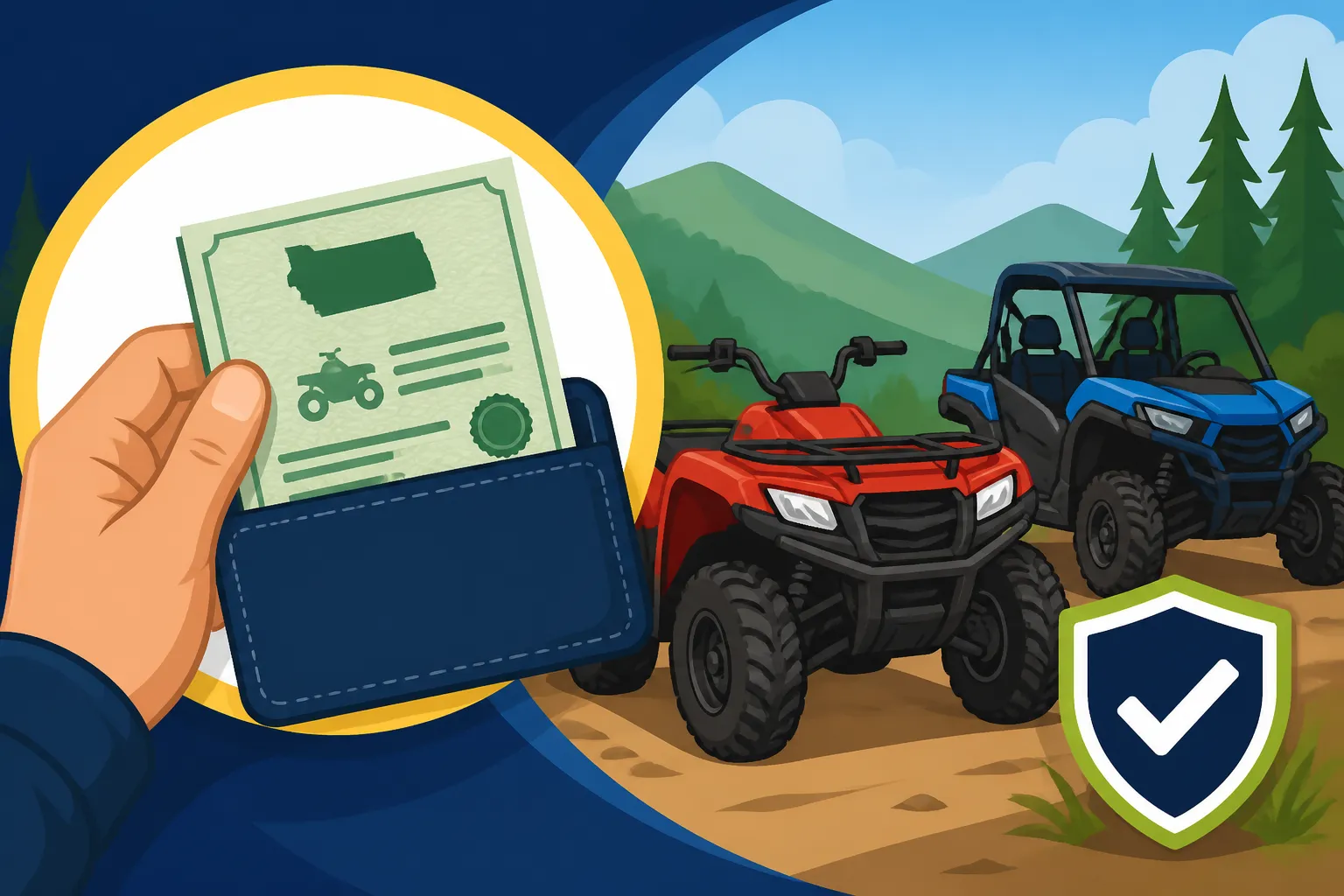
Keep your home-state registration document or card with you while riding. The exemption depends on valid out-of-state registration, so having proof available is the practical way to show why the ATV does not carry Pennsylvania registration. This is a sensible preparation step even though the facts above do not establish a separate Pennsylvania rule requiring every nonresident to carry that registration document on their person.
If your home state does not issue a registration card, or your paperwork is digital, check with the issuing agency and Pennsylvania DCNR before traveling. Do not assume that a photo, online record, bill of sale, or expired document will stand in for a valid registration. The safest approach is to bring the official proof your home state issues and keep a backup copy stored separately.
For the state-by-state question, see Does Pennsylvania Honor an Out-of-State Registration?. If you want a closer look at the practical document question, Carrying Proof of an Out-of-State Registration is also relevant. Rules and exemptions can depend on the details of the machine and its registration, so confirm any unusual case with DCNR before setting out.
| What you have | What it means for a visitor |
|---|---|
| Valid registration from another state | According to Pennsylvania DCNR, a nonresident ATV with valid out-of-state registration does not need Pennsylvania registration. Carry the official proof so you can readily demonstrate the registration is valid. |
| Expired or no home-state registration | Do not assume the nonresident exemption applies. Check with Pennsylvania DCNR before riding. |
| Pennsylvania registration | A Pennsylvania registration is separate from any trail permit that may be required for a specific riding area. |
| No registration because the machine is exempt in another way | Confirm that the exemption applies to your machine and planned use. Do not rely on a dealer document or bill of sale as a substitute for valid out-of-state registration without checking. |
A visitor’s registration status also does not automatically settle where the ATV may be ridden. Pennsylvania has designated trail systems and access rules, and a machine that is properly registered at home may still need a separate permit for a particular trail network. Registration and permission to ride a specific trail are different things.
What to carry on the ride
Pack the documents that answer the likely questions: who owns or operates the ATV, whether it is registered, whether required insurance is in force, and whether you have the credentials needed for your planned route. Keep the originals or official documents accessible and in good condition. A backup photo may help you recover information if paperwork is lost, but it should not be treated as a guaranteed substitute for the official document.
A practical document set includes:
- Valid home-state registration. This is the main proof connected to the nonresident registration exemption. Check that the document matches the ATV and has not expired.
- Liability insurance proof. According to the Pennsylvania Department of Conservation and Natural Resources, liability insurance is required when riding an ATV on property you do not own or lease, and proof of insurance must be carried with you at all times while riding.
- Safety certificate, if required for the rider. According to the Pennsylvania Department of Conservation and Natural Resources, children aged 8 to 15 must complete an ATV safety course and have a certificate to ride on land that does not belong to their parents or guardians. Carry the certificate when it applies.
- Any trail permit or access credential required by the destination. A registration card does not replace a trail-system permit.
- Emergency and contact information. Keep a way to identify the machine and reach the owner, especially if someone else is riding it.
If you ride with family or a group, make sure each operator knows where the documents are and which machine they apply to. A registration for one ATV does not prove the status of another. If several machines are on the trailer, sort the paperwork by machine before leaving rather than trying to match documents at a trailhead.
Protect paper documents from water, mud, and abrasion. A zippered waterproof pouch or a small document holder can keep registration and insurance cards together; outdoor retailers, including Amazon, offer options. Avoid fastening loose papers where they could blow off, and do not leave originals exposed on the machine. If you carry a phone copy as a backup, keep the device charged and do not depend on cell service for access.
For a Pennsylvania-registered machine, the wallet card is part of the registration materials. Visitors should not assume that a Pennsylvania wallet card is required when they qualify for the out-of-state registration exemption. The relevant document for that visitor is the valid registration issued by the home state. What the DCNR Wallet Card Is For explains the purpose of the Pennsylvania card.
Insurance proof is a separate requirement
Registration and insurance do different jobs. Having valid out-of-state registration does not mean you can ride without insurance where Pennsylvania requires it. According to the Pennsylvania Department of Conservation and Natural Resources, liability insurance must be carried when riding an ATV on property that is not owned or leased by the rider. The rider must carry proof of that insurance at all times while riding.
That makes insurance proof one of the most important items to put in your riding pouch, even if your ATV’s registration is from another state. Check that the policy covers the ATV and the kind of off-road use you plan to do in Pennsylvania. A policy document that is hard to interpret or that covers a different machine may not answer the question you need answered at the trail.
Pennsylvania DCNR has not established minimum liability coverage requirements or coverage standards for ATV liability insurance. That does not mean insurance is optional where the law requires it. It means you should review your policy and ask your insurer whether the coverage applies to your planned riding, rather than assuming a particular limit or policy label is enough.
Keep the insurance proof current and easy to retrieve. If your insurer provides a physical card, carry it in a dry, secure place. If it provides an electronic document, save it for offline access and consider carrying a paper copy as a backup. Check the policy’s effective dates before every trip, especially if the ATV is seasonal or covered under a policy that has recently changed.
For more on the difference between registration paperwork and insurance evidence, see Pennsylvania ATV Registration and Insurance Proof. If you are checking whether a home-state policy works for a Pennsylvania ride, Does Pennsylvania Honor an Out-of-State Registration? addresses the registration side; confirm insurance coverage directly with your insurer.
Check trail permits and access before you travel
A valid registration is not permission to ride every trail. Some Pennsylvania riding areas have their own permit requirements, and trail access can depend on the system, land manager, machine, and season. Before loading the ATV, identify the exact trail or property you plan to use and check its current rules.
For example, according to the Pennsylvania Department of Conservation and Natural Resources, riders need a yearly permit to use the Northcentral Regional ATV Trail. This requirement is separate from whether an ATV has a valid registration from another state. A visitor who is exempt from Pennsylvania registration should not assume that the exemption also covers a trail permit.
The Allegheny National Forest is another area with a separate ATV permit. Check the current requirements for the forest and the specific trails you plan to ride before traveling. Permit details, trail openings, and access conditions can change, so use the land manager’s current information rather than relying on old paperwork or a past trip.
A useful pre-trip sequence is:
- Identify the riding area. Confirm that the trail or property is open to ATVs and that your machine is allowed there.
- Check the permit rule. Find out whether the destination requires a permit, who must hold it, and whether it is issued for the rider, the machine, or both.
- Confirm your registration is valid. Bring the current document from your home state and make sure it identifies the ATV you are transporting.
- Verify insurance coverage. Confirm that your policy covers the ride and pack proof of liability insurance.
- Check rider-specific requirements. If a child is riding away from a parent’s or guardian’s property, confirm whether the safety-course certificate requirement applies.
- Recheck before departure. Trail closures and access notices can change after you first make plans.
For a broader explanation of how these requirements fit together, see Pennsylvania ATV Trail Permits Explained and Pennsylvania ATV Registration and Trail Access. Visitors comparing rules between states may also find Pennsylvania ATV Reciprocity With Other States useful.
If your itinerary includes roads or land outside the trail system, check those rules separately. Pennsylvania permits ATV use on private property with the owner’s consent, while state-owned property is limited to clearly marked and designated trails, according to the Pennsylvania Department of Conservation and Natural Resources. A valid home-state plate does not make a closed route or undesignated trail open to riding.
The simplest visitor setup is therefore not just a registration card. Carry valid proof from your home state, carry the required insurance proof, bring any relevant youth safety certificate, and obtain the destination’s permit if one is required. That preparation helps you explain your registration status and avoid mistaking one document for permission to ride somewhere it does not cover.
Sources
- Pennsylvania Department of Conservation and Natural Resources — Home Page – Snowmobile/ATV Registration (checked November 3, 2026)
- Pennsylvania Department of Conservation and Natural Resources — Trail Conditions – Snowmobile/ATV Registration (checked November 3, 2026)
Disclaimer
This article is for general informational purposes only and does not constitute professional advice. Laws, prices and regulations vary by location and change over time. Consult a qualified professional for guidance on your specific situation.