Crossing at Ninety Degrees in Pennsylvania
We’ve all been there: you’re out on a fantastic trail, the sun’s shining, the engine’s purring, and suddenly you hit a section where the trail ends at a public road. Maybe it’s a short hop across to another part of the system, or perhaps you need to cross to get to a gas station that’s been designated as accessible. The rules around riding ATVs and UTVs on public roads in Pennsylvania can be incredibly frustrating and confusing, leaving many riders unsure of how to proceed without breaking the law. This guide is going to clear up one of the most critical and often misunderstood rules: how to legally and safely make a ninety-degree crossing across a public road, ensuring you stay compliant and avoid hefty fines.
Navigating Pennsylvania's ATV Road Maze
Riding an ATV in Pennsylvania offers incredible freedom and access to diverse terrain, from the sprawling state forests to the thrilling private parks. However, that freedom often feels constrained the moment you encounter a paved public road. It’s a common point of contention and confusion for many riders, and for good reason—the rules aren’t always intuitive.
The Frustration of Limited Road Access
Let's be honest, it’s a pain point for virtually every ATV and UTV enthusiast in the Keystone State. You’ve got this powerful, capable machine, and yet the vast majority of public roads are completely off-limits. This isn't just an inconvenience; it can severely limit how you plan your rides, access services, or connect different sections of trails. Imagine a fantastic trail system that’s bisected by a township road – without a legal way to cross, you’re left with two separate, smaller riding areas. It makes you feel like you’re constantly battling against the very infrastructure that’s supposed to facilitate travel. It's a stark reality that [Street Legal ATVs in Pennsylvania: The Short Answer] often boils down to a complicated "no" for most public roads.
This limitation means that riders often have to trailer their machines short distances, find alternative (and often longer) routes, or simply turn back. It eats into your precious riding time and adds a layer of logistical planning that can dampen the spontaneous joy of off-roading. We all want to make the most of our time on the trails, and constantly bumping up against road closures or prohibitions can really grind your gears.
When Crossing Becomes a Necessity
Despite the general prohibitions, there are very specific, legally sanctioned instances where your ATV or UTV must interact with a public road. These aren't opportunities for joyriding; they are critical, brief transitions designed to facilitate legitimate off-road travel. Think about a sprawling state forest trail system like Whiskey Springs, which might require you to cross a minor township road to get from one section of the trail to another, or from a trail exit to a staging area.
Another common scenario involves accessing essential services. Perhaps you're running low on fuel, or your crew needs to grab a quick bite. If the only gas station or diner is just across a state route or a borough street from a legally accessible trail, the ability to cross becomes absolutely vital. These are the moments when understanding the precise rules, particularly the ninety-degree crossing mandate, moves from theoretical knowledge to practical necessity. It’s about bridging gaps, not traversing distances, and it's a key distinction from simply riding on [Pennsylvania's Designated ATV Roads] or [Pennsylvania's Joint-Use Roads].
Deciphering the Ninety-Degree Crossing Mandate
The concept of a "ninety-degree crossing" is one of the most important stipulations for ATV and UTV riders in Pennsylvania. It's not just a suggestion; it's a specific legal requirement designed to ensure safety and minimize risk when these machines interact with vehicle traffic on public roads. Understanding this rule is paramount to staying legal and safe.
The Letter of the Law: What 90 Degrees Truly Means
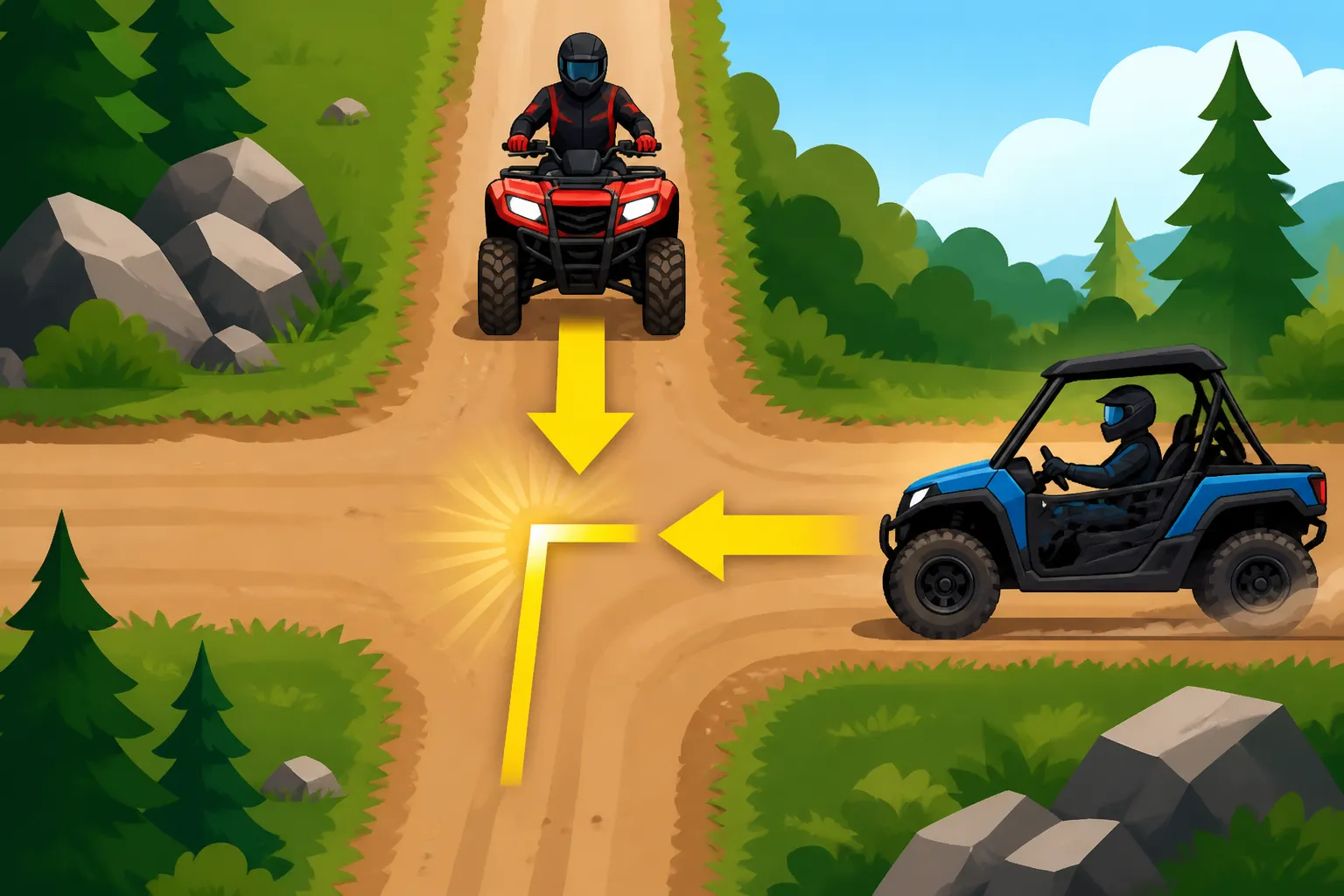
In Pennsylvania, when an ATV or UTV needs to cross a public highway or road that isn't designated for ATV use, the law is quite clear: the crossing must be made at approximately a ninety-degree angle to the roadway. This means you should approach the road, turn so your machine is perpendicular to the flow of traffic, cross directly to the other side, and then turn back onto the trail or property. It’s not about veering down the road for a few feet to find a smoother spot; it's about taking the most direct path across. This rule is rooted in safety, aiming to minimize the time your ATV is exposed to road traffic and make your movement predictable for other drivers. The regulations governing this can be found within 17 PA Code Chapter 51, which outlines the operation of snowmobiles and ATVs.
Think of it like this: if you were walking across a busy street, you wouldn't walk diagonally with your back to traffic for a long stretch. You'd pick a direct path, facing oncoming traffic as much as possible, and get across as quickly and efficiently as you could. The ninety-degree rule applies this same logic to ATVs, recognizing their unique handling characteristics and the speed differential between them and typical road vehicles. It's about presenting the smallest possible profile to traffic and making your intentions unambiguous.
Practical Steps for a Legal Crossing
So, what does this ninety-degree crossing look like in practice? It’s a deliberate, multi-step process that demands your full attention. First and foremost, you must approach the edge of the public road and come to a complete stop. This isn't a rolling stop; it's a full halt where your wheels are no longer turning. Next, you need to exercise extreme caution: [Stopping Before a Pennsylvania Crossing] is mandatory, and you must thoroughly scan for traffic in both directions, several times over. Remember, drivers on the road might not be expecting an ATV to emerge, so it's your responsibility to ensure the path is clear.
Once you’ve confirmed a clear and safe opening in traffic, you should proceed to cross the road directly and quickly, maintaining that approximate ninety-degree angle. Keep your speed appropriate for the crossing – you need enough power to get across efficiently, but not so much that you lose control. Avoid any unnecessary swerving or lingering on the roadway. The goal is to get from one side to the other, making a minimal impact on the flow of traffic. As soon as all wheels are off the pavement on the opposite side, you can resume your travel on the trail or private property.
Crossing Roads vs. Riding Designated Roads
It’s absolutely crucial to distinguish between merely crossing a public road and riding on a public road. The ninety-degree rule specifically applies to crossings where the road is otherwise off-limits to ATVs. This is a fleeting maneuver to bridge a gap, not a license to travel along the shoulder or use the road as a connector. Once you complete your perpendicular crossing, you must be off the public thoroughfare immediately.
This is a fundamental difference compared to [Pennsylvania's Designated ATV Roads] or [Pennsylvania's Joint-Use Roads]. On those specifically marked and approved routes, you have certain legal permissions to operate your ATV or UTV on the road for designated segments, often with speed limits and other specific rules. A ninety-degree crossing, however, is for all the other roads – the vast majority – where your ATV has no business being, except for that brief, perpendicular transit. Misunderstanding this distinction can quickly lead to citations and fines.
Safety First: Minimizing Risk During Crossings
Even though crossing a road at ninety degrees is a specific legal maneuver, it's inherently one of the riskiest things you'll do on your ATV or UTV. You're momentarily putting your off-road machine and yourself into an environment dominated by much larger, faster-moving vehicles. Prioritizing safety during these brief interactions is not just good practice; it's absolutely essential for your well-being.
Visibility and Awareness on Public Roads
When you're making a road crossing, your primary goal, after ensuring the path is clear, should be to make yourself as visible as possible to any approaching motorists. ATVs and UTVs are smaller and lower to the ground than most cars, trucks, and SUVs, which can make them harder for drivers to spot, especially if they're not expecting off-road vehicles. Brightly colored riding gear – jackets, helmets – can make a significant difference. Always make sure your headlights and taillights are functioning and turned on, even during daylight hours. A machine equipped with auxiliary lighting, perhaps some bright LED whips or additional forward-facing lights from a brand like SuperATV, can significantly boost your presence on the road, making it harder for drivers to miss you.
Beyond making yourself visible, you need to be hyper-aware of your surroundings. Before and during the crossing, continuously scan for traffic. Don't assume that just because you looked once, the road remains clear. Things can change quickly. Pay attention to blind spots, driveways near the crossing point, and any potential distractions that might divert a driver's attention. Remember, drivers might be speeding, distracted, or simply not paying enough attention, so you must assume they haven't seen you until you've made eye contact or are certain of their awareness.
Choosing the Safest Crossing Point
Not all road crossings are created equal. While you might be forced to cross at a specific point where a trail meets a road, if you have any discretion, always aim for the safest possible location. The ideal crossing point is on a straight section of road, far from any curves, hills, or intersections that could obscure sightlines for you or for oncoming traffic. A long, clear view in both directions gives you ample time to assess the situation and gives drivers maximum time to react if they see you. Avoid crossing directly at busy intersections with multiple lanes or complex traffic patterns if at all possible, as these present too many variables and potential hazards.
Once you’ve identified the safest spot (or accepted the one the trail dictates), patience is your best friend. Don't rush a crossing. Wait for a significant gap in traffic, one that allows you to cross completely and safely without feeling pressured or rushed. It's far better to wait an extra five minutes for the perfect opening than to attempt a risky crossing that could lead to an accident. Always remember to perform a thorough check, as described in [Stopping Before a Pennsylvania Crossing], before committing to the crossing.
Avoiding Penalties: Fines and Misunderstandings
Operating an ATV or UTV in Pennsylvania comes with responsibilities, and part of that is adhering to the laws that govern their use, especially when it involves public roadways. Failing to properly execute a ninety-degree crossing, or misinterpreting the rules entirely, can lead to serious consequences that can quickly sour a fun day on the trails.
The Cost of an Improper Crossing
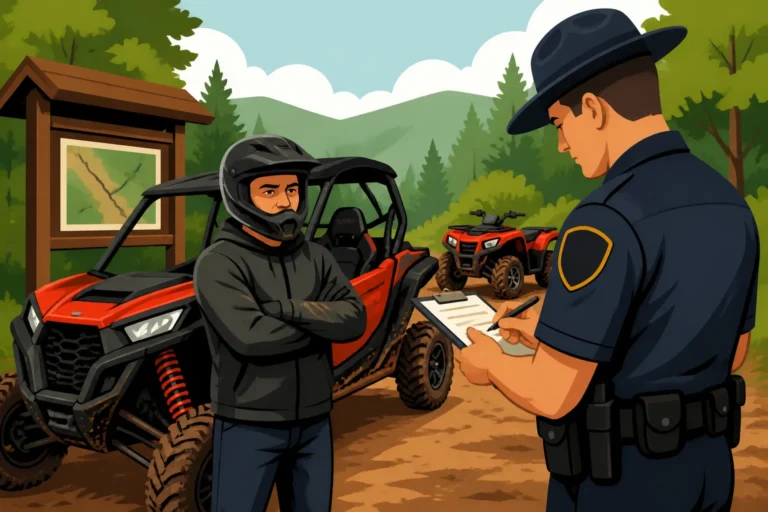
Pennsylvania law enforcement, particularly DCNR rangers and local police, are well-versed in ATV and UTV regulations. An improper road crossing is not a minor infraction; it can be seen as illegal operation on a highway. The fines for such violations can be substantial. For example, [Pennsylvania Fines for Riding Illegally] can start at several hundred dollars for a first offense, and that's often just the base fine. When you factor in court costs, surcharges, and potential impact on your driving record (depending on the specific citation), a quick, illegal dash across a road can end up costing you a significant sum.
Beyond the monetary penalties, there’s the inconvenience of dealing with a citation: potential court appearances, time off work, and the stress of the legal process. It’s a stark reminder that these rules aren't just bureaucratic red tape; they are serious legal mandates. Enforcement is often stringent, especially in areas where local communities have experienced issues with illegal ATV use on roads, making it all the more important to follow the rules precisely.
Common Misconceptions to Dispel
One of the biggest problems is the "just a short stretch" mentality. Many riders rationalize riding a few feet down a road or making a diagonal crossing by thinking, "no one will see me," or "it's just to connect two trails." This is a dangerous misconception. For law enforcement, any illegal operation on a public road is a violation, regardless of the distance traveled. There is no grace period or unspoken allowance for "just a little bit" of illegal road use.
Another myth is that if the road is rural or sparsely traveled, the rules don't apply as strictly. This is absolutely false. The regulations are statewide and apply equally to a busy state route as they do to a quiet township road. It’s also important to remember that the presence of other off-road vehicles on a road doesn't make it legal for you to be there. Just because you see someone else doing it, doesn't mean they are doing it lawfully, and it certainly won't protect you from a citation. Always operate under the assumption that you could be seen and cited if you are not strictly adhering to the ninety-degree crossing rule when appropriate, or riding on [Pennsylvania's Designated ATV Roads] otherwise.
Essential Equipment and Preparation for Road Crossings
While the ninety-degree crossing is primarily a legal and operational maneuver, your machine and your gear play a crucial role in making it as safe and compliant as possible. Thinking ahead about what you need to carry and what condition your ATV or UTV is in can save you a lot of hassle and potential trouble.
Gear for Rider and Machine
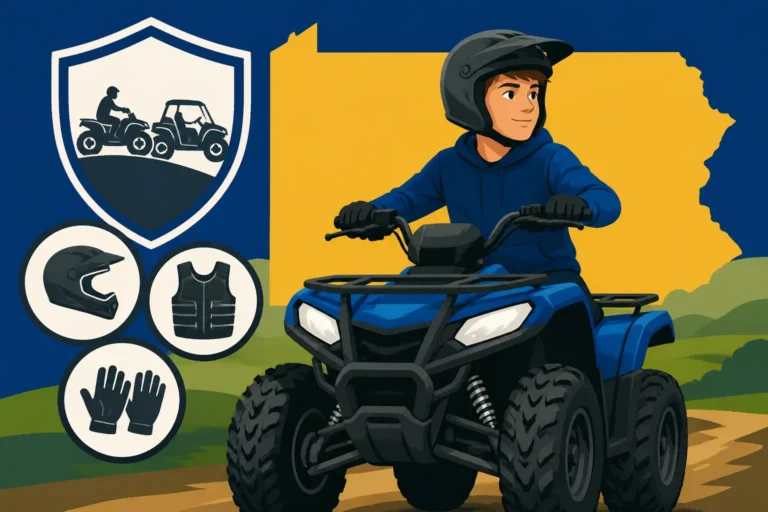
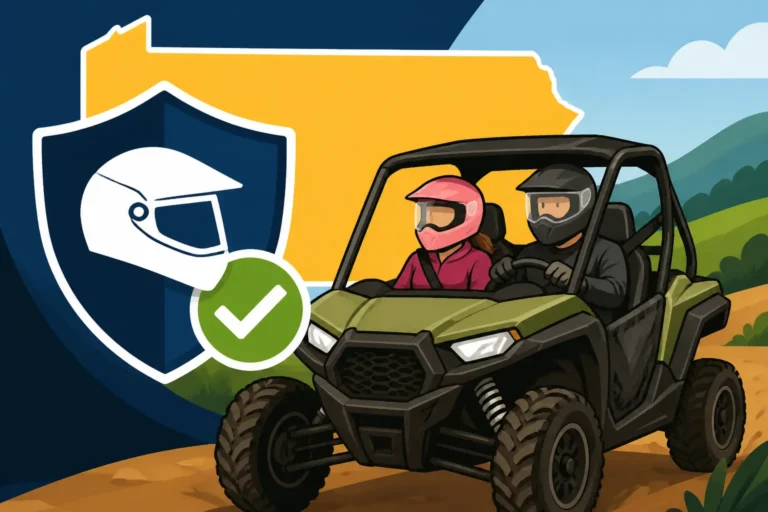
First and foremost, let's talk about rider safety gear. In Pennsylvania, helmets are mandatory for all ATV riders, regardless of age, when operating on public lands or properties. Even for a brief road crossing, you absolutely must be wearing a properly fitted, DOT-approved helmet. Eye protection is also highly recommended, and often required by trail systems, to shield you from dust, debris, and glare. Robust riding gloves, long sleeves, and pants are also essential for protection in case of a fall or collision. These aren't just comfort items; they are critical safety gear, as outlined in [Pennsylvania Helmet Law for ATV Riders].
Your machine itself needs to be up to snuff. Make sure your brakes are in excellent working order—you need to be able to stop quickly and controllably. Functional headlights and taillights are non-negotiable for visibility, especially if you happen to be crossing near dusk or dawn. Additionally, all ATVs and UTVs in Pennsylvania are required to have a spark arrester on their exhaust system to prevent wildfires. Before you even head out for your ride, do a quick pre-ride inspection of your machine to ensure everything is in proper working order. Companies like SuperATV offer a range of robust accessories, from winches to full skid plates, that enhance trail performance, but don't forget the basics for road interactions.
Carrying Your Paperwork
This might sound like a minor detail, but having your paperwork readily accessible is incredibly important for any interaction with law enforcement, even a brief one during a road crossing. You must carry your ATV’s current registration wallet card with you at all times when operating off your own private property. This card proves your machine is legally registered with the Pennsylvania DCNR. Additionally, if you're riding anywhere other than your own land, you are required to have proof of liability insurance. [Carrying Proof of Insurance in Pennsylvania] is a key legal requirement, as is understanding [Pennsylvania's Mandatory Insurance Off Your Own Land].
A small, waterproof document holder—perhaps one that attaches to your machine or fits securely in a pocket—is a wise investment. Imagine getting stopped for a check during a crossing, and your registration card is soaked or torn after a muddy creek crossing. It’s a frustrating scenario that can be easily avoided with proper preparation. Having all your documentation in order is not only a legal requirement but also helps to make any roadside stop quick and hassle-free, allowing you to get back to your ride with minimal delay. For a comprehensive list, check out [Pennsylvania ATV Registration Paperwork Checklist].
Disclaimer
This article is for general informational purposes only and does not constitute professional advice. Laws, prices and regulations vary by location and change over time. Consult a qualified professional for guidance on your specific situation.