Pennsylvania Reciprocity With Maryland
Planning to bring a Maryland ATV or UTV into Pennsylvania? The key question is whether Pennsylvania accepts the machine’s Maryland registration—not just whether it has a title or a plate. Here’s how reciprocity generally works, what it does not cover, and what to check before you tow across the state line.
Does Pennsylvania Accept Maryland ATV Registration?
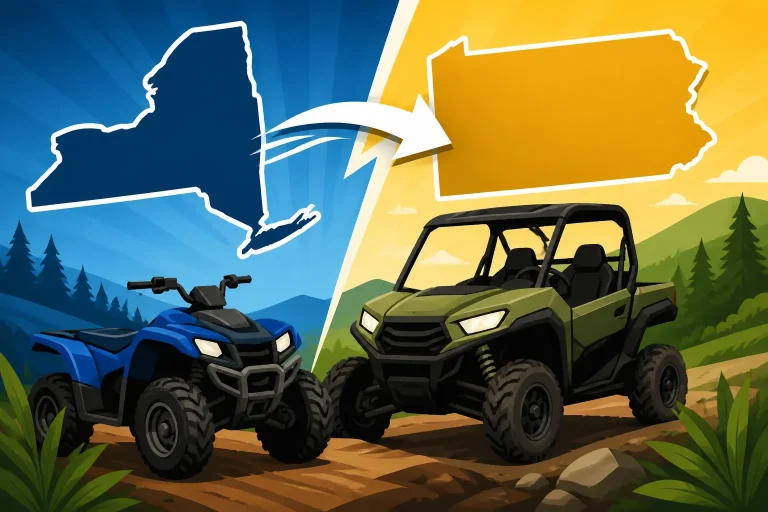
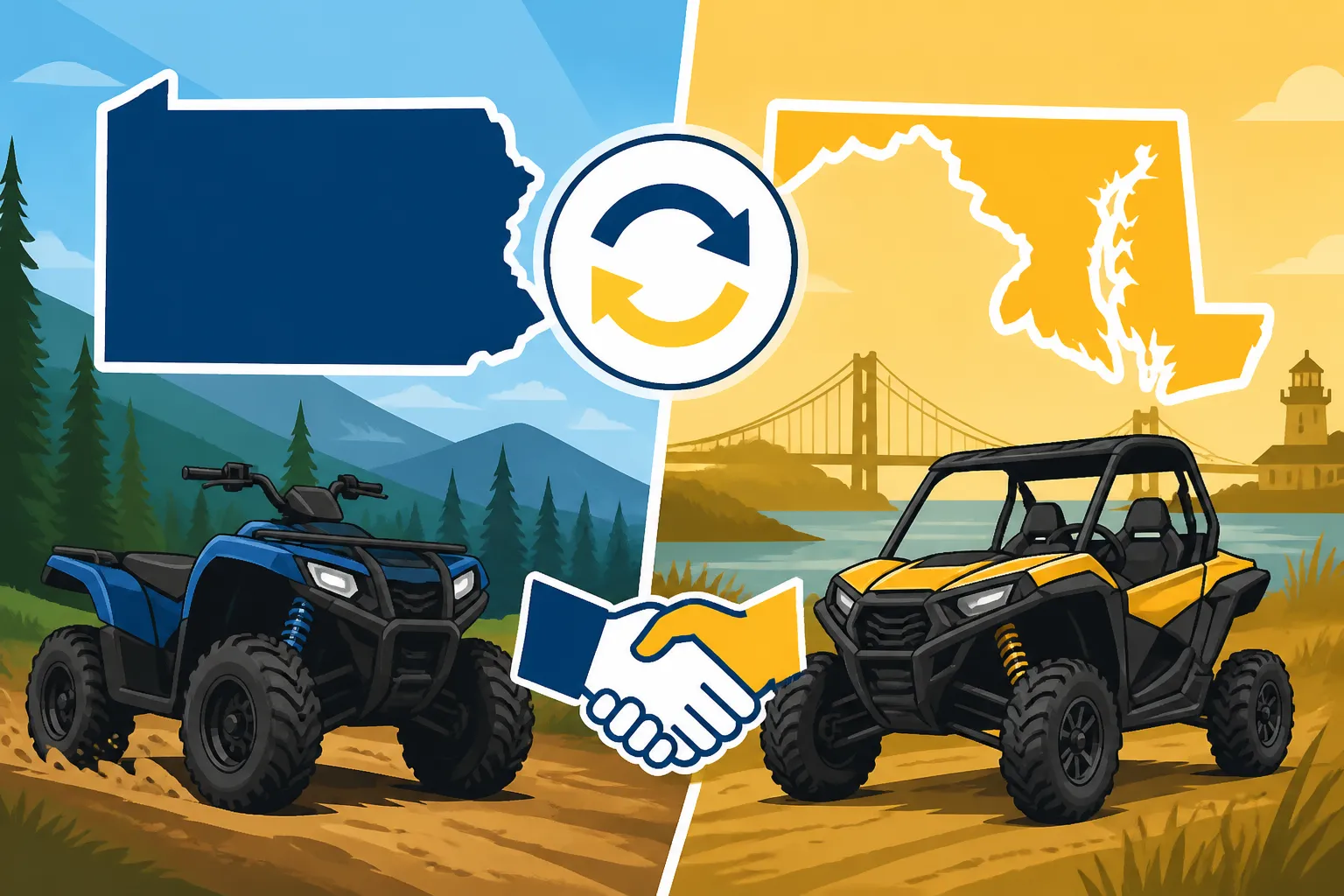
Pennsylvania’s reciprocity rules can allow a nonresident to ride an ATV or UTV in Pennsylvania using valid registration from the rider’s home state. Maryland is treated as a reciprocal state, but the important detail is that the machine must have qualifying, current registration—not merely a title, bill of sale, or temporary paperwork that does not authorize its use.
Reciprocity is about recognizing another state’s registration for riding in Pennsylvania. It does not convert a Maryland registration into a Pennsylvania registration, make an otherwise ineligible machine eligible for a particular trail, or grant permission to ride on land that is closed to ATVs.
The practical answer is: a Maryland resident with a properly registered machine can generally ride in Pennsylvania without obtaining Pennsylvania registration for that same machine, as long as the Maryland registration is valid and the rider follows Pennsylvania’s requirements. Because reciprocity and document rules can change, confirm the current status with Pennsylvania’s DCNR Snowmobile and ATV Section before leaving.
A state-issued title and a registration are different things. A title records ownership; registration is the authorization and identifying documentation used for riding. If your Maryland paperwork proves ownership but does not show current registration, do not assume it satisfies Pennsylvania’s reciprocity rule. For a broader explanation, see Does Pennsylvania Honor an Out-of-State Registration? and Pennsylvania Reciprocity With Maryland.
| What you have | Is it enough to rely on for riding in Pennsylvania? | What to check |
|---|---|---|
| Current Maryland ATV or UTV registration | Generally the document needed to claim reciprocity | Confirm it is valid for the machine and accepted under current Pennsylvania rules |
| Maryland title only | Not necessarily | A title proves ownership but may not authorize riding |
| Bill of sale or purchase receipt | No, not by itself | Registration or other qualifying documentation may still be needed |
| Expired Maryland registration | Do not rely on it | Renew or confirm with DCNR what documentation is accepted |
| A machine with no state registration | Reciprocity may not apply | Ask DCNR whether Pennsylvania registration is required |
A registration card, decal, or other evidence may be part of the documentation you need. Keep the official paperwork with you and make sure the identifying number on the machine matches the documents. A photograph on a phone can be useful as a backup, but it is not a substitute for any physical document or display requirement that applies.
If you are uncertain whether the Maryland document is an ATV registration or only a title, check with the Maryland agency that issued it before traveling. Then confirm with DCNR that Pennsylvania will recognize it for the kind of machine and use you have planned.
What to Carry and Display
Before the ride, check the registration expiration date and make sure the paperwork belongs to the exact ATV or UTV you are transporting. If the machine has recently changed owners, the previous owner’s registration may not be sufficient for you. A registration generally identifies a particular machine and registrant; it is not a transferable trail pass for anyone who borrows or buys the vehicle.
Pennsylvania has rules about registration evidence and identification on machines that are registered in the state. A reciprocal Maryland registration is not the same as a Pennsylvania registration, so do not assume that Pennsylvania’s plate or sticker requirements automatically apply to a Maryland vehicle in the same way. At the same time, keep any Maryland plate, decal, or other registration identifier in the position and condition required by Maryland. It should be secure, legible, and not hidden by mud, cargo, or accessories.
Carry the current registration document in a safe, accessible place. A small waterproof pouch can help protect papers from rain and mud. If you carry a phone copy too, treat it as a backup rather than your only proof. See Carrying Proof of an Out-of-State Registration for more on keeping registration evidence available during a ride.
It is also sensible to carry proof of insurance. Pennsylvania requires ATV liability insurance in certain circumstances, including operation away from property owned or leased by the rider. A Maryland policy may provide coverage, but do not infer that it applies to every Pennsylvania trail or use. Read the policy or ask the insurer directly whether the ATV or UTV is covered while riding in Pennsylvania, and what exclusions apply. Details are covered in Pennsylvania ATV Registration and Insurance Proof and Pennsylvania ATV Insurance Requirement.
Registration reciprocity does not settle every documentation question. Requirements can depend on the vehicle, where it is being ridden, and the type of access involved. If the machine is borrowed, newly purchased, rented, or registered under a business or club, check whether the documents identify the actual machine and whether you are authorized to operate it. Visitors bringing a rental machine should also ask the rental company what registration documents and permits come with the vehicle.
Reciprocity Does Not Replace Trail Permits or Pennsylvania Rules
A Maryland registration does not give you permission to ride every Pennsylvania trail. Registration, land access, and trail permits are separate issues. Some places require a specific permit even when the machine is properly registered, and some land is closed to ATVs altogether.
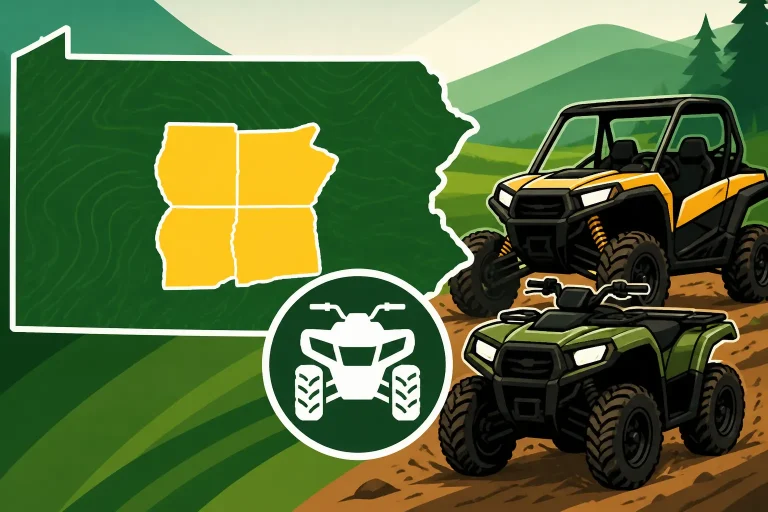
For example, certain designated state forest routes in northcentral Pennsylvania require a regional trail permit. The permit is separate from vehicle registration and applies to the trail system it covers. The Pennsylvania’s Northcentral Regional Trail Permit explains which routes it applies to and what to check before a trip.
The Allegheny National Forest has its own ATV permit requirements for the routes it designates for ATV use. A Maryland registration does not replace that permit. Review Pennsylvania’s Allegheny National Forest Permit before planning to ride there. Other state forest trails may have different access conditions, so check the rules for the specific trail system rather than assuming a permit for one area covers another.
Private riding areas and club trails can have their own admission, membership, registration, or safety conditions. Ask the operator what is required for the machine and each rider. On private land, permission from the landowner or authorized operator is essential; a state registration does not grant access.
Pennsylvania’s operating rules apply while you ride in the state. Those rules can cover where ATVs may travel, minimum ages, supervision, helmets, passengers, insurance, and safe operation. Requirements can vary with the rider’s age, the machine, and the place of operation. A Maryland resident should not assume that following Maryland rules is enough for a Pennsylvania ride. Review Pennsylvania ATV Safety Certificate Requirements, Pennsylvania Helmet Law for ATV Riders, and Pennsylvania Rules for a Passenger on a Quad if they apply to your group.
Road access deserves particular care. An ATV or UTV registration does not make the machine street legal or authorize use of an ordinary road. Pennsylvania allows ATV use only in specific situations and on roads designated for that purpose, subject to applicable restrictions. Do not use a road simply because it connects a parking area to a trailhead or appears quiet. Check the route and local signs before riding. Pennsylvania’s Designated ATV Roads and Pennsylvania Joint-Use Road Rules explain the difference between a road that is open to ATVs and one that is not.
In short, reciprocity addresses the registration question. It does not override trail closures, permit conditions, landowner rules, road restrictions, or other Pennsylvania operating laws.
A Pre-Trip Checklist for Maryland Riders
A few checks before departure can prevent a wasted trip or an avoidable citation. Work through the following list for each machine and rider.
- Confirm current Maryland registration. Check the expiration date and make sure the registration covers the specific ATV or UTV you plan to bring. If you have only a title or purchase document, ask whether a current registration is also required.
- Verify Pennsylvania reciprocity. Contact Pennsylvania DCNR if anything about the registration, machine, or ownership is unusual. This is especially important if the paperwork is temporary, recently transferred, or issued for a nonstandard vehicle.
- Check insurance coverage. Ask your insurer whether the policy covers the machine while it is operated in Pennsylvania and whether it satisfies any applicable Pennsylvania requirements. Carry proof in an accessible place.
- Choose the exact riding area. Confirm that the trail or property is open to ATVs or UTVs and that your machine fits any restrictions. Width, vehicle class, season, and trail designation can affect access.
- Identify every permit required. Check whether the area requires a state forest permit, an Allegheny National Forest permit, a club credential, or another authorization. Do not treat registration as a substitute.
- Review rider-specific rules. Check requirements for age, supervision, helmets, passengers, and safety certificates for each person in your group.
- Plan a legal route to the trail. Confirm that the trailer parking area and access route are suitable. Do not ride on an unposted road or assume that a short connector is open.
- Pack documents and protect them. Bring the registration and proof of insurance, keep them dry, and make sure the machine’s identification details are readable.
The trail operator or land manager is often the best place to confirm trail-specific access, closures, and permit conditions. DCNR can help clarify Pennsylvania registration and reciprocity questions. If different agencies manage different parts of your route, check with each one rather than relying on a single general answer.
Maryland riders should also think about what happens if a machine breaks down or a registration document is lost during the trip. Keep the issuing agency’s contact information available, and make sure another person in the group knows where the paperwork is stored. For trail-specific preparation, see Pennsylvania Trail Conditions Before You Go and Pennsylvania Trail Closures to Check First.
The safest planning assumption is simple: bring current Maryland registration, confirm that Pennsylvania recognizes the specific documentation, and separately verify every permit and access rule for the place you intend to ride. That approach avoids confusing a vehicle’s registration status with permission to use a particular trail.
Disclaimer
This article is for general informational purposes only and does not constitute professional advice. Laws, prices and regulations vary by location and change over time. Consult a qualified professional for guidance on your specific situation.