The Green Sign on a Pennsylvania Township Road
It's incredibly frustrating when you're out riding your ATV or UTV in Pennsylvania, enjoying the scenic beauty, and you suddenly hit a stretch of paved road, wondering if you're even allowed to be there. The rules for riding off-road machines on public roads in the Keystone State can feel like a tangled mess of regulations, leaving many riders confused and risking hefty fines if they make a wrong turn. This guide aims to demystify one of the most common visual clues for legal road riding: the green sign on a Pennsylvania township road, and explore everything you need to know about where you can and cannot ride.
The Elusive Green Sign and Its Meaning
You've probably seen them, those distinct green signs, often small and easily missed, dotting the landscape along certain rural routes. For the uninitiated, they might just blend into the background, another piece of municipal signage. But for an ATV or UTV rider in Pennsylvania, that green sign can be the difference between a legal, enjoyable ride and a costly citation. It's a beacon, a clear indicator that you are entering a section of road where your off-road vehicle is permitted, at least under certain conditions.
What a Green Sign Actually Tells You
At its core, The Green Sign on a Pennsylvania Township Road serves as an official declaration from the local municipality – usually a township – that a specific road or segment of road has been designated for shared use. This means that while traditional vehicles (cars, trucks) still have right-of-way and can use the road as always, ATVs and UTVs are also permitted. It’s not an invitation to ride recklessly, but rather a carefully considered allowance, often a response to community requests or a strategic effort to connect existing trail systems. These signs don't just appear; they are placed deliberately after a formal process has been completed by the local governing body.
For riders, spotting one of these signs means you can breathe a little easier, knowing you're on a legal route. However, it's crucial to understand that the presence of a green sign doesn't negate other state-mandated requirements for operating your machine on any public thoroughfare, such as registration, insurance, and safety gear. Think of it as permission to be there, but only if you've already checked all the other boxes for responsible riding. Without these signs, the default rule for almost all other roads in Pennsylvania is that ATVs and UTVs are prohibited.
Differentiating Green Signs from Other Road Markers
It's easy to confuse the specific "green sign" we're talking about with other green signs you might encounter on the road, such as standard street name signs, directional signs, or even state forest road markers. The key differentiator is the specific language and often the accompanying symbols. A designated ATV/UTV road sign will typically explicitly state "ATV/UTV Route," "Joint Use Road," or similar wording, sometimes accompanied by a small image of an ATV or UTV.
Unlike a generic state forest road sign, which might just list a route number or name, the township green sign is about permission for these specific vehicle types on a public road. State forest roads, while often dirt or gravel and seemingly ideal for off-road machines, operate under a different set of regulations from the Department of Conservation and Natural Resources (DCNR), not local townships, and generally require specific permits for ATV use, typically only on designated state forest trails, not necessarily all forest roads. The township green sign is a local ordinance at play, specifically modifying the general prohibition on ATV/UTV road use. Always look for explicit language confirming ATV/UTV access, not just a green background.
The Legal Backing Behind These Designations
The authority for townships to designate roads for ATV and UTV use stems from Pennsylvania's legal framework for these machines. While the state generally prohibits ATVs and UTVs from highway use, it does provide exceptions, allowing local municipalities the power to create [Pennsylvania's Designated ATV Roads]. This isn't a free-for-all; it's a carefully structured exception to the rule. Townships must pass specific ordinances to open these roads, a process that usually involves public hearings, safety assessments, and a vote by the township supervisors.
These ordinances lay out the specific conditions, such as hours of operation, speed limits, and any other local rules that might apply. For instance, a township might designate a road but restrict its use to specific hours of the day or certain days of the week. Riders need to be aware that simply seeing a green sign isn't the whole story; understanding the local ordinance and state laws simultaneously is paramount. Without this specific local designation, a township road falls under the general state prohibition, meaning any ATV or UTV on it is technically operating illegally, regardless of how remote or quiet the road might seem.
Pennsylvania's Framework for ATV/UTV Road Use
Navigating the rules for riding ATVs and UTVs on public roads in Pennsylvania can feel like trying to solve a puzzle with missing pieces. It's not as simple as "dirt roads are okay, paved roads are not." The reality is a nuanced system dictated by state law, but with significant allowances for local control. Understanding this framework is crucial for any rider hoping to legally connect trails or access local services.
Understanding "Designated" and "Joint-Use" Roads
The terms "designated" and "joint-use" roads are key to understanding where you can legally ride your off-road machine in Pennsylvania. [Pennsylvania's Designated ATV Roads] are precisely what they sound like: roads explicitly opened for ATV and UTV travel by local municipal ordinance, marked by those green signs we've discussed. These are the exceptions to the general rule that ATVs and UTVs are prohibited from most public roads. The municipality, usually a township, has gone through a formal process to permit this shared use.
[Pennsylvania's Joint-Use Roads] refer to a specific type of designated road where ATVs and UTVs share the pavement with other motor vehicles. This is the most common scenario for legal road riding. While these roads offer vital connections, they come with a heightened responsibility for riders. You're expected to operate your machine as you would any other vehicle, following traffic laws, respecting speed limits, and being acutely aware of other motorists. The designation allows access but doesn't change the nature of the road as a shared thoroughfare. This is vastly different from a dedicated ATV trail, where the focus is solely on off-road recreation.
The Role of Townships and Municipalities
Local townships and municipalities play the most significant role in opening roads for ATV and UTV use. The state grants them the authority to make these decisions based on local needs and circumstances. This means that rules can vary dramatically from one township to the next, even neighboring ones. What's legal in Coal Township might be strictly prohibited in Patton. This patchwork of regulations is precisely why riders must pay close attention to local signage and, if in doubt, check with the specific township's administrative office.
The process often begins with residents or ATV clubs petitioning the township supervisors. They might highlight the desire to connect existing trail systems, allow riders to access amenities in town, or simply promote local tourism. The supervisors then conduct studies, hold public hearings, and ultimately vote on an ordinance. This local control reflects the diverse geography and population densities across Pennsylvania. A rural township with vast tracts of state forest might be more amenable to opening roads than a suburban township with heavier traffic and residential areas.
Why State and Federal Roads Remain Largely Off-Limits
While townships have the power to designate their local roads, state highways (those prefixed with "SR" like SR 144 or SR 120) and federal roads (like those within national forests managed by the USDA Forest Service) remain largely off-limits to ATVs and UTVs. These roads fall under a different jurisdiction and are typically designed and maintained for higher-speed vehicular traffic. The Pennsylvania Department of Transportation (PennDOT) and federal agencies have strict regulations that prioritize the safety and flow of conventional highway traffic, which generally preclude the use of off-road machines.
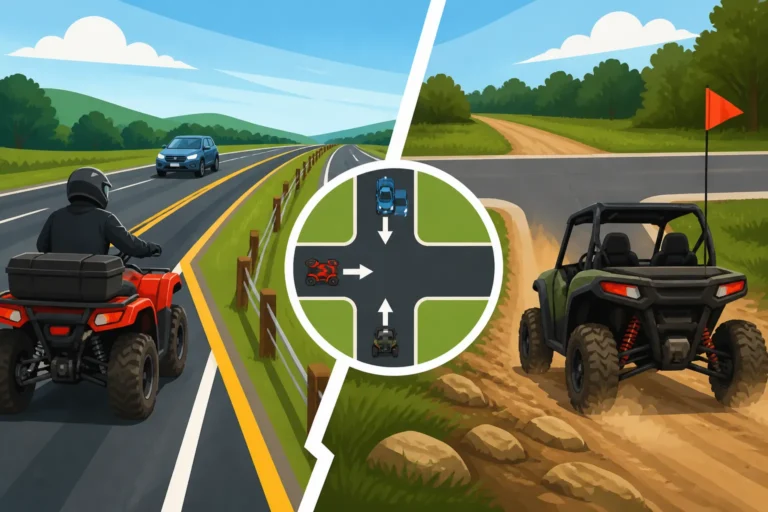
There are extremely rare, specific exceptions, such as brief, direct [Crossing a Highway on an ATV in Pennsylvania] at a ninety-degree angle, or very short designated connector sections that are explicitly signed and approved by state authorities. However, these are exceptions, not the rule. Attempting to ride your ATV or UTV down a state route or federal highway without explicit, designated signage is illegal and carries significant penalties, not to mention presenting a severe safety risk to yourself and others. This distinction is paramount: local township roads can be designated, but state and federal routes generally cannot be used for casual ATV/UTV travel.
Essential Requirements for Riding Open Roads
So, you've found a green sign, and you know you're on a designated township road. That's a great start, but it's not the end of the story. Riding an ATV or UTV on any public road in Pennsylvania, even a designated one, comes with a host of mandatory requirements designed to ensure safety and legal compliance. Ignoring these can quickly turn a permitted ride into a very expensive learning experience.
Age, Helmets, and Passenger Rules on Public Roads
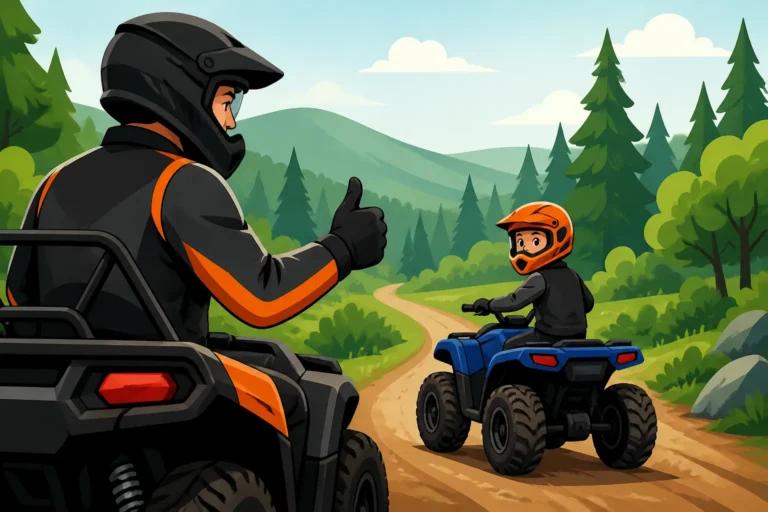
Pennsylvania has clear rules regarding who can operate an ATV or UTV and under what conditions, especially when venturing onto shared public roads. One of the most critical rules is [Pennsylvania's Minimum Age of Sixteen on Roads]. To operate an ATV or UTV on any designated road open to public vehicular traffic, the operator must be at least sixteen years old and possess a valid driver's license. This isn't just a suggestion; it's a legal requirement, recognizing the added complexities and risks of sharing roads with cars and trucks.
Helmets are another non-negotiable. [Pennsylvania Helmet Law for ATV Riders] mandates that all ATV operators and passengers under 16 years of age must wear a securely fastened helmet. However, for anyone operating an ATV or UTV on a public road, regardless of age, wearing a helmet is generally recommended and often a good safety practice, even if not strictly enforced for adults in all specific scenarios off designated trails. On designated roads, it's often an expectation to operate with full protective gear. Furthermore, if your ATV isn't specifically designed for a passenger, carrying one is prohibited. UTVs often have multiple seating positions, but always ensure passengers are seated properly with safety restraints.
Insurance and Registration: Non-Negotiables for Road Riding
You absolutely cannot ride your ATV or UTV on a designated public road in Pennsylvania without proper registration and insurance. These are foundational requirements. Your machine must be registered with the Pennsylvania DCNR. This includes displaying your [Pennsylvania ATV Plates and Where They Mount] and carrying your wallet card. Even if you only ride on your own private land, you still need DCNR registration to be on a public road.
Beyond registration, [Pennsylvania ATV Insurance Requirement] is critical. If you're riding your ATV or UTV anywhere other than your own private property, you must carry proof of liability insurance. This isn't just about protecting yourself; it's about protecting others in case of an accident. The state requires this insurance to ensure that if you cause damage or injury while riding, there's coverage available. Don't assume your auto insurance policy covers your ATV or UTV; most standard car policies explicitly exclude off-road vehicles. You'll need a separate, dedicated ATV/UTV insurance policy, and you must carry proof of it with you, just like your DCNR wallet card.
Machine Modifications and Equipment for Road Safety
When a township designates a road for ATV/UTV use, it's typically understood that these machines, while not "street legal" in the sense of being registered with PennDOT, must meet certain basic safety equipment standards for operating alongside conventional vehicles. This isn't about making your quad a street-legal car, but ensuring it's visible and controllable. For instance, functional headlights and taillights are crucial, especially if you might be riding at dawn, dusk, or in low visibility. Brake lights are equally important for signaling stops to traffic behind you.
While not explicitly mandated for DCNR-registered machines in all contexts, many riders find it prudent to add additional safety equipment when riding on designated roads. Aftermarket accessories like side mirrors, turn signals, and a horn can significantly enhance your safety and ability to communicate with other drivers. Companies like SuperATV offer a wide range of such accessories, from LED light bars for better visibility to mirror kits and signal systems that make your machine more predictable to other motorists. These additions aren't just "nice-to-haves"; they demonstrate a commitment to safe, responsible riding and can help prevent accidents when sharing the road with faster, heavier traffic.
| Requirement / Item | Designated Township Road | Private Land (solely) | State Forest Trail (DCNR permit) |
|---|---|---|---|
| DCNR Registration | Required | Not required | Required |
| Liability Insurance | Required | Not required | Required |
| Operator Age (Minimum) | 16+ (with license) | No state minimum | 8+ (with safety cert & supervision) |
| Helmet (Operator/Pax) | Strongly Recommended/Often Expected (Required under 16) | Required under 16 | Required under 16 |
| Working Lights | Required (Head/Tail/Brake) | Recommended | Recommended (Required in low light) |
| Mirrors/Turn Signals | Strongly Recommended | Not required | Not required |
| Green Designation Sign | Required for Access | N/A | N/A |
The Process of Opening a Township Road to ATVs
You might wonder how a road gets that coveted green sign in the first place. It's not a decision made lightly or on a whim. The process of designating a township road for ATV and UTV use is a formal and often lengthy undertaking, balancing recreational opportunities with public safety and resident concerns.
How Townships Make the Decision
The power to open township roads to ATVs and UTVs rests squarely with the local township's board of supervisors or commissioners. The process typically begins with local interest, often from ATV clubs, individual riders, or businesses looking to attract tourism. These groups might formally [Asking a Township to Open a Road] by submitting petitions or making presentations at township meetings, outlining the benefits and addressing potential concerns. The township then has to conduct its own due diligence.
This due diligence usually involves evaluating the road itself: its condition, traffic volume, speed limits, and any safety hazards. They'll consider whether the road is suitable for mixed use and if it effectively connects existing legal riding areas. Crucially, they'll also assess the potential impact on residents along that road – noise, dust, safety concerns for children or pets, and property values. It's a balancing act, and every township approaches it slightly differently, weighing the pros and cons through their unique local lens.
The Hurdles and Community Input
Opening a road is rarely a simple "yes." Townships face several hurdles. One of the biggest is community resistance. While some residents might welcome the idea, others might express strong opposition due to concerns about noise, environmental impact, increased traffic, or safety. Public meetings become crucial forums where residents can voice their opinions, both for and against. [Who Votes to Open a Road] is ultimately the elected township supervisors, but their decision is heavily influenced by community feedback.
Another hurdle is liability. Townships must ensure they are not exposing themselves to undue risk by permitting a new class of vehicles on their roads. This often means consulting with their legal counsel and insurance providers. There's also the practical aspect of enforcement; the township police or state police will need to be able to monitor compliance with the new rules, which requires resources. These factors combine to make the decision-making process complex and often slow, with many initial proposals ultimately falling short due to various concerns.
Why Many Roads Are Not Designated
Given the complexities and potential downsides, it becomes clear [Why Most Roads Stay Closed] to ATV and UTV traffic. For many townships, the perceived benefits simply don't outweigh the costs or the potential for conflict. High traffic volumes, narrow roads, residential density, and a lack of direct connection to established trail systems are all common reasons a township might opt to keep its roads exclusively for conventional vehicles. It's also possible that while a road might look ideal for ATV use, it might be heavily used by logging trucks, school buses, or local farm equipment, making shared use impractical or unsafe.
Furthermore, some townships simply haven't been approached with a formal proposal, or they may lack the resources to properly study and implement an ordinance. The default position in Pennsylvania is that ATVs and UTVs are prohibited from roads. Therefore, if a township doesn't actively designate a road, it remains closed. This often leaves riders frustrated when they see a perfectly good, quiet dirt road that seems ideal, only to find it's not open for their use. It underlines the importance of seeking out those specific green signs rather than making assumptions.
Navigating Practical Scenarios on Pennsylvania Roads
Understanding the legal framework is one thing; applying it to real-world riding scenarios is another. Pennsylvania's system, with its mix of designated roads and strict prohibitions, presents some common dilemmas for riders. Knowing how to legally navigate these situations is key to enjoying your ride without trouble.
Connecting Trail Systems and Crossing Highways
One of the primary reasons riders advocate for designated township roads is to create vital links between otherwise disconnected trail systems. Imagine a scenario where two fantastic DCNR trail networks are separated by just a few miles of township roads. Without the proper designation, reaching the second trail system would involve loading your machine onto a trailer and driving it, which is inconvenient and time-consuming. When a township designates those connecting roads, it opens up entirely new possibilities for extended rides, allowing riders to travel seamlessly from one recreational area to another. This is the essence of [Riding to a Trailhead on a Township Road].
However, even on designated roads, crossing a major state highway presents a specific set of rules. As mentioned, riding on state highways is generally prohibited. But Pennsylvania law does allow for [Crossing a Highway on an ATV in Pennsylvania] under very specific conditions. You must bring your ATV or UTV to a complete stop, look both ways, and cross at a ninety-degree angle to the highway, directly from one designated road or trail to another. You cannot ride along the shoulder, meander, or make turns on the highway itself. It's a quick, direct transit across, not a journey down the road. This strict protocol is in place to minimize the time your off-road machine is exposed to high-speed traffic on a major route.
Riding to Local Amenities or Your Hunting Camp
For many rural residents, ATVs and UTVs aren't just for recreation; they're utility vehicles for chores or access. This often leads to questions about using them to run quick errands or get to a remote property. If you're hoping to ride your UTV into the local borough for gas or a bite to eat, or perhaps simply to access your hunting camp down a quiet lane, you'll again need to rely on those green signs. [Riding Into Town on a Pennsylvania ATV] is only permissible if the roads leading into and through the town (borough or township) have been specifically designated for ATV/UTV use.
Many boroughs, being denser and having more pedestrian and vehicle traffic, are less likely to designate their streets than rural townships. This means that while a township road might take you close to the borough line, you might have to park your machine and walk the rest of the way, or trailer it the final stretch. Similarly, accessing a remote hunting camp or woodlot with your quad on a non-designated township road is illegal, even if that road sees virtually no other traffic. The key is permission through designation, not just common sense or perceived safety. Don't be caught assuming a quiet road is an open road.
Consequences of Riding an Undesignated Road
The temptation to take a shortcut or ride a picturesque, quiet gravel road that isn't designated can be strong. However, the consequences of riding an unregistered ATV or UTV on a public road in Pennsylvania, or riding a registered machine on an undesignated road, are severe. Enforcement by DCNR rangers, local police, or Pennsylvania State Police is real, particularly in areas near popular trail systems. A citation for riding an unregistered or uninsured ATV/UTV on a public road can result in significant fines.
Beyond monetary penalties, there's the risk of having your machine impounded. And, perhaps most importantly, if you're involved in an accident on an undesignated road, your insurance might not cover you, leading to immense financial and legal liabilities. It's simply not worth the risk. Always verify the legality of a road by looking for the green signs or checking local ordinances. If in doubt, err on the side of caution and trailer your machine.
Beyond Township Roads: Other Legal Riding Opportunities
While designated township roads offer valuable connections, they are just one piece of the larger Pennsylvania ATV/UTV riding landscape. The state also offers other legal opportunities for off-road enthusiasts, each with its own set of rules and requirements. Understanding these different venues will give you a more complete picture of where you can legally and safely enjoy your machine.
State Forest Roads and Game Lands Access
Pennsylvania boasts a vast network of State Forests, managed by the DCNR, and State Game Lands, managed by the Pennsylvania Game Commission. These lands often contain extensive networks of dirt and gravel roads that appear ideal for ATV and UTV use. However, the rules here are distinct from township roads. [Pennsylvania Rules for Riding a State Forest Road] typically dictate that most forest roads are not open to general ATV/UTV riding. Instead, ATVs are usually restricted to specific, signed "State Forest ATV Trails" that often require a DCNR trail permit. These are designated trails, not necessarily all forest roads. It's a common misconception that all dirt roads in a state forest are fair game; in reality, you must stick to marked trails.
State Game Lands are even more restrictive. With very few, highly specialized exceptions (such as individuals with specific disabled access permits), [Pennsylvania Rules for Riding a Game Lands Road] generally prohibit ATVs and UTVs entirely. These lands are managed primarily for wildlife habitat and hunting, and motorized vehicle use is severely limited to minimize disturbance. You won't find green signs for ATVs on Game Lands roads; instead, you'll likely see "Motorized Vehicles Prohibited" signs. Always check DCNR maps and regulations for State Forest Trails and Game Commission rules for Game Lands before venturing onto these properties.
Private Property and Obtaining Permission
By far the simplest and most unrestricted place to ride your ATV or UTV is on your own private property. If you own the land, you can typically ride freely, provided you adhere to state safety requirements (like helmet laws for those under 16) and local noise ordinances. However, if you want to ride on someone else's private land, [Pennsylvania Rules for Riding a Private Road] or property, you must have explicit permission from the landowner. A verbal "go ahead" might be fine with a trusted friend, but for anything more formal or for accessing larger tracts, a written permission form is always a good idea.
Riding on private land without permission is trespassing, a serious offense that can lead to fines, legal action, and a damaged reputation for the entire riding community. It's crucial to be respectful of landowners and their property. Always ask first, and if granted permission, stick to agreed-upon routes and times. Building good relationships with private landowners is vital for expanding riding opportunities, as private land can often connect trails or provide unique riding experiences not found on public lands.
Specialized ATV Parks and Trails
Beyond the public road network and state lands, Pennsylvania is home to several excellent pay-to-ride ATV and UTV parks and private trail systems. Places like the Anthracite Outdoor Adventure Area (AOAA) in Northumberland County or Rock Run Recreation Area in Cambria County offer hundreds of miles of diverse, managed trails specifically designed for off-road machines. These parks are usually well-marked, offer various difficulty levels, and have staff on site for safety and assistance.
These specialized parks often have their own internal rules regarding machine types, safety gear, and operating hours, but the advantage is that you know you're always riding legally. They provide a fantastic environment for all skill levels, from beginners to experienced riders, and many offer amenities like camping, food, and gear shops. While they require an entrance fee, the peace of mind and quality of the riding experience often make them well worth the cost. For riders looking for extensive, guaranteed legal off-road fun, these parks are an excellent choice.
Disclaimer
This article is for general informational purposes only and does not constitute professional advice. Laws, prices and regulations vary by location and change over time. Consult a qualified professional for guidance on your specific situation.