Why the Allegheny Forest Sells Its Own Permit
Planning an ATV ride in the Allegheny National Forest can mean sorting through more than one permit and registration rule. The forest permit is separate because it authorizes access to a specific network of National Forest trails; it does not replace Pennsylvania registration, insurance, or other permits that may apply elsewhere. Here’s what the permit is for and how to prepare before you ride.
What the Allegheny Forest Permit Covers
The Allegheny National Forest is federal land, managed separately from Pennsylvania’s state forests and trail systems. Its ATV permit is a local access requirement for the designated ATV trails in the forest. It helps manage use of that trail network and supports its operation and upkeep.
That is why a Pennsylvania registration alone is not enough to ride the forest’s permit-required trails. Registration identifies the machine for state purposes; the forest permit addresses access to a particular riding area. They solve different problems.
The permit is not a pass to ride anywhere in the forest. It applies to eligible, designated ATV trails, not every forest road, logging road, or open-looking track. A route being physically accessible does not mean ATVs are permitted on it. Stay on routes currently designated for ATV use and check trail status before setting out.
| Document or requirement | What it does | What it does not do |
|---|---|---|
| ATV registration | Meets the applicable registration requirement for the machine | Does not grant access to every trail |
| Insurance proof | Shows required coverage when applicable | Does not replace registration or a trail permit |
| Allegheny Forest ATV permit | Provides access to covered, designated forest ATV trails under the permit rules | Does not authorize riding off-trail or on closed routes |
| Northcentral Regional Trail Permit | Covers a separate Pennsylvania state forest trail system | Does not replace the Allegheny Forest permit |
The forest system includes designated trails associated with riding areas such as Marienville and the Timberline and Penoke trails. Before traveling, verify which routes are open and whether your machine fits the trail’s limits. Trail openings, closures, and seasonal access can change, so an old map or a previous trip is not a reliable substitute for current information.
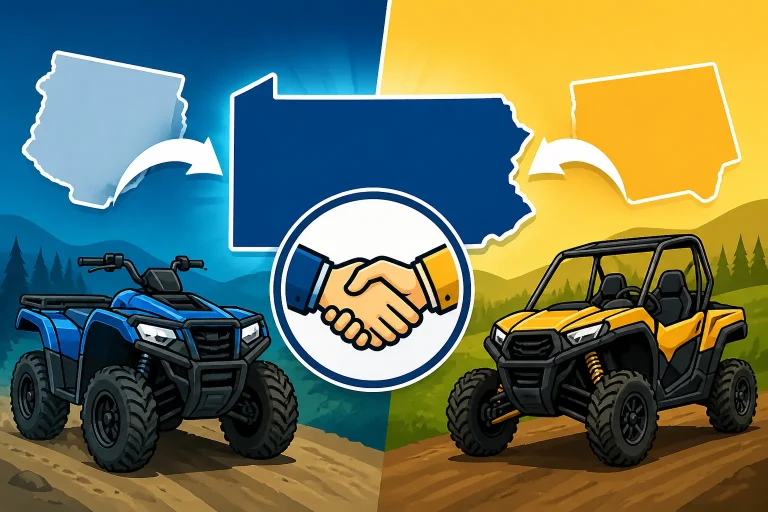
The distinction between permits matters if your trip includes more than one riding area. A permit for Pennsylvania state forest trails does not automatically cover the Allegheny National Forest, and the Allegheny permit does not open state forest trails. For the separate permit system, see Pennsylvania’s Northcentral Regional Trail Permit and Do You Need a Permit for Pennsylvania State Forest Trails?.
Why Registration and Insurance Still Matter
A common misunderstanding is that buying the forest permit settles every legal requirement. It does not. The permit is an additional access requirement, not a substitute for the documentation needed to operate the ATV.
Before riding, make sure the machine has the registration required for your circumstances and that you can show the necessary proof. If you are visiting from another state, do not assume that a home-state plate automatically satisfies Pennsylvania’s requirements or the forest’s permit rules. Reciprocity can depend on the states involved and the documents carried. Check Does Pennsylvania Accept an Out-of-State Safety Certificate? and Does Pennsylvania Honor an Out-of-State Registration? for the state-level questions, then confirm the Allegheny permit’s current requirements.
Insurance is another separate item. Pennsylvania’s rules can require insurance when an ATV is operated away from the owner’s land, and a forest permit does not waive that obligation. Keep proof accessible while riding. For more on the state requirement, see Pennsylvania ATV Insurance Requirement and Carrying Registration Proof as a Visitor.
The forest may require proof of registration and insurance when a rider applies for or uses a permit. Check the current application instructions rather than relying on another rider’s paperwork or an older form. Requirements and accepted proof can vary according to the rider’s situation, especially for nonresidents or machines registered outside Pennsylvania.
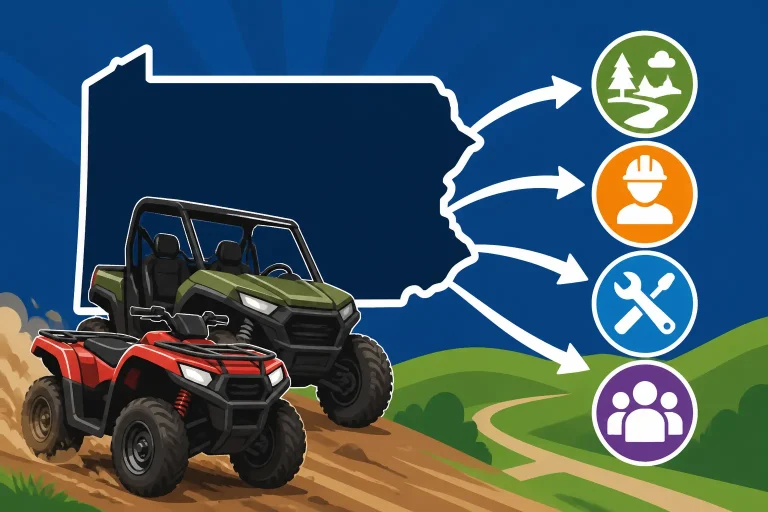
Think of the requirements as a set of separate checks:
- Is the machine properly registered for this ride? Confirm the state or other applicable registration and carry its proof.
- Do you have the required insurance? Carry evidence of coverage and verify that the policy applies to off-road riding.
- Do you have the Allegheny Forest permit? Make sure it is valid for the machine and the riding area.
- Is the route open to your machine? Follow current trail designations, seasonal rules, and machine limits.
A permit for one ATV should not be treated as a blanket pass for every machine in a group. Confirm whether the permit is issued per machine and how it must be displayed. If you trailer two ATVs, check the requirements for both before leaving home. The same care applies when borrowing a machine or renting one: ask who must obtain the permit and what documents the operator needs to carry. What the Allegheny Permit Requires You to Show and Buying a Permit for a Borrowed Machine address those practical questions.
How to Prepare Before You Ride
The simplest way to avoid a wasted trip is to handle the permit and document checks before loading the machine. Start with the official Allegheny National Forest information for current application details, eligible trails, operating periods, and closures. Permit procedures and trail conditions can change; confirm the latest instructions with the forest rather than assuming a past season’s process still applies.
Then check your machine against the trail rules. Some Pennsylvania trail systems limit machine width, and the forest’s designated routes may have their own restrictions. A machine that is too wide for a particular trail is not made eligible by buying a permit. Review Pennsylvania Rules for Riding a National Forest and Where a Wide Machine Can Still Ride before choosing a route.
Use this checklist:
- Confirm the riding area. Make sure the trip is on Allegheny National Forest trails covered by the permit, not a nearby state forest or private trail.
- Check current access information. Look for closures, seasonal restrictions, and any notices affecting the route or trailhead.
- Verify permit instructions. Confirm how to apply, what documents are needed, how the permit is assigned, and where it must be displayed.
- Check registration and insurance separately. Carry the required proof for the operator and machine.
- Review machine limits. Check width and any other restrictions that apply to the trail you plan to ride.
- Plan for trailhead logistics. Confirm parking and access details, especially if arriving with a trailer or during a busy period.
- Keep documents protected. A wallet card or insurance document can be difficult to use if it gets soaked or damaged. Store paperwork securely and make sure it remains available for inspection.
Do not treat a trail permit as permission to use a road to reach the trailhead. Road access has its own rules, and many public roads are not open to ATVs. If your route involves a road, verify that it is specifically authorized for ATV use. Pennsylvania ATV Registration and Trail Access explains why a registration and trail permit do not automatically make every connecting road legal.
It also helps to plan around the forest’s season and conditions. A trail that was open on a previous visit may be closed for maintenance, weather, or seasonal management. Wet or thawing conditions can damage trails and lead to restrictions. Check current notices close to departure, and be prepared to change plans rather than ride around a gate or closure.
If you are comparing a forest ride with other Pennsylvania riding options, keep the permit systems separate in your budget and planning. The state’s Northcentral permit covers a different set of trails; private riding areas and club trails may have their own entry rules as well. Why Pennsylvania Honors Only Mutual States is useful for visitors sorting out state registration reciprocity, while Pennsylvania ATV Trails That Charge Nothing can help distinguish free state forest access from areas with separate requirements. “Free” access to one trail network does not make the Allegheny permit unnecessary.
The practical takeaway is straightforward: the Allegheny Forest sells its own permit because access to its designated ATV trails is managed separately from Pennsylvania vehicle registration and from other trail systems. Bring the permit, registration proof, and insurance proof required for your ride, and check the current rules for the exact trails and machine you plan to use.
Disclaimer
This article is for general informational purposes only and does not constitute professional advice. Laws, prices and regulations vary by location and change over time. Consult a qualified professional for guidance on your specific situation.